





PLanning and Operations

Planning and operations for agile, cost-effective supply chains.

Accurate demand planning and effective S&OP are essential for efficient, responsive supply chains. At Trace Consultants, we help organisations implement advanced planning frameworks and systems that improve forecast accuracy, optimise inventory, and enable genuine cross-functional collaboration.

Blurred view of a warehouse shelf filled with stacked cardboard boxes and products, showcasing organized storage.

Why supply chain operations planning matters.

Demand patterns shift rapidly, inventory costs squeeze margins, and siloed decision-making creates inefficiency. Without robust supply chain operations planning and cross-functional alignment, organisations struggle with stockouts, excess inventory, and forecasts that don't reflect reality.

Strong S&OP and demand planning turn uncertainty into advantage. With structured frameworks and advanced systems, organisations improve forecast accuracy, optimise working capital, and make decisions with confidence.

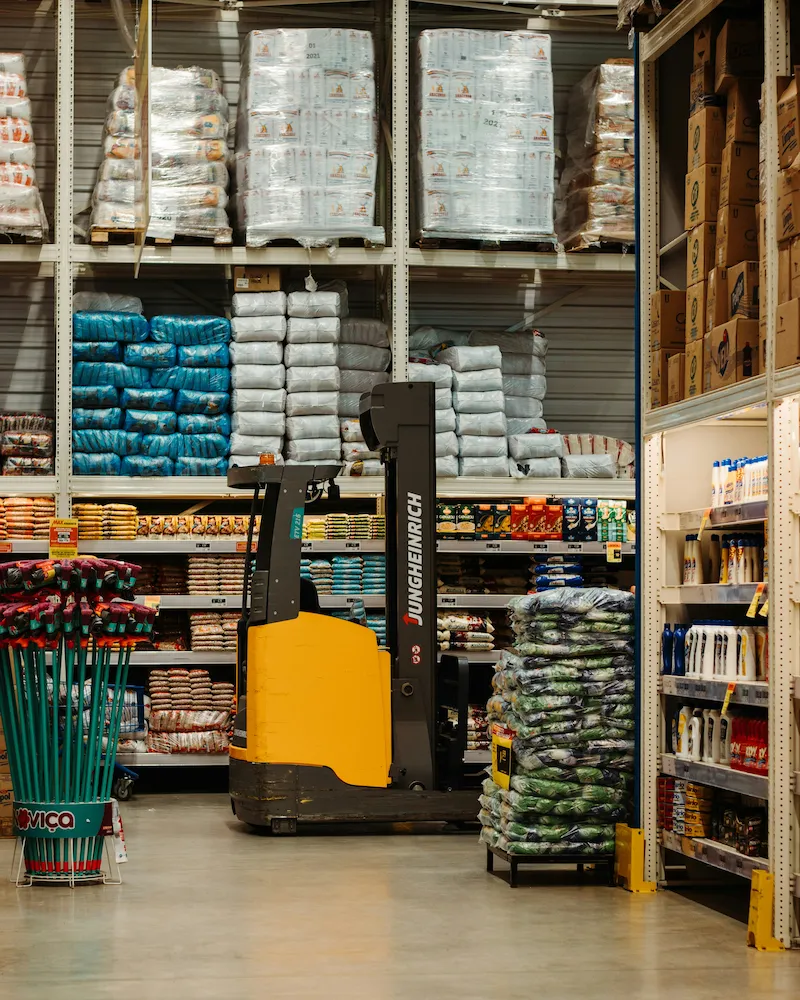
A warehouse aisle featuring a yellow forklift, stacked goods on shelves, and various products displayed on either side.

Ways we can help

Flow

Improve forecast accuracy

We implement AI-driven forecasting models and robust demand planning processes that reduce uncertainty and align supply with actual market demand.

Supplier performance

Reduce excess inventory costs

We help optimise inventory levels through better demand-supply balancing, freeing up cash while maintaining service levels.

Supply chain technology

Align teams across functions

We design S&OP and IBP frameworks that break down silos between sales, operations, and finance, enabling aligned decision-making.

Supply chain sustainability

Increase supply chain agility

We implement Advanced Planning Systems and digital tools that give organisations the capability to sense and respond to demand changes faster than ever.

Employee efficiency

Optimise MRO supply chains

We help asset-intensive industries balance spare parts availability with cost, reducing downtime through predictive maintenance planning and smarter procurement.

Core service offerings

What our planning and operations service covers:

We bring expertise across demand planning, advanced planning systems, S&OP/IBP process design, and MRO supply chain optimisation. Our work connects forecasting accuracy to operational reality, ensuring plans that work on the ground, not just on paper.

Demand Planning and Forecasting Strategy

Effective demand planning ensures the right inventory availability, production schedules, and supply chain responsiveness. We help businesses move beyond spreadsheet-driven forecasting to implement advanced, data-led approaches.

What we deliver:

  • AI-driven forecasting models to improve demand accuracy
  • Optimised forecasting techniques (statistical, causal, machine learning)
  • Improved collaboration between sales, operations, and supply chain teams
  • Integration of demand planning into broader S&OP and IBP processes
  • Reduction of bias and improved forecast reliability

Advanced Planning Systems (APS) Selection and Implementation

Many businesses struggle with manual, disconnected planning tools that limit forecasting accuracy and supply chain performance. We assist organisations in selecting and implementing APS solutions tailored to their needs.

What we deliver:

  • Selection and implementation of APS solutions aligned to business requirements
  • Integration with ERP, WMS, and TMS systems for real-time visibility
  • Automated supply chain decision-making using AI-driven planning tools
  • Demand-supply balancing through digital twin modelling
  • Ongoing optimisation and capability uplift

Sales & Operations Planning (S&OP) Transformation

An effective S&OP process bridges the gap between supply chain, finance, and commercial functions, ensuring alignment between demand, supply, and financial goals. We help businesses implement structured frameworks that drive real collaboration.

What we deliver:

  • Structured S&OP frameworks for end-to-end visibility
  • Enhanced scenario planning to respond to demand shifts faster
  • Integration with financial planning for revenue and margin optimisation
  • S&OP best practices and decision-making cadence
  • Cross-functional governance and accountability structures

Integrated Business Planning (IBP) Implementation

IBP elevates S&OP by fully integrating financial, commercial, and operational planning into a single, strategic framework. We help organisations align strategy, finance, and operations for cohesive decision-making.

What we deliver:

  • IBP framework development aligning strategy, finance, and operations
  • Implementation of digital IBP platforms for real-time scenario modelling
  • Cross-functional accountability for financial and operational goals
  • Automated data collection and reporting for faster decision-making
  • Long-term capacity and capability planning integration

MRO (Maintenance, Repair and Operations) Supply Chain Optimisation

MRO supply chains are critical for asset-intensive industries. Many organisations struggle with excessive spare parts inventory, unplanned downtime, and inefficient procurement. We help businesses optimise MRO planning and execution.

What we deliver:

  • MRO inventory management optimisation to balance availability and cost
  • AI-driven predictive maintenance planning to reduce asset downtime
  • Improved MRO procurement strategies and supplier performance
  • Integration of MRO planning with demand forecasting and IBP processes
  • Spare parts categorisation and criticality analysis

Frequently Asked Questions

Common questions about planning and operations.

Ask another question

What's the difference between demand planning, S&OP, and IBP?

Demand planning focuses on forecasting customer demand. S&OP brings together supply chain, sales, and operations to balance demand and supply. IBP extends S&OP to include financial planning and strategic alignment, creating a fully integrated planning process.

Do we need an Advanced Planning System, or can we use spreadsheets?

Spreadsheets work for simple operations, but as complexity grows, they become error-prone and time-consuming. APS solutions provide automation, scenario modelling, and real-time visibility that manual processes can't match. We help assess whether the investment is justified for your business.

What's the biggest challenge in demand planning?

The most common challenges are forecast bias (consistent over or under-forecasting), siloed decision-making, and poor data quality. Addressing these requires both better processes and better collaboration across sales, operations, and finance.

How do you measure success in planning and operations?

Success is measured through improved forecast accuracy, reduced inventory carrying costs, better service levels, and enhanced collaboration. We establish clear KPIs at the start of every engagement to track progress and demonstrate value.

Can you help implement planning technology, not just design processes?

Yes. Unlike traditional advisory firms, we support end-to-end implementation, including technology selection, configuration, integration with existing systems, and capability uplift to ensure your teams can use the tools effectively.

Insights and resources

Latest insights on planning and operations.

Planning, Forecasting, S&OP and IBP

Inventory Optimisation in Australian FMCG and Retail

Most Australian FMCG and retail businesses are carrying too much of the wrong inventory and not enough of the right inventory — often at the same time. Here's how to fix that.

Inventory Optimisation in Australian FMCG and Retail

Ask the CFO of any Australian FMCG or retail business what keeps them up at night, and inventory will be on the short list. Too much inventory and working capital is locked on the balance sheet, warehouse space is consumed, and obsolescence and markdown risk accumulate. Too little, and stockouts cost sales, damage retailer relationships, and erode the customer trust that takes years to build. The cruel irony is that most organisations are simultaneously carrying excess inventory in some categories and running short in others — often for reasons that are hiding in plain sight.

Inventory optimisation is the discipline of resolving that paradox: holding exactly the right stock, in the right locations, at the right times, to service customer demand at an acceptable cost and risk level. It is not about minimising inventory across the board. It is not about maximising service level regardless of cost. It is about finding the right balance — a balance that looks different for every SKU, every category, and every part of the supply chain.

This article explains how inventory optimisation works in the Australian FMCG and retail context — what drives excess and shortage, how to diagnose where the problem actually lives, what the improvement levers are, and how to build the planning infrastructure that makes inventory performance sustainable rather than dependent on heroic effort.

Why Inventory Is So Hard to Get Right

Inventory is the buffer between supply uncertainty and demand uncertainty. The more uncertain either side of the equation is, the more buffer is required to maintain service levels — all else equal. That basic relationship explains most of the inventory problems Australian organisations face.

End-to-end inventory in FMCG can extend to six months or more. From raw material procurement through manufacturing, warehousing, and distribution to shelf, the total inventory holding across the supply chain is significant. That inventory carries a cost — the cost of capital tied up in stock, warehousing and handling costs, insurance, spoilage and obsolescence risk, and the increasing cost of funding that inventory as interest rates remain elevated compared to the near-zero environment of the decade prior.

Australian supply chains carry structural features that amplify inventory requirements. Long distances between population centres, limited consolidation points relative to the geographic spread of the market, long inbound lead times from offshore manufacturing, and volatile domestic freight conditions all create uncertainty that needs to be buffered with stock. An Australian FMCG business sourcing product from Asia with six to ten week lead times and high sea freight variability will carry structurally more inventory than a European equivalent sourcing from a factory two days' drive away.

Promotional activity creates demand spikes that are consistently underplanned. Promotions are a defining feature of the Australian FMCG and grocery retail market — and they are one of the most significant drivers of both stockout and overstock events. Promotions that sell through faster than forecast create stockouts at the shelf and lost sales for both manufacturer and retailer. Promotions that underperform create post-promotional inventory overhang that ties up working capital and risks markdown or obsolescence.

Product proliferation has increased the complexity of inventory management without a corresponding improvement in planning capability. The number of active SKUs in most FMCG businesses has grown substantially over the past decade — through range extensions, new product launches, format variants, and channel-specific packaging. Each additional SKU adds inventory management complexity: it requires its own forecast, its own safety stock calculation, its own replenishment logic. Managing a portfolio of 500 SKUs with the same planning tools and processes designed for 200 produces predictable results.

The Anatomy of an Inventory Problem

Before reaching for improvement levers, it is essential to understand where the inventory problem actually lives. Most organisations have an imprecise diagnosis — they know they have too much inventory, or too many stockouts, or both — but they haven't traced the root causes with sufficient precision to target improvement efforts effectively.

A structured inventory diagnostic typically reveals several distinct problem types.

Excess inventory in slow-moving and obsolete stock (SLOB). In most FMCG businesses, a significant proportion of the total inventory value is held in SKUs that are selling slowly, have been superseded by newer products, or are in the tail of a promotional event that didn't perform. SLOB inventory is expensive to hold, frequently triggers markdown or disposal costs, and occupies warehouse space that could be used for faster-moving product. Addressing it requires both a tactical clear-down and the upstream process changes that prevent it from accumulating again.

Excess safety stock in fast-moving lines. Safety stock set conservatively — either because lead times are long, demand variability is high, or planners are simply risk-averse — ties up working capital unnecessarily in lines where it isn't needed. When safety stock parameters haven't been reviewed since lead times changed or demand patterns shifted, they are often either too high (excess buffer) or too low (inadequate buffer) relative to current conditions.

Systematic stockouts in specific SKUs or locations. Stockouts are rarely uniformly distributed. They cluster in specific SKUs — typically high-velocity lines with unpredictable demand, promotional items, or products with irregular supply — and in specific locations — typically the ends of the network or locations with less frequent replenishment cycles. Identifying the specific concentration of stockout events is the most efficient path to a targeted fix.

Inventory in the wrong location. Stock that is held centrally when demand is regional, or held in one state distribution centre when demand is spiking in another, creates simultaneous excess and shortage at the aggregate level. Network inventory positioning — where stock is held relative to where demand is occurring — is a distinct problem from total inventory quantum, and it requires a different intervention.

Forecast error driving safety stock inflation. Poor demand forecasting is the most common root cause of excess inventory. When forecasts are systematically inaccurate — either because the forecasting process doesn't capture promotional uplifts, seasonal patterns, or new product demand curves — the natural response is to buffer the uncertainty with more safety stock. The result is that forecast error is converted directly into inventory cost.

The Six Inventory Optimisation Levers

Improving inventory performance requires working across multiple levers simultaneously. Organisations that pull only one — typically either cutting safety stock or improving forecasting — rarely achieve sustained improvement because the root causes are interconnected.

1. Demand Forecasting Accuracy

Forecast accuracy is the foundational input to inventory optimisation. Every percentage point improvement in forecast accuracy translates directly into reduced safety stock requirements — and therefore reduced working capital — for the same service level. Conversely, poor forecast accuracy forces the supply chain to buffer uncertainty with inventory, which is expensive.

The highest-value forecasting improvements for most Australian FMCG and retail businesses are not algorithmic — they are process and data improvements. Capturing promotional plans accurately and early enough to adjust supply, incorporating retailer POS data into the demand signal rather than relying on orders, improving new product launch forecasting through structured pre-launch processes, and managing end-of-life transitions proactively to avoid post-discontinuation inventory overhang are all high-impact levers that don't require advanced technology to execute.

Advanced planning systems with machine learning capabilities can deliver further forecast accuracy improvement once the process foundations are in place — but technology applied to broken processes produces bad forecasts faster, not better ones.

2. Safety Stock Right-Sizing

Safety stock exists for a reason: to buffer demand variability and supply variability so that stockouts don't occur when forecasts are wrong or supply is delayed. The question is not whether to hold safety stock — it is how much to hold against each SKU, calibrated to the actual variability of demand and supply for that item.

Most organisations set safety stock through a combination of rules of thumb (a fixed number of days' cover for all lines, or a fixed percentage of average demand), planner judgment, and inertia. The result is safety stock that is neither risk-based nor regularly reviewed. Lines where demand has become more predictable are still carrying safety stock set when they were more volatile. Lines where lead times have extended are still carrying safety stock set when suppliers were more reliable. SKUs in fast growth are understocked while declining SKUs are overstocked.

A systematic safety stock review, conducted at the SKU level, recalibrates safety stock settings against current demand and supply variability data. It typically identifies significant working capital release opportunity in lines that are over-buffered and significant service risk in lines that are under-buffered — and the two effects partially offset each other, meaning total inventory can come down while service level goes up.

3. SKU Rationalisation

Every SKU in a product range carries inventory management overhead: a forecast, a safety stock holding, a replenishment process, warehouse space, and management attention. Low-volume, high-complexity SKUs — the long tail of the range — frequently consume a disproportionate share of that overhead relative to the revenue and margin they contribute.

SKU rationalisation — the deliberate reduction of range complexity by delisting slow-moving and low-contribution products — reduces inventory, simplifies planning, and often improves service on the retained range by concentrating demand onto fewer, better-managed lines. It is a procurement and commercial decision as much as a supply chain decision, and it requires structured analysis of the full contribution picture (revenue, margin, customer retention, channel requirements) before decisions are made.

For FMCG manufacturers selling through major retailers, SKU rationalisation decisions also involve retailer relationships and ranging agreements — which adds a layer of commercial complexity that needs to be managed carefully.

4. Network Inventory Positioning

Where inventory is held across the supply chain network has as much impact on working capital and service as how much inventory is held. Centralising inventory reduces total system stock requirements — because pooling demand across more locations reduces the variability each location needs to buffer — but increases replenishment frequency and transport cost for regional destinations. Decentralising inventory improves proximity to end demand but multiplies safety stock requirements and creates higher risk of stranded stock if demand patterns shift.

The optimal network positioning depends on the demand profile, lead times, transport costs, and service level requirements for each category. For FMCG businesses operating through a multi-echelon distribution network — national distribution centre to state DCs to stores — the inventory positioning decision at each echelon has significant working capital implications that are often not fully quantified.

Postponement strategies — holding inventory in unfinished or semi-finished form as long as possible before committing to specific SKUs or pack formats — can significantly reduce total inventory requirements in categories with high SKU proliferation and unpredictable mix demand.

5. Supplier Lead Time and Reliability Improvement

Lead time and lead time variability are direct inputs to safety stock calculations. Shorter, more reliable lead times require less safety stock for the same service level. Every week of lead time reduction translates into working capital release — and every reduction in lead time variability reduces the buffer required to cover worst-case replenishment scenarios.

For Australian businesses sourcing from offshore manufacturers with long and variable sea freight lead times, this lever is partially constrained by geography. But it is worth distinguishing the non-negotiable geographic component of lead time from the manageable operational components: supplier production lead times, order preparation and customs clearance times, freight booking and consolidation practices, and port congestion management. Each of these components is addressable, and together they can materially reduce total lead time and variability.

For domestic suppliers, lead time improvement is more directly achievable through supplier partnership programmes, consignment and VMI arrangements, and collaborative supply planning that gives suppliers better forward visibility of demand.

6. S&OP Process Integration

Inventory optimisation cannot be sustained without a planning process that integrates demand signals, supply constraints, inventory targets, and commercial decisions into a coherent weekly and monthly cadence. S&OP — Sales and Operations Planning — is that process. When it works well, it connects the commercial team's promotional and ranging plans to supply chain's inventory and replenishment decisions in time to avoid both excess and shortage. When it doesn't work — when S&OP is a reporting exercise rather than a decision-making process, or when commercial teams don't engage with supply consequences — inventory problems recur regardless of how much effort is invested in fixing them.

The most common S&OP failure mode relevant to inventory is the disconnect between commercial promotion planning and supply chain replenishment. When promotions are confirmed late, communicated to supply chain in insufficient detail, or changed after orders have been placed, supply chain cannot respond in time and inventory failure — either stockout or overstock — is the inevitable result. Fixing this requires process discipline and cross-functional accountability, not technology.

The Working Capital Equation

Inventory optimisation is fundamentally a working capital management discipline, and it needs to be framed that way when building the business case for investment.

The working capital locked in inventory is calculated simply: average inventory value on the balance sheet. Reducing that by 10–20% through the levers described above — which is achievable for most Australian FMCG and retail businesses that haven't previously undertaken a structured optimisation programme — releases cash directly. That cash can reduce debt and interest cost, fund growth investment, or improve return on assets.

The financial case is not just the inventory value released. It includes the ongoing carrying cost reduction — the cost of capital applied to the inventory balance, warehousing and handling costs, insurance, and shrinkage — which recurs annually. For a business carrying $50M in inventory at a 10% cost of capital and typical carrying cost rates, a 15% inventory reduction is worth $750K in working capital release and $750K+ in annual carrying cost reduction.

The service level improvement case is equally important. Stockouts have a direct P&L impact — lost sales, promotional redemption shortfalls, retailer chargebacks — and a longer-term relationship cost that is harder to quantify but real. Presenting inventory optimisation as a programme that simultaneously releases working capital and improves service levels, rather than trading one against the other, is the commercial framing that lands with CFOs and CEOs.

What Sustainable Inventory Performance Requires

The fundamental mistake in most inventory improvement programmes is treating inventory as a problem to be solved once rather than a performance dimension to be managed continuously. Inventory balances change every day. Demand patterns evolve. New products launch and old ones die. Supplier performance varies. Seasonal patterns recur. An inventory position that was right six months ago may be wrong today.

Sustainable inventory performance requires: the right planning parameters (safety stock settings, reorder points, order quantities) reviewed and updated regularly, not set and forgotten; the planning capability — people, process, and systems — to translate current demand signals into accurate replenishment decisions; a governance cadence that reviews inventory performance regularly and acts on exceptions; and cross-functional alignment that prevents commercial decisions from blindsiding supply chain.

For many Australian FMCG and retail businesses, the biggest gap is not the inventory optimisation methodology — it is the planning capability required to execute it consistently. Investing in that capability, through both people development and planning systems, is what separates organisations that achieve lasting improvement from those that run a project, see a temporary improvement, and then watch inventory creep back up.

How Trace Consultants Can Help

At Trace Consultants, we help Australian FMCG and retail businesses diagnose and systematically improve inventory performance — reducing working capital, improving service levels, and building the planning capability that sustains the improvement.

Inventory diagnostic and opportunity quantification. We conduct structured inventory diagnostics that identify where excess and shortage are concentrated, quantify the working capital and service opportunity, and prioritise improvement initiatives by impact and feasibility. The output is a clear, actionable improvement roadmap with a financial case attached.

Safety stock and parameter review. We review safety stock settings, reorder points, and replenishment parameters at the SKU level, recalibrating them against current demand and supply variability data. For businesses that haven't reviewed their planning parameters systematically, this exercise typically identifies significant working capital release opportunity.

Planning & Operations process design. We design and implement the S&OP and demand planning processes that keep inventory performance on track — including cross-functional governance, promotional planning integration, and new product and end-of-life management.

Network inventory positioning. We assess inventory positioning across distribution networks and identify rebalancing opportunities — where centralisation, decentralisation, or postponement strategies can reduce total system inventory while maintaining or improving service.

SKU rationalisation. We support structured SKU rationalisation analysis — building the commercial and supply chain case for range simplification decisions and managing the transition to avoid service disruption during delisting.

Technology selection and APS support. For organisations where planning system capability is a constraint, we support advanced planning system selection and implementation — independently, without vendor alignment — ensuring the technology investment is matched to the actual planning process requirements.

We work across FMCG and manufacturing, retail, health and aged care, and property and hospitality. The inventory optimisation challenge presents differently across these sectors — the disciplines that solve it are consistent.

Explore our Planning & Operations capability →

Speak to an expert at Trace →

The Right Starting Point

For most Australian FMCG and retail businesses, the right starting point for inventory optimisation is a structured diagnostic — not a technology purchase, not a headcount reduction in the planning team, and not a blanket instruction to cut stock by 20%.

A diagnostic takes four to eight weeks, produces a quantified picture of where the inventory problem lives and what is causing it, and generates a prioritised action plan. It typically reveals more opportunity than expected — and it provides the evidence base to build a business case that gets executive commitment to the investment required for sustained improvement.

If your balance sheet is carrying more inventory than it should, if stockouts are costing you sales you can ill afford to lose, or if your planning team is working harder than ever without improving the numbers — a diagnostic is where to start.

Explore our Planning & Operations capability →

Speak to an expert at Trace →

Planning, Forecasting, S&OP and IBP

Supply Chain Visibility: From Blind Spots to Real-Time

David Carroll
David Carroll
March 2026
The gap between what supply chain teams think is happening and what is actually happening is almost always larger than they realise. Visibility closes that gap. Here's how to build it.

Most supply chain teams are operating with significant blind spots. They know what was in the warehouse last night — if the WMS count ran correctly. They know what purchase orders were issued — if the ERP is up to date. They know what was shipped — if the carrier confirmed the booking.

What they typically don't know: where that shipment is right now, what the supplier's actual production status is, whether inventory is positioned correctly relative to where demand is actually coming from, and which of the dozens of things that could go wrong today are already going wrong.

The gap between the supply chain on paper and the supply chain in reality is what supply chain visibility addresses. This article explains what visibility means in practice, what it takes to build it, and what Australian businesses are typically leaving on the table by not having it.

What Supply Chain Visibility Actually Means

Supply chain visibility is the ability to access accurate, timely data about what is happening across the supply chain — from supplier to end customer — in a way that supports better decisions.

The definition has three components that are each important.

Accurate. Visibility built on inaccurate data is worse than no visibility, because it creates false confidence. A warehouse inventory count that is 15% inaccurate, a shipment tracking system that doesn't update in real time, a demand plan based on stale sales data — these are not visibility. They are noise dressed up as information.

Timely. The value of supply chain data decays rapidly. Knowing that a shipment is delayed is valuable if you find out 72 hours in advance, giving you time to expedite an alternative or communicate proactively to customers. Knowing it 72 hours after it was due to arrive — when the customer is already calling — has no operational value and has directly caused a service failure.

Decision-supporting. Visibility is not valuable in its own right. It is valuable because it enables better decisions — about inventory positioning, supplier expediting, logistics rerouting, customer communication. Visibility that is technically present but not connected to decision-making processes generates reports that nobody acts on.

The Visibility Maturity Spectrum

Supply chain visibility capability exists on a maturity spectrum. Most Australian businesses sit somewhere in the middle — with basic transactional visibility but significant gaps in operational and predictive insight.

Level 1 — Transactional visibility. The organisation can see completed transactions — purchase orders issued, goods receipted, invoices processed, orders shipped. This is the baseline capability of any functioning ERP. It tells you what happened, after the fact.

Level 2 — Status visibility. The organisation can see the current status of in-flight transactions — where a shipment is in transit, what a supplier's order acknowledgement status is, what the current inventory level is across all locations. This requires real-time or near-real-time data feeds from carriers, suppliers, and warehouse systems.

Level 3 — Exception visibility. The organisation has automated exception detection — systems that identify deviations from plan (a shipment that is late, a supplier that hasn't confirmed, an inventory level below threshold) and surface them as alerts to the relevant operators. This moves from passive visibility to active exception management.

Level 4 — Predictive visibility. The organisation can see what is likely to happen — a demand forecast that is more accurate because it incorporates current signals, a supply risk assessment that identifies which suppliers are at risk of failure, an inventory projection that shows where stockouts are likely to occur and when. This requires analytical capability on top of data infrastructure.

Level 5 — Network-wide visibility. The organisation has visibility not just into its own operations but into the extended supply chain — supplier capacity and lead times, carrier capacity and route reliability, second-tier supplier risks. This is the frontier of supply chain visibility capability and is only now becoming practically achievable as supplier collaboration platforms, IoT sensors, and carrier APIs mature.

The Common Blind Spots

For most Australian mid-market businesses, the most significant visibility gaps fall into four categories.

Inbound supply chain. What is happening between the point of purchase order issue and goods receipt? For businesses sourcing from offshore, this is a window of 4–12 weeks during which a significant amount can go wrong — production delays, quality failures, freight disruptions, port congestion — and which most businesses monitor only through periodic email updates from suppliers and freight forwarders. The gap between a purchase order being issued and the goods arriving is the largest visibility blind spot in most supply chains.

Inventory accuracy. The inventory figure in the ERP is the count the system believes is there. The actual count in the warehouse may differ — due to receiving errors, picking errors, shrinkage, or system update delays. For businesses where the inventory figure drives procurement, fulfilment, and financial decisions, the cost of inventory inaccuracy — in the form of unnecessary purchases, stockouts that shouldn't happen, and write-offs that surprise the finance team — is material.

Last-mile delivery. What happens after the goods leave the distribution centre? For e-commerce businesses and businesses with direct delivery to customers, last-mile visibility — knowing where the delivery vehicle is, whether the delivery has been attempted, what the customer's experience has been — is a competitive and operational necessity. Yet it remains surprisingly inconsistent in Australian logistics.

Supplier performance. Most organisations track what suppliers deliver — DIFOT, quality rates — but not why. Understanding root cause at the supplier level — which suppliers are consistently late and why, which products generate the most quality failures — requires visibility into supplier operations that most businesses don't have.

Building Visibility: Where to Start

Effective supply chain visibility is built incrementally. The starting point that delivers the most practical value for most Australian businesses is inbound visibility — knowing where purchase orders are in the supply pipeline with reliable, current status data.

This typically requires three things: a supplier collaboration portal or EDI connection that allows suppliers to confirm order status, provide advance ship notifications, and flag issues proactively; a freight visibility tool that integrates carrier tracking data into a single view; and a process for acting on exceptions — who gets alerted when a shipment is late, what the escalation process is, and how the response is tracked.

The return on investment from this foundation is fast — because the cost of reactive firefighting that currently happens when inbound supply failures are discovered late is material and immediately reducible.

From this foundation, the maturity journey extends to inventory accuracy improvement (physical count discipline, cycle counting, system discipline), outbound delivery visibility (carrier API integration, customer notification automation), and eventually to predictive capabilities built on the clean, integrated data that the foundation establishes.

Technology Options

The technology landscape for supply chain visibility has matured significantly in the last five years.

For inbound visibility, supplier collaboration platforms (e2open, Elementum, Coupa Supply Chain) and freight visibility platforms (project44, FourKites, Visibility Hub for the Australian market) provide near-real-time status across ocean, air, and road shipments.

For inventory visibility, the combination of a well-configured WMS, disciplined cycle counting, and integration between the WMS and ERP provides the foundation. RFID and IoT-based inventory tracking are increasingly cost-effective for high-value or time-sensitive inventory.

For network-wide visibility, supply chain control tower platforms (SAP IBP, Oracle SCM Cloud, Kinaxis, o9) aggregate data from multiple sources into a single operational view. These are the most complex and expensive implementations — appropriate for large, complex supply chains, less justified for simpler operating environments.

The right technology choice depends on the organisation's scale, supply chain complexity, and existing technology infrastructure. A fit-for-purpose visibility solution for an Australian business with $100–500 million in supply chain spend is significantly different from the enterprise platform appropriate for a $5 billion retailer.

How Trace Consultants Can Help

Trace Consultants helps Australian organisations design and build supply chain visibility capability — from diagnostics through to technology selection and implementation support.

Visibility diagnostics: We map current visibility gaps, quantify their operational and financial impact, and prioritise the investments that will deliver the fastest return.

Technology selection: We help organisations select the right visibility tools for their scale and complexity — without over-engineering for complexity that isn't there, or under-investing in foundations that limit future capability.

Process design: Technology alone doesn't create visibility. We design the operating processes — exception management, escalation protocols, performance review cadences — that turn data into decisions.

Explore our Technology services →Explore our Resilience & Risk Management services →Speak to an expert at Trace →

Planning, Forecasting, S&OP and IBP

What Is S&OP and Why Does It Fail?

Mathew Tolley
Mathew Tolley
March 2026
S&OP is one of the most widely adopted planning frameworks in Australian business — and one of the most consistently underdelivered. Here's the honest diagnosis.

What Is S&OP — and Why Do Most Australian Businesses Get It Wrong?

Ask most supply chain or operations leaders in Australia whether their organisation has a Sales and Operations Planning process, and the answer is almost always yes. Ask whether it's actually working — whether it genuinely aligns demand and supply, drives better decisions, and connects operational planning to financial outcomes — and the answer becomes considerably less confident.

S&OP is one of the most widely adopted planning frameworks in Australian business. It is also one of the most consistently underdelivered. Organisations invest in the process, the meetings, sometimes the technology — and then find themselves asking why nothing much has changed. Forecasts are still wrong. Inventory is still too high in the wrong places and too low in the right ones. The executive team still makes decisions in isolation. The monthly cycle still feels like a reporting exercise rather than a planning one.

This article explains what S&OP actually is, what it's supposed to do, why most implementations fall short, and what a high-functioning process looks like in practice. If you're running an S&OP process that isn't delivering, or you're about to implement one, this is the honest guide you need.

What S&OP Actually Is — and What It Isn't

Sales and Operations Planning is a cross-functional business management process that aligns demand and supply across an organisation — and connects that alignment to the financial plan. Done well, it gives leadership a single, integrated view of the business across a rolling planning horizon, and a structured forum for making decisions that balance customer service, inventory, capacity, and cost.

The process typically runs on a monthly cycle, with a planning horizon of 12–18 months, and involves a defined sequence of steps: demand review, supply review, financial reconciliation, and an executive decision-making meeting. Each step builds on the last. The demand review produces an updated, consensus forecast. The supply review tests that forecast against capacity, supply lead times, and inventory positions. The financial reconciliation identifies the gap between the operational plan and the financial plan. The executive meeting is where the key decisions get made — trade-offs between service and cost, investment calls, risk responses.

Integrated Business Planning (IBP) is the more mature evolution of S&OP. It extends the process to a longer planning horizon (typically 24–36 months), integrates strategic planning and financial planning more explicitly, and involves a broader set of executive stakeholders. For the purposes of this article, S&OP and IBP refer to the same fundamental process — the distinction is largely one of maturity and scope.

What S&OP is not is a reporting meeting. It's not a forum for reviewing last month's performance. It's not something the supply chain team does while sales and finance observe. And it's not a technology solution — software supports S&OP, but no system can substitute for the process discipline and organisational commitment that makes it work.

Why S&OP Matters More Than Ever for Australian Businesses

The case for S&OP has never been stronger — or more urgent — for Australian businesses. The operating environment of the last several years has been one of sustained disruption: pandemic-related supply shocks, cost inflation across logistics and raw materials, geopolitical volatility affecting sourcing and trade, and customer expectations that haven't softened despite all of it.

In this environment, the cost of poor planning is significant. Excess inventory ties up working capital and generates write-off risk. Stockouts cost sales, damage customer relationships, and in some sectors — health, defence, food service — have consequences that go beyond the commercial. Unplanned production changes are expensive. Emergency freight is expensive. Poor forecast accuracy makes supplier relationships harder to manage and more costly to maintain.

McKinsey research comparing mature IBP practitioners with organisations that lack well-functioning planning processes consistently shows meaningful advantages for the former across forecast accuracy, inventory efficiency, service levels, and cost performance. The gap between organisations that plan well and those that don't is widening — particularly as supply chains become more complex and planning horizons more uncertain.

For Australian businesses specifically, the planning challenge has particular characteristics. Long import lead times — especially for businesses sourcing from Asia — mean that decisions made today have consequences three to six months out. Seasonal demand patterns, geographic spread across a large continent, and concentrated retail customer bases that exert significant forecasting pressure all add complexity. A well-functioning S&OP process isn't a luxury in this environment. It's an operational necessity.

The Six Reasons Australian S&OP Processes Fail

Understanding why S&OP fails is more useful than describing why it should succeed. The failure modes are remarkably consistent across industries and organisation sizes.

1. It Becomes a Reporting Meeting, Not a Decision-Making Meeting

The most common failure of all. The monthly S&OP cycle gets established, the meetings happen, the slides get presented — and nothing actually gets decided. The demand review is a retrospective on last month's actuals. The supply review is a status update on known issues. The executive meeting is a forum for information sharing, not trade-off resolution.

When S&OP becomes a reporting cycle, it consumes significant organisational time and produces minimal value. People stop attending seriously. The process drifts toward irrelevance, or it survives only as an administrative obligation that everyone quietly resents.

Real S&OP meetings produce decisions. They answer questions like: given this demand outlook, do we build inventory now or accept a service risk later? Do we invest in additional capacity or manage the constraint through customer allocation? Do we accept this margin outcome or reprice? If your S&OP meetings aren't generating decisions of this type, they're not working.

2. Sales Doesn't Engage

This is the second most consistent failure mode — and one of the most damaging. S&OP is a cross-functional process. It only works if the demand side of the organisation brings its genuine best view of the future to the table. When sales teams treat the demand review as someone else's problem — sending a planner to represent them, submitting last month's forecast unchanged, or simply not showing up — the process is operating on half the information it needs.

Sales disengagement usually happens for one of two reasons. Either the process hasn't been designed in a way that creates value for sales — it feels like a burden, not a tool — or there's no accountability for forecast quality, so there's no incentive to invest in it. Fixing this requires both: a process that sales leaders find genuinely useful, and clear ownership and accountability for the demand input.

3. The Numbers Don't Reconcile to the Financial Plan

Many S&OP processes operate in a parallel universe to the financial plan. The operations team runs an unconstrained demand plan. The finance team runs a budget. The two are never explicitly reconciled, and no one is accountable for closing the gap.

The result is that S&OP produces a plan that the organisation operationally follows but that has no connection to what the business committed to financially. When the gap between the operational plan and the financial plan is large — and it often is — leadership loses confidence in both. S&OP becomes a supply chain exercise rather than a business management tool.

Effective S&OP explicitly bridges the operational and financial plans. The financial reconciliation step isn't optional — it's where the process connects to the P&L, the balance sheet, and the cash flow forecast. When that connection is made, S&OP becomes something the CFO and CEO genuinely care about — not just the supply chain team.

4. The Planning Horizon Is Too Short

Most Australian S&OP processes operate with an effective planning horizon of one to three months — regardless of what the nominal horizon is supposed to be. Decisions are being made to solve this month's problem. The 12-month horizon exists on the slide template but isn't meaningfully used.

The problem is that many supply chain decisions — production scheduling, procurement of long lead time materials, capacity investment, promotional planning — require a meaningful forward view to be made well. If you're only planning three months ahead, you're always reacting. You're booking emergency freight, making unplanned production changes, and managing inventory crises that were predictable four months ago.

Extending the effective planning horizon requires better forecast quality at longer horizons, which requires better process discipline around how the forecast is built and reviewed — not just better statistical models.

5. It's Run by Supply Chain, Not the Business

S&OP is often implemented and owned by the supply chain or planning function, and never successfully transitions to being a genuine business management process. The meetings are facilitated by the planning team, attended primarily by operations and supply chain, and escalated to the executive only when there's a crisis.

When this happens, S&OP produces a very good supply plan. What it doesn't produce is business alignment. The strategic context from the executive team doesn't flow down into the operational plan. The operational constraints and trade-offs don't flow up into executive decision-making. The two worlds remain disconnected.

High-functioning S&OP is sponsored and actively participated in by the CEO or COO. The executive meeting is the most important meeting in the S&OP cycle — not an afterthought appended to the operational reviews.

6. The Data Can't Be Trusted

It's almost impossible to run a useful S&OP process on bad data. If the demand plan is built in a spreadsheet that takes two days to compile and is out of date by the time it's presented, decision-makers can't trust it. If inventory positions aren't accurate, supply planning is guesswork. If the financial reconciliation requires a week of manual effort, it happens too late to influence the decisions it should be informing.

Data quality and process infrastructure are genuine prerequisites for S&OP maturity. Not necessarily sophisticated technology — many organisations run effective S&OP on relatively simple tools — but data that is accurate, timely, and accessible to the people who need it.

What a High-Functioning S&OP Process Looks Like

The good news is that the solution to these failure modes is well understood. Organisations that run effective S&OP share several characteristics.

A clearly defined purpose. Everyone involved understands what the process is for — making decisions that align demand and supply and connect operational planning to financial outcomes — and what it isn't for. The meeting design reflects this purpose.

Active cross-functional ownership. Sales, marketing, operations, supply chain, and finance all have defined roles and genuine ownership. There is no passenger seat in a well-run S&OP process.

A rolling financial bridge. Every cycle, the operational plan is explicitly reconciled to the financial plan. Gaps are identified, quantified, and escalated for decision. This is what makes S&OP a business management tool rather than a supply chain exercise.

Decisions, not presentations. The meeting design is built around the decisions that need to be made, not the information that needs to be shared. Information is shared in advance, in writing. The meeting is for discussion and decision.

A meaningful forward horizon. The process genuinely operates across a 12–18 month horizon. Near-term execution decisions are kept separate from medium-term planning decisions. Both get the attention they need — without the urgent overwhelming the important.

Continuous improvement. High-functioning S&OP processes measure their own performance — forecast accuracy, schedule adherence, inventory against plan, financial versus operational plan variance — and use those metrics to improve. They don't just run the cycle. They get better at it.

S&OP Maturity: Where Does Your Organisation Sit?

S&OP maturity develops in stages. Most Australian organisations are sitting somewhere in the middle — they have a process, it runs regularly, but it isn't delivering the full value it could.

A useful way to assess maturity is to ask a few direct questions:

  • Does your S&OP process produce a consensus demand forecast that sales genuinely owns and defends?
  • Is there an explicit financial reconciliation every cycle?
  • Does your CEO or COO actively participate in the executive meeting?
  • Can you make a meaningful planning decision using the 12-month horizon, or do you only really trust the next 30–60 days?
  • Do the decisions made in S&OP meetings get tracked and executed?

If the honest answer to most of these is no, there's a meaningful maturity gap — and a meaningful value opportunity.

How Trace Consultants Can Help

At Trace Consultants, we help Australian businesses design, implement, and improve S&OP and IBP processes that actually work — not just on paper, but in the room, every month, producing decisions that improve business performance.

S&OP diagnostic and maturity assessment. We assess your current process against best practice across process design, cross-functional engagement, financial integration, data infrastructure, and meeting effectiveness. We identify the specific gaps that are limiting your S&OP value and prioritise them by impact.

Process design and redesign. We design S&OP processes from the ground up for organisations implementing for the first time, and redesign existing processes that have drifted into reporting cycles. We work with your leadership team to define purpose, roles, accountabilities, meeting design, and the financial bridge — before we run a single meeting.

Planning & Operations implementation support. We embed with your team through the first several cycles of a new or redesigned process — facilitating meetings, coaching participants, troubleshooting issues in real time, and building the organisational muscle that makes S&OP sustainable.

Demand planning capability. Weak S&OP almost always starts with weak demand planning. We help organisations build statistical forecasting foundations, consensus demand review processes, and sales accountability frameworks that produce a demand plan worth planning against.

Technology enablement. We help organisations assess whether their current planning tools are fit for purpose, and support the selection and implementation of planning technology where it's needed — including Advanced Planning Systems (APS) that unlock the data quality and scenario planning capability S&OP needs to reach full maturity.

We work across retail and FMCG, manufacturing, health and aged care, government, and hospitality. The S&OP challenges are consistent across sectors. The context and constraints differ, and that's where experience matters.

Explore our Planning & Operations services →

Speak to an expert at Trace →

Getting Started: The Honest First Step

The starting point for any S&OP improvement program is an honest assessment of where you are. Not where you aspire to be, and not where the process documentation says you should be — where you actually are.

That means sitting in the meetings as they currently run, reviewing the outputs they produce, talking to the participants about what they find useful and what they don't, and testing the data quality that underpins the process. Most of the time, that diagnostic produces a clear picture within a few weeks — and a prioritised list of changes that would move the needle quickly.

The organisations that improve S&OP fastest are those that start with process before technology, secure genuine executive sponsorship before running the first meeting, and are willing to be honest that the current process isn't delivering — rather than defending it because it's been in place for years.

If your S&OP process is running but not working, the gap between what you have and what you could have is probably smaller than you think — and the return on closing it is larger.

The Bottom Line

S&OP done well is one of the highest-leverage management investments an Australian business can make. It improves forecast accuracy, reduces inventory cost, lifts service levels, and connects operational planning to financial outcomes in a way that makes the whole business run better.

Most organisations have the process in name. The opportunity is in building it in practice — with the right design, the right cross-functional commitment, and the right leadership to make it a genuine business management tool rather than a monthly supply chain meeting.

Explore our Planning & Operations services →

Speak to an expert at Trace →

Start a conversation

Build planning capabilities that drive performance.

We help organisations implement S&OP and demand planning frameworks that reduce uncertainty, align cross-functional teams, and turn forecasts into reliable operational plans.

Get in touch to strengthen your supply chain operations planning and build capabilities that perform under pressure.

Three men in suits standing in front of the Sydney Harbour Bridge