For most Australian organisations, Scope 3 emissions represent over 80% of their total carbon footprint. The new mandatory reporting regime makes this a procurement and supply chain problem, not just an ESG one.
Scope 3 Emissions: Why This Is Now a Supply Chain and Procurement Problem for Australian Businesses
For most of the past decade, Scope 3 emissions have sat in the sustainability team's domain. They appeared in voluntary disclosures, were estimated using spend-based proxies, and were treated as a reporting exercise rather than an operational priority. Procurement teams were occasionally asked to include sustainability questions in tender documents. Supply chain leaders were sometimes consulted on transport emissions. But the overwhelming majority of Scope 3 activity was managed at arm's length from the functions that actually control the supply chain decisions driving those emissions.
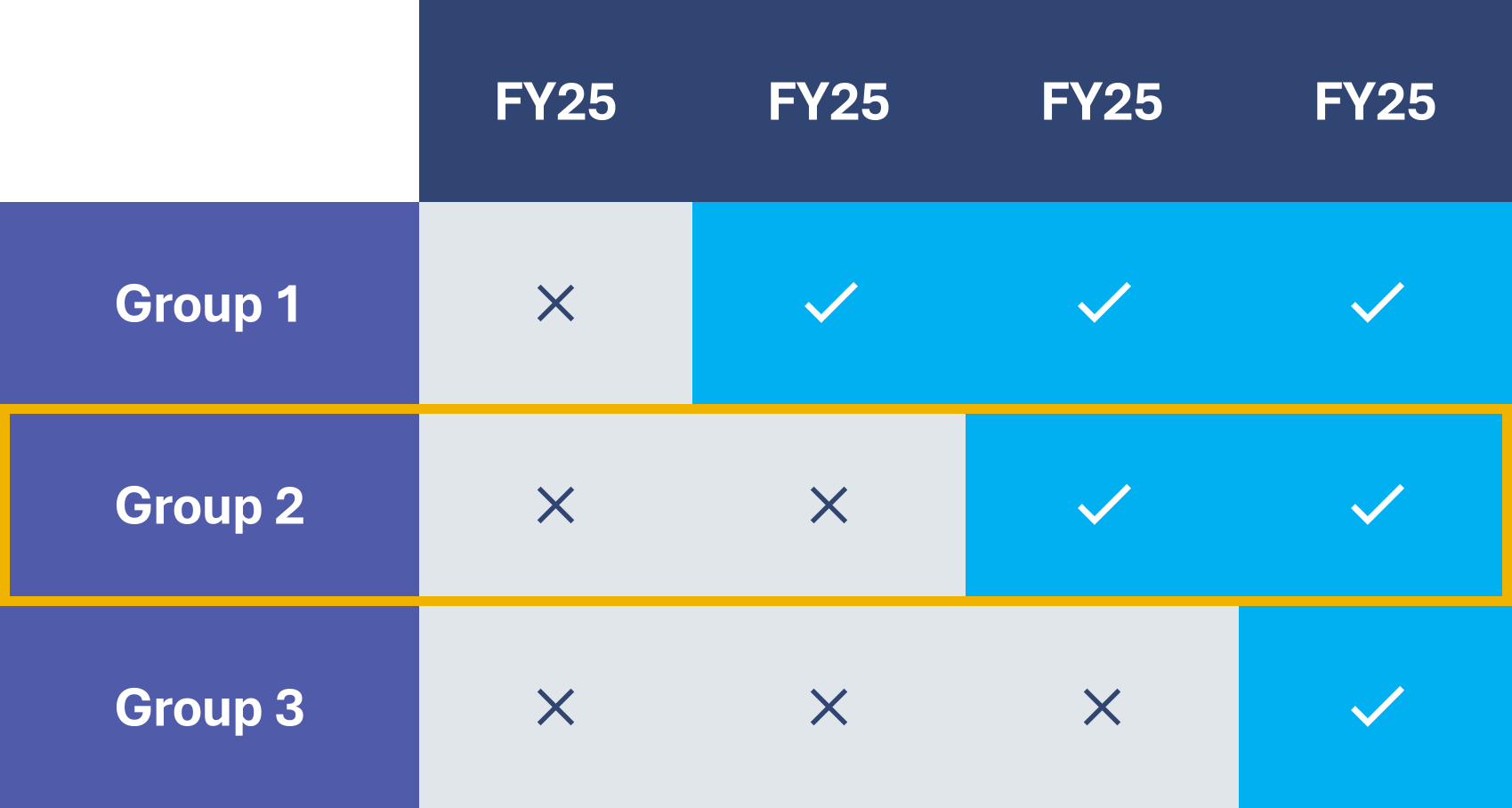
That is changing, and it is changing fast. Australia's mandatory climate reporting regime, introduced under the Treasury Laws Amendment (Financial Market Infrastructure and Other Measures) Bill 2024 and governed by AASB S2, is phasing in requirements that make Scope 3 emissions disclosure a legal obligation for thousands of Australian businesses. Group 1 entities, those with over $500 million in revenue or $1 billion in assets, began reporting Scope 1 and 2 emissions from January 2025, with Scope 3 mandatory from their second reporting year. Group 2 entities follow from July 2026. Group 3 entities from July 2027. Within two years, virtually every large and mid-sized business in Australia will be required to measure, report, and subject to assurance their value chain emissions.
This is not a sustainability challenge that can be solved by the sustainability team alone. Scope 3 emissions, by definition, are generated across the supply chain. They sit in purchased goods and services, upstream and downstream transportation, waste generated in operations, business travel, use of sold products, and end-of-life treatment. For most organisations, Scope 3 represents somewhere between 70% and 90% of total greenhouse gas emissions. The decisions that drive those emissions are procurement decisions, logistics decisions, product design decisions, and supplier management decisions. Which means this is now, unavoidably, a supply chain and procurement problem.
What Scope 3 Actually Covers
The Greenhouse Gas Protocol defines 15 categories of Scope 3 emissions, split between upstream (supply side) and downstream (customer and end-of-life side). Not all categories are material for every organisation, and the reporting standards do not require equal depth of measurement across all 15. But understanding the categories is essential for determining where to focus.
On the upstream side, purchased goods and services is almost always the largest category. This covers the cradle-to-gate emissions embedded in everything an organisation buys, from raw materials and components to professional services and office supplies. For a retailer, this is the emissions profile of every product on the shelf. For a manufacturer, it includes every input material. For a services business, it includes everything from IT hardware to cleaning contracts. Capital goods, fuel and energy-related activities not included in Scope 1 or 2, upstream transportation and distribution, waste generated in operations, and business travel round out the upstream categories.
On the downstream side, the material categories depend heavily on the business model. For a manufacturer, use of sold products and end-of-life treatment of sold products can be enormous. For a property company, downstream leased assets may dominate. For a franchisor, franchisee emissions are the key category.
The practical implication is clear. Any organisation that wants to measure, let alone reduce, its Scope 3 emissions needs to engage deeply with its supply chain. There is no shortcut that avoids this. Spend-based estimates using industry-average emission factors will satisfy minimum reporting requirements in the short term, but they do not provide the granularity needed to identify reduction opportunities, set credible targets, or demonstrate progress over time.
Why This Hits Procurement First
Procurement is the function that selects suppliers, negotiates contracts, defines specifications, and manages the commercial relationships across the supply base. If Scope 3 emissions are driven by what an organisation buys, from whom, at what specification, and through what supply chain, then procurement is the primary lever for influencing those emissions.
This creates several practical requirements that most procurement functions have not yet absorbed.
Supplier emissions data collection becomes a procurement obligation. To report Scope 3 with any accuracy beyond spend-based estimates, organisations need primary emissions data from their suppliers. This means building data collection into supplier onboarding, contract requirements, and performance management. It means defining what data is needed, in what format, at what frequency, and with what level of verification. For many suppliers, particularly smaller businesses, this is new territory, and the requesting organisation may need to provide support, tools, or at minimum clear guidance on what is expected.
Evaluation criteria need to incorporate emissions. As Scope 3 reporting matures and assurance requirements tighten, the emissions profile of a supplier's product or service will need to be a genuine factor in procurement decisions, not just a line item in a sustainability questionnaire that nobody reads after the tender is awarded. This does not mean that emissions will or should override price, quality, or delivery in every procurement. It means that emissions need to be visible, measured, and considered as part of the total cost and total value assessment.
Category strategies need a carbon lens. The categories where an organisation's Scope 3 emissions are concentrated should be reflected in category management priorities. If 40% of your Scope 3 footprint sits in one or two procurement categories, those categories need dedicated attention, with targets, supplier engagement plans, and alternative sourcing strategies that address the emissions profile alongside cost, quality, and supply risk.
Contract terms need to evolve. Contracts with key suppliers will increasingly need to include emissions reporting obligations, performance expectations, and potentially reduction trajectories. This is not about imposing punitive requirements on small suppliers. It is about embedding emissions accountability into the commercial framework in the same way that quality, safety, and delivery performance are already embedded.
Why This Hits Supply Chain Operations Second
Beyond procurement, supply chain operations drive Scope 3 emissions through logistics, warehousing, waste, and the physical movement of goods through the value chain.
Transport and distribution emissions sit across both upstream (inbound logistics managed by suppliers) and downstream (outbound logistics to customers). The mode of transport, the distance travelled, vehicle utilisation, fuel type, and network design all influence the emissions profile. For organisations with significant freight activity, transport is one of the most actionable Scope 3 categories because the levers are relatively well understood: modal shift from road to rail or sea, route optimisation, fleet electrification or transition to lower-emission fuels, load consolidation, and network redesign to reduce total kilometres travelled.
Waste generated in operations is another category where supply chain decisions directly influence emissions. Packaging design, material selection, waste segregation infrastructure, and the availability of circular or recycling pathways all determine whether waste generates landfill methane or is diverted to lower-emission recovery processes. For organisations with significant packaging, construction waste, or food waste streams, this category can represent a material portion of Scope 3.
Warehousing and distribution centre operations contribute through energy consumption (which may fall under Scope 2 if the organisation operates its own facilities, or Scope 3 if outsourced to a 3PL). The energy efficiency of the facility, the source of electricity, refrigeration requirements, and material handling equipment all influence the emissions profile.
The Data Challenge
The single biggest barrier to meaningful Scope 3 management is data. Most organisations do not have supplier-level emissions data for the majority of their supply base. They rely on spend-based estimates, which apply a generic emissions factor per dollar of procurement spend in a given category. This approach produces a directional estimate of Scope 3 magnitude but is almost useless for identifying specific reduction opportunities, comparing suppliers, or tracking progress over time.
Moving from spend-based estimates to activity-based or supplier-specific data is a multi-year journey. It requires investment in data collection systems, supplier engagement, internal capability, and a realistic assessment of where to start.
The practical approach is to prioritise. Identify the procurement categories and suppliers that represent the largest portion of your Scope 3 footprint, typically the top 20 to 30 suppliers will account for 60% to 80% of supply chain emissions, and focus data collection efforts there first. Engage those suppliers directly, explain what data is needed and why, and work with them to establish reporting mechanisms. For the long tail of smaller suppliers, spend-based estimates will remain the default for some time, and that is acceptable under the reporting standards provided the methodology is disclosed and consistent.
The technology landscape for Scope 3 data management is maturing but still fragmented. There are platform-based solutions that aggregate supplier data, calculate emissions using multiple methodologies, and integrate with procurement and ERP systems. There are also industry-specific initiatives developing sector emission factors and data-sharing protocols. The right approach depends on the organisation's scale, complexity, existing systems, and the maturity of its supplier base.
What Boards and CFOs Need to Understand
Scope 3 is not a sustainability team deliverable. It is a cross-functional programme that requires investment, governance, and executive sponsorship. Boards and CFOs need to understand several things.
The reporting obligation is real and enforceable. Mandatory climate reporting under AASB S2 carries compliance obligations equivalent to financial reporting. Non-compliance penalties mirror those under the Corporations Act. Disclosures will be subject to assurance, progressing from limited to reasonable assurance over a phased timeline. This is not a voluntary reporting exercise.
The data will be imperfect for some time, and that is expected. The standards acknowledge that Scope 3 measurement is inherently more complex and less precise than Scope 1 and 2. There is a three-year protection from litigation specifically related to Scope 3 disclosures, recognising the immaturity of data and methodologies. The obligation is to make reasonable efforts, disclose the methodology used, and improve data quality over time.
Scope 3 creates strategic risk and opportunity simultaneously. Organisations that understand their value chain emissions can identify transition risks (exposure to future carbon pricing, regulatory tightening, or customer requirements), manage those risks proactively, and capture the efficiency gains that often accompany decarbonisation. Organisations that treat Scope 3 purely as a compliance burden will do the minimum, spend the money, and miss the strategic value.
The investment required is not trivial. Building the supplier data collection capability, the internal analytical capacity, the governance framework, and the cross-functional coordination to manage Scope 3 effectively requires dedicated resources. For large, complex organisations, this is a programme of work that takes two to three years to reach maturity, and it needs to start now if it has not already.
What Good Looks Like
Organisations that are managing Scope 3 well share several characteristics.
They have governance that connects sustainability, procurement, and supply chain. Scope 3 is not siloed in a sustainability function. There is a cross-functional steering group or working group that includes procurement, supply chain, finance, and sustainability, with clear accountability and reporting lines to the executive team.
They have prioritised based on materiality. They have completed a Scope 3 screening using spend-based estimates to identify the largest categories and the suppliers that contribute most to the footprint. Detailed data collection and reduction planning is concentrated on these material categories first, not spread thinly across the entire supply base.
They are engaging suppliers as partners, not policing them. The most effective organisations are working with their key suppliers to build capability, share tools, and develop joint reduction plans. They recognise that many suppliers, particularly mid-market and SME suppliers, do not yet have the systems or expertise to measure and report their own emissions, and they are providing practical support to bridge that gap.
They are embedding emissions into procurement decisions, not bolting them on. Emissions data is visible alongside cost, quality, and delivery data in category reviews and sourcing decisions. It is weighted appropriately in tender evaluations, and it is referenced in contract negotiations. This does not mean every procurement decision is optimised for emissions. It means emissions are a factor that is considered, not ignored.
They are setting realistic targets. Rather than headline commitments that are disconnected from operational reality, they are setting Scope 3 reduction targets that are grounded in the actual levers available: supplier switching, specification changes, logistics optimisation, packaging redesign, and energy transition across the supply base.
How Trace Consultants Can Help
Trace works with Australian organisations to connect Scope 3 obligations to supply chain and procurement strategy, ensuring that emissions management is embedded in the functions that actually control the levers.
Scope 3 materiality assessment and supply chain mapping. We conduct structured assessments to identify where Scope 3 emissions concentrate across your supply chain, which categories and suppliers are material, and where the data gaps are. This provides the foundation for a targeted programme of work rather than an unfocused compliance exercise.
Procurement strategy and category management. We integrate emissions considerations into procurement strategy, category plans, and sourcing processes, ensuring that Scope 3 is a genuine input to supplier selection, contract design, and performance management without derailing commercial outcomes.
Supply chain optimisation for emissions reduction. We identify and quantify the operational levers available across logistics, warehousing, packaging, and waste, where supply chain design and operational decisions directly influence Scope 3 performance.
Supplier engagement programme design. We design supplier engagement frameworks that are practical, proportionate, and aligned to your data maturity, helping you collect the right data from the right suppliers without creating an administrative burden that neither party can sustain.
Explore our Supply Chain Sustainability services →Explore our Procurement services →Speak to an expert at Trace →
Getting Started
The starting point is a Scope 3 screening. If you have not already estimated your Scope 3 footprint at a category level, that is the first step. It does not need to be precise. It needs to be directional enough to tell you where the material emissions sit and where to focus your effort.
From there, the work is about building the systems, processes, and supplier relationships that allow you to move from estimates to actual data, and from reporting to reduction. The organisations that start this work now will be better positioned when assurance requirements tighten, when customers and investors start benchmarking Scope 3 performance, and when the competitive landscape shifts to reward supply chains that can demonstrate genuine decarbonisation progress.
The regulatory mandate is clear. The commercial logic is sound. And the supply chain is where the work needs to happen.