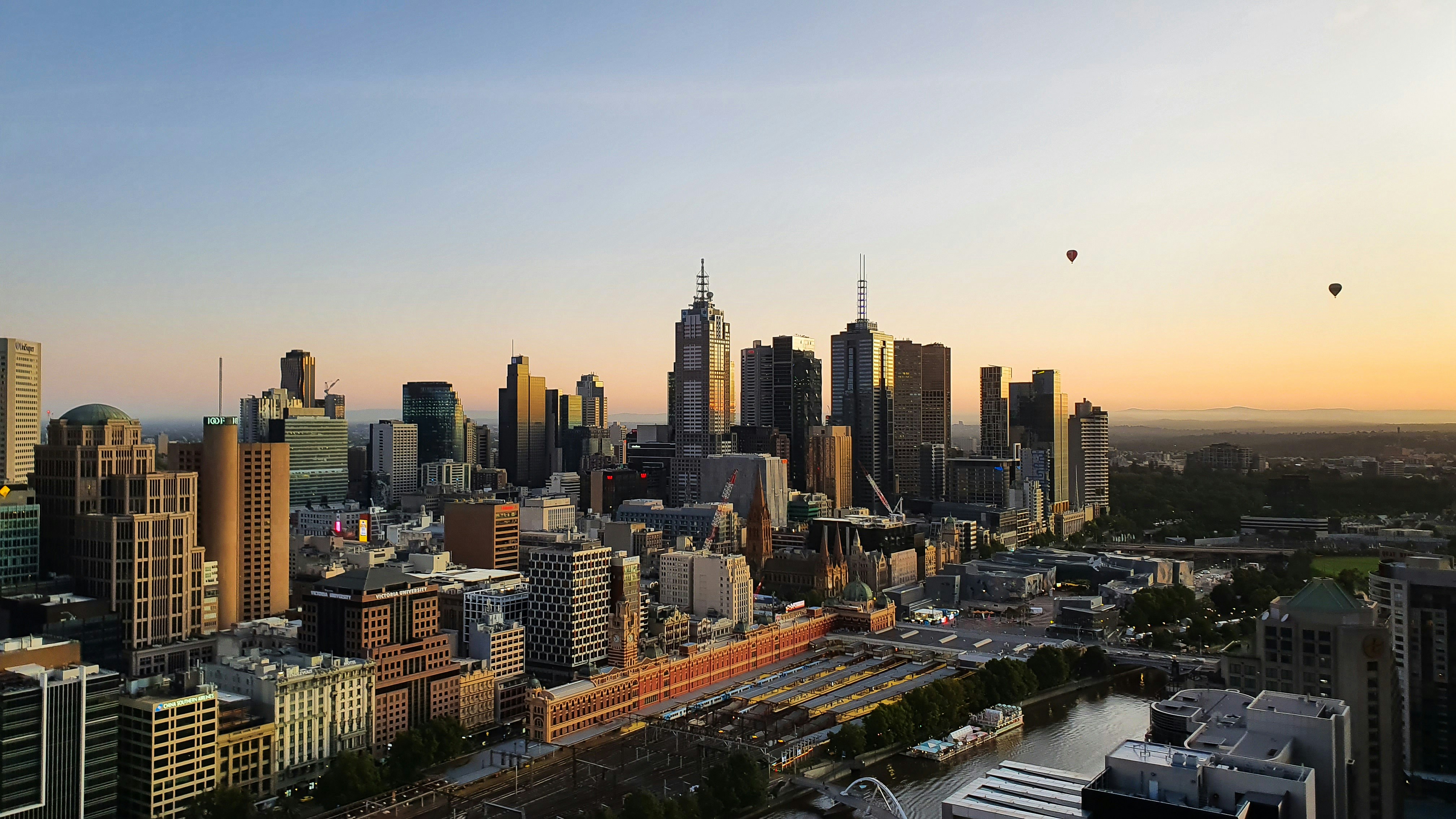


Australia's energy transition depends on resilient supply chains.
Australia's energy landscape is shifting faster than most people expected. In the final quarter of 2025, renewables and storage supplied more than half of the National Electricity Market's energy needs for the first time ever. Wholesale electricity prices dropped significantly. Coal generation hit an all-time quarterly low. And battery storage discharge nearly tripled compared to the same period a year earlier.
On the surface, the numbers look encouraging. But behind every solar panel installed, every wind turbine erected, and every battery commissioned is a supply chain — and right now, those supply chains are under serious pressure.
If Australia is going to sustain this momentum and meet its legislated target of net-zero emissions by 2050, then the conversation needs to move beyond megawatts and policy targets. It needs to focus on procurement lead times, component availability, workforce capacity, logistics infrastructure, and the dozens of other practical realities that determine whether a project gets built on time, on budget, and to spec — or whether it stalls.
This article unpacks the supply chain challenges facing Australia's energy and renewables sector, and what organisations across the value chain can do to build genuine resilience.
The Scale of the Challenge
Australia is no stranger to large infrastructure rollouts, but the energy transition represents something fundamentally different in both pace and complexity. The country needs to simultaneously retire ageing coal-fired generation, build out gigawatts of new renewable capacity, deploy battery energy storage systems at scale, expand transmission networks across vast distances, and integrate distributed energy resources into an increasingly decentralised grid.
Each of these workstreams has its own supply chain, and each of those supply chains has its own set of dependencies, bottlenecks, and vulnerabilities.
Consider solar. The build-out phase is moderately to highly complex because Australia relies heavily on imported panels and components, predominantly from China. Wind is more complex still — turbines are larger, heavier, require specialised transport, and involve components sourced from multiple countries. Battery energy storage systems introduce yet another layer: lithium, cobalt, nickel, and rare earth elements all need to be sourced, processed, and manufactured into cells before they even reach Australian shores.
The Australian Energy Market Operator's Draft 2026 Integrated System Plan reinforces what the industry already knows — that renewable energy, backed by storage and connected through upgraded networks, remains the lowest-cost pathway to reliable electricity. But the plan also acknowledges that making this happen depends on resolving supply chain constraints that are already causing delays and cost overruns.
Where the Pressure Points Are
Critical Minerals and Component Sourcing
Australia is one of the world's largest producers of lithium, yet the vast majority of processing happens offshore — particularly in China. This creates a vulnerability that's become increasingly visible as trade tensions have escalated. The 10% tariff imposed on Australia by the United States in early 2025, while partially offset by the subsequent US-Australia Critical Minerals Production Tax Credit Agreement, highlighted just how quickly geopolitical shifts can ripple through supply chains.
For organisations involved in energy storage, solar, and grid infrastructure, the sourcing question is no longer just about price. It's about security of supply, lead time reliability, and the geopolitical risk embedded in concentrated supply chains. The growing push to diversify away from Chinese equipment and towards suppliers in South Korea, Europe, India, and Southeast Asia is sensible — but it takes time, relationship-building, and a procurement strategy that's fit for purpose.
Transmission and Grid Infrastructure
You can build all the solar farms and wind turbines you want, but if you can't connect them to the grid, they don't generate a single watt. Transmission has been one of the most stubborn bottlenecks in Australia's energy transition. AEMO's updated Transmission Cost database showed real cost increases of between 25% and 55% for overhead transmission line projects compared to earlier estimates. Planning approvals are slow, particularly in New South Wales, where the process can take four to seven years and cost developers millions just to apply.
The supply chains feeding transmission projects — steel, conductors, transformers, switchgear — are global in nature and subject to the same pressures affecting other heavy infrastructure. When every state government is simultaneously investing in transport, defence, health, and education infrastructure, the competition for materials and skilled labour becomes fierce. This is where strategy and network design becomes critical — understanding not just what needs to be built, but when, where, and in what sequence to avoid the worst of the supply chain congestion.
Workforce Shortages
The energy sector needs people, and it doesn't have enough of them. Estimates suggest the industry requires tens of thousands of additional skilled workers by the end of the decade — electrical engineers, wind turbine technicians, battery specialists, project managers, and a range of trade roles. The Clean Energy Council's launch of the "Clean energy, job ready" programme in mid-2025 was a positive step, but the gap between current capacity and what's needed remains significant.
Workforce challenges don't just affect construction timelines. They affect maintenance schedules, operational efficiency, and the ability to commission assets safely. For organisations managing energy assets or building out new capacity, workforce planning and scheduling needs to be treated as a strategic capability, not an afterthought. Getting the right people in the right place at the right time — and retaining them — is fundamental to keeping projects moving.
Logistics and Warehousing
The physical movement of energy infrastructure components across Australia presents its own set of challenges. Wind turbine blades can exceed 80 metres in length. Battery modules require temperature-controlled handling. Solar panel shipments arrive in enormous volumes that need staging, storage, and last-mile distribution to often remote project sites.
Australia's geography makes this particularly demanding. Long distances between ports and project sites, limited road and rail infrastructure in regional areas, and seasonal access constraints all add complexity. The design of warehousing and distribution networks for energy projects needs to account for these realities — factoring in laydown areas, staging logistics, just-in-time delivery constraints, and the capacity of regional freight corridors.
Lessons from Other Infrastructure Rollouts
Australia has been here before — maybe not at this exact scale, but the patterns are familiar. The National Broadband Network rollout is probably the most instructive parallel. That project suffered from global supply shortages of fibre-optic cables, network equipment, and skilled technicians — issues that weren't sufficiently anticipated during the planning phases.
The parallels with the energy transition are uncomfortably close. Heavy reliance on imported components, workforce bottlenecks, regulatory delays, and insufficient supply chain planning all contributed to cost blowouts and schedule slippage on the NBN. The lesson is clear: supply chain planning needs to be proactive, not reactive. Waiting until a project is underway to discover that a critical component has a 12-month lead time is not a supply chain strategy — it's a supply chain crisis.
The organisations that will navigate this transition most successfully are those that invest early in understanding their supply chain risks, mapping their dependencies, and building contingency into their plans. This is the domain of resilience and risk management — not as a compliance exercise, but as an operational discipline that protects project delivery and financial performance.
What Good Looks Like: Building Resilience into Energy Supply Chains
So what does a resilient energy supply chain actually look like in practice? It starts with visibility — knowing where your components come from, who your suppliers' suppliers are, and where concentration risks exist. From there, it's about making deliberate choices to mitigate the risks that matter most.
Supplier Diversification and Strategic Procurement
Relying on a single source for critical components is a well-understood risk, but many organisations in the energy sector still haven't addressed it adequately. Building a diversified supplier base takes effort — qualifying new suppliers, negotiating terms, managing quality across multiple sources — but the payoff in resilience is substantial.
Strategic procurement in the energy sector also means thinking differently about lead times. When global demand for batteries, inverters, and transformers is surging simultaneously, the organisations that have locked in supply agreements and built buffer stock strategies will be in a far stronger position than those operating on thin margins and short planning horizons. Trace Consultants' procurement practice works with organisations to develop sourcing strategies that balance cost, quality, and supply security across the full procurement lifecycle.
End-to-End Supply Chain Visibility
You can't manage what you can't see. For complex energy projects with multi-tier supply chains spanning multiple countries, real-time visibility into supplier performance, logistics status, and inventory levels is essential. This doesn't necessarily mean implementing the most expensive technology platform available — it means having the right data, the right processes, and the right governance to make informed decisions quickly.
Trace Consultants works with organisations to design and implement planning and operations frameworks that give leadership teams the information they need to anticipate problems rather than react to them. Whether it's tracking component deliveries across a multi-site build programme or managing MRO inventory for an operational fleet of wind turbines, the principle is the same: visibility drives better decisions.
Scenario Planning and Risk Modelling
Energy supply chains are exposed to a wide range of risks — geopolitical disruption, natural disasters, regulatory changes, currency fluctuations, and demand volatility, to name a few. Scenario planning allows organisations to stress-test their supply chains against plausible future states and develop contingency plans that can be activated quickly when conditions change.
This is particularly important in the current environment, where trade policy can shift rapidly and the competitive landscape for critical minerals is evolving. Organisations that have modelled multiple sourcing scenarios and understand the cost and timeline implications of each are better positioned to pivot when disruptions occur.
Network and Infrastructure Design
For energy companies, network utilities, and project developers, the physical configuration of supply chain infrastructure — laydown areas, warehouses, maintenance depots, and distribution routes — has a direct impact on project delivery and operational efficiency. Getting this right requires a combination of spatial analysis, demand modelling, and an understanding of local infrastructure constraints.
Trace Consultants' strategy and network design practice brings together these disciplines to help energy sector clients design supply chain networks that are efficient, scalable, and resilient. Whether it's determining the optimal location for a regional maintenance hub or designing the logistics footprint for a large-scale solar roll-out, the approach is grounded in data and shaped by operational reality.
Sustainability and Circular Economy Considerations
The energy transition is, at its core, a sustainability story — but the supply chains supporting it need to be sustainable too. The carbon footprint of manufacturing and transporting solar panels, wind turbines, and batteries is significant. End-of-life management for these assets is becoming an increasingly pressing issue as early-generation installations approach decommissioning.
Organisations that build circular economy principles into their supply chain design — including component recycling, refurbishment, and responsible disposal — will be better positioned both ethically and commercially. Trace Consultants' supply chain sustainability practice helps clients quantify the emissions embedded in their supply chains and identify practical steps to reduce them.
The Hydrogen Question — and What It Tells Us About Supply Chain Reality
It's worth briefly touching on hydrogen, because the story there is instructive. A few years ago, green hydrogen was being talked about as a pillar of Australia's energy future. But production costs of $5–6 per kilogram — well above the $2 target needed for commercial viability — combined with infrastructure gaps and uncertain demand have forced a reckoning. Several flagship hydrogen projects have been cancelled or scaled back, including multi-billion dollar developments in Queensland.
The supply chain lesson here isn't that hydrogen is dead — it's that supply chain fundamentals matter more than ambition. Without reliable access to affordable electrolysers, skilled installation crews, and functioning export infrastructure, even the most generously funded projects will struggle. The same principle applies across the energy sector: you need to build the supply chain before you build the asset, or at the very least, build them in parallel.
This is where organisational design plays an underappreciated role. Many energy companies have project teams that are brilliant at engineering and construction, but lack the internal supply chain capability to manage the procurement, logistics, and inventory challenges that large-scale projects demand. Getting the organisational structure right — with clear accountability for supply chain performance and the right expertise embedded in project teams — can be the difference between a project that delivers on schedule and one that spirals.
The Role of Government and Industry Collaboration
This isn't a challenge that any single organisation can solve alone. Building resilient energy supply chains requires collaboration between project developers, component manufacturers, logistics providers, government agencies, and training organisations.
Government has a critical role to play — in fast-tracking planning approvals, investing in transmission infrastructure, supporting domestic manufacturing capability, and funding workforce development programmes. The Albanese Government's approval of 123 renewable energy projects since 2022 and the successful Cheaper Home Batteries scheme — which saw 200,000 batteries installed in just six months — demonstrate what's possible when policy settings and market conditions align.
But industry needs to do its part too, by sharing demand forecasts, investing in supplier development, and committing to the long-term partnerships that give supply chain participants the confidence to invest in capacity. The energy sector can also learn from how other industries — particularly FMCG and manufacturing — have built mature, collaborative supplier ecosystems that balance efficiency with resilience.
For government agencies navigating energy policy and infrastructure delivery, Trace Consultants provides supply chain advisory services that bridge the gap between policy intent and operational execution. Our experience working with government and defence clients gives us a practical understanding of the procurement, logistics, and workforce challenges that public sector agencies face in delivering complex programmes.
How Trace Consultants Can Help
The energy and renewables sector is at an inflection point. The policy settings are broadly right, the economics of renewables are compelling, and public support for the transition is strong. But none of that matters if the supply chains underpinning the transition can't deliver.
At Trace Consultants, we work with energy companies, utilities, project developers, government agencies, and infrastructure investors to design, optimise, and de-risk their supply chains. Our team brings deep expertise across the disciplines that matter most in this sector:
Supply Chain Strategy and Network Design — We help clients model optimal supply chain configurations, taking into account demand forecasts, infrastructure constraints, cost-to-serve, and resilience requirements. Whether you're planning a new renewable energy roll-out or rethinking the logistics of an existing asset portfolio, we bring the analytical rigour and operational experience to get it right.
Procurement Excellence — From strategic sourcing of critical components to supplier qualification and contract management, our procurement team helps clients build supply bases that are competitive, reliable, and resilient. We understand the unique challenges of procuring for energy projects — long lead times, technical specifications, and the need to balance cost with supply security.
Resilience and Risk Management — We help organisations identify, quantify, and mitigate supply chain risks through structured risk assessment frameworks, scenario modelling, and contingency planning. In a sector where a single supplier failure can delay a project by months, this capability is not optional — it's essential.
Warehousing, Distribution and Logistics — Our warehousing and distribution team designs logistics networks that work in the real world — accounting for the oversized, heavy, and temperature-sensitive nature of energy components, the remoteness of many project sites, and the constraints of Australian transport infrastructure.
Workforce Planning — We help energy organisations build workforce plans that align with project timelines, operational requirements, and the realities of a tight labour market. This includes demand modelling, skills gap analysis, and the design of rostering and scheduling systems that maximise productivity.
Technology and Digital Enablement — We support clients in selecting, implementing, and optimising supply chain technology that delivers genuine visibility and control — from planning systems and inventory management to predictive analytics and digital twins.
Project and Change Management — Transforming a supply chain is a complex undertaking that requires disciplined project and change management. We embed ourselves in our clients' operations to ensure that strategies are implemented, benefits are realised, and change is sustained.
The Bottom Line
Australia's energy transition is one of the most significant infrastructure programmes the country has ever undertaken. It will reshape how electricity is generated, stored, distributed, and consumed for decades to come. But the pace and success of that transition will ultimately be determined not just by policy ambition or investment appetite — but by the strength and resilience of the supply chains that make it happen.
The good news is that the foundations are being laid. Renewables are now cost-competitive with fossil fuels. Battery storage costs have plummeted. Government policy is supportive. And the market is responding, with close to 7 GW of renewable capacity added to the grid in 2025 alone. But scaling from here to an 82% renewables target by 2030 — let alone net zero by 2050 — will require a step change in supply chain maturity across the sector.
The organisations that invest now in understanding their supply chain vulnerabilities, building strategic procurement capabilities, designing resilient logistics networks, and developing the workforce to deliver and maintain energy assets will be the ones that thrive in the transition ahead. Those that treat supply chain as a second-order concern will find themselves managing one crisis after another.
For those looking to take that step, Trace Consultants is ready to help. We don't just advise — we work alongside your team to deliver measurable outcomes. Because in a sector moving this fast, strategy without execution is just a slideshow.
Trace Consultants is an Australian supply chain and procurement consultancy with offices in Sydney, Melbourne, Brisbane, and Canberra. To discuss how we can support your energy or renewables supply chain, speak to one of our team.