






BOH Logistics

Building BOH logistics systems that deliver results behind the scenes.

Efficient, reliable BOH logistics are the backbone of every property, facility, and service environment. As experienced logistics consultants, Trace helps organisations design, digitise, and deliver smarter BOH systems that keep people, products, and processes moving seamlessly.

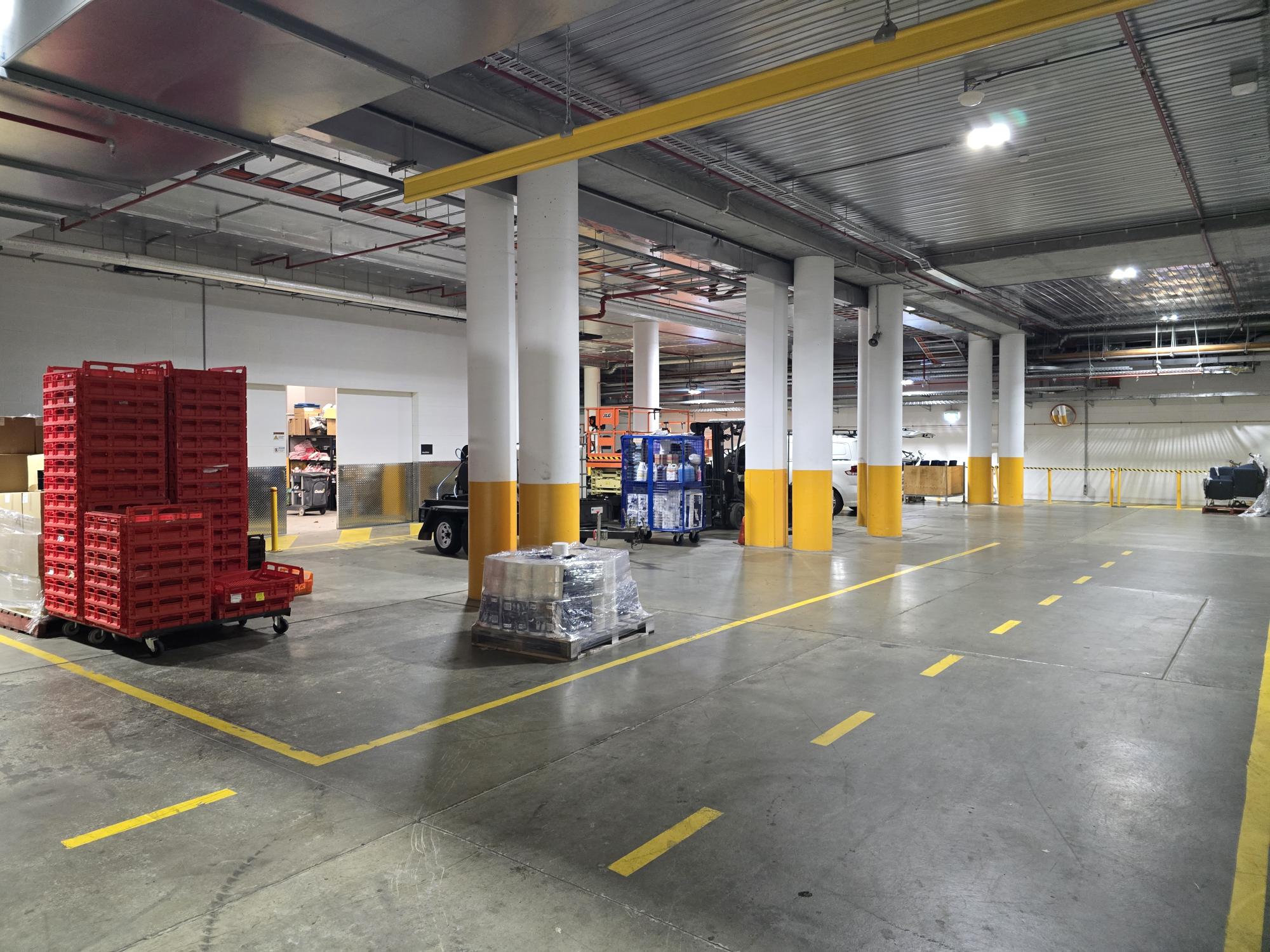
An industrial loading dock area with yellow-striped concrete floor, stacked red crates, and a pallet nearby.

Why BOH logistics matter.

Behind every high-performing hospital, stadium, or large facility is a well-designed Back of House (BOH) logistics system that keeps operations running seamlessly. From patient care to event delivery, effective BOH Logistics drives efficiency, safety, and service quality. It’s the difference between smooth performance and daily disruption.

As specialist logistics consultants, Trace helps organisations design agile, sustainable, and data-driven BOH systems that reduce costs, enhance productivity, and adapt to real-world challenges so your front-of-house teams can focus on what matters most.

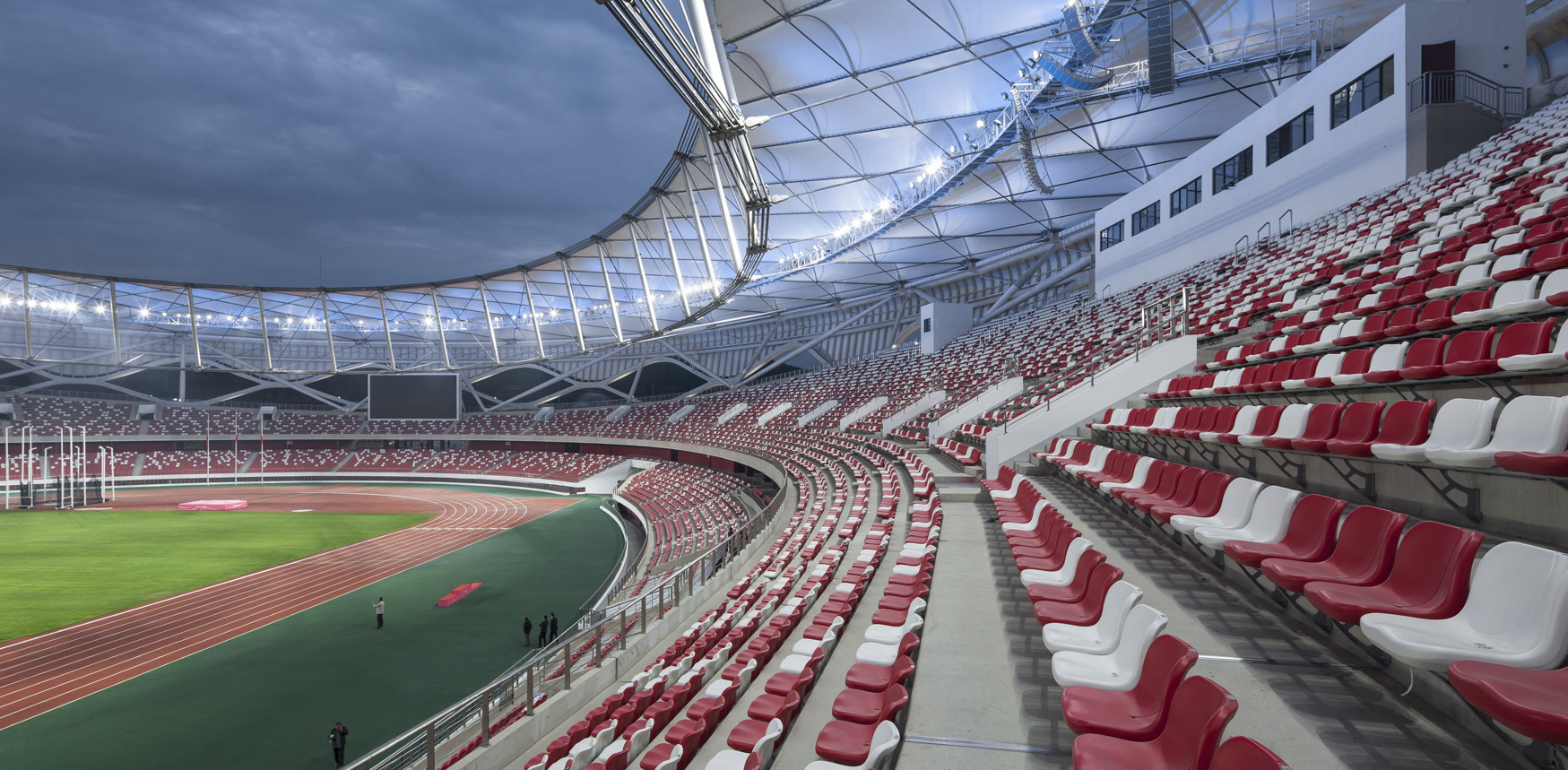
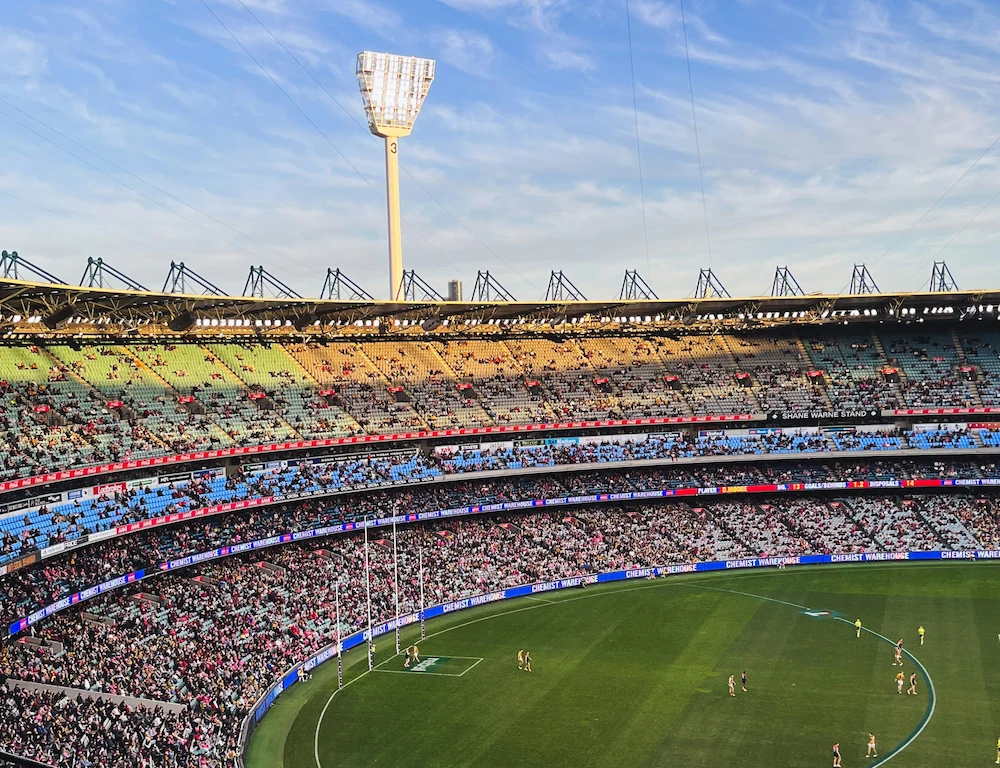
Aerial view of a packed stadium during a sporting event, featuring green field, colourful seating tiers, and a bright floodlight.

ways our Logistics consultants can help

Flow

Optimise site flow and congestion

We analyse how goods, equipment, and people move through your sites to uncover bottlenecks and inefficiencies. Our practical recommendations reduce congestion, improve safety, and streamline operations.

Supplier performance

Improve supplier performance

We help you evaluate and manage supplier performance, ensuring reliable deliveries, reduced waste, and better service standards across your network.

Supply chain technology

Digitise and modernise operations

From procurement to dock scheduling, we integrate smart, scalable systems that give you real-time visibility and control across multiple sites.

Supply chain sustainability

Build resilience and sustainability

We design logistics models that reduce environmental impact, minimise waste, and support circular economy practices — building operations that last.

Employee efficiency

Strengthen workforce efficiency

Through process design, rostering analysis, and change management, we ensure your team works smarter, not harder, while maintaining safety and service quality.

Core service offerings

What our BOH logistics service covers:

As specialist logistics consultants, we integrate physical space planning, supply chain processes, technology, and transformation programs to deliver measurable results across complex facilities and service networks.

BOH Design and Space Planning

We design and optimise back-of-house environments that enable seamless operations behind the scenes. Our layouts, workflows, and spatial planning help reduce congestion, improve safety, and support efficient service delivery.

What we deliver:

  • Loading dock and receiving area design for efficient inbound flow
  • Centralised storage and distribution systems for smoother stock movement
  • Linen and laundry planning to minimise risk and turnaround times
  • Kitchen and F&B logistics design for hotels, healthcare, and other venues
  • Waste management strategies that ensure compliance and efficiency

Industries we work with:

Supply Chain Process Optimisation

We refine back-of-house supply chain processes to improve visibility, reduce waste, and enhance service performance.

What we deliver:

  • Dock-to-ward logistics models that streamline hospital supply routes
  • Demand-driven inventory and warehouse optimisation
  • Procurement and supplier collaboration frameworks that cut holding costs

Industries we work with:

Technology and Automation in BOH Operations

We integrate modern technology to drive smarter, data-led BOH operations with greater accuracy, visibility, and control.

What we deliver:

  • Smart stock tracking using barcoding and RFID
  • Predictive analytics and AI tools for demand planning
  • Workforce planning systems that boost productivity
  • Low-code automation to streamline routine BOH workflows

Industries we work with:

Benchmarking, Review and Transformation Programs

We help organisations measure, improve, and future-proof BOH logistics through structured transformation programs.

What we deliver:

  • Operational benchmarking against industry best practice
  • Cost and efficiency improvement programs
  • Change management and training for sustainable adoption

Industries we work with:

Download our Capability Overview:

A concise, shareable overview of our BOH logistics approach, with a focused look at hospital and healthcare environments

Thanks for your interest, your capability overview is ready to download below.

Download the Capability Overview (PDF)
*Please ensure you have filled out all required fields.
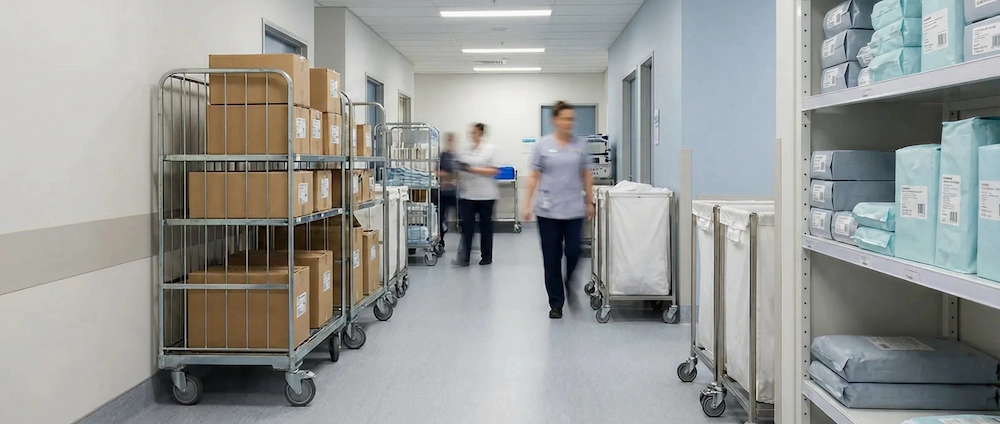
Hospital corridor with staff moving and carts holding medical supplies and boxes.

Frequently Asked Questions

Common questions about BOH logistics.

Ask another question

What kinds of problems can effective BOH Logistics solve?

Efficient BOH systems can ease dock congestion, cut operating costs, reduce waste, and free up valuable space. They also improve safety and compliance by separating clean and dirty flows, optimising temperature zones, and ensuring materials move through sites without disruption.

How does Trace Consultants improve BOH Logistics?

We take a data-led, design-informed approach. Our logistics consultants map how goods, equipment, and people move through your facility, then develops practical solutions to improve flow, safety, and productivity. We also integrate technology and workforce planning tools to embed sustainable improvement.

What results can organisations expect from BOH optimisation?

Clients typically see measurable reductions in congestion and waste, lower operational costs, and improved on-time deliveries. Optimised BOH networks also enhance service reliability, compliance, and the overall employee and customer experience.

Who benefits most from BOH Logistics services?

Any organisation managing complex facilities — from hospitals and aged care to stadiums, universities, retail precincts, and hospitality venues. We help these environments operate more efficiently, safely, and sustainably by improving the systems that support them.

Can Trace help implement, not just design, BOH improvements?

Yes. Trace bridges strategy and execution. Our logistics consultants deliver implementation support, training, and change management to ensure your new BOH model performs as intended and your team is equipped to sustain it long-term.

Insights and resources

Latest insights on BOH logistics.

BOH Logistics

Goods and Waste Logistics in Airports and Stadiums

Emma Woodberry
Emma Woodberry
March 2026
The back-of-house of an airport or stadium is invisible to passengers and spectators. But when it fails, the front-of-house does too. Here's what world-class goods and waste logistics looks like in complex venue environments.

The passenger in Gate 42 waiting for a flight, and the fan in Row J waiting for kick-off, share something in common: neither sees the logistics operation that makes their experience possible. Every coffee served at a terminal café, every beer poured at a stadium concourse, every piece of merchandise stocked in a retail outlet, and every bin emptied before it overflows has a supply chain behind it — one that operates in environments of extraordinary complexity, under extreme time pressure, and with very little margin for failure.

Airports and stadiums are among the most demanding logistics environments in Australia. They concentrate enormous volumes of goods and waste into tight physical spaces, operate on non-negotiable schedules, manage multiple competing stakeholders with conflicting access needs, and face regulatory constraints — biosecurity, aviation security, food safety, work health and safety — that have no equivalent in conventional distribution operations. When the logistics works, it is invisible. When it fails, the consequences cascade immediately into the front-of-house experience.

This article explains what world-class goods and waste logistics looks like in airport and stadium environments: the design principles, the operating model, the technology, the waste strategy, and where most Australian venues are currently underperforming.

The Unique Logistics Challenge of Complex Venues

Airports and stadiums share a structural characteristic that defines everything about their logistics challenge: they are multi-tenant, multi-operator environments serving a public whose experience depends on all of those operators performing simultaneously.

A major Australian airport terminal — Melbourne's T2, Sydney's T1, Brisbane's domestic terminal — hosts dozens of retail concessionaires, multiple food and beverage operators, airline lounges, contracted maintenance and cleaning providers, and a security and safety infrastructure, all operating from a single physical plant with shared loading infrastructure and shared waste streams. No single operator controls the full system. The airport authority sets the rules, allocates the infrastructure, and bears the reputational consequence of operational failure, but each operator manages their own supply chain to the dock, their own inventory within their concession, and their own compliance with the standards the airport sets.

A major stadium — MCG, SCG, Optus Stadium, Accor Stadium, Adelaide Oval — presents a variant of the same challenge, compressed into an even tighter operational window. Match-day logistics involves dozens of food and beverage operators, merchandise outlets, and operational contractors, all taking delivery in a multi-hour window before the event, operating through the event at peak demand, and generating concentrated waste streams immediately after it. The operational peak is extreme: at a sold-out event at the MCG, a single concourse outlet may sell thousands of beverages in a two-hour period, generating equivalent volumes of packaging waste that must be removed without disrupting the fan experience or creating safety hazards.

The complexity that makes these environments distinctive — multiple stakeholders, shared infrastructure, extreme peaks, regulatory constraints, public visibility — is also what makes logistics improvement so high-value. Incremental operational improvement in a complex venue has an outsized impact on both cost and experience.

The Goods-In Framework: From Kerb to Concession

In airport logistics, the goods flow is typically described as Goods In, Waste Away (GIWA) — the bidirectional flow that sustains terminal operations. Understanding that framework, and where the constraints within it typically sit, is the starting point for improvement.

The Landside Constraint: Service Yards and Loading Docks

For most Australian airports and stadiums, the binding constraint on goods-in operations is the service yard and loading dock infrastructure — the physical bottleneck through which all inbound goods must pass before reaching the concession or outlet they are destined for.

Service yard capacity is typically designed to the projected average daily delivery volume at the time the facility was built — which, for older terminals and many stadiums, was a fraction of current volume. As the number of concessionaires grows, as delivery frequencies increase, and as operator-specific delivery windows narrow, the service yard becomes chronically congested. The visible symptoms are queuing delivery vehicles, delays to time-sensitive chilled deliveries, conflict between inbound goods and outbound waste streams, and the security risk created by unvetted vehicles waiting unsupervised in service areas.

The three levers for addressing the landside constraint are:

Delivery scheduling and slot management. Implementing a time-slot booking system — in which every supplier books a specific delivery window rather than arriving at will — transforms the service yard from a first-come-first-served queue into a managed flow. Delivery scheduling reduces peak congestion, improves dock utilisation across the day, and creates the visibility needed to plan staffing and equipment allocation. For airports and stadiums with high delivery volumes, a purpose-built dock management platform — tracking vehicle arrival, bay allocation, unload time, and departure — produces significant operational improvement at relatively modest cost.

Consolidation centres. For airports with high concessionaire density and complex security screening requirements, a consolidation centre — a purpose-built or repurposed facility on or adjacent to the airport precinct, operated by a logistics provider, into which all supplier deliveries are consolidated before final distribution to terminal concessions in a smaller number of trips — is increasingly recognised as best practice. Consolidation centres compress supply chains, reduce vehicle movements, and centralise security screening before airside transfer. GetTransport London Luton Airport's recently commissioned consolidation centre, designed to process inbound goods for more than forty shops and restaurants, illustrates the model: fewer vehicles accessing the terminal, tighter security controls, and more predictable on-shelf availability for concessionaires.

In Australia, Western Sydney International Airport — due to open in 2026 as Australia's first freight-first airport — has an opportunity to embed consolidated goods-in logistics in its design from the outset, rather than retrofitting it to an existing terminal. Melbourne Airport's ADP T2 project and other major terminal upgrades offer similar opportunities, and the logistics design decisions made at the master planning stage will shape operational performance for decades.

Physical infrastructure upgrades. Where the service yard or loading dock configuration is the primary constraint, physical upgrades — additional dock doors, improved hardstand, dock levellers, separation of inbound and outbound flows, undercover unload areas for chilled goods, improved lighting and safety infrastructure — are the prerequisite for operational improvement. Technology and scheduling cannot fully compensate for fundamental physical capacity constraints.

The Vertical and Horizontal Flow Problem

In multi-level terminals and stadiums, goods reaching the service yard still need to travel to their point of consumption — which may be multiple levels above the dock, through corridors shared with staff, contractors, and in some cases passengers. The vertical and horizontal flow of goods through the building is a logistics problem that is frequently underestimated in facility design and chronically under-managed in operations.

The constraints are predictable: lifts sized for the original delivery volumes that are now undersized for current throughput, service corridors that have been progressively narrowed by other uses, congestion points at lift lobbies and staging areas, and inadequate cold-chain infrastructure for the journey from dock to concession storage. In venues operating cold chain products — chilled beverages, fresh food, dairy — every minute of unchained cold exposure between the delivery vehicle and the concession storage is a food safety risk and a quality issue.

Designing the internal goods flow properly — with routes that separate goods movement from staff movement, lift capacity sized for peak delivery volume, appropriately placed staging areas, and cold-chain handoff points — is as important as designing the service yard, and in most Australian venues is addressed less rigorously.

Waste: The Overlooked Half of the System

Waste management in complex venues is the operational challenge that receives the least strategic attention and consistently creates the most visible operational failures. Full bins in public areas, overflow at collection points, waste contaminating recycling streams, and post-event waste removal blocking ingress and egress are all symptoms of waste infrastructure that has not been designed or resourced to match the demand placed on it.

Volume and Stream Complexity

The waste volumes generated by a major airport or stadium are large and operationally complex. At a sold-out stadium event, the volume of packaging waste, food waste, and hazardous waste (oils, chemicals, clinical) generated in a three-to-four-hour operating window can exceed the daily waste output of a medium-sized commercial building. At a major airport terminal, the continuous 24-hour operation generates a sustained waste stream across multiple concurrent sources: concession food waste, retail packaging waste, aircraft waste (subject to specific biosecurity requirements), cleaning waste, and construction and maintenance waste from the ongoing works that are a permanent feature of operating airport environments.

Managing these volumes requires a waste infrastructure that matches the throughput — sufficient collection points, appropriate compaction equipment, waste streams segregated at the point of generation to enable recycling compliance, and a collection schedule that clears primary collection points before they reach capacity.

The waste stream complexity in these environments is also significant. International aircraft waste requires incineration or controlled landfill disposal under biosecurity regulations — it cannot enter the standard waste stream regardless of its apparent composition. Food waste from kitchens and concessions needs to be separated from general waste to comply with increasingly stringent Australian organic waste diversion targets — the National Waste Policy Action Plan targets halving the volume of organic waste sent to landfill by 2030. Hazardous waste requires separate handling. Cardboard, glass, plastics, and metals each require their own collection infrastructure if recycling targets are to be achieved.

Circular Economy and Sustainability Obligations

Australian airports and stadiums are under increasing pressure — from operators, from tenants, from regulators, and from the public — to improve their waste diversion rates and reduce landfill dependency. The ASX-listed property groups and institutional investors that own many of Australia's major airports and stadiums have published sustainability commitments that include waste diversion targets, and those commitments flow down to the operating models of the venues they own.

Achieving credible waste diversion rates in a complex venue requires more than adding recycling bins. It requires: source segregation infrastructure designed into the venue (bins configured and labelled for specific waste streams at every collection point), operational protocols that ensure segregation is maintained through the collection and compaction process, supplier packaging standards that minimise non-recyclable materials entering the venue, tenant engagement programmes that ensure all operators are compliant with venue waste policies, and reporting infrastructure that tracks diversion rates by stream and by operator.

Venues that treat waste management as a cleaning contract rather than a logistics system consistently underperform against their sustainability commitments and generate operational problems — full bins, contaminated recycling, complaints from operators and patrons — that are ultimately more expensive to manage than a well-designed waste system would have been.

The Multi-Stakeholder Governance Problem

The most difficult aspect of goods and waste logistics in airports and stadiums is not the physical or technological challenge — it is the governance challenge of managing a logistics system across multiple operators with different commercial interests, different supply chains, and different views about who is responsible for what.

An airport authority or stadium operator that owns the venue and the infrastructure but does not directly operate the concessions has a structural governance challenge: it bears the reputational and operational consequence of logistics failures, but does not directly control the supply chains that create them. Concessionaires have no inherent incentive to comply with delivery scheduling if non-compliance does not cost them anything. Suppliers have no inherent incentive to use consolidation infrastructure if direct delivery is more convenient for them.

Effective governance requires: clearly articulated standards for delivery scheduling, vehicle type, goods presentation, and waste management, embedded in concessionaire leases with enforceable compliance mechanisms; a venue logistics manager or logistics coordinator role with the authority and the tools to manage the system across all operators; performance visibility — dock throughput, delivery compliance, waste diversion rates — that creates accountability across the operator base; and supplier engagement that extends the governance framework to the transport and logistics providers whose vehicles are actually arriving at the dock.

Venues that invest in this governance infrastructure consistently outperform those that rely on goodwill and best efforts across their tenant base. The difference is visible in dock congestion, in waste diversion rates, and ultimately in the front-of-house experience for passengers and fans.

Technology: From Spreadsheets to Smart Venues

The technology gap in Australian airport and stadium logistics is significant. Many venues are still managing delivery scheduling via phone and email, tracking waste collection via paper-based checklists, and managing dock congestion reactively rather than predictively. The technology exists to do substantially better, and the cost of deploying it has fallen to the point where the business case is achievable for venues of meaningful scale.

Dock management and delivery scheduling platforms — including purpose-built solutions and configurations of standard appointment scheduling software — provide real-time visibility of dock occupancy, vehicle queue, and unload status. They enable delivery window booking by suppliers, automated reminders and compliance tracking, and the operational data needed to optimise dock staffing and equipment allocation.

Real-time waste monitoring — bin sensors that track fill levels and trigger collection alerts — reduces the frequency of overflow incidents, optimises collection routes, and provides the usage data needed to calibrate bin placement and collection frequency against actual demand patterns. For venues with large concourse areas across multiple levels, real-time waste monitoring is the difference between reactive bin management (responding after overflow) and proactive management (collecting before the problem occurs).

Venue-wide visibility dashboards — integrating dock management, waste monitoring, cold-chain compliance tracking, and CCTV — give operations teams the situational awareness to manage the full logistics system in real time, rather than responding to individual incidents as they arise.

How Trace Consultants Can Help

At Trace Consultants, goods and waste logistics for complex venues is one of our most distinctive practice areas. We have designed, assessed, and improved BOH logistics operations for integrated resorts, airport terminals, stadiums, and other complex venue environments — combining the supply chain methodology, the operational design expertise, and the sector knowledge that this work requires.

Our engagement model in this space covers the full spectrum: rapid diagnostics and time-and-motion studies to quantify the current state and identify the highest-value interventions; infrastructure design advisory for new builds and major refurbishments; operating model design covering delivery scheduling, consolidation, waste management, and governance; technology selection and implementation; and ongoing performance management frameworks.

We bring BOH Logistics expertise alongside Procurement capability — ensuring that the commercial structures with logistics providers, waste contractors, and equipment suppliers support the operating model rather than undermining it. And we bring Supply Chain Sustainability thinking to waste strategy, ensuring that circular economy and diversion commitments are operationally grounded rather than aspirational.

Our clients in this space include major Australian integrated resorts, airport operators, and stadium managers. The work typically starts with a focused diagnostic — a two to three week assessment of the current goods-in and waste-away operation that quantifies the gap against best practice and identifies the priority interventions. From there, the improvement programme can be scoped and sequenced.

Explore our BOH Logistics capability →

Speak to an expert at Trace →

The Opportunity in Plain Sight

The goods and waste logistics of airports and stadiums is genuinely difficult. But the difficulty is well understood — the design principles, the governance frameworks, the technology, and the operating models that work are known. The gap between current Australian practice and world-class performance in this space is not a knowledge gap. It is an investment and prioritisation gap.

Venues that treat their BOH logistics as a strategic operational capability — designing it properly, governing it rigorously, and continuously improving it with good data — achieve lower operating costs, fewer service failures, better sustainability outcomes, and a front-of-house experience that reflects the standard the venue aspires to. Venues that treat it as a facilities management overhead consistently underperform on all of those dimensions.

The logistics operation that the passenger and the fan never see is the one that determines whether they come back.

Explore our BOH Logistics capability →

Speak to an expert at Trace →

BOH Logistics

How to Reduce Food and Beverage COGS in Hospitality

Mathew Tolley
Mathew Tolley
March 2026
For large-scale hospitality operators, food and beverage COGS is a nine-figure problem hiding in plain sight. Most organisations are leaving 3–7% on the table. Here's where it goes and how to get it back.

How to Improve Food and Beverage COGS in Hospitality

For a large hotel, integrated resort, or entertainment venue, food and beverage is not a supporting act. It is a core revenue stream, a major driver of guest experience, and one of the largest and most controllable cost lines on the P&L. At scale — a multi-property integrated resort group turning over hundreds of millions in F&B annually — a one percentage point improvement in COGS ratio translates directly into millions of dollars of EBITDA. The difference between a well-managed F&B cost base and a poorly managed one is not marginal. It is transformational.

Yet F&B cost management in large hospitality operations is frequently fragmented, reactive, and significantly below what structured procurement and operational discipline can deliver. Purchasing decisions are made at outlet level rather than group level. Par levels are set by chefs rather than by data. Supplier contracts renew by default rather than by design. Waste is managed by exception rather than by process. The result is a cost base that is consistently higher than it needs to be — not because the organisation lacks talent, but because it lacks the systems, processes, and procurement discipline to capture the value that scale should provide.

This article explains where F&B COGS leaks in large hospitality operations, what the improvement levers are, how to sequence them, and what a sustained cost improvement programme looks like in practice.

Understanding F&B COGS in Hospitality

Food and beverage cost of goods sold is the direct cost of the ingredients and products consumed to generate F&B revenue. It is calculated as:

F&B COGS (%) = (Cost of F&B consumed ÷ F&B Revenue) × 100

Industry benchmarks for F&B COGS vary by outlet type and service model. As a general reference, food costs typically target 28–32% of food revenue in full-service restaurant environments, beverage costs target 18–25% of beverage revenue (lower for liquor and cocktails, higher for premium wine), and blended F&B COGS across a diverse multi-outlet operation typically sits in the 30–35% range for a well-managed operation.

For integrated resorts and large multi-outlet hospitality groups, the COGS picture is more complex than a single number suggests. The blended rate reflects a mix of outlet types — fine dining, casual, quick service, banqueting, mini-bar, room service, staff cafeteria — each with different cost profiles. A property where fine dining (lower COGS) is a large share of the mix will naturally report a better blended rate than one heavily weighted toward casual and buffet formats. Understanding the composition of the COGS number is essential before designing an improvement programme.

For large Australian hospitality operators, F&B COGS improvement of 2–7% of revenue is achievable through structured procurement, inventory management, menu engineering, and waste reduction — depending on the starting position and the maturity of existing processes. At the scale of a major integrated resort group, the dollar value of that improvement range is very significant.

Where F&B COGS Leaks: The Seven Sources

F&B COGS overruns in large hospitality operations almost always trace to one or more of seven root causes. Understanding which of these is driving the cost problem in a specific operation is the essential precursor to designing the right intervention.

1. Fragmented Procurement Without Group Leverage

The most common and highest-value F&B cost leakage in multi-outlet and multi-property operations is procurement fragmentation. When individual outlets or individual properties purchase independently — each maintaining their own supplier relationships, negotiating their own prices, and ordering on their own schedules — the organisation fails to leverage the aggregated buying power that its total volume warrants.

A single integrated resort property spending $60M annually on F&B COGS, or a group with multiple properties collectively spending $150–200M, has enormous supplier leverage. Suppliers who are quoting at outlet level — against a fraction of the total volume — will price accordingly. Consolidating purchasing under a national contract or a group-level category management framework, with volume committed across the portfolio, consistently produces unit price reductions of 3–8% on key commodity categories without any change in product specification.

This is particularly true for high-spend categories with multiple credible suppliers: proteins (beef, chicken, seafood), dairy, beverages (both alcoholic and non-alcoholic), dry goods, and cleaning chemicals. In each of these categories, a structured competitive tender against consolidated volume typically reveals significant margin available in the current supply arrangements.

2. Pricing Benchmarking Gaps

Related to procurement fragmentation is the absence of systematic price benchmarking. Most large hospitality operators do not have a structured, regular process for comparing their current supplier prices against market rates. Prices agreed in a contract negotiated two or three years ago may no longer reflect current market conditions — either because commodity prices have moved, competitive dynamics have shifted, or the supplier has gradually escalated prices through the invoice process in ways that are not immediately visible.

For specialty and niche products — artisan producers, imported ingredients, premium spirits, specialist seafood — benchmarking requires genuine market intelligence rather than just a competitive tender. The price differential on these categories between what an unmanaged operation pays and what a well-benchmarked one pays can be significant, precisely because the low-volume, high-specificity nature of the purchase reduces the buyer's natural market awareness.

3. Menu Engineering Neglect

Menu engineering is the discipline of designing and managing a menu to optimise the combination of profitability and popularity across menu items. Items that are both highly popular and highly profitable — "stars" in the classic matrix — should be featured prominently and protected. Items that are low-margin and low-popularity — "dogs" — should be rationalised. Items that are popular but low-margin — "plowhorses" — should be repriced or reformulated to improve their contribution.

In large multi-outlet hospitality operations, menu engineering is frequently done once at menu launch and then not revisited until the next menu cycle — which may be 12 to 18 months later. In that interval, ingredient costs change, portion sizes drift, recipe adherence varies, and the menu's actual profitability profile diverges from the designed one. Regular, data-driven menu engineering — at least quarterly, using actual POS and recipe cost data — is one of the most cost-effective tools in F&B cost management.

Menu size rationalisation is a closely related lever. More than half of Australian restaurants reduced menu size during 2025, and operators who cut menus by 20% or more consistently reported improvements in both cost control and speed of service. For large hospitality operations with extensive menus across multiple outlets, rationalising to a focused core menu reduces ingredient complexity, purchasing breadth, waste, and kitchen labour simultaneously.

4. Inventory and Par Level Management

F&B inventory management in large hospitality operations is frequently inadequate relative to the financial exposure it represents. Par levels — the minimum stock holdings at each storage point that trigger replenishment — are often set by chefs based on experience and comfort rather than by actual consumption data. The result is chronic overstocking in some categories (particularly slow-moving specialty items and premium spirits that are ordered speculatively) and understocking in others, which drives costly ad hoc purchasing.

Overstocking directly inflates COGS through two mechanisms: spoilage and waste from products that exceed their shelf life before consumption, and the carrying cost of capital tied up in excess inventory. In a large F&B operation with significant perishable inventory, spoilage can represent 2–5% of food cost in poorly managed operations — a direct, recoverable cost leakage.

Inventory accuracy is a related issue. Stocktaking that is done infrequently, inconsistently, or without rigorous physical counting against a master product list produces variance data that cannot be trusted. Variance — the difference between theoretical and actual food cost — is one of the most powerful diagnostic tools in F&B cost management, but only when the underlying inventory data is accurate enough to make the variance signal meaningful.

5. Recipe Costing and Adherence

Every menu item should have a standard recipe cost — a precise calculation of the ingredient cost of one unit of the dish, based on current supplier prices and defined portion specifications. That standard recipe cost is the baseline against which actual food cost is measured. When actual food cost exceeds the standard recipe cost, there is variance — and that variance has a cause.

In many large hospitality operations, recipe costing is incomplete, outdated, or not systematically maintained. Recipes that were costed at the time of menu design have not been updated as ingredient prices changed. Portion specifications are defined but not consistently enforced. Substitutions are made in the kitchen without updating the recipe record. The result is that the organisation cannot distinguish between food cost overruns caused by procurement pricing (a supplier issue), portion drift (a kitchen discipline issue), waste (an operations issue), or data error (a system issue).

Building and maintaining a complete, accurate recipe costing system — and connecting it to actual purchasing data and POS revenue data — is the data infrastructure that makes F&B cost management possible at scale.

6. Receiving and Waste Controls

F&B cost leakage happens not just in the buying decision but in the receiving and operations process. Deliveries that are not checked against purchase orders — for quantity, weight, and quality — allow suppliers to short-deliver or deliver below specification without detection. Portioning that is not controlled against defined yields creates food cost variance that appears to be a purchasing problem but is actually an operations problem.

Waste in the kitchen — trim waste, preparation waste, spoilage, over-production — is a significant and frequently underestimated component of food cost. In a large banqueting operation, the difference between over-producing for a function and precise production represents a material cost difference on high-volume, high-food-cost items. Production planning discipline — forecasting function attendance accurately, setting production quantities against forecast rather than against chef intuition — directly reduces this waste.

7. Supplier Relationship Management Without Accountability

The final source of F&B cost leakage is structural: the absence of systematic supplier performance management. Suppliers who are not regularly reviewed against their contracted specifications — on pricing compliance, quality standards, DIFOT performance, and invoice accuracy — will gradually drift from their contracted terms in ways that individually appear minor but cumulatively are significant.

In large hospitality operations with hundreds of active F&B suppliers, the contract management overhead is real. But the cost of not managing supplier performance systematically — through regular scorecards, pricing audits, and structured review meetings — is consistently higher than the cost of doing it.

The Improvement Sequence

For large hospitality operators undertaking a structured F&B COGS improvement programme, the sequencing of initiatives matters. Not all levers deliver equal impact, and some require data infrastructure that needs to be built before higher-value improvements can be captured.

Phase 1: Establish the baseline (weeks 1–6). Before any procurement or operational changes, establish an accurate picture of the current COGS position. This means: mapping total F&B spend by category and by supplier across all outlets and properties, establishing the current COGS ratio by outlet type, identifying the major variance items between theoretical and actual food cost, and benchmarking current prices on key categories against market rates. This diagnostic phase defines the improvement opportunity and prioritises the interventions by value.

Phase 2: Procurement consolidation (months 2–6). The highest-impact, fastest-return initiative in most large hospitality operations is procurement consolidation — aggregating volume across outlets and properties to negotiate national or group-wide supplier agreements. This phase involves: category segmentation (which categories have sufficient volume to support consolidated contracts), market engagement (approaching the supplier market with a consolidated volume proposition), tender and negotiation, and transition to new supply arrangements. Savings of 3–8% on high-spend commodity categories are typically achievable within six months for operations that have not previously consolidated purchasing.

Phase 3: Inventory and par level optimisation (months 3–8). In parallel with procurement consolidation, address the inventory management discipline that prevents spoilage cost from eroding the procurement savings. This includes: establishing or upgrading stocktake processes, recalibrating par levels against actual consumption data, implementing waste tracking at the outlet level, and building the accountability governance for inventory performance.

Phase 4: Menu engineering and recipe costing (months 4–9). Build or update the recipe costing infrastructure and conduct a structured menu engineering review across all outlets. This phase typically identifies a further 1–2% COGS improvement opportunity through menu rationalisation, portion adjustments, and strategic repricing of high-cost low-margin items.

Phase 5: Supplier performance management (ongoing from month 6). Establish the governance framework for ongoing supplier management — quarterly pricing reviews, DIFOT scorecards, invoice audit processes, and structured renegotiation cycles. This phase locks in the procurement savings from Phase 2 and creates the commercial discipline to prevent the cost base from drifting back over time.

The Procurement Consolidation Case in Detail

Procurement consolidation deserves more detailed treatment because it is both the highest-value lever and the one most commonly underimplemented in large Australian hospitality operations.

The commercial logic is straightforward. A supplier quoting on $500,000 of annual spend from one outlet will price differently from a supplier quoting on $5 million of spend across a national portfolio. The volume-price relationship in food and beverage supply is real and significant. The question is whether the organisation has structured its procurement to capture it.

In large integrated resort and hotel group environments, the barriers to consolidation are typically organisational rather than commercial. Executive chefs have historically had significant autonomy over supplier selection — and they have strong views about product quality, supplier relationships, and the ingredients they want to use. Finance and procurement functions have limited visibility into F&B purchasing. And the operational reality of running multiple outlets with different cuisine profiles, service models, and customer expectations makes a one-size-fits-all supply approach genuinely inappropriate for some categories.

The resolution is category segmentation: identifying which spend categories are suitable for consolidated national contracts (commodity ingredients, beverage brands, cleaning products, packaging) and which genuinely require outlet-level discretion (specialty and artisan producers, specific equipment, occasion-specific premium products). For the consolidatable categories — which typically represent 60–70% of total F&B spend in a large operation — procurement consolidation captures the available leverage without constraining culinary creativity on the items where that matters.

The business case for consolidation in a large Australian hospitality operation is compelling. On a $100M F&B COGS base, a 4% improvement through consolidated procurement is $4M in annual savings. That is not a rounding error — it is a strategic initiative that warrants dedicated resourcing and executive sponsorship.

Benchmarking as the Starting Point

For organisations uncertain about the scale of their F&B cost improvement opportunity, benchmarking is the most efficient entry point. A structured benchmarking exercise compares the organisation's current F&B COGS ratio, procurement pricing, and waste rates against comparable operations — similar venue types, similar volume profiles, similar market contexts.

Benchmarking typically reveals one of three situations: the organisation is performing at or near best practice (in which case the focus shifts to sustaining performance and identifying incremental improvements); there is a moderate gap to best practice (2–3% of revenue) addressable through procurement and operational improvements; or there is a significant gap (5–8% or more) indicating structural issues in procurement, inventory management, or operations that require a more comprehensive programme.

The benchmarking exercise also identifies which specific categories or outlets are the primary drivers of the gap — enabling improvement effort to be directed where it will have the highest impact rather than applied uniformly across the operation.

How Trace Consultants Can Help

At Trace Consultants, we work with large Australian hospitality operators — integrated resorts, hotel groups, entertainment venues, and precinct operators — to systematically reduce F&B COGS through procurement excellence, inventory optimisation, and operational discipline.

F&B cost benchmarking. We conduct structured F&B cost benchmarking against comparable operations, identifying the gap to best practice by category and outlet type, and quantifying the improvement opportunity with sufficient precision to build a credible business case.

Procurement consolidation and category management. We design and execute F&B procurement consolidation programmes — from spend mapping and category segmentation through to market engagement, tender management, supplier negotiation, and transition to consolidated supply arrangements. We bring the independent market intelligence and commercial negotiation capability that consistently produces results that internal teams working alone do not achieve.

Inventory and par level optimisation. We review and redesign F&B inventory management practices — par level settings, stocktake processes, waste tracking, and the variance analysis frameworks that identify where cost is leaking and why.

Menu engineering and recipe costing. We support menu engineering reviews and recipe costing infrastructure — building the data foundation that makes ongoing F&B cost management possible and identifying the specific menu changes that improve profitability without compromising guest experience.

Supplier performance management frameworks. We design the governance processes — pricing audits, DIFOT scorecards, review cadences, and contract management disciplines — that lock in procurement improvements and prevent cost drift over the life of supplier relationships.

Our Property, Hospitality & Services sector practice brings deep understanding of the operational realities of large-scale F&B environments — the culinary dynamics, the multi-outlet complexity, and the balance between cost discipline and the guest experience standards that the brand requires. We work collaboratively with executive chefs, F&B operations teams, and finance functions to design improvements that work in practice, not just on paper.

Explore our Procurement capability →

Speak to an expert at Trace →

The Bottom Line

F&B COGS is one of the most controllable cost lines in large hospitality operations — and one of the most consistently underoptimised. The opportunity is not hidden. It sits in fragmented procurement, unmanaged inventory, outdated recipe costs, and supplier relationships that have not been reviewed with sufficient commercial rigour.

For large-scale operators, the combination of procurement consolidation, inventory discipline, and menu engineering typically delivers 3–7% COGS improvement on a blended basis. On a $100M+ COGS base, that is a material and sustainable improvement to the P&L — one that more than justifies the investment in getting the programme right.

The starting point is understanding where you currently sit relative to best practice. A benchmarking exercise, honestly conducted, will answer that question — and tell you whether the improvement opportunity is incremental or transformational.

Explore our Procurement capability →

Speak to an expert at Trace →

BOH Logistics

Back-of-House (BOH) Design in Stadiums

Emma Woodberry
Emma Woodberry
March 2026
Stadium success isn't just about sightlines and seating bowls. The back-of-house — docks, service corridors, waste rooms, goods lifts and storage areas — determines whether a venue can actually deliver on its promise to fans, operators and the community. Here's why BOH design deserves far more attention than it typically gets.

Walk into any major Australian stadium on game day and you'll notice the things you're supposed to notice. The sweep of the seating bowl. The quality of the turf. The screens, the lighting, the atmosphere. What you won't notice — if everything is working properly — is the back-of-house. The loading docks where food and beverage deliveries arrived at 5am. The service corridors where catering teams are wheeling stock to concourse outlets. The waste holding rooms where compactors are processing the remnants of 40,000 meals. The goods lifts quietly moving equipment between levels.

You won't notice any of it, and that's entirely the point. When back-of-house logistics work well, they're invisible to the fan. When they don't, the consequences are anything but invisible: long queues at food outlets because stock couldn't be replenished fast enough, overflowing bins in concourse areas because waste collection couldn't keep pace, delayed bump-ins for concerts because the dock schedule clashed with catering deliveries, and rising operational costs that eventually land on the ticket price.

The uncomfortable truth about stadium development in Australia is that back-of-house design is routinely treated as an afterthought. Architects and developers — understandably — focus their energy on the fan experience, the urban design interface, the commercial suites and the broadcast infrastructure. The BOH gets whatever space is left over. And then, for the next thirty or forty years, every operator who works in that building pays the price for decisions that were made in the design phase by people who never had to run a dock at 4am on a State of Origin morning.

This article makes the case that back-of-house design deserves to be treated as a first-order design consideration in stadium and event venue development — not as a logistics problem to be solved after the architect has locked in the floorplate, but as a fundamental input to the design process from concept stage onwards.

What Do We Actually Mean by Back-of-House?

Before going further, it's worth being specific about scope. In the context of a sporting or event stadium, back-of-house logistics encompasses every physical system and operational process that supports the delivery of goods, services and waste management behind the scenes. That includes dock and loading infrastructure (how goods physically enter and exit the building), service corridors and goods lifts (how goods move through the building once they're inside), storage and holding areas (where goods are staged before they reach their destination), waste infrastructure (how waste is collected, consolidated, compacted and removed), food and beverage supply chain (the logistics chain from supplier delivery through to point of sale), and the operating model that governs scheduling, access control and contractor coordination across all of these functions.

In a major stadium, these aren't peripheral concerns. A venue hosting 50,000 patrons for an AFL final or a Bledisloe Cup test match might process 15 to 20 tonnes of food and beverage product in a single event cycle. It might generate five to eight tonnes of waste. It might require 80 to 120 individual dock movements across a 24-hour bump-in, event and bump-out window. Every one of those movements needs physical infrastructure to support it — and if that infrastructure wasn't designed properly, the operation bends around the constraints in ways that cost money, create safety risks and degrade the experience.

Why BOH Design Fails: The Structural Problem

The reason back-of-house design so often falls short in stadium projects isn't that architects or developers don't care. It's structural. The problem sits in how these projects are typically delivered.

Stadium developments are complex, multi-stakeholder endeavours. The client might be a state government, a local council, a sporting code or a private developer. The design team involves architects, structural engineers, services engineers, landscape architects, urban designers and a host of specialist consultants. The commercial model involves naming rights partners, premium hospitality operators, food and beverage concessionaires and broadcast rights holders. Each of these stakeholders has legitimate priorities that compete for space, budget and design attention.

In this environment, the operational logistics of the building — how goods actually move through it, how waste is managed, how the dock functions on a busy day — rarely has a dedicated voice at the table during the early design phases. By the time an operations consultant or facilities manager is engaged, the floorplate is locked, the dock location is fixed, the service corridor widths are set and the goods lift provisions are determined. The operational team inherits a building and has to make it work.

This pattern repeats across Australian stadium and major venue projects. It's not unique to any single developer or architect. It's a systemic gap in how the industry approaches design, and it results in a predictable set of problems that show up in the first year of operations and persist for the life of the asset.

The Five Most Common BOH Design Failures in Stadiums

Having worked across major venue and precinct developments in Australia, the same design failures appear with remarkable consistency. They're worth examining in detail because each one is avoidable if addressed during the design phase — and extremely expensive to fix after construction.

Undersized Docks and Inadequate Scheduling Infrastructure

The loading dock is the single most constrained piece of infrastructure in a stadium's back-of-house. Every inbound delivery, every outbound waste collection, every equipment bump-in and bump-out passes through it. Yet docks are consistently undersized relative to peak-day demand.

The root cause is usually a design assumption based on average daily movements rather than peak-day movements. A stadium might process 30 dock movements on a quiet training day and 120 on a sold-out Saturday night with a post-match concert bump-in overlapping the catering breakdown. If the dock was designed for the average, it fails catastrophically on the peak.

Effective dock design requires detailed modelling of peak-day scenarios — not just the number of movements, but the dwell time of each vehicle, the sequencing constraints (refrigerated deliveries before dry goods, waste collection after catering breakdown), and the physical turning circles and manoeuvring requirements for the vehicle types that will actually use the dock. This is strategy and network design work applied to a single building, and it requires the same analytical rigour.

Service Corridors That Can't Handle Concurrent Flows

Service corridors in stadiums serve multiple functions simultaneously. They're goods movement routes for catering and retail stock. They're waste collection routes for bin runners. They're pedestrian routes for staff, contractors and sometimes athletes. And on event days, all of these functions peak at the same time.

The design failure here is usually one of width and intersection management. Corridors designed at 2.4 metres might be adequate for a single pallet jack moving in one direction. They're completely inadequate when a pallet jack, a waste bin runner and a group of catering staff need to pass each other at an intersection — which, on a game day, happens constantly.

The consequence is congestion, delays and safety incidents. In one Australian venue we assessed, service corridor congestion during peak pre-event stocking added an estimated 35% to the time required to replenish concourse food outlets, directly contributing to longer fan queues at first service.

Waste Rooms That Don't Match the Waste Profile

Waste management in stadiums is more complex than most designers appreciate. A single event generates multiple waste streams — general waste, mixed recyclables, organic waste, cooking oil, cardboard, glass (in premium areas) and sometimes biosecurity waste (for international events with catering from controlled food sources). Each stream has different containment, handling and collection requirements.

The common design failure is providing a single, undersized waste holding room and expecting the operator to sort it out. The result is mixed waste streams (destroying diversion rates and increasing disposal costs), overflow during peak events (creating hygiene and compliance risks) and inefficient collection (because the waste contractor can't access the right streams at the right time).

Effective waste infrastructure design starts with a waste generation model — how much of each stream, at what rate, across the event cycle — and works backwards to determine the holding capacity, compaction equipment, bin configuration and collection scheduling required. This is the kind of supply chain sustainability thinking that needs to be embedded in the design phase, not bolted on during operations.

Goods Lift Provision That Creates Bottlenecks

Multi-level stadiums rely on goods lifts to move stock between the dock level and the concourse, premium and corporate levels. The number, size, speed and location of goods lifts determines the throughput capacity of the entire vertical supply chain.

Under-provision of goods lifts is one of the most expensive BOH design failures because it's almost impossible to retrofit additional lift shafts after construction. The consequence is a permanent constraint on how quickly the building can be stocked, restocked and cleared — a constraint that the operator works around every single event day for the life of the building.

Goods lift provision needs to be modelled against peak-day vertical movement requirements, accounting for the mix of pallet, cage and bin movements, the cycle time of each lift (including loading and unloading), and the scheduling conflicts between competing users. A lift shared between food deliveries, waste collection and equipment moves will always be a bottleneck unless the capacity has been sized for concurrent demand.

No Separation Between Goods, Waste and Pedestrian Flows

The final common failure is the absence of clear flow separation between goods movements, waste movements and pedestrian movements within the BOH. When these flows share the same corridors, lifts and staging areas, the result is congestion, cross-contamination risk, safety incidents and scheduling complexity that drives up operating costs.

Flow separation doesn't necessarily mean duplicating every corridor. It means designing the circulation network so that goods, waste and people can move through the building without constantly crossing each other's paths — through dedicated routes where volumes justify it, time-based scheduling where they don't, and intersection design that manages conflict points safely.

The Economic Case for Getting BOH Right

The argument for investing in BOH design isn't just operational — it's financial. Poor back-of-house design creates costs that compound over the life of the asset, and the numbers are significant.

Labour is the largest operating cost in stadium logistics. When BOH infrastructure creates inefficiencies — longer replenishment times, manual handling workarounds, double-handling of waste, congestion-related delays — the cost shows up in the labour line. Across a 50-event season, even modest per-event inefficiencies compound into substantial annual costs.

Waste disposal is the second lever. A stadium that can't effectively segregate waste streams at source will pay significantly more per tonne for disposal than one with properly designed upstream sortation and compaction infrastructure. The difference in diversion rates between a well-designed and poorly designed waste system can be 30 percentage points or more — and with landfill levies rising across Australian states, that gap translates directly to the bottom line.

Then there's the revenue impact. If BOH constraints limit the speed at which concourse outlets can be restocked, the venue sells less food and beverage per patron. In a 50,000-seat stadium, even a small per-capita revenue uplift from faster service translates to material annual revenue.

And finally, there's the capital cost of retrofitting. Widening a service corridor, adding a goods lift shaft or reconfiguring a dock after construction is an order-of-magnitude more expensive than getting it right in the design phase. The cheapest time to fix a BOH problem is before the concrete is poured.

Sustainability and Compliance: The Growing Regulatory Dimension

Beyond economics, there's an increasingly important regulatory dimension to BOH design in Australian stadiums. State and local government sustainability requirements are tightening. Venues are being asked to demonstrate waste diversion performance, report on Scope 1 and 2 emissions, and align with Net Zero and ESG frameworks that require verifiable data on waste, energy and resource consumption.

A stadium with well-designed waste infrastructure — upstream sortation stations on every concourse level, dedicated organic waste processing, compaction equipment that reduces collection frequency and associated vehicle emissions — is structurally better positioned to meet these obligations than one that relies on back-end sorting at a materials recovery facility.

Biosecurity is another consideration that's growing in importance, particularly for venues that host international events. Quarantine and controlled waste requirements for food service at international sporting events require dedicated containment, chain-of-custody documentation and approved disposal pathways. If the physical infrastructure doesn't support these requirements, compliance becomes a manual, expensive workaround rather than an embedded system.

For stadium owners and operators navigating these obligations, having a clear resilience and risk management framework that extends to waste and logistics operations is no longer optional — it's a condition of operating in an increasingly regulated environment.

What Good Looks Like: Principles for BOH Design in Stadiums

Rather than prescribing a single solution (every venue is different), here are the principles that distinguish well-designed stadium BOH from the status quo.

The first principle is to design for peak, not average. Every piece of BOH infrastructure should be sized against the worst-case realistic scenario — the sold-out Saturday night final with a concert bump-in starting two hours after the final siren. If it works on that day, it works every day.

The second is to model before you build. Dock movements, corridor flows, lift utilisation and waste generation should be modelled quantitatively before the design is locked. This isn't guesswork — it's planning and operations analysis applied to building design.

Third, separate the streams. Goods, waste and people should have distinct circulation paths wherever volumes justify it. Where full separation isn't feasible, design the intersections to manage conflict safely and schedule the shared infrastructure to minimise concurrent demand.

Fourth, embed the operating model in the design. The building should be designed around an explicit operating model — who manages what, how scheduling works, how tenants interact with shared BOH infrastructure, how contractor performance is measured. The operating model shouldn't be invented after the building opens; it should be a design input.

Fifth, future-proof the infrastructure. Tenant mixes change. Event types evolve. Waste regulations tighten. The BOH should have enough flexibility — in space, services and access — to accommodate change without requiring structural modification.

And finally, bring logistics expertise into the design process early. Not after the schematic design is locked. Not during the detailed design phase when the floorplate is fixed. During the concept and masterplan phase, when the fundamental decisions about dock location, corridor width, lift provision and waste room sizing are being made. This is exactly the kind of engagement that a specialist BOH logistics consultancy brings to the table.

The Operator's Perspective: Living with Design Decisions

It's worth pausing to consider the perspective of the people who actually have to run these buildings. Stadium operations teams, catering managers, waste contractors and facilities managers don't get to redesign the dock. They work with what they're given.

In venues where the BOH was well-designed, operators describe their work in terms of systems and schedules. Deliveries arrive in designated windows. Stock moves through the building on predictable routes. Waste is collected on a rhythm that matches generation rates. Problems are exceptions, not the default state.

In venues where the BOH was poorly designed, operators describe their work in terms of workarounds and compromises. Deliveries stack up because the dock can't process them fast enough. Stock sits in corridors because there isn't enough staging space. Waste overflows because the holding rooms are too small. The team spends its energy managing constraints rather than managing the operation.

The difference between these two experiences is almost entirely determined by decisions made during the design phase — decisions that the operator had no input into. This is the core argument for integrating operational logistics expertise into the design process: the people who understand how a building operates should have a seat at the table when the building is being designed.

How Trace Consultants Can Help

Trace Consultants is an Australian supply chain and logistics consultancy with deep experience in back-of-house design for complex venues, including stadiums, integrated resorts, airports and large-scale mixed-use developments.

Our BOH Logistics practice works with developers, architects, project managers and operators to embed goods movement and waste management strategy into the masterplan and design phases of stadium and venue projects. We bring the operational lens that's typically missing from the design table — translating real-world logistics requirements into design specifications that the architect and engineer can work with.

Our approach typically spans several workstreams that align with the lifecycle of a stadium project.

During concept and masterplan, we develop goods and waste movement strategies, model peak-day dock demand, size waste infrastructure and define the circulation principles that shape the BOH floorplate. This is the highest-leverage phase — the point where a relatively small investment in logistics analysis prevents significant operational costs downstream.

During design development, we review and validate detailed BOH design against operational requirements. We assess corridor widths, goods lift provision, waste room sizing, dock geometry and flow separation. We identify design risks and work with the architect to resolve them before they're built into the structure.

During operational readiness, we develop the operating model, scheduling frameworks and contractor specifications that translate the physical infrastructure into a functioning operation. This includes procurement support for waste and logistics service providers, as well as workforce planning for the BOH operations team.

And during optimisation of existing venues, we assess current BOH performance, identify constraints and inefficiencies, and develop improvement programs that extract more value from the existing infrastructure — often delivering material cost savings without capital expenditure.

We work across the property, hospitality and services sector, and our team understands the specific challenges of venues that operate in high-volume, time-compressed, security-controlled environments. If you're involved in a stadium or major venue project and want to ensure the back-of-house gets the attention it deserves, get in touch with our team.

The Bottom Line

Stadium and event venue development in Australia is entering a period of significant investment. New builds, major refurbishments and precinct developments are underway or planned across multiple states. Each of these projects presents an opportunity to get the back-of-house right — or to repeat the mistakes that have burdened operators and inflated costs in existing venues for decades.

The back-of-house isn't glamorous. It doesn't feature in the artist's impression or the minister's media release. But it's the engine room of the venue — the infrastructure that determines whether the building can actually deliver on its commercial, operational and sustainability promises.

Getting it right requires bringing logistics thinking into the design process early, modelling the operation before locking the design, and treating BOH infrastructure as a strategic investment rather than a residual allocation. The cost of getting it wrong is measured in decades of operational inefficiency, missed sustainability targets and retrofit expenditure that dwarfs the original saving.

The best time to fix a back-of-house problem is before the building exists. The second-best time is now.

For more insights on supply chain strategy, logistics infrastructure and operational design, visit the Trace Consultants Insights page.

Start a conversation

Optimise your BOH logistics today.

Our logistics consultants bring data-driven insight and practical experience to design solutions that deliver real impact, not just recommendations.

If you’re ready to make your operations run smarter, safer, and more sustainably, let’s start the conversation.

Three men in suits standing in front of the Sydney Harbour Bridge