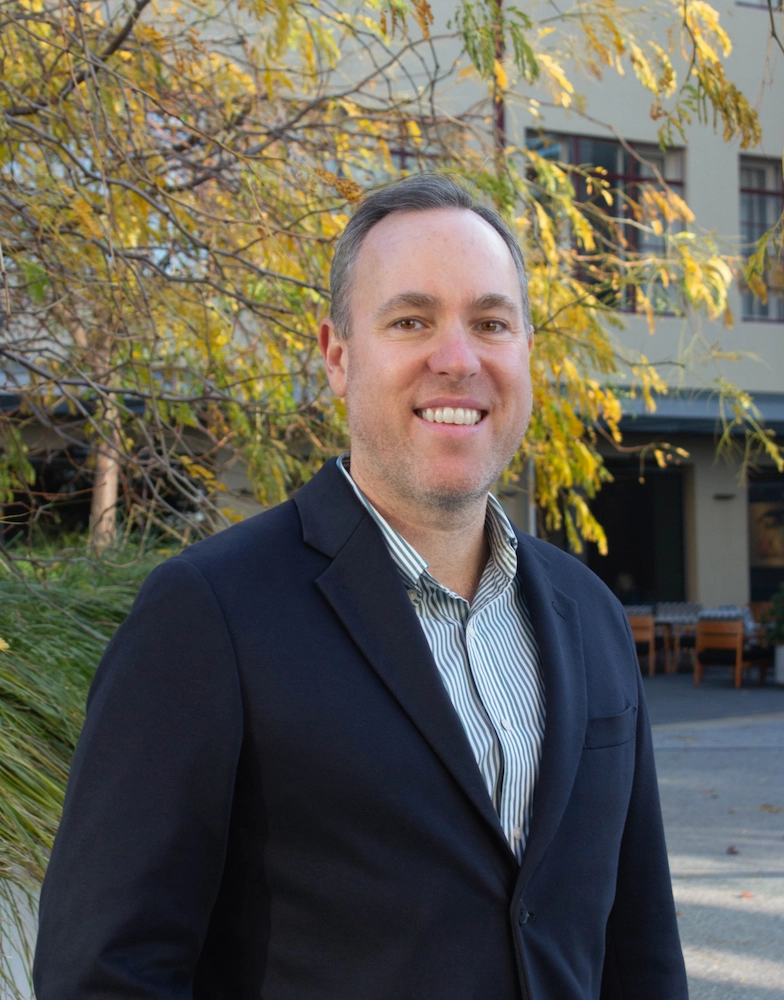



At Trace, Emma bridges operational expertise with sustainability transformation. She's a supply chain specialist with deep experience in circular economy design, change management in heavily regulated industries, and back-of-house logistics. Her strength is seeing patterns across vastly different environments and asking the questions that expose risk before it compounds.
We sat down with Emma to talk about what shaped her approach to problem-solving, what circular supply chains actually require in practice, and why embedding sustainability into operations is harder than most organisations want to admit.

You've led supply chain operations in defence, advised global clients at PwC, and now lead sustainability at Trace. That's a pretty extraordinary range. Looking back, what experiences have been most formative in how you solve problems today?
EW: The defence years shaped me more than anything else. When you're managing supply chains in that environment, the stakes are critical, the wrong part missing at the wrong time isn't a KPI problem, it's a mission problem. That pressure teaches you to think in systems, to find the weak link before it finds you, and to stay calm when complexity is at its peak. I came away with a deep respect for operational discipline, but also for the people on the ground who actually make things work.
What I didn't expect was how naturally that translated into sustainability. On the surface, defence logistics and sustainability couldn't look more different but both are fundamentally about managing risk across long, interdependent chains where the consequences of getting it wrong compound over time. At Trace, I find myself drawing on that same instinct: where's the fragility? What are we not seeing? Who bears the cost if this breaks? The context has changed, but the way I approach a problem really hasn't.
Sustainability in supply chains is shifting from compliance to competitive advantage. We’re seeing organisations embed sustainability considerations into route planning, network design, and supplier selection. What's driving that shift, and how are the leaders in this space actually operationalising sustainability rather than just reporting on it?
EW: We’ve definitely seen the shift from nice to have to a regulatory compliance led must have, and now into the competitive advantage space.The organisations we’re seeing getting ahead are the ones who’ve put in the work and got the data right — not just the glossy sustainability report. Scope 3 emissions are a good example, a lot of organisations can tell us their headline number but not where it comes from or which supplier is driving it. The gap between reporting and understanding is closing, but understanding and taking action is where competitive advantage really sits.
You've worked extensively in back-of-house logistics, particularly in complex environments like stadiums and large venues. With Brisbane preparing for the 2032 Olympics, what are the critical logistics challenges that organisers need to be thinking about now?
EW: Brisbane 2032 is operating with a distributed model across multiple venues and regions, which multiplies the coordination challenge enormously. The critical decisions about network design need to happen now. How will goods flow between venues, where will there be consolidation points, how will surge volumes be handled without disrupting regular supply chains? Infrastructure lead times are a lot longer than most realise, decisions over the next two years will lock in constraints that will require operational workarounds and risk mitigations later.
Circular supply chains are gaining momentum, but implementation often lags behind intention. What does a circular supply chain actually look like in practice, and where do organisations typically struggle to close the loop?
EW: A circular supply chain isn't a recycling program or a take-back scheme bolted onto a linear process. It's when end-of-life thinking is embedded in design from the start, and material flows are tracked with the same rigour as cost and lead times. Practically, this means knowing what your products are made of at a component level, having pathways to recover those materials, and most importantly, having suppliers who are willing and capable of receiving them back or repurposing them. The organisations doing this well have essentially redesigned their supplier relationships, not just their packaging.
Where most organisations struggle is the reverse logistics part. Getting products out to customers is a system built over decades. Getting it back used to be an afterthought, and while it's gained momentum in the last few years, it’s still under-resourced, poorly tracked, and there’s a lack of clearly defined commercial models to sustain it. There's also a data problem: circularity depends on knowing what you have, where it is, and what condition it's in at recovery, and most supply chain systems aren't built for that. Additionally, there is a system-level gap. Procurement teams are still largely rewarded on unit cost, not lifecycle value, which means circular options that cost more upfront get deprioritised even when the total-cost case is sound. Closing the loop isn't only a logistics challenge, it's a governance and measurement challenge as well.
You've led transformations in highly regulated, risk-averse environments like defence and health. What makes change so difficult in these settings, and what strategies actually work when you're trying to shift entrenched systems and processes?
EW: Regulated and risk-averse environments are likely resistant to change because the cost of getting it wrong is genuinely high, and the system has been deliberately designed to protect against failure. In defence, a process failure doesn't mean a missed KPI, it can mean an aircraft doesn't fly or a person doesn't come home. In health, the stakes are equally concrete. So when you come in with a transformation agenda, you're up against a deeply rational risk equation that has been reinforced over years of operating in high-consequence environments.
Credibility can be a game changer. In these environments, trust is critical and it's earned through demonstrated competence and consistency, not just through a flashy slide deck or a business case alone. The other thing that consistently separates successful transformations from stalled ones is how you handle compliance and risk framing. Most change programs treat regulation as a constraint to work around. The smarter approach is to position the change as the risk-reduction mechanism, showing that the current process is actually the higher-risk option, whether that's a manual system creating error exposure, a legacy procurement approach creating supply vulnerability, or a siloed data environment creating compliance blind spots. When you can reframe the conversation from "change is risky" to "not changing is riskier," you're speaking the language these organisations already understand.
Looking ahead, what shifts in how organisations approach sustainability are you most excited or optimistic about, and where do you think the industry still has significant ground to cover?
EW: ’m looking forward to seeing the divide between sustainability and operations continue to reduce and eventually disappear. For a long time, and even now, sustainability is treated as a separate function, and with siloed reporting and initiatives. What we’re starting to see more of, particularly in the organisations that are leading in this space, is sustainability logic being embedded directly into operational decision-making. Procurement teams pricing in carbon alongside cost. Network design teams modelling emissions as a real constraint, not an afterthought. That integration is where the real leverage is, and it's starting to happen at scale in a way it wasn't three or four years ago.
We've all become very good at producing sustainability narratives, but not so much the harder work like supplier engagement beyond tier one, meaningful scope 3 accountability, and being honest when a target is off track rather than reframing it. The compliance frameworks coming through will force some organisations' hands to increase rigour, but regulation tends to set a floor not a ceiling. The organisations that will lead are the ones that treat the standard as a starting point rather than a destination, and are willing to have uncomfortable conversations with their suppliers, their customers, and their own leadership about what progress actually looks like. I’m optimistic for the shift in sustainability, even though there is still a lot of work to be done.