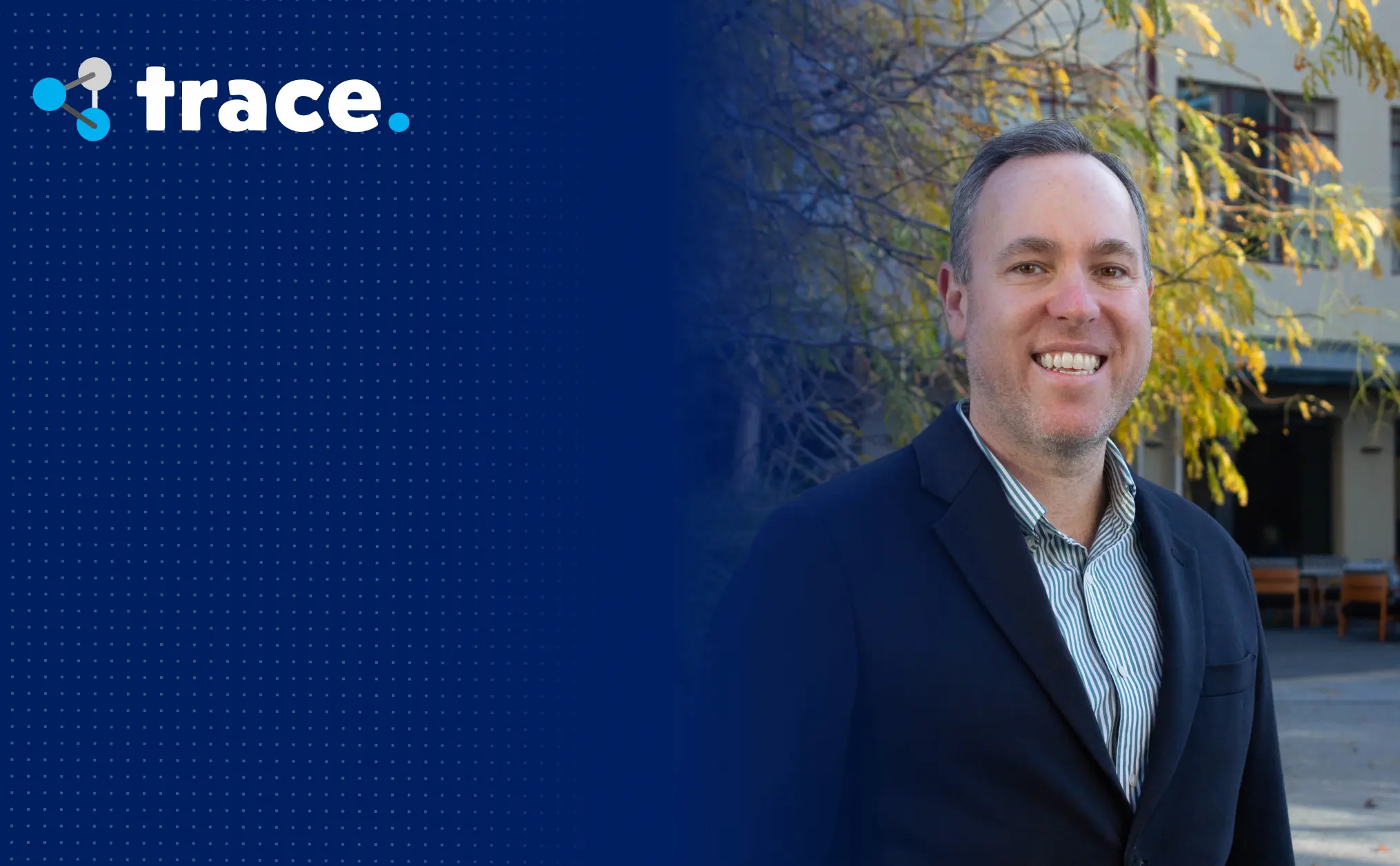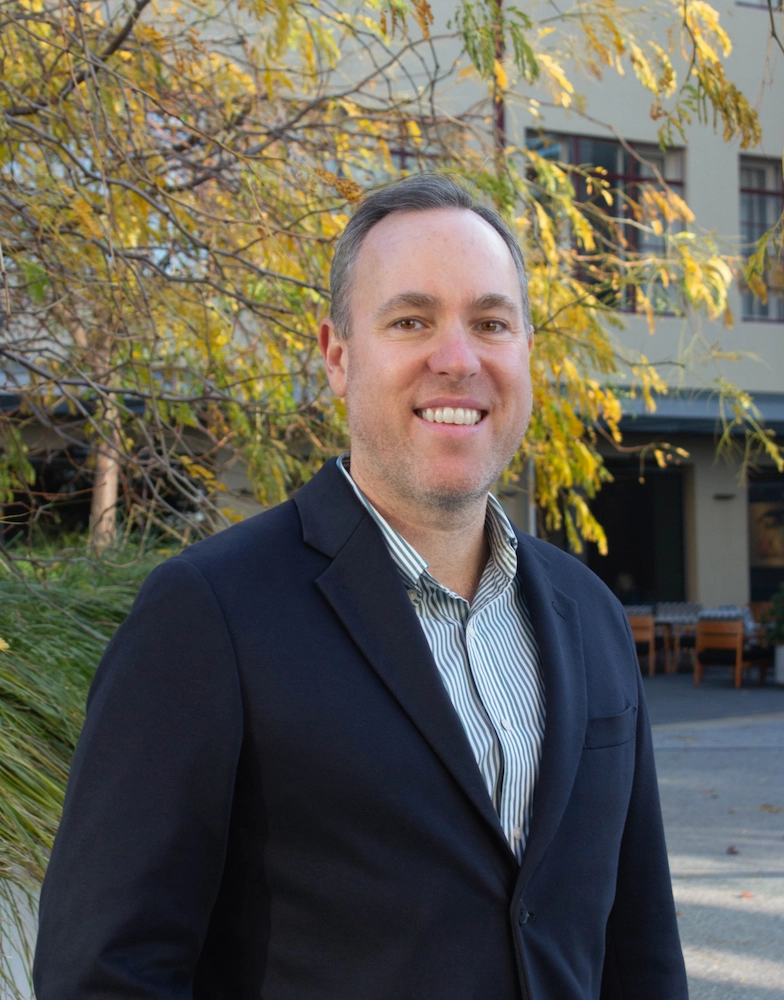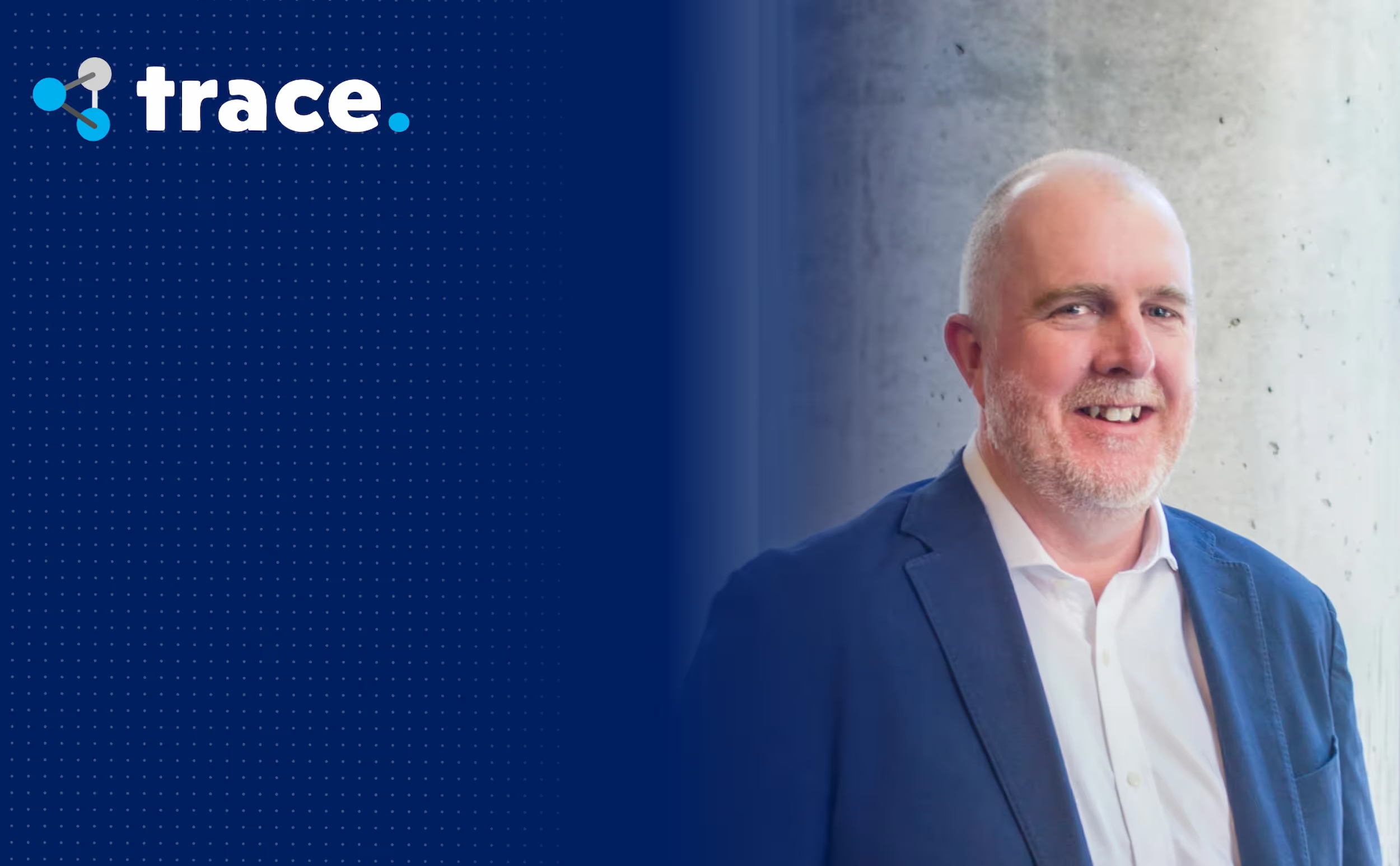



Tim Harris doesn't fit the typical consultant mould, and that's exactly why he's so effective. He's spent much of his career on the operational front line, leading teams as CIO at Border Express, delivering major programs at Victoria Police, working as COO at a WMS implementation partner, and spending the early part of his career in humanitarian logistics across Africa.
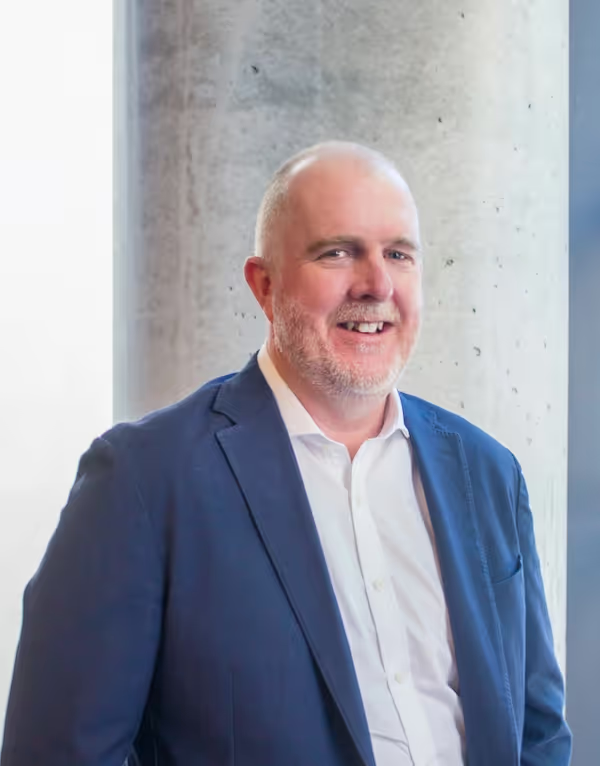
We sat down with Tim to talk about what shaped his approach to problem-solving, the lessons he's carried from humanitarian operations into commercial environments, and what organisations consistently underestimate when modernising their supply chains.
You've built a career that spans humanitarian logistics, law enforcement, and commercial operations. Which experiences have been most formative in shaping how you solve problems today?
TH: Early in my career, I spent nearly a decade working in humanitarian logistics across Africa, Albania, Kosovo, Russia, Mozambique, Tanzania, Angola, Uganda, Malawi, and South Africa, responding to natural disasters and food shortages between 1999 and 2007. When you’re establishing distribution operations in crisis zones, you quickly learn that perfect information doesn't exist, resources are always constrained, and the cost of failure isn't measured in dollars, it's measured in lives. That experience taught me to make decisions with incomplete data, build systems that are resilient by design rather than by accident, and always focus on the outcome rather than the process.
At Victoria Police, I transitioned into a more structured environment, overseeing critical equipment programs and asset management across the state. Managing equipment where accountability is non-negotiable, where every item must be tracked and every process auditable, instilled a discipline around governance, compliance, and systematic thinking that I carry into every project.
At Border Express, I had the opportunity to apply both of those foundations at scale. I led the development of item-level freight tracking, which became foundational to the business. I then headed the project to develop the parcel network, which generated $20 million in revenue in its first twelve months. Those projects taught me how to translate operational innovation into commercial outcomes—how to build the business case, align stakeholders, and deliver technology that genuinely moves the needle.
Critical to all of this has been my ability to communicate across levels, from an operator on the floor to the board. When you're leading large projects that impact the whole business, communication is everything. Today, my problem-solving draws on all three experiences: the pragmatism from working in austere environments, the rigour of managing highly accountable systems, and the commercial lens for building solutions that create value.
You've led operations from the inside and now advise organisations as a consultant. How does sitting on both sides of the table change the way you work with clients?
TH: Having sat in the chair makes a significant difference. As CIO at Border Express for three years, I was accountable for technology decisions that affected every part of the operation. I lived with the consequences of those decisions, good and bad. I've also held executive roles as COO at Open Sky Group, a boutique Blue Yonder WMS implementation partner, and as Head of Program Management at Körber. Those roles gave me deep exposure to how technology vendors and implementation partners operate, which is invaluable when helping clients navigate procurement and delivery.
That dual perspective changes my approach in three ways.
I understand the internal politics. When I'm working with a client's IT team, operations leadership, and finance function, I know they often have competing priorities. I've been in those conversations. I can help bridge those gaps because I've had to do it myself.
I'm realistic about what technology can and can't do. Having implemented WMS and TMS solutions from the vendor side and operated them from the client side, I can cut through the sales narrative. I know which features genuinely deliver value and which are impressive in a demo but problematic in practice.
I bring operational credibility. At Trace, I've been heavily involved in providing operational expertise across warehousing in manufacturing, government, and retail distribution. When I'm advising on a warehouse strategy or 3PL benchmarking exercise, I'm not just applying frameworks, I'm drawing on direct experience running operations, managing P&Ls, and making the trade-offs that every operations leader faces.
Clients appreciate that I'm not giving them theoretical advice. I've made the decisions they're facing, and I've lived with the outcomes.
From your experience, what separates organisations that navigate disruption well from those constantly firefighting?
TH: The organisations that manage disruption well share three characteristics:
They have visibility before they need it. Resilient organisations invest in supply chain visibility when things are running smoothly, not when a crisis forces them to. They know their tier-two and tier-three suppliers, understand the geographic concentrations of risk, and have dashboards that surface exceptions early. When disruption hits, they're not scrambling to understand their exposure; they already know it.
They've done the scenario planning. The best operators have thought through their response to major disruptions before they happen. They've mapped alternative suppliers, identified backup logistics routes, and stress-tested their inventory buffers. During the pandemic, the organisations that coped best weren't necessarily the ones with the most resources but the ones who had contingency plans they could activate. Proactive risk management is cheaper than reactive crisis management.
They have empowered decision-makers close to the operation. In a disruption, centralised decision-making creates bottlenecks. Resilient organisations push authority down so site managers and operations leads can make calls without waiting for head office approval. This requires trust, clear decision frameworks, and a culture that doesn't punish people for acting decisively in ambiguous situations.
The reactive organisations I've seen typically share the opposite profile: limited visibility, no contingency planning, and overly centralised control. When disruption hits, they're making decisions with incomplete information, discovering problems late, and waiting for approvals while the situation deteriorates.
The shift from reactive to proactive isn't primarily about technology, it's about mindset and investment priorities. It's choosing to spend money on resilience before you're forced to spend more on recovery.
You started your career in disaster relief and high-pressure humanitarian logistics. What lessons from those environments still shape how you think about resilience and decision-making?
TH: I began my career overseeing warehouse and distribution operations in Albania and Kosovo, and then spent nearly a decade working on global relief efforts in Mozambique, Tanzania, Angola, Uganda, Malawi, and South Africa, responding to natural disasters and food shortages between 1999 and 2007. That experience shaped my thinking in ways that still influence how I approach every project.
On resilience: In humanitarian operations, you learn that systems will fail. Roads wash out, suppliers don't deliver, equipment breaks. Resilience isn't about preventing failure, it's about designing operations that can absorb failure and keep functioning. You build redundancy, cross-train people, and preposition stock in multiple locations. That mindset applies directly to commercial supply chains: the question isn't whether disruption will happen, but whether your operation can continue when it does.
On preparedness: In relief operations, the organisations that responded fastest were those that had prepositioned supplies, established relationships with local partners, and rehearsed their deployment processes before the crisis. Preparedness is an investment you make when you don't need it, so it's available when you do. I carry that into commercial settings, encouraging clients to invest in visibility tools, supplier diversification, and contingency planning before disruption forces them to.
On decision-making under pressure: When people's lives depend on your logistics operation, you can't wait for perfect information. You make the best decision you can with what you know, act, and adjust as you learn more. That comfort with ambiguity has served me well in commercial environments. It's about making decisions when you're 70% confident rather than waiting for 95%, where speed often matters more than precision.
Those years taught me that logistics isn't just about efficiency. At its core, it's about ensuring the right things reach the right people when they need them. That purpose still drives how I think about supply chain work.
As CIO at Border Express, you were accountable for connecting technology investment to business performance. What lessons from that role still guide how you approach technology today?
TH: As CIO at Border Express, I was responsible for technology decisions in a business where margins are tight and operational performance is everything. That environment taught me several lessons I still apply.
Start with the business problem, not the technology. The most successful projects I led—item-level freight tracking, the parcel network, and the regional on-forwarder program—started with a clear commercial or operational need. The parcel network wasn't a technology project; it was a growth strategy that required technology to execute. That $20 million in first-year revenue came from solving a market opportunity, not from implementing software. When technology investments are framed around business outcomes, they get funded, prioritised, and supported through the inevitable implementation challenges.
Build the business case with rigour but design for learning. Every investment needs a solid ROI case, that's non-negotiable in a commercial environment. But I also learned to build programs in phases that deliver value incrementally and allow us to learn and adjust. Large, monolithic projects that promise transformation in eighteen months are high-risk. Projects that deliver tangible wins in three to six months, then build on that foundation, are more likely to succeed and sustain executive support.
Technology is only valuable if people use it. The best system in the world is worthless if the operations team works around it. I learned to invest as much in change management, training, and process redesign as in the technology itself, and to involve operations early not just IT, so the solution reflects how work actually gets done.
Don't confuse activity with outcomes. It's easy to measure project milestones, go-live dates, and system uptime. What matters is whether the business is performing better: faster delivery times, lower cost-to-serve, improved customer satisfaction. I try to ensure every technology conversation comes back to the metrics that matter to the business.
Looking ahead, what shifts or innovations in supply chain technology and operations are you most excited about, and why?
TH: Three areas genuinely excite me.
The maturation of AI from hype to practical application. We're past the point where AI is just a vendor talking point. I'm seeing real-world applications in demand forecasting that integrate external signals such as weather, events and social trends to significantly improve accuracy. Predictive analytics for exception management means operations teams receive alerts about problems before they escalate into crises, not after. The shift from reactive firefighting to proactive intervention changes how operations leaders spend their time and dramatically improves service outcomes.
The convergence of WMS and TMS into unified platforms. Historically, these systems operated in silos. The TMS would create a shipment plan, hand it to the WMS, and have no visibility into execution until the truck was loaded. The next generation of platforms shares data continuously, so shipment planning can reoptimise in real time based on what's happening in the warehouse. That integration eliminates a lot of the friction and inefficiency I've seen in traditional implementations.
Embedding sustainability into supply chain decision-making. For a long time, sustainability was a reporting obligation rather than an operational driver. That's changing. Route optimisation now considers emissions, not just cost and time. Network design considers the carbon footprint alongside service levels. Customers, particularly in retail and FMCG, are demanding visibility into the environmental impact of their supply chains. This isn't just about compliance, it's becoming a source of competitive advantage.
What excites me most is that these innovations aren't just about efficiency, they're about building supply chains that are more responsive, resilient, and sustainable. Having spent the early part of my career in environments where supply chains genuinely mattered to people's lives, I find it encouraging to see commercial supply chains embrace that same sense of purpose.
What sets Tim apart is simple: he's sat in the chair. He's led the transformations, built the systems, made the calls, and lived with what happened next. That experience shapes everything he brings to clients at Trace.