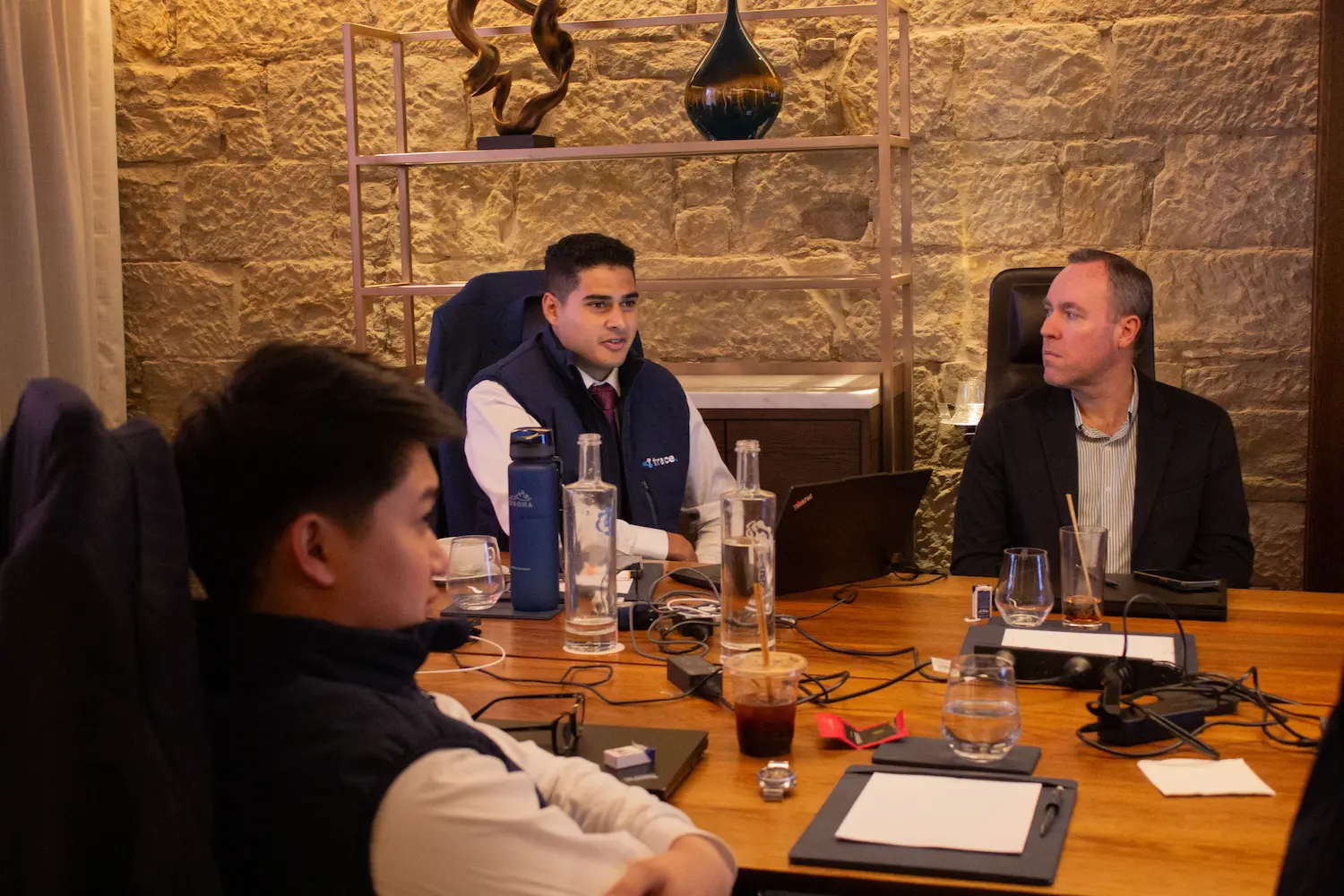



There’s a recurring scene in many Australian and New Zealand companies: Monday morning meetings full of intuition, spreadsheets and heated debate. Sales promise the customers will show up; operations promise they’ll deliver; finance quietly wonders which forecast to trust. When forecasts don’t land, stock either piles up in warehouses or customers walk away. That’s the precise pain S&OP was built to solve — and why the natural evolution to Integrated Business Planning (IBP) matters for organisations that want to connect operational execution to financial value.
This article is written for supply chain leaders, heads of planning, CFOs and executives across Australia and New Zealand. It’s practical, deliberately non-technical where it helps the conversation, and focused on the decisions that deliver value. We’ll cover what S&OP and IBP are, why both matter, how to design and implement them, and the mistakes to avoid. Along the way you’ll find a pragmatic roadmap you can adapt to your organisation and clear ways Trace Consultants can help you move from a tactical process to a value-creating planning capability.
What are S&OP and IBP — and how are they different?
Sales & Operations Planning (S&OP) is a cross-functional process that aligns demand and supply plans to balance service and cost. Typical S&OP cycles are monthly and focus on matching a forecasted demand plan with the organisation’s capacity to supply — across manufacturing, sourcing and distribution. It’s a forum where Sales, Operations, Supply Chain, Procurement and Finance agree on an operational plan for the medium term (usually 3–18 months).
Integrated Business Planning (IBP) is the evolution of S&OP. IBP brings explicit financial integration and strategic planning into the process. Where S&OP answers the operational question, “Can we make and deliver?”, IBP asks, “Does this plan deliver value to the business?” IBP extends horizons, tightens financial reconciliation, integrates product and strategic portfolio decisions, and elevates execution to the executive level.
In short: S&OP is about operational alignment; IBP is about aligning operations to strategy and financial outcomes.
Why S&OP / IBP matter — the business case
When S&OP/IBP works, the business reaps a set of interrelated benefits:
- Improved service and reduced stock: Better forecasts and joint decisions reduce safety stock and avoid lost sales.
- Lower working capital: Fewer one-off buys, smoother production schedules and smarter inventory policies free up cash.
- Faster decision-making: A structured cadence moves decisions out of ad hoc meetings and into an accountable process.
- Better margin management: By linking plans to the financials, the business chooses the actions that improve margin, not just volume.
- Scenario-readiness: Planning becomes a tool for testing “what if?” scenarios — from raw material shortages to demand spikes.
- Stronger cross-functional collaboration: S&OP/IBP creates shared language and clear governance for trade-offs.
In the ANZ context, these benefits are especially material. Geography and distribution cost sensitivities, retail seasonality, complex channel mixes and supplier concentration mean the right planning process can quickly improve both service and cashflow.
The core components of a robust S&OP process
A well-functioning S&OP has repeatable components. Think of it as an engine: data is the fuel, people are the engineers, and governance keeps it on the rails.
1. Demand planning
Accurate, actionable demand plans are the foundation. Demand planning combines statistical forecasting with commercial inputs:
- Statistical forecasts: time-series models, seasonality, promotions and causal drivers.
- Commercial intelligence: sales channel insights, promotions calendar, new product launches and major customer commitments.
- Consensus process: a collaborative forum where sales, marketing and customer teams explain their assumptions and the forecast is adjusted to reflect market intelligence.
For ANZ businesses, demand planning must reflect local seasonality (e.g. EOFY, summer retail peaks), channel shifts and the influence of major national account contracts.
2. Supply planning
Supply planning translates demand into feasible production and sourcing plans:
- Capacity checks: raw materials, production slots, labour, and external suppliers.
- Inventory policies: safety stock rules, lead-time buffers and replenishment logic.
- Constraint resolution: identify bottlenecks and propose mitigations — e.g. overtime, subcontracting, or alternative suppliers.
Supply planners should be confident their plans are realistic and include contingency options.
3. Reconciliation & financial integration
S&OP must reconcile to the financial plan:
- Cost and margin analysis: different fulfilment options vary profitably — choose the option that delivers the best commercial outcome.
- Working capital and cash impacts: quantify the balance-sheet effect of inventory decisions.
- Budget alignment: ensure planned activity sits within approved budgets or show clear cases to adjust them.
IBP deepens this integration, bringing balance-sheet metrics and scenario P&L into the decision forum.
4. Executive review
A monthly executive S&OP/IBP review is the governance heart. This is where decisions that affect headcount, capital, pricing or significant supplier strategy are approved. Effective executive reviews have clean inputs: scenario options, financial impacts, recommended decisions and clear owners.
5. Scenario & contingency planning
It’s not enough to have a plan — you must test it. Scenario planning considers supply disruption, demand shocks and raw material price changes. Robust S&OP includes pre-agreed contingency strategies and triggers for execution.
6. KPIs and continuous improvement
Track forecast accuracy, inventory turns, service levels, OTIF and decision cycle times. Use these KPIs to iterate and improve the process.
What IBP adds — the leap from operations to strategy
IBP elevates S&OP in three central ways:
- Financial tightness: IBP embeds a single, reconciled financial plan. Decisions are evaluated for profit, cashflow and capital impact.
- Strategic alignment: IBP integrates product portfolio decisions, capital projects and long-term capacity choices — aligning daily decisions with strategy.
- Longer horizons and governance: IBP stretches the lens beyond months into years, making it the forum for trade-offs that shape the organisation.
When done well, IBP converts operational agility into strategic advantage. It gives leadership a single truth for demand, supply and financials so they can prioritise investments and respond to disruption with clarity.
Designing S&OP/IBP — a practical 12–18 month roadmap
Below is a pragmatic roadmap that ANZ organisations can adapt. It focuses on outcomes over methodology.
Phase 0 — Diagnostic (4–6 weeks)
- Current state review: process, data sources, systems, people, KPIs and governance.
- Pain-point identification: where are the biggest errors and bottlenecks?
- Stakeholder map: who must be involved — Sales, Operations, Procurement, Finance, HR, IT.
Deliverable: a concise diagnostic report with a prioritised list of interventions and a high-level business case.
Phase 1 — Target design (6–10 weeks)
- Process design: meeting cadence (demand review, supply review, pre-S&OP, executive review), roles and RACI.
- Data model: define inputs, reconciliations and ownership.
- KPI framework: forecast accuracy targets, inventory, service, cost-to-serve and cycle time.
- Technology assessment: capability gap analysis against target processes.
Deliverable: a target S&OP/IBP blueprint and a prioritised implementation plan.
Phase 2 — Build & pilot (12–16 weeks)
- Tooling & dashboards: configure demand and supply plans, build reconciled reports and dashboards.
- Pilot teams: run pilots in one product group or business unit to stress-test assumptions.
- Training: prepare facilitators, planners and executives for the new cadence.
Deliverable: working pilot with measurable KPIs demonstrating improved decision quality.
Phase 3 — Scale & embed (16–24 weeks)
- Rollout: extend the process across business units and geographies.
- Integrations: connect ERP, CRM and other planning systems as required.
- Governance: formalise executive review cadence and decision rights.
- Continuous improvement: establish S&OP/IBP office or centre of excellence.
Deliverable: enterprise-level S&OP/IBP process operating routinely with executive sponsorship.
Phase 4 — Optimise & mature (ongoing)
- Scenario planning regularised.
- Advanced analytics: machine-learning forecasting, demand sensing and optimisation.
- Strategic planning integration: align IBP with annual planning and long-term strategy.
Deliverable: IBP that is the single source of truth for operational and strategic trading decisions.
Choosing the right technology
Technology accelerates S&OP/IBP but is not a substitute for process maturity.
- Forecasting tools: Choose solutions that support multiple forecasting methods, hierarchy roll-ups and easy collaboration.
- Supply planning / APS: Advanced planning systems help with constrained scheduling and optimisation where complexity warrants it.
- Integration platform: Ensure reliable data flows between ERP, CRM, WMS and planning tools.
- Dashboards & reporting: Executive-friendly dashboards that reconcile to finance make the process actionable.
- Cloud vs on-premises: Cloud solutions reduce setup time and often bring faster updates, but ensure they meet security and integration needs.
Remember: pick technology to solve a defined problem. Many organisations benefit from pragmatic, low-code tools to bridge capabilities while longer-term architecture is implemented.
The human element — roles, skills and change
People make the process work or break it.
Key roles:
- Demand planners: statistical modelling and consensus facilitation.
- Supply planners: capacity planning, constraint management and inventory policy owners.
- S&OP/IBP facilitator: runs the process, drives accountability and ensures follow-through.
- Executive sponsor: provides authority and resources.
Skills to build:
- Forecasting and statistical literacy.
- Commercial judgement: understanding trade-offs between service and margin.
- Facilitation and negotiation: cross-functional alignment requires diplomacy.
- Data literacy: the ability to interpret dashboards, reconcile anomalies and challenge assumptions.
Change management: run pilots, celebrate quick wins, create clear decision rights and invest in training. The aim is cultural shift — from siloed decision-making to collaborative trade-off resolution.
Common pitfalls and how to avoid them
- Treating S&OP as a meetings exercise: if the meetings don’t solve decisions or produce tangible outputs, the process won’t stick. Make every meeting accountable — decisions, owners and deadlines.
- Poor data governance: garbage in, garbage out. Define single sources of truth and reconcile them monthly.
- Lack of executive sponsorship: without a senior leader to arbitrate trade-offs, S&OP becomes a “nice to have.”
- Over-reliance on technology: tools are enablers, not the solution. Focus on process and people first.
- Too much scope, too fast: pilot and scale. Trying to implement IBP across multiple business units simultaneously is a common mistake.
Avoid these traps by being pragmatic, starting small and demonstrating tangible value quickly.
KPIs and metrics that matter
Your KPI set should link operational performance to commercial outcomes.
Forecast & demand metrics
- Forecast accuracy (by product family & horizon)
- Forecast bias (systematic over- or under-forecasting)
Supply & inventory metrics
- Inventory days on hand / stock turns
- Fill rate / service level
- On-time-in-full (OTIF)
Financial & cycle metrics
- Cost-to-serve by channel/product
- Cash-to-cash cycle time
- Working capital tied to inventory
Process metrics
- Decision lead time (time from issue identification to decision)
- Percentage of planned vs ad-hoc production
- Number of open exceptions requiring executive decision
Track these metrics regularly and ensure the executive review focuses on the handful of KPIs that drive value.
S&OP and IBP in the ANZ context — practical considerations
Australian and New Zealand organisations face a set of local realities:
- Geography and distribution cost: domestic freight and long regional routes in Australia make inventory placement and replenishment logic critical.
- Seasonality and promotions: Australian retail has unique seasonality (summer holidays, EOFY) and events that must be embedded in forecasting.
- Supplier concentration: many industries have small numbers of key suppliers; constraint scenarios must include supplier failure or extended lead-times.
- Regulatory and compliance: certain sectors (pharmaceuticals, food) require planning that respects compliance windows and lot traceability.
- Labour markets: labour shortages in regional areas affect planning and capacity decisions.
Design S&OP/IBP rules and scenarios explicitly for these realities — local detail matters.
How Trace Consultants can help
Designing and embedding a world-class S&OP or IBP capability is as much about execution as it is about design. Trace Consultants partners with ANZ organisations to translate ambition into measurable outcomes across the end-to-end journey. Practical ways we support clients include:
- Diagnostic & readiness assessment: rapid current-state reviews that identify gaps in process, data and governance and prioritise high-impact interventions.
- Target operating model & process design: bespoke S&OP/IBP blueprints that define meeting cadences, roles, KPIs and decision rights — tailored to ANZ operational realities.
- Demand & supply modelling: activity-based demand forecasting, inventory policy design and constraint modelling to create realistic, decision-ready plans.
- Technology selection & implementation support: we advise on tool selection (from forecasting engines to APS), run procurement for vendors and support configuration to your constraints.
- Pilot delivery & roll-out: design and run pilots that prove the new process, deliver quick wins and create a blueprint for scaling across business units.
- Capability building & change management: training for planners, facilitators and executives; establishment of S&OP/IBP centres of excellence and governance routines.
- Continuous improvement & benchmarking: ongoing optimisation cycles, scenario planning workshops, and peer benchmarking to sustain productivity gains.
Trace’s approach is pragmatic: we focus on the decisions you must make, the numbers you need to manage, and the governance required to make those decisions stick. If you want to understand where the biggest improvements live in your S&OP/IBP process, Trace can run a short diagnostic that identifies the top three interventions likely to deliver measurable benefit within six months.
A practical checklist: how to start this month
- Run a one-page diagnostic: who owns forecast accuracy, what are top three planning pain points, and what’s the current executive decision cadence?
- Define the minimum viable S&OP: pick one product family or business unit for a 3-month pilot.
- Agree the KPIs: choose 3–5 metrics that will show progress for the pilot (e.g. forecast accuracy, inventory days, OTIF).
- Design the meetings: set a clear cadence — demand review, supply review, pre-S&OP and executive review — with owners and decision authorities.
- Build a reconciled dataset: one source of truth for demand and supply inputs. Start with simple extracts from ERP and sales data.
- Run scenario workshops: identify two credible supply constraints and test responses in the pilot.
- Train the facilitator: an effective S&OP needs a strong facilitator who can hold the agenda and ensure decisions happen.
- Report to the executive: after the pilot, present a clear business case for scaling based on the pilot KPIs.
S&OP and IBP are not “nice to have” frameworks — they are the practical glue that connects commercial ambition to operational reality and financial value. The journey from rough, spreadsheet-driven planning meetings to a disciplined IBP capability is not trivial, but the returns are clear: less inventory, higher service, better cash flow and faster decision-making.
If you’re starting, focus on the fundamentals: clean data, a simple repeatable cadence, clear decision rights and a pilot that proves the outcomes you care about. If you’ve already got an S&OP, ask whether it truly links to your financials and strategic portfolio decisions — that’s the moment to consider IBP.
Trace Consultants works with ANZ organisations to design, pilot and scale S&OP and IBP capabilities that are practical, defensible and aligned to commercial outcomes. If you want to explore a short diagnostic to identify quick wins and a 12–18 month roadmap tailored to your business, get in touch — the first step is often the clearest.