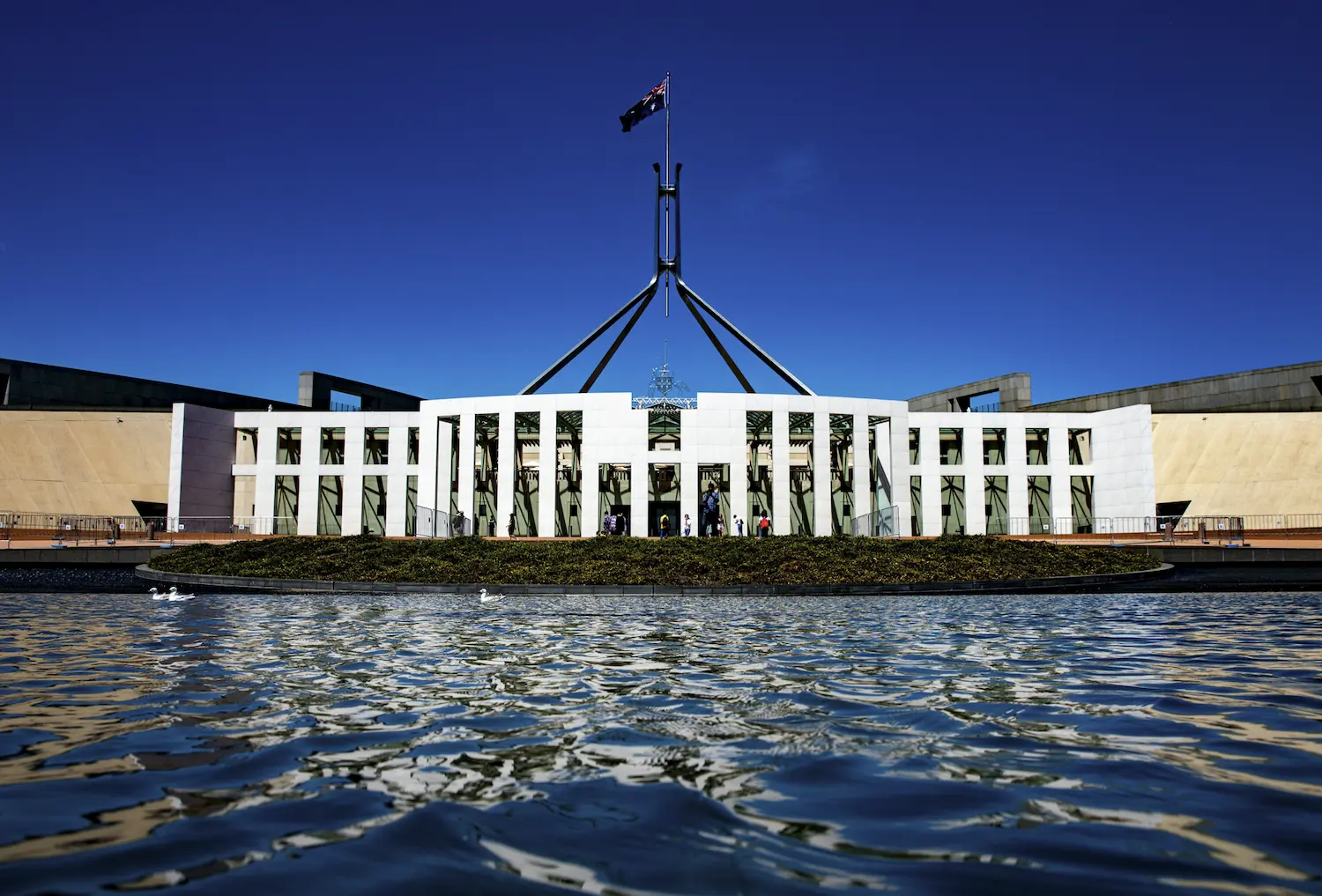



Australia’s 2024 National Defence Strategy and the accompanying Integrated Investment Programme represent the most significant reorientation of Australian defence policy in decades. The strategy is explicit about the threat environment — and equally explicit about the supply chain and industrial capability implications. It identifies the need to build and sustain sovereign industrial capability in priority areas, reduce dependence on foreign supply chains for critical inputs, and ensure the ADF can operate and sustain itself in contested environments without relying on just-in-time global logistics.
This is not abstract policy language. It has direct implications for how Australian industry structures its defence supply chains, how government agencies procure and manage sovereign capability, and where private sector investment is flowing. For supply chain and procurement professionals working in or adjacent to the defence sector, understanding these implications is increasingly essential.
What the National Defence Strategy Actually Says About Supply Chain
The NDS identifies several capability priorities that have direct supply chain dimensions. Guided weapons and explosive ordnance — the GWEO enterprise — is perhaps the most prominent. Australia currently relies almost entirely on imported munitions, and the strategy commits to building domestic manufacturing capability for key munitions categories. The supply chain implications are significant: establishing domestic manufacturing requires sovereign raw material access, qualified supplier bases, specialised manufacturing facilities, and logistics infrastructure that does not currently exist at scale in Australia.
The strategy also emphasises the need to improve fuel and energy resilience. Australia’s liquid fuel supply chain is heavily import-dependent, with limited domestic refining capacity and relatively shallow strategic reserves compared to peer nations. The NDS identifies this as a vulnerability and commits to addressing it, which will require investment in storage infrastructure, alternative supply arrangements, and logistics planning that accounts for contested maritime environments.
Sustainment — the long-term maintenance, repair, and overhaul of military platforms and systems — is another area where sovereign capability is identified as a priority. Current sustainment arrangements for major platforms often involve significant offshore components, with parts and expertise sourced from original equipment manufacturers in the United States, United Kingdom, and Europe. The strategy signals an intent to build more domestic sustainment capability, reducing the vulnerability that comes from extended global supply chains in a crisis.
Sovereign Capability: What It Means in Practice
The term ‘sovereign capability’ appears frequently in Australian defence policy, but its operational meaning varies. In the supply chain context, sovereign capability generally refers to the ability to produce, maintain, or access critical goods and services from within Australia or from highly trusted partner nations, without dependence on supply chains that could be disrupted by adversaries or geopolitical events.
In practice, this means different things for different capability areas. For munitions and energetics, it means establishing domestic manufacturing capacity for at least some categories of guided weapons and conventional ordnance. For fuel, it means increasing domestic storage capacity and diversifying supply arrangements. For platform sustainment, it means building the domestic skills, facilities, and supply chains to maintain major platforms without relying on offshore OEM support in a crisis. For critical minerals and materials, it means securing supply from Australian or allied sources rather than from potential adversaries.
The degree of sovereignty required is not the same across all capability areas. For some categories, full domestic production is both feasible and cost-effective. For others, the appropriate model is assured access from trusted partners — Five Eyes nations, Japan, South Korea — rather than full domestic production. The policy intent is to reduce single-point dependencies and extend the window within which Australia can sustain operations without resupply, not necessarily to onshore every element of the supply chain.
The GWEO Enterprise: A Case Study in Sovereign Supply Chain Development
The Guided Weapons and Explosive Ordnance enterprise is the most concrete example of the NDS supply chain agenda in action. Australia has committed to establishing domestic manufacturing capability for guided weapons, with the Sovereign Guided Weapons Enterprise (SGWE) intended to produce surface-to-surface and air-to-surface missiles domestically in partnership with industry.
The supply chain challenges involved are substantial. Guided weapons contain hundreds of components, many of which involve controlled technologies, specialised materials, and complex manufacturing processes. Establishing a domestic supply chain for these systems requires not just a prime contractor with integration capability, but a supporting ecosystem of suppliers capable of producing subcomponents to the required specifications and quality standards.
Australia currently has limited depth in this supplier ecosystem. Some subcomponents can be sourced domestically or from Australian subsidiaries of foreign firms. Others will require either technology transfer arrangements, foreign direct investment in domestic production facilities, or assured supply agreements with allied nation producers. Mapping the supply chain, identifying the critical bottlenecks, and developing a sequenced plan to address them is a major program of work that involves both government procurement teams and industry partners.
For supply chain professionals, the GWEO enterprise illustrates the gap between policy intent and implementation reality. Building a sovereign capability is not a procurement decision — it is a supply chain development program that involves industrial base investment, supplier qualification, technology transfer, workforce development, and sustained government commitment over years or decades.
Fuel and Energy Resilience: The Logistics Vulnerability
Australia’s fuel supply chain has been a known vulnerability for years. The closure of domestic refineries has left Australia dependent on imported refined petroleum products, with the majority sourced through Asian refining hubs. Strategic reserve levels, while improved by recent policy decisions, remain below those of most comparable nations. The supply chain for fuel to military bases and operational areas is heavily dependent on commercial infrastructure that was not designed with military requirements in mind.
The NDS signals intent to address these vulnerabilities, but the practical path involves difficult trade-offs. Increasing domestic refining capacity would require significant capital investment in infrastructure that is commercially marginal given global refining economics. Expanding strategic reserves requires storage infrastructure at appropriate locations, including in northern Australia where operational requirements are most acute but commercial fuel infrastructure is least developed.
For the supply chain function within Defence, fuel resilience is a planning and logistics challenge as much as a policy one. It requires detailed modelling of consumption scenarios, assessment of the vulnerability of different supply routes and storage locations, development of alternative supply arrangements for contingency situations, and integration of fuel logistics into broader operational planning.
Sustainment and the Industrial Base
Sustainment — keeping platforms operational over their service lives — is where defence supply chain meets industry policy. The platforms the ADF operates — submarines, frigates, combat aircraft, armoured vehicles, helicopters — require sustained maintenance, repair, and overhaul over service lives measured in decades. The workforce, facilities, and supply chains required to support this sustainment are a major component of Australia’s defence industrial base.
The NDS and associated AUKUS commitments have significantly expanded the sustainment agenda. The Virginia-class submarine program, if it proceeds as planned, will require Australia to develop sustainment capability for nuclear-powered submarines at a scale and complexity that does not currently exist here. The supply chain requirements — nuclear-qualified components, specialised tooling, trained technicians, appropriate facilities — are in a different category from conventional submarine sustainment.
More broadly, the NDS signals an intent to grow the domestic defence industrial base and reduce the proportion of sustainment work performed offshore. This has implications for procurement policy (local content requirements, Australian Industry Capability obligations), for industry investment (where companies choose to build or expand facilities), and for supply chain design (how maintenance supply chains are structured to support domestic sustainment).
Procurement Policy Implications
The NDS has prompted a review of defence procurement policy, including the Australian Industry Capability (AIC) framework and the mechanisms by which sovereign capability requirements are factored into procurement decisions. For supply chain and procurement professionals working in defence, several developments are worth tracking.
The Sovereign Industrial Capability Priority (SICP) program identifies specific capability areas where the government assesses that domestic supply is important to national security. Companies seeking to work in these areas are expected to demonstrate plans to support sovereign capability development. This creates both requirements and opportunities for domestic suppliers — requirements to invest in the capabilities that support sovereign production, and opportunities to access government support for that investment.
Defence procurement is also increasingly considering supply chain resilience as a factor in vendor evaluation. The question is no longer just whether a supplier can provide the required goods or services at the right price and quality, but whether their supply chain is resilient to disruption, whether they have domestic manufacturing capability or can develop it, and whether they are dependent on supply chains that create geopolitical risk.
For companies positioning themselves for defence work, this means being able to articulate their supply chain risk profile and their plans to address vulnerabilities. For procurement teams within Defence, it means developing the analytical capability to assess supply chain resilience as part of vendor evaluation, rather than treating it as a secondary consideration.
The Role of Allied Supply Chains
Sovereign capability does not mean autarky. Australia’s defence supply chain strategy explicitly includes assured access from allied nations as an element of sovereignty. The AUKUS partnership, in particular, is intended to create a deeper integration of Australian, UK, and US defence industrial bases, with technology transfer, joint production arrangements, and streamlined export control processes designed to make access to allied capabilities more reliable.
For supply chain professionals, the practical implication is that ‘sovereign’ increasingly means ‘Five Eyes plus trusted partners’ rather than ‘exclusively Australian.’ The question for supply chain design is not whether every component is made in Australia, but whether the supply chain as a whole is resilient to disruption from adversaries and whether it can sustain operations in a contested environment.
This framing has implications for how companies structure their global supply chains. Maintaining production in China or sourcing critical components from Chinese manufacturers creates supply chain risk in the defence context that it may not create in commercial contexts. Increasingly, defence prime contractors and their subcontractors are being asked to map their supply chains and identify dependencies on non-allied sources, and to develop plans to address them.
Practical Implications for Organisations
For organisations operating in or adjacent to the Australian defence sector, the NDS supply chain agenda creates both urgency and opportunity. A few practical implications stand out.
Supply chain mapping is no longer optional. Organisations that cannot articulate where their inputs come from, what the dependencies are, and what the vulnerabilities might be will find it increasingly difficult to engage effectively with defence procurement requirements. Mapping supply chains to the component level, identifying country-of-origin for critical inputs, and assessing single-source dependencies are foundational steps.
Sovereign capability development requires long-term commitment. Building domestic manufacturing capability for defence applications is not a short-term project. It requires capital investment, workforce development, supplier qualification, and sustained relationship-building with government procurement teams. Organisations that start this work now will be better positioned as sovereign capability requirements mature.
Resilience and redundancy need to be designed in. Defence supply chains that rely on just-in-time principles and lean inventory management are inherently vulnerable to disruption. The shift in policy context means that designing in redundancy — maintaining buffer stocks, qualifying multiple suppliers, holding spare capacity in sustainment facilities — is increasingly valued rather than penalised.
The regulatory and policy environment is evolving rapidly. AIC requirements, SICP designations, export control arrangements under AUKUS, and foreign investment screening all affect how defence supply chains can be structured. Organisations need to stay current on policy developments and factor them into supply chain design decisions.
How Trace Consultants Can Help
Trace Consultants works with organisations across the defence supply chain — prime contractors, subcontractors, government procurement teams, and industry bodies — to develop supply chain strategies that align with sovereign capability requirements and defence procurement policy.
Our work in this space includes supply chain mapping and vulnerability assessment, sovereign capability development planning, procurement policy navigation, sustainment supply chain design, and industry positioning for defence opportunities. We understand the intersection of supply chain practice and defence policy, and we work with clients to translate policy intent into practical supply chain decisions.
Contact Trace Consultants to discuss how we can support your organisation’s defence supply chain strategy.