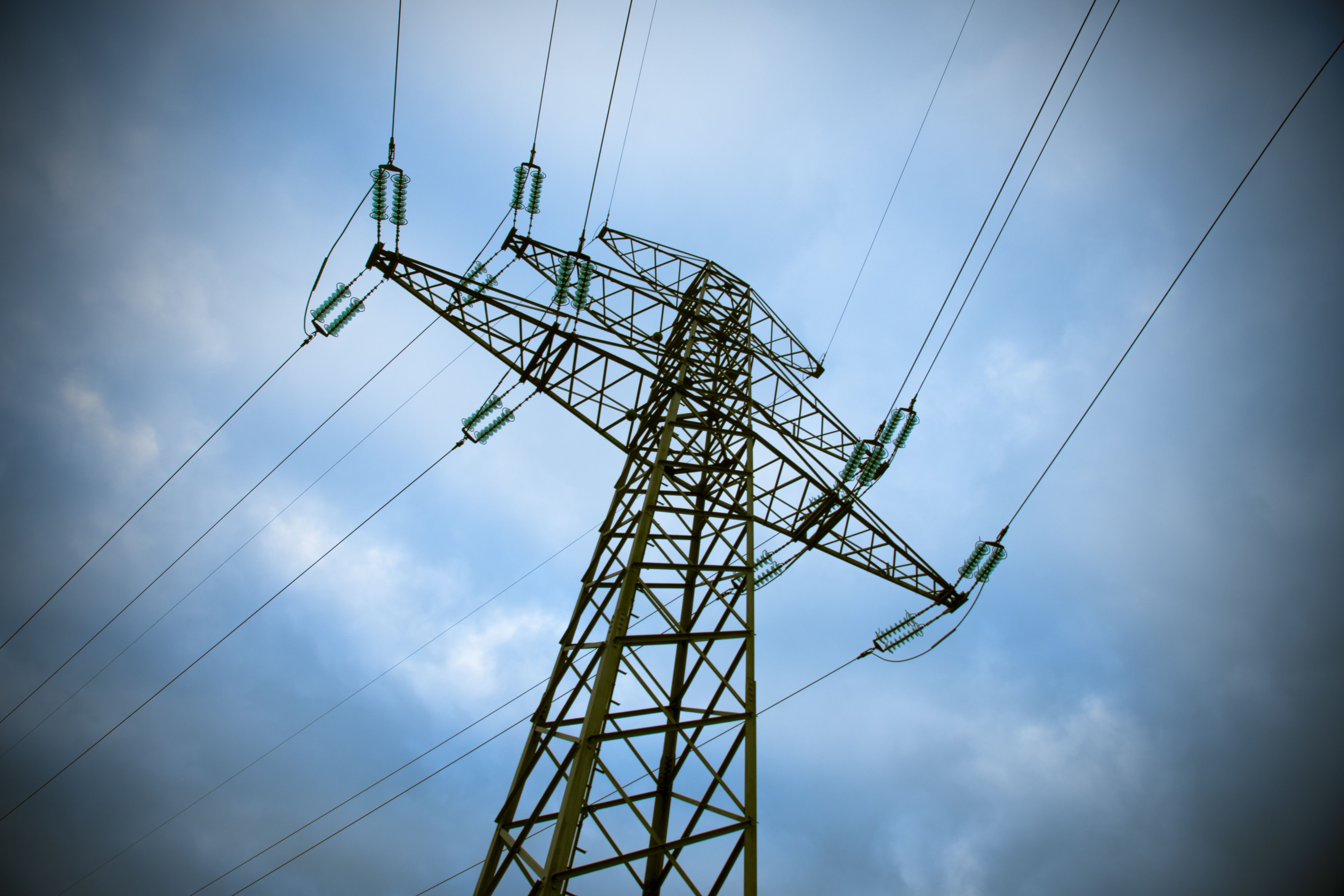



Australia is in the middle of the largest rebuild of its electricity grid in living memory. Coal is leaving the system, renewables are arriving at pace, and thousands of kilometres of new high voltage transmission are being planned and built to connect the two. That task was already stretching the country's energy transmission supply chain and its skilled workforce to the limit. Then artificial intelligence arrived, and with it a wave of data centre demand that lands directly on the same wires, the same equipment order books, and the same pool of electricians and engineers.
The popular framing is that Australia is "rebuilding the grid for AI." That is not quite right, and the distinction matters. The grid rebuild is driven first by the energy transition: the retirement of ageing coal generators and the commitment to 82 per cent renewable electricity by 2030. AI and the data centres that power it are not the cause of the rebuild. They are a powerful new load arriving on top of it, compressing timelines that were already tight and intensifying constraints that were already binding.
For Australian leaders in energy, infrastructure, government, and the businesses that supply them, the practical message is blunt. The constraint is no longer ambition, policy, or even capital. The constraint is whether the physical equipment and the skilled people can be secured fast enough. This article looks at the problem through a supply chain lens: what is being built, how AI changes the demand picture, why decades of underinvestment have left Australia on the back foot, and what commercial and government organisations should actually do about it.
What is actually being rebuilt
The blueprint is the Australian Energy Market Operator's 2024 Integrated System Plan, the official roadmap for the National Electricity Market. Its central conclusion is stark: to replace retiring coal with firmed renewables, Australia needs around 10,000 kilometres of new transmission lines, with roughly 4,581 kilometres of that required just to hit the 2030 targets, according to the Department of Climate Change, Energy, the Environment and Water. AEMO costs the transmission component at about $16 billion and expects it to deliver net market benefits of around $22 billion. The urgency comes from coal: AEMO projects that 90 per cent of today's coal capacity will close by 2035, and all of it before 2040.
Funding the network side is the Commonwealth's Rewiring the Nation programme, a $20 billion pool of concessional finance and equity administered through the Clean Energy Finance Corporation. The money is now flowing into the projects that form the new backbone of the east coast grid: HumeLink and VNI West connecting New South Wales and Victoria, Project EnergyConnect linking New South Wales and South Australia, Marinus Link under Bass Strait to Tasmania, Sydney Ring South, QNI Connect into Queensland, and renewable energy zone infrastructure such as the Central-West Orana REZ.
The important context is this. Australia committed to the rebuild, set it a hard deadline, and underwrote it with public money, all before AI demand became a serious factor. The plan was always going to test the country's ability to source equipment and skilled labour. AI did not create that test. It raised the difficulty.
How AI changes the demand maths
Data centres are still a modest share of Australian electricity demand, but the trajectory is steep. In 2024-25, data centres consumed around 4 terawatt hours, about 2 per cent of the NEM, equivalent to the electricity used by more than 700,000 homes, according to analysis for AEMO by Oxford Economics Australia. The same work projects that demand triples to nearly 12 terawatt hours by 2030, lifting data centres to about 6 per cent of NEM electricity, and reaches roughly 34 terawatt hours by 2049-50, around 12 per cent of the grid.
The pipeline behind committed projects is far larger. In New South Wales alone there were 44 data centres in the development pipeline as at 31 March 2026, totalling 11.4 gigawatts, which is roughly the output of four Eraring power stations, Australia's largest coal generator. A CEFC and Baringa report released in December 2025 forecasts that data centres could account for up to 11 per cent of national electricity consumption by 2035, up from about 1 per cent today, with the sector attracting between $85 billion and $135 billion in investment and growing capacity fourfold within a decade. Around half of all planned capacity is clustered in Sydney, with Melbourne hosting roughly a quarter.
Two features make this demand hard to plan for. The first is geographic concentration. AI data centres cluster around existing fibre, land, and power, so the load piles up in a handful of corridors, principally Western Sydney and parts of Melbourne, putting acute, localised pressure on the transformers and substations that serve those pockets. The second is uncertainty. Networks are receiving connection applications well beyond what will ever be built, a phenomenon the industry calls "phantom demand," where developers lodge speculative requests to hold a place in the queue. This makes forecasting genuinely difficult and creates a real risk of over-building for loads that never materialise, or under-building for the ones that do. For anyone planning supply, the AI boom is not a single clean signal. It is a noisy, concentrated, fast-moving demand layer on top of an already demanding transition.
How Australia ended up on the back foot
Australia is not rebuilding this grid from a position of strength. It is rebuilding after decades in which it barely needed to build at all, and the supply chain muscle for large-scale grid delivery has wasted. This is the part of the story that gets least attention and matters most.
The original grid was largely built out in the post-war decades. From the 1990s, with the network broadly in place and the sector privatised and restructured, investment shifted toward maintenance and incremental upgrades rather than nation-shaping transmission. For roughly a generation, Australia simply did not do large grid construction at scale. Commentators have long observed that the country's energy infrastructure suffered from a lack of long-term investment and planning, and even the recent past tells the story: the electricity transmission sector contracted slightly through the early 2020s before the current build began to turn it around.
Two things happened to the supply chain as a result. First, the domestic manufacturing base narrowed. As recently as 2000, government analysis found that 75 to 85 per cent of Australia's transformer capacity was made domestically. A capable local base still survives, led by long-standing names such as Wilson Transformer Company, but the largest and highest-voltage units, along with many specialist high-voltage components such as HVDC cable and cable accessories, are now imported. Industry analysis has explicitly flagged that this reliance on imported high-voltage specialist items has exposed supply chain vulnerabilities. Second, the skills and project-delivery base thinned. The workforce that built the original grid aged out, apprenticeship pipelines shrank against flat demand, and the engineering and construction ecosystem that knew how to deliver large transmission contracted. The Australia Institute has documented that real productivity in the electricity sector fell by around a third between 2007 and the early 2020s, with hands-on field roles giving way to administrative ones.
This is supply chain atrophy, and it behaves the same way in every industry. When a capability is not needed for twenty or thirty years, suppliers consolidate or exit, skilled people retire without being replaced, and the institutional knowledge of how to build at scale fades. None of it vanishes overnight, but rebuilding it takes years. Australia is trying to rebuild it at exactly the moment global demand for the same equipment and people is at a record high. That is what being on the back foot means in practice, and it is why the recovery is not simply about spending money. It is about re-standing-up manufacturing, trades, and delivery capability that were allowed to wither.
The equipment squeeze: availability is now the gating factor
The grid does not run on plans and finance. It runs on transformers, high voltage cables, switchgear, circuit breakers, conductors, and steel. Every one of those items now sits in a global queue, and a country that imports the largest units is near the back of it.
The International Energy Agency's 2025 report Building the Future Transmission Grid quantified the problem. Across the global market, it now takes two to three years to procure high voltage cables and up to four years to secure large power transformers, with lead times having almost doubled since 2021. Direct current cables, preferred for the long-distance interconnectors central to Australia's plan, can take more than five years. Wood Mackenzie's market surveys through 2025 told the same story, with standard power transformers averaging around 128 weeks for delivery and the largest units stretching to four years. Prices have moved with the lead times: the IEA found power transformer prices have risen roughly 75 per cent since 2019 and cable prices have nearly doubled, driven by raw materials such as grain-oriented electrical steel, which roughly doubled in price between 2021 and 2023.
The reason is that demand is not one wave but three, all peaking at once and drawing from the same supplier base: the global energy transition, the electrification of industry and transport, and the AI data centre build-out. Global power transformer trade was worth about USD 13.5 billion in 2023, and just four countries, China, Korea, Türkiye, and Italy, supply about half of it. A buyer in Sydney or Melbourne is bidding against utilities and hyperscalers worldwide for slots in that small set of factories.
The strategic consequence is simple to state and easy to underestimate: equipment availability has replaced capital and permitting as the primary constraint on infrastructure projects. A facility that breaks ground today cannot energise on a conventional timeline, because the transformer it needs was effectively ordered years before the business case was signed. Procurement of long-lead equipment must now happen before final investment approval, not after it. The order book, not the project schedule, sets the real delivery date.
The workforce squeeze: a harder constraint than steel
If equipment is the visible constraint, the workforce is the deeper one, because a skilled tradesperson cannot be imported overnight and an apprentice takes four years to train.
Jobs and Skills Australia's report The Clean Energy Generation estimates that Australia needs around 32,000 additional electricians by 2030 to deliver the renewable target, and roughly 85,000 more by 2050, well beyond projected supply. It notes that more than half of Australia's electrical engineers were born overseas, leaving the pipeline heavily reliant on migration. Modelling of the 2024 ISP by the RACE for 2030 research centre found electricity sector employment is likely to double by 2029, an increase of about 33,000 workers in five years. The supply side is not keeping up: the Powering Skills Organisation projects an energy sector shortfall of more than 14,000 electricians by 2030, and estimates Australia needs around 20,500 apprentice electricians to commence each year through to 2030, about 40 per cent above the recent average. Close to half of electrotechnology apprentices drop out before finishing, and roughly 2.4 energy workers are approaching retirement for every new entrant under 25. This makes the shortage structural, not cyclical.
Three dynamics turn these national figures into project-level risk. The work is front-loaded into a construction peak in the late 2020s before shifting to operations and maintenance, so everyone needs the same trades in the same few years. The bulk of the work is in regional Australia, competing for the same people needed by capital-city infrastructure and, increasingly, by data centres concentrated in a few corridors. And the competition is global: the United States needs around a million additional electricians, and the IEA estimates the worldwide net zero effort requires 30 million new clean energy workers by 2030. Australia is recruiting from the same pool as everyone else, and it is no longer the automatic destination of choice. It is no surprise that an alliance of industry groups, unions, community organisations, and environmental bodies has proposed that data centres setting up in Australia be required to contribute to local energy supply and skills, rather than simply drawing on capacity others have built.
The network design challenge, and how modelling solves it
The temptation is to manage equipment and workforce one project at a time. That badly underestimates the danger, because the constraints are correlated. The same narrow window sees transmission, renewables, electrification, and AI data centres all pulling on the same transformers, cables, and crews. When a scarce resource is drawn by an entire economy at once, the risk is not just higher cost. It is that a project cannot buy the equipment or hire the people at any price within its schedule. You cannot manage correlated, systemic risk with project-by-project workarounds.
This is why the problem is, at its heart, a supply chain network design problem before it is an engineering one. The relevant network is not only the wires. It is the end-to-end equipment supply network that feeds the build: a thin set of global suppliers, oversized heavy-lift logistics through constrained ports and road corridors, staging and laydown, strategic spares, and a workforce that must be deployed across dispersed regional sites in the right sequence. Designing that network well, under genuine uncertainty, is hard for three reasons that compound each other: demand is uncertain and inflated by phantom requests, supply is long-lead and globally contested, and the work is geographically concentrated and time-compressed. A single point forecast will be wrong, and any plan built on one will fail at the first delayed transformer.
This is where scenario modelling earns its place. Rather than betting on one demand future, you model several: high and low data centre uptake, phantom versus real connections, faster or slower coal exit. You test sourcing strategies against realistic distributions of lead times rather than optimistic averages. You quantify the cost and risk of holding strategic spares against the cost of sourcing reactively when a unit fails in service. And you identify the decisions that hold up across all those scenarios, robust choices rather than ones that are optimal only for a forecast that will not eventuate.
Network optimisation then turns that insight into decisions. It tells you where to source to reduce single-point dependence, where to position critical inventory including shared transformer spares pools, how to sequence and stage builds to smooth the equipment and labour peak rather than amplify it, and how to design the inbound logistics network for equipment that needs heavy-lift handling and special road routes. Done well, this is the difference between a pipeline that overwhelms the supply chain and one the supply chain can actually serve. This is core supply chain network design, and it is exactly the kind of problem that rigorous demand modelling and supply chain analytics are built to solve, so that ordering and staging decisions are made early enough to matter rather than reconstructed after a delay has already happened.
What commercial organisations should do
For network operators, renewable developers, engineering and construction firms, equipment suppliers, and the data centre operators building their own grid connections, the practical priorities are clear. Start with an honest diagnostic of where you are actually exposed on the critical path, then act on it.
Decouple procurement from financial close. Order long-lead items, transformers and HVDC cable in particular, ahead of final investment decision, and secure factory slots and supplier relationships early. Treating procurement as a task to be sorted once funding lands is the most common way projects slip by years.
Build visibility below the first tier. The binding constraint is often a sub-component, a bushing, a tap changer, grain-oriented steel, or a cable accessory, not the headline unit. Map that exposure so a single shortage cannot quietly hold up everything else.
Treat strategic inventory as a resilience asset, not a cost. Hold or pool critical spares, especially large transformers, rather than sourcing reactively. The carrying cost is small against the cost of a stranded, near-complete project.
Plan against scenarios, not a single forecast. Use scenario modelling and network optimisation to choose sourcing, inventory, and logistics decisions that perform across a range of demand and lead-time futures, rather than optimising for one number that is almost certain to be wrong.
Build the workforce as a multi-year capability. Map the trades and engineering skills each phase needs, smooth your pipeline to avoid the worst of the boom-bust peak, plan the transition from construction crews to long-term operations and maintenance teams, and invest in apprenticeships and retention rather than assuming you can simply hire at the peak.
Diversify and qualify supply. Reduce single-source dependence, qualify alternative suppliers before you need them, and consider domestic assembly, refurbishment, and local content where it improves resilience and speed.
What government should do
Government is both the system steward and, collectively, the largest client. Its choices shape whether the supply chain can cope. The most useful interventions are supply chain decisions, not new regulation.
Coordinate and smooth the national pipeline. Sequence the build so the country does not place its entire demand for transformers, cables, and crews into the same two or three years. Smoothing the pipeline is a supply chain decision with national consequences, and it is the single highest-leverage move available.
Use collective buying power. Aggregate and coordinate procurement across projects and jurisdictions to place early, large, bundled orders that secure scarce global manufacturing capacity, through framework and advance-purchase agreements rather than each project competing alone and late.
Invest deliberately in sovereign capability. Support domestic manufacturing, assembly, refurbishment, and a national strategic-spares pool where the resilience value exceeds the lowest-first-cost case. The value of supply chain security does not show up in a standard return calculation, and judging these investments on that basis alone guarantees they never get built.
Fund the workforce pipeline at scale. Treat training capacity, apprenticeships, migration pathways, and retention as infrastructure with a four-year lead time. The crews needed at the late-decade peak have to start training now.
Improve the quality of the demand signal. Reduce phantom connection requests so planners and suppliers can invest against real demand rather than speculative queues. Better signal quality lowers the risk of both over-building and under-building.
De-risk inbound logistics. Prioritise the ports, heavy-lift corridors, and oversized-load routes that imported equipment depends on, so the last mile does not become the bottleneck after a transformer has crossed an ocean.
How Trace Consultants can help
Trace works at the intersection of supply chain, procurement, and workforce, which is precisely where the grid rebuild is constrained. We help asset owners, infrastructure developers, government bodies, and the firms that supply them turn an ambitious build programme into a deliverable one.
Supply chain strategy and network design. We model the end-to-end equipment supply network, run the demand and lead-time scenarios, and optimise sourcing, strategic inventory, and inbound logistics so the pipeline is one the supply chain can actually serve. Explore our strategy and network design capability.
Procurement and category strategy. We help organisations bring forward and de-risk the procurement of transformers, cables, switchgear, and conductors, building the supplier relationships and contracting approaches that secure capacity early rather than competing for it late. See our procurement services.
Resilience and risk management. We build the supply chain risk frameworks that make correlated equipment and labour risk visible at board level, so it can be managed deliberately across a portfolio. Learn more about resilience and risk management.
Strategic workforce planning. We map the trades and engineering skills each phase requires, model supply against a tight and ageing labour market, and design the transition from construction to long-term operations and maintenance. Explore our workforce planning capability.
Planning technology. Where the challenge calls for it, we implement advanced planning and analytics tools that bring rigour to demand scenarios, long-lead procurement, and strategic inventory, turning uncertain forecasts into early, defensible decisions. See our technology services.
For government clients and defence-adjacent infrastructure, where security of supply and sovereign capability carry additional weight, we bring sector experience through our government and defence practice, and we support major build programmes with project and change management.
Conclusion
Australia is rebuilding its electricity grid for the energy transition, and AI data centre demand has arrived on top of that rebuild at the worst possible moment for a supply chain that spent a generation winding down. The capital is largely committed and the plan is clear. What is not guaranteed is that the transformers, cables, and skilled people can be secured fast enough to deliver it, especially after decades in which the country let that capability atrophy. This is a supply chain and workforce challenge before it is anything else, and it rewards organisations that plan early and punishes those that wait.
If you are delivering grid, generation, or data centre infrastructure in Australia, now is the time to pressure-test your supply chain and workforce plans against the reality of global lead times, a thin domestic base, and a tight labour market.
Explore our supply chain strategy and network design capability →
Related reading: Resilience and risk management · Strategic workforce planning · Trace Insights