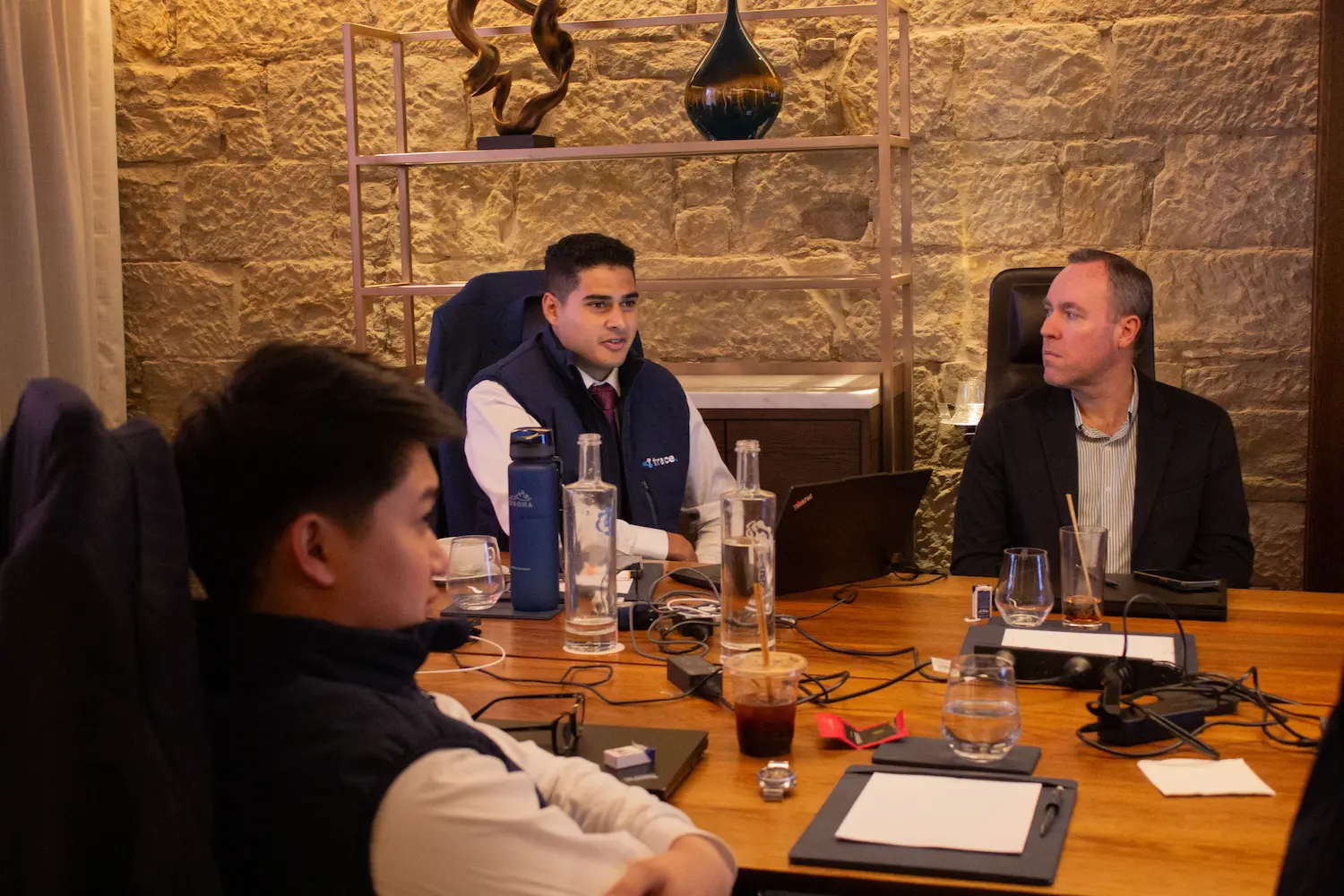


Most Australian FMCG businesses have an S&OP process. Very few of them have one that works.
That is not a cynical observation. It is the honest conclusion that emerges when you sit inside enough S&OP meetings across enough organisations and observe the gap between what the process is supposed to do and what it actually does. The monthly cycle runs. The slides get prepared. The numbers get reviewed. And then the business goes back to making decisions the same way it made them before the process existed: through bilateral conversations between sales and supply chain, reactive adjustments when the plan misses, and escalations that should never have needed to be escalated.
Sales and Operations Planning, when it is working properly, is the most commercially valuable planning process an FMCG business can run. It produces a single agreed plan that connects demand, supply, inventory, and financial performance. It gives leadership a forum to make real trade-off decisions before those decisions get made by default. It reduces the cost of supply chain surprises and the commercial damage of avoidable stockouts. And it creates the organisational alignment that allows commercial, operations, and finance teams to work toward the same objectives rather than optimising against each other.
The gap between that description and the S&OP process most Australian FMCG businesses are actually running is the subject of this article. Understanding why the gap exists is the first step toward closing it.
What Is S&OP Actually For?
Before diagnosing why S&OP fails, it is worth being precise about what it is designed to do. A significant proportion of the process failures in Australian FMCG stem from a misunderstanding of the purpose.
S&OP is a decision-making process, not a reporting process. Its purpose is to produce agreed decisions about how the business will respond to the current gap between supply and demand over the planning horizon. Those decisions might include adjusting a production plan to accommodate a customer volume commitment, choosing to build inventory in advance of a promotional period, resolving a capacity constraint that will affect service levels in two months, or making a trade-off between a higher cost supply option and a service level risk.
The key word in that description is decisions. An S&OP meeting where no decisions are made is not an S&OP meeting. It is a review. And the distinction matters enormously, because the organisational habit most Australian FMCG businesses have developed is to run S&OP as a review process and then wonder why nothing changes as a result.
IBP integrates product management, demand, supply, finance, and strategy into a single business planning model. For larger FMCG businesses where the S&OP process has matured to the point where it is reliably producing operational alignment, IBP is the natural next step. For businesses where the basic S&OP mechanics are still not working, pursuing IBP is the wrong sequence. Fix the foundation before building the extension.
Why Does S&OP Fail in Australian FMCG?
The Process Becomes a Reporting Ritual
The most widespread S&OP failure in Australian FMCG is the transformation of a decision-making process into a reporting ritual. It happens gradually and usually without anyone noticing. The S&OP deck grows longer as each function adds the metrics they want to present. The meeting agenda fills up with reviews of the previous month's performance. The forward-looking discussion gets compressed into the last twenty minutes. Attendees come prepared to defend their function's numbers rather than to solve the business's problems. And the decisions that need to be made get deferred to bilateral conversations that happen outside the room.
The reporting ritual is often more comfortable than genuine decision-making. Reporting requires preparation but not courage. It produces accountability-looking activity without the discomfort of explicit trade-off decisions where someone's preference loses. Over time it becomes self-reinforcing as attendees calibrate their preparation to what the meeting actually requires of them, which is increasingly nothing more than a credible set of numbers and a plausible explanation for any misses.
Breaking this pattern requires explicit redesign of the meeting structure and explicit agreement on what decisions will be made in the room. It also requires senior leadership to demonstrate, through their behaviour in the meeting, that they want decisions rather than defence.
Demand Planning Is Backward-Looking
A demand plan built primarily on historical sales data is a lagging indicator dressed up as a forecast. It tells you what happened, adjusted slightly for trend, and presents the result as a view of the future. In a stable market with predictable seasonality and a fixed promotional calendar, this approach produces forecasts that are good enough. In the FMCG environment Australian businesses are actually operating in, it produces forecasts that are systematically surprised by the things that drive real demand variability.
Unpredictable consumer behaviour has become the norm. Promotions, pricing changes, and new product launches can cause dramatic demand swings, and major retailers expect near-perfect delivery performance and rapid response to fluctuations. A demand planning process that does not incorporate forward-looking commercial inputs, the promotional calendar, pricing decisions under consideration, new product launch timing, and range review outcomes at major retail customers, is not a demand plan. It is a sales history with a trend line.
The organisational barrier is that the people who hold the forward-looking commercial information (the account managers, the category managers, the marketing team) are often not the people who build the demand plan (the demand planner or supply chain analyst). Getting those two groups to collaborate in a way that produces a genuinely informed forward view requires both a process design that connects them and a cultural environment that values forecast accuracy over forecast protection.
The Numbers Are Not Trusted
An S&OP process where participants do not trust the numbers in the room is an S&OP process that cannot function. If the commercial team suspects the supply chain forecast is padded to protect service levels, they discount it. If the supply chain team suspects the commercial forecast is aspirational rather than analytical, they build their own view. If finance is working from a budget that was set six months ago and bears no relationship to the current demand or supply position, the financial dimension of the S&OP conversation is entirely disconnected from operational reality.
The trust problem compounds over time. When the forecast is consistently wrong, people stop using it to make decisions and revert to experience and intuition. When they revert to experience and intuition, the forecast becomes even less relevant, which reduces the incentive to invest in improving it, which produces even worse forecasts.
Rebuilding forecast trust requires transparency about forecast performance. Measuring forecast accuracy at the SKU and customer level, publishing the results, and reviewing them in the S&OP process itself creates the accountability that drives improvement. It is uncomfortable in the short term. It is essential for a functioning process.
The Process Does Not Connect to Financial Planning
One of the most consistently undervalued capabilities of a well-run S&OP process is its ability to provide an early warning system for financial performance. When the demand plan changes materially, the financial outlook changes with it. When a supply constraint emerges that will reduce service levels, the revenue and margin consequences are calculable. When an inventory position is building to a level that will require clearance activity, the working capital and margin impact is quantifiable.
Most Australian FMCG businesses are not making these connections in their S&OP process. The operational plan and the financial plan run on parallel tracks that intersect once a year at budget time and then diverge again as actual conditions evolve. Finance finds out about supply chain problems when they appear in the monthly accounts. Supply chain finds out about commercial commitments when they create a demand spike that nobody planned for.
The connection between operational planning and financial performance is not a theoretical benefit. It is a practical consequence of having a single agreed plan that all functions work from rather than separate functional plans that are only reconciled when they conflict.
Ownership Is Unclear
S&OP lives in the gap between functions. Demand planning is often owned by supply chain but informed by commercial. Supply planning is owned by operations but constrained by procurement. The financial translation is owned by finance but driven by commercial and supply chain assumptions. New product introduction planning sits with marketing but has supply chain consequences that need to be managed before launch.
In many Australian FMCG businesses, nobody owns the end-to-end S&OP process in a way that gives them the authority and the accountability to make it work. The process exists but it reports to no single executive who is held responsible for its quality and outcomes. Facilitation falls to someone in supply chain who has the operational knowledge but not the cross-functional authority to drive the commercial and financial integration the process requires.
A functioning S&OP process needs a process owner with genuine cross-functional authority, executive sponsorship that is visible in the meeting rather than absent from it, and clear accountability for the quality of the inputs from each function. Without those conditions, the process will gradually drift back toward the reporting ritual regardless of how well it was designed.
What Does Good S&OP Actually Look Like?
A well-designed and well-run S&OP process in an Australian FMCG business has several characteristics that distinguish it from the reporting ritual described above.
The meeting structure is forward-looking by design. The agenda allocates the majority of the time to the future planning horizon, not to the previous month's results. Performance review is covered quickly by exception and then the conversation moves to decisions. Attendees come prepared not to present but to decide.
The demand review is genuinely collaborative. Account managers and category managers have contributed forward-looking commercial inputs to the demand plan before the meeting. New product launches, promotional events, pricing changes, and range review outcomes are all reflected in the demand picture. The demand planner has reconciled these inputs with the statistical baseline and surfaced the gaps and assumptions that need to be resolved.
The supply review translates the demand plan into a clear picture of supply capability and constraints. Capacity constraints, procurement lead times, and supplier risks are quantified against the demand plan and the gaps are explicit. The supply review presents options, not just problems.
The leadership review makes decisions. When supply cannot meet demand at acceptable cost, the meeting agrees on a response. When inventory is building beyond acceptable levels, the meeting decides what to do about it. When a financial risk is emerging from the operational picture, the meeting agrees on the financial response. Decisions are recorded, assigned, and followed up.
The financial integration connects every change in the operational plan to a financial consequence. The S&OP process maintains a rolling financial forecast that is updated as the operational plan changes, and the gap between the current financial forecast and the budget is explicit, understood, and owned.
When Should You Move from S&OP to IBP?
For FMCG businesses where the S&OP mechanics are working well, Integrated Business Planning represents the natural evolution. IBP extends the planning horizon, integrates strategic decision-making alongside operational planning, and connects the planning cycle directly to the financial management of the business.
The practical distinction between S&OP and IBP is less about process mechanics and more about strategic integration. Where S&OP is primarily concerned with balancing supply and demand over a rolling horizon of typically three to eighteen months, IBP extends the conversation to include portfolio strategy, capital allocation, and the multi-year financial outlook. It makes the planning process a genuine management tool rather than an operational necessity.
S&OP is the right starting point for businesses beginning to integrate their planning processes. IBP suits larger or more complex businesses that need to align strategic objectives with operational plans while also integrating financial performance. Attempting IBP without that foundation is a common mistake in Australian FMCG. The additional complexity amplifies the failure modes of a weak S&OP process rather than resolving them.
What Role Does Technology Play in S&OP?
Demand planning and S&OP technology has improved significantly over the past five years, and modern planning tools are genuinely capable of supporting better forecasting, faster scenario modelling, and more connected financial planning than the spreadsheet-based approaches many Australian FMCG businesses are still using.
The technology investment is worth making when the process is ready for it. A well-designed S&OP process built on good data and sound organisational habits will benefit from an advanced planning system that automates the statistical baseline, enables scenario modelling, and provides a single platform for the commercial and operational inputs that drive the plan. A poorly designed process with trust problems, unclear ownership, and backward-looking demand inputs will not be fixed by technology. It will simply have its failure modes automated at greater speed and expense.
The sequencing question matters. Fix the process design, the data foundations, and the organisational habits before selecting and implementing a planning technology. The technology should accelerate a process that already works, not substitute for a process design conversation that has not happened.
How Can Trace Help With S&OP?
Trace Consultants works with Australian FMCG businesses to design, implement, and improve S&OP and IBP processes that function as genuine decision-making tools rather than reporting rituals. Our approach is grounded in the operational realities of the Australian FMCG market, and we have practitioners who have built and run planning processes inside FMCG businesses as well as advised on them from the outside.
S&OP process design and redesign
We help FMCG businesses redesign their S&OP processes from the ground up when the current process is not working, or restructure specific elements when the process has identifiable failure modes. Our design approach starts with the decisions the process needs to produce and works backwards to the meeting structure, inputs, and governance that will reliably produce those decisions. Explore our Planning and Operations services.
Demand planning capability
For businesses where the demand planning function is the root cause of S&OP underperformance, we build the processes, tools, and organisational integration between commercial and supply chain that produce better forecasts and better replenishment decisions. Explore our Planning and Operations services.
IBP design and implementation
For businesses that have a mature S&OP foundation and are ready to extend into Integrated Business Planning, we design IBP frameworks that connect operational planning to financial management and strategic decision-making in a way that is practical for the scale and complexity of the business. Explore our Strategy and Network Design services.
FMCG and manufacturing sector expertise
Our work across the FMCG and manufacturing sector means we understand the specific commercial dynamics, customer relationships, and supply chain structures that shape planning performance in Australian FMCG. We do not apply a generic methodology. We design processes that work in the sector's actual operating environment. See our FMCG sector page.
Where Should You Start If Your S&OP Isn't Working?
The most useful starting point for any FMCG business that suspects its S&OP process is underperforming is an honest audit of what the process is actually producing. Not what it is designed to produce, but what it is currently producing in practice.
Sit in the next three S&OP meetings as an observer rather than a participant. Count the decisions that are made in the room as distinct from the information that is presented. Assess whether the demand plan that drives the supply response is genuinely forward-looking or primarily backward-looking. Test whether the financial forecast and the operational plan are connected or parallel. Ask whether people in the room trust the numbers they are reviewing.
If the audit produces uncomfortable answers, that is useful information. Most S&OP processes in Australian FMCG have been running in their current form long enough that the failure modes have become invisible through familiarity. Making them visible again is the prerequisite for fixing them.
The businesses that do fix it don't just plan better. In a cost and margin environment as demanding as Australian FMCG in 2026, they execute better. And that's where the real value sits.
Frequently Asked Questions About S&OP in FMCG
Why do most Australian FMCG businesses struggle with S&OP?
The most common problem is that S&OP gradually becomes a reporting ritual rather than a decision-making process. The monthly cycle runs, the slides get prepared, and the numbers get reviewed, but the business continues making decisions the same way it did before the process existed. An S&OP meeting where no decisions are made is not an S&OP meeting.
What is the difference between S&OP and IBP?
S&OP focuses on balancing demand and supply over a rolling planning horizon. IBP extends that to integrate financial planning, portfolio strategy, and capital allocation into a single business planning model. IBP is the natural next step for FMCG businesses where S&OP is already working well. Attempting IBP without a functioning S&OP foundation amplifies the existing failure modes rather than resolving them.
Why doesn't S&OP connect to financial planning in most businesses?
The operational plan and the financial plan typically run on parallel tracks, intersecting once a year at budget time and then diverging again as conditions change. Finance finds out about supply chain problems when they appear in the monthly accounts. Supply chain finds out about commercial commitments when they create a demand spike nobody planned for. A functioning S&OP process maintains a rolling financial forecast that updates as the operational plan changes.
Who should own the S&OP process?
S&OP lives in the gap between functions, and in many Australian FMCG businesses nobody owns the end-to-end process in a way that gives them the authority and accountability to make it work. A functioning process needs a process owner with genuine cross-functional authority and executive sponsorship that is visible in the meeting, not absent from it. Without those conditions, the process drifts back toward a reporting ritual regardless of how well it was designed.
How do you fix a demand planning process that nobody trusts?
Rebuilding forecast trust requires transparency about forecast performance. Measuring forecast accuracy at the SKU and customer level, publishing the results, and reviewing them in the S&OP process itself creates the accountability that drives improvement. It is uncomfortable in the short term and essential for a functioning process.