


There's a pattern we see repeatedly in Australian organisations attempting to transform their supply chains. It starts with a compelling case for change — costs are too high, service levels are inconsistent, inventory is bloated, planning is reactive rather than proactive. Leadership agrees something needs to change. A project is initiated. And almost immediately, the conversation turns to technology.
Which planning system should we implement? Should we move to a cloud ERP? What AI tools are available? Who are the leading vendors? Can we see a demo?
This is understandable. Technology is tangible. It can be evaluated, costed, and procured. It has a vendor behind it who will show up with a team and a project plan. It feels like progress. And in a world where 82% of supply chain organisations report increasing their IT spending, the expectation that technology will solve the problem is reinforced at every conference, in every analyst report, and by every vendor pitch.
But here's the uncomfortable truth that the data keeps confirming: the technology is rarely why supply chain transformations fail. McKinsey estimates that more than 70% of digital transformations fail to deliver their expected results. Gartner puts ERP implementation failure rates above 75%. BCG's study of over 850 companies found that only 35% of digital transformations meet their value targets globally. These aren't technology failures — they're failures of everything that surrounds the technology. Process redesign. Organisational change. Executive alignment. Capability building. Governance. The human side of transformation.
This article is about that human side — and why the organisations that get it right consistently outperform those that don't, regardless of which technology they choose.
The technology illusion
The technology market for supply chain management has never been more capable. Advanced planning systems can run probabilistic demand forecasts across thousands of SKUs. Digital twins can simulate network configurations before committing capital. AI-powered analytics can identify patterns in procurement data that humans would miss. Real-time visibility platforms can track shipments across global supply chains. The tools exist.
And yet, McKinsey's 2025 survey of 100 global supply chain leaders confirms that the majority of companies understand their supply chain risks only up to tier one — and that this visibility has actually deteriorated since 2022 as pandemic urgency faded. PwC's 2025 Digital Trends in Operations Survey found that 82% of operations leaders face challenges balancing short-term needs with long-term strategic change. Ninety percent expect supplier and material costs to increase significantly. The technology is deployed, but the outcomes lag.
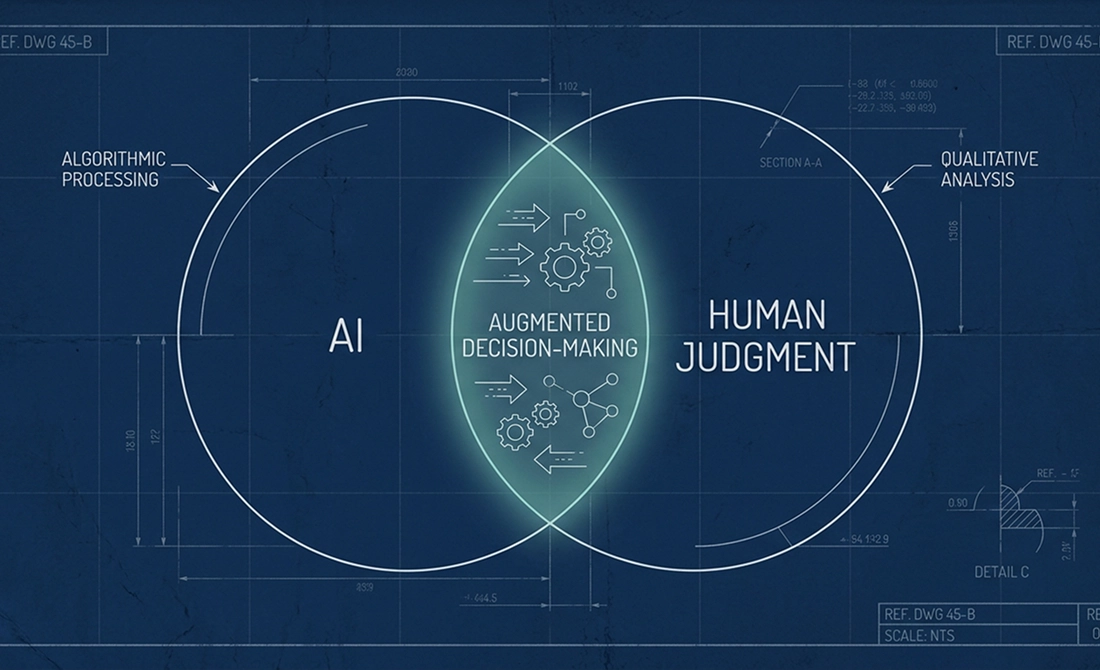
The reason is what we might call the technology illusion: the belief that implementing a new system will, by itself, change how the organisation operates. It won't. A new planning system layered over a broken S&OP process will produce better-formatted reports about the same bad decisions. A new ERP implemented without redesigning the underlying business processes will, as one observer put it, simply automate chaos faster. A visibility platform that nobody trusts or acts on is an expensive dashboard.
We see this in Australia regularly. An organisation invests $5-15 million in a new ERP or planning platform. The implementation partner delivers the system on time and on budget. The project is declared a success. Six months later, planners are running the same spreadsheets alongside the new system because they don't trust the outputs. Procurement is processing purchase orders through the new platform but hasn't changed any of its sourcing processes. Warehouse operations have reverted to manual workarounds because the system configuration doesn't match how the warehouse actually operates. The technology was successfully implemented. The transformation never happened.
The organisations that succeed treat technology as an enabler of transformation, not the transformation itself. They invest as much — often more — in the process redesign, organisational change, and capability building that allow the technology to deliver its potential. The ones that fail treat the technology implementation as the project, and then wonder why nothing actually changed.
The five things that actually determine whether a transformation succeeds
1. Process redesign before system design
The single most cited cause of ERP and supply chain technology implementation failure is poor business process mapping. Organisations jump into implementations without thoroughly understanding or redesigning their current processes. The technology then gets configured to replicate existing workflows — including all their inefficiencies, workarounds, and dysfunction.
Lidl's experience is a cautionary example at scale: the German retailer spent an estimated €500 million over seven years on a SAP implementation before abandoning the project entirely and reverting to its legacy system. The failure was attributed not to the software but to an inability to reconcile the company's operating processes with the system's design philosophy.
In our experience at Trace, the organisations that succeed in supply chain transformation invest significant effort — often three to six months — in process design before making technology decisions. This means mapping current-state processes end to end, identifying where value is created and where waste accumulates, defining the target-state operating model, and only then determining what technology is needed to enable it. The technology selection follows the process design, not the other way around.
This is particularly important for planning transformations. The difference between a functional S&OP process and a dysfunctional one isn't the planning software — it's whether demand and supply planners collaborate effectively, whether commercial teams contribute meaningful demand signals, whether the executive S&OP meeting makes real decisions or just reviews slides, and whether the planning outputs actually drive operational execution. These are process and behavioural challenges, not technology challenges. The best APS in the world cannot compensate for a planning process where commercial and operations teams don't trust each other's numbers.
2. Executive alignment and sustained sponsorship
Insufficient executive sponsorship kills more supply chain transformations than technical issues. This isn't just about a CEO signing off on a business case. It's about sustained, visible leadership commitment through the difficult middle phase of transformation — when the old ways no longer work, the new ways aren't yet embedded, and the organisation is tempted to revert.
Supply chain transformation is inherently cross-functional. It touches procurement, manufacturing, logistics, commercial, finance, and IT. Each of these functions has its own priorities, its own metrics, and its own definition of success. Without executive alignment on what the transformation is trying to achieve — and a willingness to resolve the trade-offs that inevitably emerge — the project fractures along functional lines.
PwC's survey found that 82% of operations and supply chain leaders face challenges balancing short-term needs with long-term strategic changes. This tension plays out in transformation programmes constantly: the supply chain director wants to transform planning processes, but the sales director won't release commercial staff for the S&OP redesign because they have quarterly targets to hit. The CFO approved the business case but now wants to cut the change management budget because Q3 results are soft. The IT department insists on a different technology platform than the one the supply chain team evaluated.
The organisations that navigate this successfully have a senior executive — ideally at C-suite level — who owns the transformation outcome (not just the project), who has the authority to resolve cross-functional conflicts, and who maintains visible engagement throughout the multi-year programme. In our experience, transformations without this level of sponsorship have a near-zero success rate, regardless of how good the technology or the implementation partner is.
3. Change management as a core workstream, not an afterthought
Deloitte has identified change management as the single biggest failure point for ERP and supply chain transformation projects, citing the critical people-related challenges that leaders face at every stage. Research suggests that 70% of all software implementations fail due to poor user adoption. Forty-five percent of employees say new software is introduced without adequate training, and 63% will stop using new technology if they don't see its relevance or receive help.
Yet in most supply chain transformation budgets, change management is a fraction of the investment — if it's budgeted explicitly at all. The technology licence, the implementation partner fees, and the data migration dominate the cost structure. Training is compressed into a few sessions near go-live. Communication is limited to project updates in the company newsletter. The organisational redesign that should accompany the new ways of working is deferred because it's "too disruptive."
Effective change management in supply chain transformation involves several elements. Stakeholder analysis and engagement from the outset — understanding who will be affected, what their concerns are, and how to bring them on the journey. Role and process redesign — defining explicitly how each role changes under the new operating model, and ensuring people understand and accept their new responsibilities. Capability building — not just system training (how to use the tool) but process training (how to work differently) and analytical training (how to interpret and act on the new information available). Communication that goes beyond project updates to address the "what's in it for me" question that every affected employee is asking. And sustained reinforcement after go-live — because the hardest phase of any transformation is the three to six months after implementation, when old habits reassert themselves and the system hasn't yet proven its value.
At Trace, we've seen organisations that invest 15-20% of total transformation spend on change management consistently outperform those that invest less than 5%. The delta isn't marginal — it's often the difference between a transformation that delivers its business case and one that becomes an expensive technology deployment with no measurable impact.
This is especially true in supply chain, where the people affected by the transformation are often the most operationally critical. Warehouse managers, demand planners, procurement specialists, logistics coordinators — these are the people who keep the supply chain running day to day. If they don't understand, accept, and adopt the new ways of working, no technology investment will deliver its promised returns. And unlike office-based knowledge workers who might adapt to a new CRM, supply chain professionals operate under real-time pressure where a clunky workaround today means a missed shipment tomorrow. The stakes of poor adoption are immediate and visible.
4. Data foundations that actually support decision-making
There's a common assumption that implementing a new system will fix data problems. It won't. If your master data is inconsistent, your demand history is unreliable, your inventory records are inaccurate, and your cost data doesn't reflect reality, a new system will simply process bad data faster and present it more attractively.
Panorama Consulting found that 23% of ERP projects exceed budgets, with half requiring additional technology that nobody planned for and 40% discovering organisational issues that should have been obvious from the start. Much of this unplanned effort relates to data: the migration, cleansing, and harmonisation work that nobody fully scoped because it's unglamorous and hard to estimate.
In supply chain transformation specifically, the data challenge has several dimensions. Master data harmonisation — ensuring consistent product hierarchies, supplier records, customer classifications, and location data across business units. Demand data quality — ensuring the demand history that will feed new planning algorithms actually reflects true demand rather than constrained shipments, one-off promotions, or data entry errors. Inventory accuracy — ensuring the system's view of inventory matches physical reality, which for many organisations means investing in cycle counting, warehouse management processes, and potentially warehouse technology before a planning system can be effective. Cost data integrity — ensuring that the cost models driving procurement, make-or-buy, and network design decisions reflect actual costs rather than averaged or allocated figures that obscure the true economics.
This data work isn't optional, and it can't be deferred until after the technology is implemented. It needs to run in parallel with — or ideally ahead of — the system implementation. Organisations that treat data readiness as a prerequisite rather than an afterthought dramatically reduce implementation risk and accelerate time to value.
In practice, this means appointing data owners for each critical data domain well before the implementation begins, establishing data governance processes that will persist after the project, investing in the often tedious work of data cleansing and standardisation, and testing the new system with real data — not sanitised test data — before go-live. The organisations that do this well often find that the data remediation effort alone delivers value, because clean, consistent data improves decision-making even in existing systems.
5. Organisational design that reflects the new operating model
Supply chain transformation changes how work gets done, which means it changes what skills are needed, how roles are defined, and how the organisation is structured. Yet many transformations leave the organisational design unchanged — implementing new technology and processes within the same reporting structures, role definitions, and capability profiles that existed before.
This creates a predictable set of problems. New planning processes require analytical skills that existing planners don't have — but there's no plan to recruit, develop, or supplement that capability. Cross-functional processes like IBP require regular collaboration between demand planners, supply planners, commercial managers, and finance — but the organisation still operates in functional silos with no shared forums or decision-making processes. The new operating model requires someone to own end-to-end supply chain performance — but accountability remains fragmented across procurement, manufacturing, logistics, and customer service.
McKinsey's research on successful enterprise platform transformations highlights that the organisations that deliver sustained value combine technology implementation with cross-functional working groups, capability building, and a continuous improvement culture. The technology is the platform, but the organisational design is what determines whether the platform generates value.
In Australia, this challenge is compounded by the structural talent shortage in supply chain and operations. With 90% of supply chain leaders globally reporting their companies lack the necessary talent and skills to achieve digitisation goals, the gap between what the new operating model requires and what the existing workforce can deliver is often substantial. Closing that gap requires a deliberate capability strategy — combining recruitment, development, process simplification, and strategic use of external expertise — that runs alongside the technology implementation rather than being addressed after it.
The failure patterns we see most often
Having worked across dozens of supply chain transformation programmes in Australian organisations, we see several recurring patterns that lead to disappointing outcomes.
The vendor-led transformation. The organisation selects a technology vendor or implementation partner and then allows the vendor's methodology to define the transformation scope, timeline, and approach. Because the vendor's incentive is to implement the software (and bill consulting hours), the non-technology workstreams — process redesign, organisational change, capability building — are under-scoped or treated as secondary. The system goes live on schedule, but the business outcomes don't materialise because the surrounding transformation was never adequately addressed.
The IT-owned transformation. Supply chain transformation is positioned as an IT project with a technology-focused project manager and governance structure. Business stakeholders are consulted but don't own the outcomes. Decisions default to what's easiest to implement technically rather than what delivers the most business value. The result is a technically sound system that doesn't match how the business needs to operate — leading to workarounds, shadow systems, and frustrated users.
The big-bang approach. The organisation attempts to transform everything simultaneously — new ERP, new planning system, new warehouse management system, new procurement platform, new organisational structure — in a single programme. The complexity overwhelms the organisation's capacity to absorb change. Testing is compressed because the timeline is aggressive. Training is superficial because there's too much to cover. Go-live is chaotic, and the organisation spends the next 12-18 months stabilising rather than realising benefits. Research consistently shows that incremental approaches have significantly lower failure rates than these large-scale overhauls.
The underfunded change programme. The business case includes $10 million for technology and implementation but $200,000 for change management — essentially a communications plan and a few training sessions. The system is technically functional but user adoption is poor, process compliance is low, and the organisation gradually reverts to old ways of working. Twelve months after go-live, an internal review finds that the transformation hasn't delivered its expected benefits, and the finger-pointing begins.
The transformation without a target operating model. The organisation implements new technology without first defining the target operating model — including governance, decision rights, process ownership, performance metrics, and organisational structure. The technology gets layered onto the existing operating model, which wasn't designed for it. The mismatch creates friction, workarounds, and frustration, and the promised benefits of integration and visibility are never realised because the organisational design doesn't support them.
Each of these patterns is avoidable. But avoiding them requires recognising that supply chain transformation is fundamentally an organisational change programme that happens to involve technology — not a technology project that happens to affect the organisation.
What good looks like in practice
The organisations we've seen succeed in supply chain transformation — whether they're implementing a new planning system, redesigning their network, restructuring their procurement function, or building end-to-end visibility — share several characteristics that transcend the specific technology or initiative.
They start with the business problem, not the technology solution. The transformation is driven by a clear articulation of what needs to change in business outcomes — service levels, cost performance, working capital, resilience, agility — and the technology is selected and configured to deliver those outcomes. When McKinsey documented a successful enterprise platform transformation that identified over 40 operational initiatives worth approximately $250 million, the key difference from the company's previous failed attempt was that the successful effort focused on achieving combined business and IT benefits rather than treating it as a technology project.
They invest in process design before system design. Target-state processes are defined, tested, and agreed before the technology is configured. This means the technology is built to support the way the organisation wants to work, not the way it works today.
They budget realistically for change. The total cost of transformation includes not just the technology and implementation but the process redesign, data remediation, organisational restructuring, capability building, and sustained change management that determine whether the investment delivers returns. The best organisations we work with allocate 30-40% of total programme spend to these non-technology elements.
They sequence deliberately. Rather than attempting a big-bang transformation across the entire supply chain, they identify the highest-value, lowest-risk starting points, build capability and confidence, and expand from there. This mirrors the broader finding that incremental approaches show significantly lower failure rates than large-scale overhauls, because they reduce complexity and allow the organisation to learn as it goes.
They measure what matters. Success metrics are defined at the outset in business terms — not in project management terms like "on time" and "on budget" but in operational terms like forecast accuracy improvement, inventory days reduction, service level uplift, or cost per unit shipped. These metrics are tracked from before the transformation through to steady state, creating accountability for actual business impact rather than just system delivery.
And they sustain the effort after go-live. The three to six months after a system goes live is the most critical period — and the period most likely to be under-resourced because the project team has moved on and the organisation assumes the transformation is "done." In reality, this is when new processes need to be reinforced, when users need the most support, when workarounds need to be identified and eliminated, and when the benefits start to materialise (or don't). Organisations that maintain dedicated transformation support through this period consistently outperform those that don't. Successful companies also conduct formal post-implementation reviews — not to assign blame, but to capture what worked, identify what didn't, and feed those lessons into the next phase of the transformation or the next initiative. Without this discipline, the same mistakes are repeated across the organisation, and institutional learning from expensive transformation experience is lost.
What this means for Australian supply chains
Australian organisations face specific dynamics that make the non-technology dimensions of transformation even more critical.
Geographic dispersion means that supply chain processes must work across multiple time zones, climates, and operating environments — from dense urban distribution networks in Melbourne and Sydney to remote operations in Western Australia and the Northern Territory. Technology that works in a single-site pilot may not scale without significant process adaptation.
The concentrated supplier market means that procurement and supply chain transformations must work within the reality of limited supplier optionality. Transformations designed for markets with deep supplier bases need to be adapted for categories where there may be two or three viable suppliers nationally.
The talent challenge means that transformation programmes can't assume access to the specialist skills they need — whether in planning, analytics, technology, or change management. Capability building and knowledge transfer must be embedded in the programme design, not treated as something that happens organically.
And the scale of most Australian organisations — smaller than US or European peers in most sectors — means that transformations need to deliver value faster and with lower total investment. This argues for pragmatic, phased approaches rather than multi-year, enterprise-wide programmes that defer benefits while accumulating cost.
The good news is that this same scale can be an advantage. Smaller organisations can move faster, with shorter decision-making chains and less organisational inertia. Cross-functional alignment is easier to achieve when the supply chain director and the commercial director sit in the same office. Process redesign can be tested and refined quickly when there are dozens of users rather than thousands. The key is to design the transformation approach for the Australian operating context rather than importing a methodology designed for Fortune 500 scale.
This also means being realistic about the role of emerging technologies like AI and generative AI. While these tools offer genuine potential — particularly in demand sensing, spend analytics, and exception management — the foundational work of process design, data quality, and organisational alignment must come first. Organisations that rush into AI before their core processes and data are sound will repeat the same failure patterns that have plagued ERP implementations for decades, just with newer technology.
How Trace can help
At Trace, we help Australian organisations design and deliver supply chain transformations that actually work — by focusing on the business outcomes, process redesign, organisational change, and capability building that determine whether a technology investment pays off.
Our approach begins with understanding the business problem, not the technology landscape. We work with clients to define what good looks like in operational terms, design the target-state processes and operating model, identify the technology requirements that follow from that design, and then support the implementation with the change management, capability building, and governance that sustains the transformation.
We work across planning and operations, procurement, warehousing and distribution, strategy and network design, organisational design, and project and change management. We serve clients across FMCG and manufacturing, retail, government, health, and resources.
We're independent — we don't sell software, we don't take commissions from technology vendors, and we don't have implementation partnerships that bias our recommendations. When we advise on technology, our only interest is what will deliver the best outcome for your organisation.
If you're planning a supply chain transformation — or recovering from one that didn't deliver — get in touch. The technology is the easy part. Let us help you get the hard part right.
Trace Consultants is an Australian supply chain and procurement consulting firm. We help organisations transform their supply chains by getting the fundamentals right — process design, organisational change, capability building, and governance — so that technology investments deliver real business impact. Visit our insights page for more on the challenges shaping Australian supply chains.