


Warehouse Design, Operations, Technology, MHE, Automation and Industrial Real Estate (Australia)
Walk a warehouse floor at 6:30am and you’ll see the truth in under a minute.
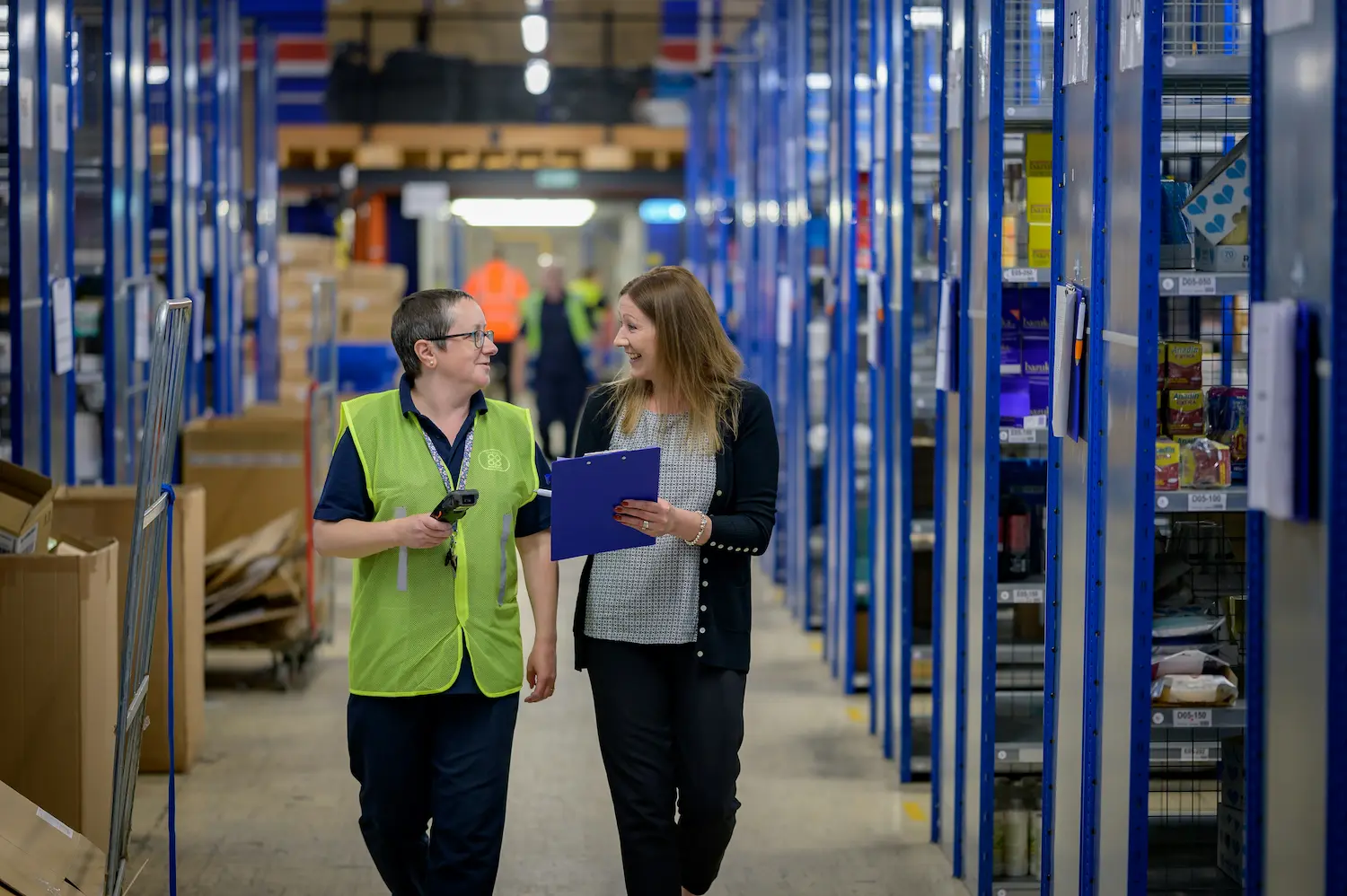
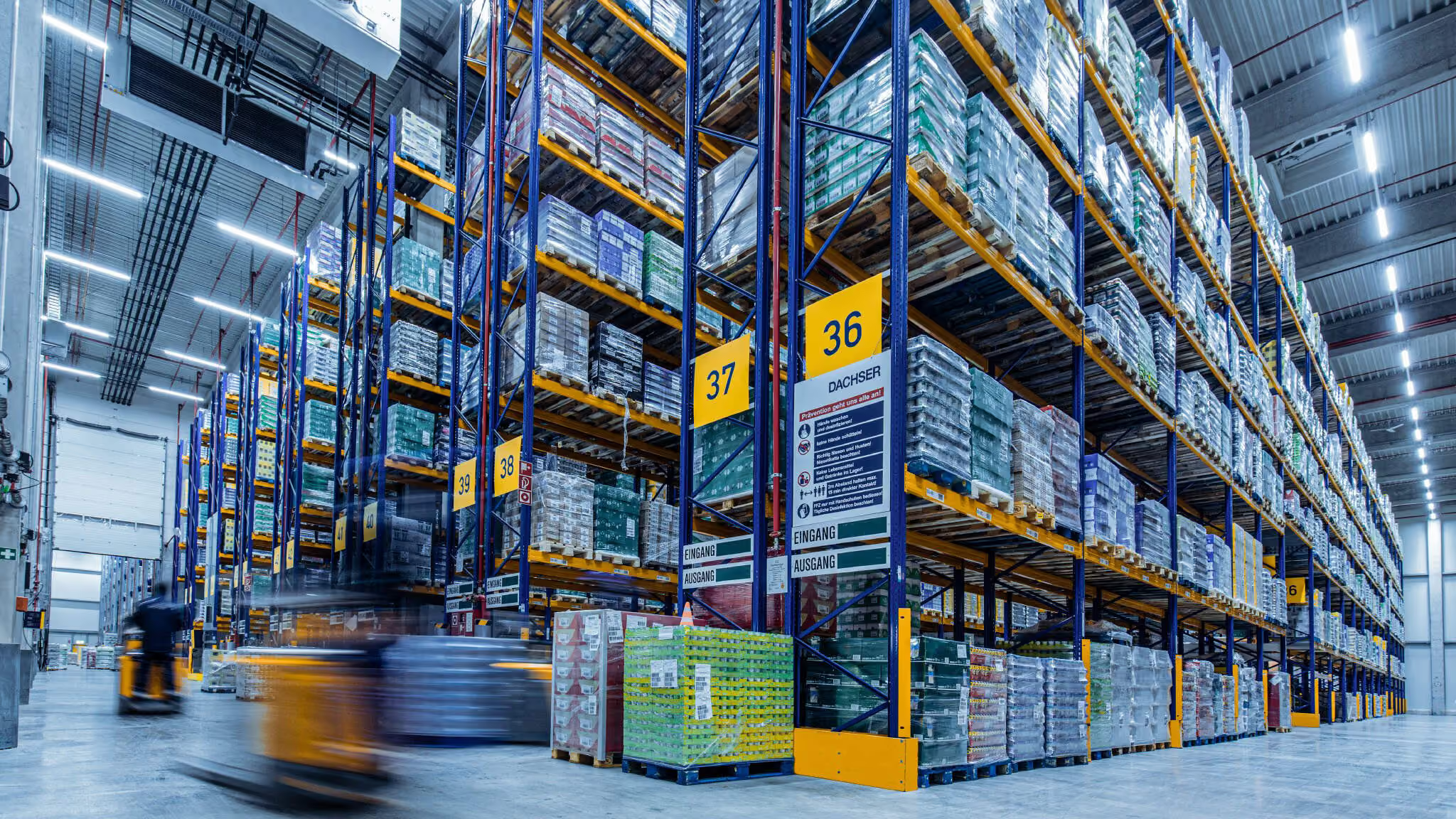
You’ll hear forklifts beeping in reverse, the slap of stretch wrap, a scanner chirping, a cage rattling across joints in the slab. You’ll also notice the stuff that doesn’t make noise—but costs the most: congested pick aisles, “temporary” overflow that became permanent, a packing bench stuck in the wrong spot, a dock that can’t clear inbound before outbound, and a team doing heroic work to make an imperfect setup look functional.
That’s the thing about warehouses. They will always run—until they can’t. And by the time a warehouse is visibly failing (service misses, overtime spikes, inventory accuracy drifting, safety incidents rising), the underlying problems have been building for years.
In Australia, the stakes are higher again. Our labour markets are tight, metro industrial land is constrained, freight distances can be unforgiving, and customer expectations keep tightening. The winners are the businesses that stop treating warehousing as a facilities topic and start treating it as a strategic operating system—where design, operations, technology, material handling equipment (MHE), automation and industrial real estate are engineered together.
This article is a practical playbook: what good looks like, where projects usually go sideways, and how to make decisions you can defend in the boardroom and on the warehouse floor.
If you want to explore how Trace supports these programs end-to-end, start with our Warehousing & Distribution capability page.
Why warehouses have become a boardroom issue (not an ops footnote)
Warehouses used to be judged on one question: “Can it store enough stock?”
Now they’re judged on a different one: “Can it fulfil the service promise—profitably—under volatility?”
That shift is why warehouse conversations now sit alongside pricing, customer experience and working capital. A warehouse that can’t scale becomes a growth constraint. A warehouse with the wrong flow becomes a margin leak. A warehouse that isn’t automation-ready becomes a risk.
And most importantly: warehouses are where many “small” inefficiencies compound into big money—extra touches, extra travel, extra handling, extra damages, extra time, extra labour, extra freight, extra rent.
The five systems that must align (or you’ll pay twice)
A high-performing warehouse is the alignment of five systems:
- Demand and order profile
What you actually ship (cartons vs pallets), where it goes, and how predictable it is. - Facility design (layout + flows)
The physical logic: receiving → putaway → replenishment → pick → pack → dispatch (and returns). - Operating model (process + workforce)
How work is released, managed, supervised, measured, trained and improved. - Technology (WMS/OMS/WES + data)
How decisions are made, tasks are prioritised, and inventory truth is maintained. - MHE and automation (from racking to robotics)
How product physically moves and how “touches” are reduced.
Industrial real estate sits underneath all of this. Get the location or building wrong and you end up redesigning the operating system to fit a constraint you didn’t choose deliberately.
Start with the service promise, not the racking catalogue
Before you sketch a layout or price conveyors, lock in the basics:
- Service targets by channel: next-day metro, two-day regional, store replenishment cadence, trade/project delivery windows
- Cut-offs: when orders stop, when trucks must leave
- Order shapes: lines per order, units per line, carton vs each-pick, oversize and awkward items
- Peak behaviour: not average volume—your worst month, worst week, worst day, worst hour
- Growth range: base case and “what if we’re wrong?” scenarios
- Non-negotiables: temperature control, compliance, dangerous goods (if relevant), security, customer labelling, traceability
Warehouses fail when they are built for an average day that doesn’t exist.
Warehouse design that actually works: flow-led, not drawing-led
Good warehouse design isn’t about maximum storage density. It’s about the right density in the right places, while protecting flow and safety.
1) Put receiving and dispatch on purpose (not by habit)
Receiving must absorb variability: late trucks, supplier non-compliance, quarantine holds, shortages, damages, ASN mismatches.
Dispatch must protect the service promise: staging, lane discipline, load sequencing, carrier performance and cut-off integrity.
If inbound and outbound fight for the same space, congestion becomes a daily tax.
2) Separate “fast” and “slow” inventory properly
Slotting is not a one-off exercise. It’s a living discipline:
- put fast movers where travel distance is minimal
- keep replenishment simple and predictable
- avoid mixing very slow movers into prime pick faces
- design pick faces to the unit of measure (each/carton/case/pallet)
If your fastest SKUs are scattered across the building, you’ve built a walking simulator.
3) Design replenishment as a first-class process
A lot of warehouses “optimise picking” and then wonder why pickers are waiting around.
Replenishment is the hidden engine. If it’s reactive, you get:
- empty pick faces
- mid-pick interruptions
- cherry-picker dependency
- overtime just to refill locations
4) Treat returns as a profit-protection stream
Returns aren’t just a corner with a few cages. In many sectors they’re a material workload. A well-designed returns area can reduce write-offs and protect inventory accuracy.
Operations: where productivity is won (or bled)
A warehouse layout can look brilliant and still perform poorly if the operating model is mushy.
The operational levers that matter most
Work release and task prioritisation
- Are you releasing work in waves, waveless, batch, zone, cluster, or a hybrid?
- Do supervisors have real-time control, or are they chasing problems after the fact?
Labour standards and performance rhythm
- Do you have engineered standards (or at least practical baselines)?
- Are you measuring the right units (lines, units, cartons, pallets, tasks)?
- Are you comparing like-for-like (zone complexity matters)?
Training and cross-skilling
Australia’s labour constraints mean cross-skilling is resilience. If only a few people can operate key MHE or run dispatch, you’ll feel it the minute someone’s away.
Quality built into the process
“Accuracy checks at the end” usually means rework. Better to prevent errors at source with scanning discipline, location control, and simple physical design.
Safety as operational design
Traffic management, pedestrian separation, line of sight, fatigue, manual handling and housekeeping aren’t posters—they’re engineered decisions.
Technology: WMS, OMS, WES—and why the difference matters
Warehouse technology is full of jargon, so here’s the plain-English version:
- WMS (Warehouse Management System): inventory truth, task management, location control, directed putaway/pick/replenishment, cycle counts
- OMS (Order Management System): order capture, allocation, orchestration across nodes (stores, DCs, 3PLs), customer comms
- WES (Warehouse Execution System): orchestration of automation and labour in highly mechanised environments—prioritising flows across conveyors, sorters, GTP, robotics
A common trap is buying tech based on feature lists instead of operational fit. The right question is: what decisions must the system make, at what speed, with what data quality, in what peak conditions?
If you’re exploring how technology can support operational uplift, see Technology and our Solutions suite.
The “unsexy” technology topics that decide outcomes
Master data discipline
If item dimensions, weights, pack hierarchies and barcodes are wrong, automation business cases collapse and WMS rules become unreliable.
Slotting logic and replenishment rules
The system must support your replenishment strategy, not fight it.
RF scanning discipline
RF is only powerful if processes are designed so people can’t bypass it easily.
Visibility and KPIs
Teams can’t improve what they can’t see. Dashboards should show actionable insights: backlog, ageing, exceptions, labour deployment, and quality.
MHE: the difference between “moving product” and “moving profit”
Material handling equipment sits between design and execution. It’s also where costs can drift—slowly—because “we’ll just get another forklift” feels easier than redesigning the work.
Here’s a practical way to think about MHE selection in Australia:
1) Racking and storage systems
- Selective pallet racking: flexible, common, but space-hungry
- Double-deep / drive-in: higher density, but access trade-offs
- Very Narrow Aisle (VNA): high density, specialised equipment, tight tolerances
- Carton flow / pallet flow: great for fast movers and FIFO discipline
- Mezzanines: useful for value-add or each-pick zones, but consider safety, evacuation, and structural load
2) Forklifts and access equipment
- electric vs LPG, battery management, charging infrastructure
- reach vs counterbalance vs turret vs articulated depending on aisle width and pick method
- order pickers for each-pick environments
- attachment choices (clamps, rotators) based on handling needs
3) Picking aids
- pick-to-voice
- pick-to-light
- put-to-wall
- wearable tech and task interleaving
The principle is simple: MHE should reduce touches and travel without creating new complexity.
Automation: when it’s brilliant, when it’s a trap
Automation can be transformational—but only when it matches the order profile, labour reality, service promise, and facility constraints.
Common automation options (and what they’re good at)
- Conveyors and sortation: predictable carton flow, high throughput, repetitive moves
- AS/RS (Automated Storage and Retrieval Systems): high density + high accuracy, good where footprint is constrained and profile is stable
- Goods-to-person (GTP): reduces travel dramatically for each-pick environments
- AMRs/AGVs: flexible transport tasks, especially where reconfiguration is likely
- Automated pallet handling: inbound/outbound repeatability, reduced forklift traffic
The questions that decide if automation will pay back
- Is your volume stable enough (or your design flexible enough) to justify capex?
- Can you protect uptime with maintenance capability and spare parts?
- Is your data clean enough (dimensions, weights, barcodes, locations)?
- Do you have the right building constraints (floor flatness, clear height, power)?
- Can your WMS/WES integrate cleanly without turning go-live into a science experiment?
- What’s your fall-back mode when the automation is down?
Automation is not a trophy. It’s a tool. If it doesn’t reduce touches or protect service in peak, it’s expensive theatre.
A note on real-world outcomes
In an Australian retailer example, redesigning pick/pack zones and improving system support helped lift picking efficiency by ~20% and reduce labour cost by ~15%.
In another Australian distribution centre example, introducing automation (including AGVs and conveyors) was associated with a ~25% productivity lift and ~20% labour cost reduction, with picking errors reducing by ~15%.
Numbers like these aren’t guaranteed (every operation is different), but they illustrate what’s possible when design, tech and workflow are built together—not bolted on.
Industrial real estate: the decision that outlives your org chart
Industrial property decisions in Australia can lock you in for a decade. That’s why “availability-driven” choices often sting later.
A better sequence is:
Network strategy first. Real estate second. Facility design third.
That order stops you from choosing a building that looks right on paper but can’t deliver the operating model you need.
If you’re facing a lease event, growth, consolidation, or a “do we build or outsource?” decision, explore Strategy & Network Design and the thinking behind network strategy and industrial real estate.
What to assess beyond rent ($/sqm)
Location and connectivity
- freight corridors, congestion, curfews
- access for larger vehicles, turning circles, queuing
- proximity to labour pools and competing DCs
Building fundamentals
- clear height and column grid
- floor flatness and load-bearing capacity
- sprinklers and fire design (especially for high-density storage)
- dock count, dock configuration, and yard capacity
- power availability (automation, charging, electrification)
Expansion and optionality
- can you grow without creating a second “temporary” site?
- what’s the cost of being wrong?
Industrial real estate is not just a property line item. It shapes the physics of your supply chain—distance, touches, labour access, and automation viability.
The business case: don’t let payback maths hide operational risk
Warehouse projects are notorious for optimistic savings and undercooked stabilisation plans.
A good business case includes:
- Cost-to-serve view, not just “warehouse cost”
- Capex + implementation + transition cost, including dual-running and training
- Sensitivity analysis (volume, labour rates, uptime, peak)
- Service risk quantified, not hand-waved
- Benefits realisation plan (who owns it, how it’s tracked, what triggers action)
If you’re linking warehouse decisions to broader planning and inventory settings, our Planning & Operations capability is often the unlock—because inventory policy decisions directly change space, labour and automation needs.
The part everyone underestimates: go-live, stabilisation, and change
A warehouse move or major redesign isn’t a “switch on Monday, done by Friday” event.
The operations that perform best treat go-live as a program:
- readiness gates (systems, data, process, training, safety, inventory integrity)
- cutover planning (waves, customer segmentation, buffer stock logic)
- stabilisation resourcing (superusers, floor walkers, vendor support)
- KPI war room (backlog, service, quality, productivity, safety)
- continuous improvement rhythm after go-live
If you want transformation to stick, you need governance and change built in from day one. That’s exactly what our Project & Change Management team supports.
The most common traps (and how to avoid them)
- Designing for average volumes instead of peaks
- Choosing property first and forcing operations to fit
- Automating a broken process (you just make mistakes faster)
- Underestimating master data cleanup
- Ignoring replenishment design and blaming picking
- Buying WMS on features rather than workflow fit
- Treating safety as compliance rather than operational engineering
- Skipping the stabilisation plan and being surprised when service dips
- Not aligning inventory policy to warehouse capacity realities
- Assuming labour will “sort itself out” in tight corridors and competitive markets
How Trace Consultants can help
Trace supports Australian organisations to make warehouse decisions that hold up commercially and operationally—linking strategy to design, and design to day-to-day execution.
1) Warehouse diagnostics and performance uplift
We establish a clear fact base—where time is being lost, where errors are being created, and which constraints are structural vs procedural.
2) Concept and detailed warehouse design
Flow-led layout design, zoning, slotting logic, dock and yard planning, safety pathways, and scalability planning—so the facility supports the operating model you actually need.
3) Warehouse operations and workforce design
Work release methods, labour planning, standards, training design, supervisor cadence, KPI design and daily management systems—because layouts don’t run themselves.
4) Technology strategy and vendor-neutral selection
From WMS/OMS/WES requirements through to selection support and implementation governance—ensuring tech decisions fit your operation (not just a demo script). Start with Technology.
5) MHE and automation feasibility, business case and roadmap
We help you choose the right level of mechanisation, model the economics, stress-test the assumptions, and build a phased pathway that protects service.
6) Industrial real estate and network-aligned site decisions
We support location strategy, facility sizing, lease vs build vs 3PL assessments, and corridor comparisons—anchored in network logic and cost-to-serve. Explore Strategy & Network Design.
7) End-to-end program delivery support
Business case, governance, cutover planning, readiness, stabilisation and benefits realisation—so outcomes don’t evaporate after go-live. See Project & Change Management.
If you want a quick sense of how Trace works (and why we’re deliberately solution-agnostic), read Why Choose Trace.
A quick self-check: is your warehouse due for a redesign or upgrade?
If you’re nodding at three or more of these, it’s usually time to act:
- We’re permanently using “temporary overflow”
- Pick paths feel longer every quarter
- Replenishment is reactive and interrupts picking
- Dispatch is congested and cut-offs are fragile
- Inventory accuracy is drifting and cycle counts feel endless
- Labour is increasingly dependent on overtime or “hero shifts”
- Safety incidents or near misses are rising
- Automation keeps coming up, but no one trusts the business case
- Lease expiry is approaching and the property team is already shopping
- Service is being protected by effort, not system design
FAQs (for Australian leaders searching this topic)
What’s the difference between warehouse design and warehouse operations?
Design is the physical and logical blueprint—layout, flows, zones, dock and yard design. Operations is how work is executed daily—process, labour, standards, supervision, KPIs, and continuous improvement. You need both.
When does warehouse automation make sense?
When it reduces touches and protects service under peak demand, and when your order profile, data quality, building constraints and maintenance capability support it.
Is a new WMS always required to improve warehouse performance?
No. Sometimes process redesign, slotting, replenishment rules and better discipline unlock major gains. A WMS upgrade is worth considering when the system is preventing the operating model you need.
How do we link industrial real estate decisions to warehouse performance?
By modelling network scenarios first (cost-to-serve + service + risk), translating that into facility requirements, and only then assessing sites/buildings against those needs.
Related reading on Trace’s Insights page
- Warehouse Design: When and How It Can Make a Difference to Cost, Service and Growth
- Network Optimisation for DCs and Warehousing: How Many, How Big and Where
- The Role of Automation and Technology in Modern Warehouses
- Network Strategy and Industrial Real Estate in Australia
Ready to design a warehouse that performs in the real world?
Whether you’re planning a new DC, fixing a facility that’s outgrown itself, selecting a WMS, assessing automation, or making a high-stakes industrial real estate call—Trace can help you make decisions that stand up in operations, finance and the boardroom.
Start a conversation here: Contact Trace.