We appreciate you taking the time to get in touch. Your message has been received and will be reviewed by a member of the Trace team within 1–2 business days.
While you wait, see what we're all about. Learn more about how Trace works, what sets us apart, and the kinds of problems we help clients solve.
Explore our insights to see how we approach real-world complexity with clarity, structure, and measurable outcomes.

In the fast-paced global market, Supply Chain Planning (SCP) is a critical strategic process that ensures the seamless flow of goods, services, and information from suppliers to customers. This cornerstone of logistics and supply chain management is all about achieving a balance between supply and demand. By integrating strategic planning, detailed scenario analysis, and commitments to real-time demand, businesses can significantly optimise their operations, reduce costs, and enhance customer satisfaction.

Amidst the ever-increasing complexity and volatility of global supply chains, scenario planning within Sales & Operations Planning (S&OP) serves as a beacon for navigating through uncertainty. Despite its critical importance, only a fraction of companies effectively utilise S&OP to its full potential. Scenario planning enables organisations to forecast and prepare for various future states, examining the ramifications of different decisions and external factors on their operations.
Superior Sales and Operations Planning (S&OP) is a linchpin in the realm of SCP, offering a plethora of business advantages from augmented profitability and revenue to improved cash flow and customer service. However, the journey to realising these benefits is often hampered by compartmentalised decision-making and underdeveloped S&OP processes. The challenge lies in demonstrating the intrinsic value of S&OP beyond the supply chain department, advocating for its integration into broader business optimisation and performance strategies.
Securing buy-in for SCP enhancements necessitates a compelling narrative that clearly communicates the strategic advantages, quantifiable improvements, and the need for cross-functional collaboration.
As the landscape of supply chain management continues to evolve, with a significant uptick in disruptions, the ability to manage change and effectively engage stakeholders becomes paramount. Successful SCP leaders must articulate a vision for the future, backed by a robust plan and a clear roadmap to navigate the organisation through the complexities of transformation.
A disconnect often exists between the objectives and capabilities of supply planning. To bridge this gap, organisations must cultivate an SCP framework that is in harmony with their strategic goals, fostering integration with key internal processes and establishing clear performance metrics.
Addressing the skills gap within the supply chain discipline is essential for sustained success. Crafting an organisational design and talent strategy that supports SCP ambitions involves:
Technology plays a pivotal role in the efficiency and effectiveness of SCP. However, projects often falter due to misaligned expectations, scope creep, and a lack of strategic planning. Developing a technology roadmap for SCP entails a clear articulation of goals, use cases, and the support structure required to ensure the successful adoption and maximisation of technology investments.
The journey to SCP excellence requires a multi-faceted approach, integrating scenario planning, refining S&OP processes, fostering organisational support, navigating change management, aligning talent strategies, and establishing a coherent technology roadmap. By addressing these critical areas, Australian businesses can not only navigate the complexities of today's supply chain challenges but also lay the groundwork for long-term success, driving efficiency, profitability, and customer satisfaction in the dynamic global marketplace.

As Australia braces for a transformative era in environmental regulation, organisations across the spectrum are being called to adapt and innovate in their approach to carbon emissions. The spotlight is increasingly on Scope 3 emissions, which account for the indirect carbon footprint associated with activities not directly owned or controlled by the organisation, including supply chain operations, employee commuting, and the lifecycle of sold products.
Interviewer: With the Australian government tightening carbon emission standards, what kind of adjustments should organisations anticipate?
Emma Woodberry: The next decade will be pivotal. We’re moving towards a regulatory environment where transparency, accountability, and innovation in carbon management aren’t just encouraged but required. The focus on Scope 3 emissions is a game-changer. It extends responsibility beyond direct operations to include the entire value chain. This broadens the scope of influence—and challenge—for organisations but also opens up new avenues for leadership in sustainability.
Interviewer: Scope 3 emissions seem to be a significant hurdle for many. How do you view the challenges and opportunities they present?
Emma Woodberry: Indeed, Scope 3 emissions can be daunting due to their extensive nature, covering emissions from activities like the production of purchased materials, waste disposal, and even business travel. The challenge lies in the lack of direct control over these emissions. Yet, there’s a silver lining. Addressing Scope 3 emissions encourages organisations to look beyond their boundaries, fostering collaboration and innovation within their supply chains. It’s an opportunity to redefine efficiency and sustainability in business practices, potentially leading to cost savings and enhanced brand reputation.
Interviewer: In this context, how can supply chain consulting services be a catalyst for positive change?
Emma Woodberry: Supply chain consultants are critical navigators in this journey. They bring a wealth of expertise in analysing and optimising supply chain operations from an environmental perspective. By helping organisations identify the most significant sources of Scope 3 emissions, consultants can devise targeted strategies for reduction. This might involve selecting more sustainable materials, redesigning products for efficiency, or implementing more rigorous supplier sustainability criteria. Their role is to facilitate actionable insights and strategies that align with both regulatory requirements and business objectives.
Interviewer: What practical steps should organisations take now to gear up for the regulatory changes ahead?
Emma Woodberry: Preparation should start with a comprehensive emissions audit, highlighting both direct and indirect emissions. For Scope 3, this means engaging deeply with suppliers to understand their environmental impact. Technology plays a vital role here; digital tools and platforms can enhance data collection and analysis, making it easier to track and manage emissions across the supply chain. Additionally, educating and involving stakeholders across the organisation in sustainability goals is crucial. Creating a culture of environmental responsibility can drive more meaningful and effective action.
Interviewer: How can N-tier supply chain analysis assist organisations in adapting to new regulations and improving sustainability?
Emma Woodberry: N-tier supply chain analysis offers organisations a comprehensive view of their supply chain, extending beyond immediate suppliers to include multiple tiers of suppliers and subcontractors. This depth of visibility is crucial for identifying and addressing environmental and regulatory risks, especially concerning carbon emissions. By understanding the intricacies of the entire supply chain, organisations can pinpoint areas of high carbon footprint or non-compliance with emerging regulations. This analysis enables businesses to work collaboratively with all tiers of suppliers to implement sustainable practices, reduce emissions, and ensure compliance. Furthermore, N-tier analysis can uncover opportunities for streamlining operations and enhancing efficiency, leading to reduced costs and improved sustainability across the supply chain.
Interviewer: How can driving supply chain operational excellence help reduce transport emissions and improve inventory waste through demand planning and forecasting?
Emma Woodberry: Driving supply chain operational excellence through network optimization and enhanced demand planning and forecasting directly contributes to reducing transport emissions and minimizing inventory waste. Network optimization involves redesigning the supply chain network to minimize distances travelled and improve load efficiency, which significantly reduces fuel consumption and carbon emissions from transport activities. By optimizing route planning and vehicle loading, organisations can achieve more environmentally friendly transport operations. Additionally, advanced demand planning and forecasting enable companies to better predict customer demand, leading to more accurate inventory levels. This precision reduces the risk of overproduction and excess inventory, which can contribute to waste. Improved forecasting models can also help in aligning production schedules and distribution strategies with actual market demand, ensuring that resources are used efficiently and sustainably, further contributing to the organization's environmental and economic goals.
Interviewer: As organisations look to the future, what strategies will be key to thriving under these new regulations?
Emma Woodberry: Flexibility and collaboration will be indispensable. Organisations must be willing to experiment with new approaches and technologies to reduce their carbon footprint. Building strong partnerships with suppliers, customers, and even competitors to share knowledge and resources can amplify impact. Moreover, engaging with policymakers and industry bodies can help shape a conducive regulatory framework. The ultimate goal is to view these regulations not as a burden but as an impetus for innovation that can drive competitive advantage and sustainability in equal measure.


Interviewer: Welcome to our deep dive into the pivotal role of properly defining functional and non-functional requirements before selecting and implementing advanced planning software. With us today is Mathew Tolley, a seasoned expert in the realm of supply chain optimization and software implementation. Mathew, why is it essential to accurately define these requirements in the context of advanced planning systems like Kinaxis, Relex, O9, GAINs, Blue Yonder, Arkieva, Logility, Coupa, SAP, Oracle, and others?
Mathew Tolley: Thank you for having me. The essence of successfully implementing any advanced planning software lies in understanding and defining what the business truly needs. This is where the distinction between functional and non-functional requirements becomes critical. Functional requirements detail what the system should do — for example, demand forecasting, inventory optimization, or supply chain planning. Non-functional requirements, on the other hand, deal with how the system operates, including scalability, reliability, and user-friendliness. Without a comprehensive definition of these requirements, businesses risk adopting a system that might not align with their operational needs or strategic goals.
Interviewer: That’s an insightful distinction. Can you elaborate on how this understanding influences the selection of a planning system?
Mathew Tolley: Absolutely. The selection process is essentially about prioritizing what's crucial for the business. By clearly defining both sets of requirements upfront, organizations can evaluate each potential software solution against their specific needs. This not only streamlines the selection process but also ensures that the chosen system can effectively support the company's objectives. For instance, if real-time data integration is a key functional requirement for a business, a system like Kinaxis or O9 might be more appropriate. Conversely, if robustness and scalability are priority non-functional requirements, solutions from SAP or Oracle could be more fitting.
Different industries indeed have varied priorities when it comes to selecting advanced planning systems, primarily due to their unique operational dynamics and market demands. For instance, fast-moving consumer goods (FMCG) companies prioritize systems with robust demand forecasting capabilities to manage the high volume and quick turnover of products. Retailers, on the other hand, may focus on systems that offer detailed consumer behavior analytics and inventory management to align stock levels with fluctuating demand patterns closely. Manufacturing entities often look for solutions that excel in supply chain optimization and resource planning, ensuring materials and production capacities meet order demands efficiently. Meanwhile, service-oriented businesses might prioritize systems with strong scheduling and workforce management features to align service delivery with customer expectations. These differing priorities underscore the importance of understanding specific industry needs and challenges when selecting an advanced planning system, ensuring it supports the core objectives and enhances the competitive edge of the business.
Interviewer: What are some emerging innovations in this space?
Mathew Tolley: Emerging forecasting capabilities and innovations are revolutionizing how businesses predict future trends and demand, leveraging sophisticated algorithms, machine learning, and advanced analytical techniques. Algorithms, forming the backbone of forecasting models, have grown increasingly complex, capable of processing vast datasets to identify patterns and predict outcomes with higher accuracy. The use of tournament versus Bayesian techniques showcases an evolving landscape in predictive modeling. Tournament approaches, where multiple predictive models compete against each other to forecast outcomes, allow for a dynamic selection of the most accurate models based on real-time performance. Bayesian techniques, on the other hand, offer a probabilistic view, integrating prior knowledge with new data to continually refine predictions. Machine learning algorithms stand out by their ability to learn from past data, automating the creation of sophisticated models that can adapt to changing trends. Leading indicator analysis further enhances forecasting by identifying external factors and indicators that precede and predict future trends, enabling businesses to anticipate changes more effectively. Together, these advancements are setting new standards in forecasting, offering unprecedented insight and accuracy in predicting future market behaviors and trends.
Interviewer: How does this approach impact the implementation phase and the overall success of the software?
Mathew Tolley: Properly defined requirements are the blueprint for successful implementation. They guide the customization and configuration of the software, ensuring that it functions as needed right out of the gate. This foresight can significantly reduce implementation time, lower costs, and minimize disruptions to business operations. Furthermore, it allows for a more strategic deployment of the system, focusing on areas that will generate the most value for the business. Ultimately, this meticulous preparation sets the stage for a system that not only meets but exceeds expectations, fostering enhanced decision-making, operational efficiency, and competitive advantage.
Interviewer: In your experience, how do businesses typically approach this process, and where do you see common pitfalls?
Mathew Tolley: Many businesses recognize the importance of defining requirements but often struggle with how to approach this process systematically. A common pitfall is not involving key stakeholders from across the organization, which can lead to a narrow perspective on what the software needs to achieve. Another issue is treating non-functional requirements as an afterthought, which can lead to problems with system performance or user adoption down the line. The most successful approach is a collaborative one, where cross-functional teams work together to define requirements that reflect the full spectrum of business needs and strategic goals.
Interviewer: What final piece of advice would you give to companies embarking on this journey?
Mathew Tolley: Start with a clear vision of what you want to achieve with the advanced planning software. Involve stakeholders from across the organization to ensure a holistic understanding of needs. Be meticulous in defining both functional and non-functional requirements, and use these as your guiding criteria throughout the selection process. Remember, the goal is not just to implement a system but to enable a transformation in how your business plans and operates. With the right preparation and focus, you can select a software solution that truly aligns with your business priorities and drives meaningful improvement.
Interviewer: Thank you, Mathew, for sharing your expertise with us today. It’s clear that the key to effective advanced planning software selection lies in the careful definition of requirements, ensuring that businesses can leverage these powerful tools to their full potential.

Australia's defence capability hinges not just on the acquisition of cutting-edge technology and heavy assets but, more crucially, on the robustness and resilience of its supply chains. In the theatre of global defence, it's an often-repeated adage that while acquisition may win battles, sustainment wins wars. This blog delves into the intricate world of Australia's defence supply chains, focusing on heavy asset management and Maintenance, Repair, and Overhaul (MRO) logistics, and explores the critical attributes that can forge a competitive advantage in times of uncertainty.

Sustainment in the defence sector refers to the comprehensive support and maintenance activities required to keep military assets operational over their life cycle. This includes the procurement of spare parts, repairs, overhauls, and upgrades necessary to maintain readiness and extend the operational life of military equipment. For Australia, a country with vast territories and strategic interests in the Indo-Pacific region, the efficiency and reliability of defence sustainment activities are paramount.
Heavy assets in defence include armoured vehicles, naval ships, aircraft, and complex weapon systems, all requiring meticulous maintenance and timely support. The Maintenance, Repair, and Overhaul (MRO) of these assets is a complex logistical endeavour, involving a network of suppliers, technicians, and logistics platforms. The Australian Defence Force (ADF) relies on an intricate MRO supply chain to ensure that these assets are mission-ready at all times.
In the face of geopolitical tensions and the increasing pace of technological change, the attributes that define a competitive advantage in defence supply chains are resilience, agility, and innovation. Here's how these attributes translate into operational excellence:

Effective demand planning and service delivery are at the heart of defence sustainment. This involves accurately forecasting the need for spare parts and maintenance services and ensuring that these are delivered where and when needed. Advanced analytics and AI play a significant role in enhancing demand forecasting, allowing for more precise planning and inventory management.
Constraint-based optimisation involves identifying and managing the bottlenecks that limit the efficiency of supply chains. In the context of defence, this could mean prioritising the repair of critical assets or optimising the distribution network to ensure timely replenishment of supplies. Supply and replenishment planning ensures that all elements of the defence force are adequately stocked with the necessary parts and materials, minimising downtime and ensuring operational readiness.
Scenario modelling involves using simulations to understand the impact of different operational scenarios on supply chain performance. This can help defence planners prepare for a range of contingencies, from sudden spikes in demand to disruptions in the supply network. Network optimisation tools can then be used to design a logistics network that balances efficiency with resilience, ensuring that resources are optimally allocated across the supply chain.
The final piece of the puzzle is logistics execution – the actual transportation, warehousing, and delivery of supplies. In Australia, with its unique geographical challenges, this often involves a mix of land, air, and sea logistics solutions. Advanced tracking and management systems ensure that assets are delivered efficiently and safely, with real-time visibility into the status of shipments.

For Australia, building a defence capability that can withstand the challenges of the 21st century requires more than just investing in the latest technology. It demands a holistic approach to sustainment, one that prioritises resilience, agility, and innovation across all aspects of the defence supply chain. From demand planning and service delivery to logistics execution, each component must be optimised to ensure that the ADF remains ready and capable of defending the nation's interests.
In uncertain times, the strength of Australia's defence does not lie solely in its fleet of aircraft or its arsenal of missiles but in the reliability and efficiency of its supply chains. As the global security landscape evolves, sustaining this capability will be the key to ensuring that Australia can not only win battles but sustain a winning strategy in the long term.
The recent AUKUS submarine deal represents a monumental shift in Australia's defence landscape, necessitating a significant transformation in the nation's sustainment, heavy asset, and MRO (Maintenance, Repair, and Overhaul) supply chain capabilities. This landmark agreement, which sees Australia entering into a strategic partnership with the United States and the United Kingdom to acquire nuclear-powered submarines, underscores the increasing complexity and technological sophistication of modern military assets. The integration of these advanced submarines into Australia's defence arsenal will require an unprecedented level of support in terms of maintenance, technical expertise, and supply chain logistics.
The step-change demanded by the AUKUS deal goes beyond the mere acquisition of new equipment; it encompasses the development of a robust infrastructure capable of supporting high-tech, nuclear-powered vessels over their operational lifecycle. This entails not just the physical maintenance of the submarines but also the management of a complex network of suppliers and the continuous updating of spare parts and materials. The deal highlights the need for Australia to enhance its MRO capabilities, ensuring that the nation can maintain operational readiness and technological superiority.
Moreover, the AUKUS submarine deal brings to the forefront the importance of international collaboration in supply chain management. As Australia navigates the intricacies of integrating these advanced submarines, working closely with its AUKUS partners will be crucial in developing a shared understanding of best practices in sustainment and logistics. This collaboration will likely spur innovations in supply chain management and operational logistics, setting new standards for the sustainment of high-value, technologically advanced defence assets.
In summary, the AUKUS submarine deal is not just a significant military acquisition for Australia; it is a catalyst for transforming the country's defence supply chains. It necessitates a comprehensive reevaluation of current sustainment practices and a concerted effort to elevate Australia's heavy asset and MRO supply chain capabilities to meet the demands of 21st-century warfare. This transformation will be instrumental in ensuring that Australia maintains its strategic edge in an increasingly complex and uncertain global security environment.
%20Process.avif)
Sales and operations planning (S&OP) is a strategic management process that aligns sales, production, inventory, and financial planning to ensure all facets of a business are working in harmony. It acts as a bridge between strategic planning and operational execution, providing a unified framework for decision-making. S&OP is essential for businesses as it enables them to achieve operational excellence, enhance customer satisfaction, optimise resource utilisation, and adapt to market changes effectively.
Effective implementation of an S&OP process brings many benefits for businesses:
Implementing a successful S&OP process requires a systematic approach. trace.'s methodology involves the following key steps:
Data and technology are essential in successfully implementing S&OP, providing the tools and insights necessary for informed decision-making. Here's how they contribute:
Effective cross-functional collaboration is a cornerstone of successful S&OP implementation. Some strategies to foster collaboration within an organisation are:
Accurate demand forecasting is crucial for S&OP success. Techniques to enhance demand forecasting include:
S&OP has a profound impact on supply chain management by aligning production and distribution with market demand. This alignment minimises excess inventory, reduces lead times, and enhances overall supply chain responsiveness. An integrated S&OP process enables organisations to optimise their supply chain, ensuring a balance between cost efficiency and customer satisfaction.
Measuring the success of S&OP implementation requires the use of relevant performance metrics and key performance indicators (KPIs). Some essential metrics include:
Despite its potential benefits, S&OP implementation is challenging. Common obstacles include:
Implementing a robust sales and operations planning process is instrumental for businesses seeking sustainable growth and operational excellence. With trace. as a dedicated partner, businesses can navigate the complexities of demand and supply balancing, harnessing the power of data, technology, and cross-functional collaboration. Embrace the future of business planning with trace. and unlock the potential for lasting success. Contact us today enquiries@traceconsultants.com.au

Demand planning is a multi-step process that involves forecasting future demand based on historical data, market trends, and various influencing factors. The objective is to align the supply chain with anticipated demand, ensuring that products are available when and where they are needed.
At its core, demand planning is about predictive analytics and informed decision-making. This process enables businesses to anticipate fluctuations in demand, identify patterns, and allocate resources efficiently. It bridges supply and demand, helping organisations avoid excess inventory or stockouts. This ultimately enhances overall operational efficiency.
Demand planning is a comprehensive process that involves various elements to ensure the smooth functioning of the supply chain. Here are some key aspects:
A robust demand planning process relies heavily on accurate forecast models. These models use historical data, market analysis, and other relevant variables to predict future demand patterns. Advanced algorithms and data analytics tools are crucial in creating reliable forecast models, enabling businesses to make informed decisions.
Skilled professionals, known as demand planners, are instrumental in the demand planning process. These individuals possess the expertise to interpret data, analyse market trends, and collaborate with various stakeholders to create realistic demand forecasts. Their role is predicting future demand and continuously refining and adjusting forecasts as new data becomes available.
Demand planning involves meticulous management of a company's product portfolio. It necessitates understanding the unique demand patterns of different product lines, ensuring optimal stock levels, and aligning production with market needs. Strategic product portfolio management enhances overall supply chain agility and responsiveness.
Demand planning is not merely a technicality; it is the anchor holding together various facets of supply chain management. Its significance can be distilled into several key points:
A primary goal of demand planning is to enhance customer satisfaction. A proven way businesses can encourage loyalty is by ensuring that products are readily available when customers want them. Consistently meeting customer expectations leads to positive reviews, repeat business, and increased brand reputation.
Effective demand planning is crucial for the success of trade promotions. It helps businesses align promotional activities with expected demand, preventing excessive stock or stockouts during promotional periods. This synchronisation ensures that promotional efforts yield maximum impact.
Demand planning acts as a compass for the supply chain. Accurate forecasts enable organisations to optimise inventory levels, streamline production, and minimise waste. This, in turn, results in cost savings and improved overall supply chain efficiency.
In today's fast-paced business environment, real-time decision-making is non-negotiable. When integrated with real-time data analytics, demand planning empowers businesses to make agile decisions. This agility is particularly valuable in responding to sudden shifts in market conditions or unexpected demand spikes.
Implementing demand planning best practices is essential for achieving optimal results. Here are some key strategies:
Integrating demand planning with ERP systems can streamline the entire process. ERP systems enable real-time data access, facilitating quick decision-making and adjustments based on market fluctuations.
Demand planning goes beyond raw data; it considers the impact of trade promotions on product demand. Effective trade promotion management ensures that promotional activities align with the overall demand forecast.
Integrating real-time data into demand planning processes allows businesses to adapt to evolving market conditions, minimising the impact of unforeseen events.
To achieve successful demand planning, organisations can follow a structured approach with these steps:
The foundation of demand planning is built on accurate and comprehensive data. Organisations need to collect and analyse historical data, market trends, and other relevant information to create a solid basis for forecasting.
Demand planning is not an isolated function; it requires collaboration across various departments, such as sales, marketing, and production. When you foster open communication, you encourage the exchange of valuable insights, leading to more accurate forecasts.
Leveraging technology and data analytics tools allow businesses to promptly track changes in demand patterns and adjust their strategies accordingly.
Seamless integration with enterprise resource planning systems enhances the effectiveness of demand planning. ERP systems provide a centralised platform for data management, enabling organisations to make informed decisions based on real-time information.
Harmonising sales and operations planning is crucial for effective demand planning. Organisations can avoid bottlenecks, reduce lead times, and enhance operational efficiency by aligning sales forecasts with production and distribution plans.
Anticipating various scenarios and developing contingency plans is a key step in demand planning. This proactive approach prepares organisations to respond swiftly to unforeseen events, such as market disruptions or supply chain challenges.
Demand planning is an iterative process. Regularly reviewing and refining forecasting models based on actual performance and market feedback ensures continuous improvement. This is essential for staying ahead in an ever-changing business landscape.
As industries evolve and technology advances, the future of demand planning holds exciting possibilities. Several trends shape the landscape and influence how organisations approach this supply chain management process.
The future of demand planning lies in harnessing real-time capabilities. Advanced analytics and artificial intelligence enable organisations to analyse data instantaneously, providing a more accurate and responsive approach to demand forecasting.
Machine learning algorithms and predictive analytics are becoming integral to demand planning. These technologies can analyse vast datasets, identify patterns, and make predictions with accuracy that surpass traditional methods.
Collaboration is set to become even more seamless with advanced technologies. Cloud-based platforms and collaborative tools will enable real-time sharing of data and insights, fostering better communication between departments and supply chain partners.
As sustainability becomes a central business focus, demand planning will integrate environmentally conscious practices. Organisations will factor in the environmental impact of their supply chain decisions, ensuring that sustainability is a key consideration in demand forecasting and planning.
Demand planning will benefit from increased supply chain visibility and transparency. By leveraging technologies like blockchain, organisations can create a more transparent and traceable supply chain, reducing the risk of disruptions and enhancing overall reliability.
trace. envisions a future where demand planning transcends its current capabilities. trace. aims to empower businesses to anticipate and adapt to market changes with unparalleled agility.
As demand planning evolves, it becomes increasingly evident that its impact extends beyond operational efficiency. For trace., a workforce planning consulting firm, demand planning is not just a process but a commitment to sustainable value. By focusing on measurable sustainability outcomes, even when service and costs are prioritised, trace. contributes to the creation of supply chains that are carbon-conscious, transparent, ethical, and circular. Contact us today at enquiries@traceconsultants.com.au

In an era where environmental consciousness and corporate responsibility are at the forefront, businesses are increasingly integrating sustainability into their operations. Sales and operations planning (S&OP) is a strategic tool that can enhance operational efficiency and contribute significantly to sustainable decision-making.
Organisations must align their S&OP processes with overarching corporate sustainability goals to achieve true sustainability. This alignment involves a holistic approach, integrating environmental, social, and economic aspects into the planning framework.
S&OP processes need to consider environmental impact indicators such as carbon footprint, water usage, and waste generation. Simultaneously, social indicators like fair labour practices and community engagement must be incorporated. Integrating these factors ensures a comprehensive understanding of the true sustainability impact of business operations.
Sustainability is a journey, not a destination. S&OP processes should facilitate long-term vision development and goal setting aligned with the organisation's commitment to sustainable practices. This may involve setting targets for emissions reduction, waste minimisation, and responsible sourcing.
Effective decision-making in S&OP requires a careful consideration of sustainability factors. Incorporating these factors not only reduces environmental impact but also enhances the resilience and reputation of the organisation.
S&OP can benefit from integrating life cycle assessment methodologies to evaluate a product's or service's environmental impact, from raw material extraction to end-of-life disposal. This approach aids in identifying areas for improvement and making informed decisions that reduce the overall ecological footprint.
S&OP decision-making should extend beyond the organisational boundaries. Doing business with suppliers who share your commitment to sustainability is crucial. This involves assessing suppliers not only on cost and quality but also on their environmental and social practices, creating a responsible and ethical supply chain.
Anticipate and respond to the growing demand for sustainable products. S&OP should incorporate market trends, customer preferences, and regulatory changes to align product offerings with sustainability expectations.
A perennial challenge in business sustainability is balancing economic objectives with environmental considerations. S&OP can play a pivotal role in managing these trade-offs, ensuring that financial success does not come at the expense of ecological integrity.
Scenario planning can help to evaluate the impact of different decisions on economic and environmental aspects. This proactive approach allows organisations to identify potential conflicts and devise strategies for mitigating negative consequences.
Integrate a sustainability lens into traditional cost-benefit analyses. This involves assessing sustainable practices' long-term economic benefits and risks, providing a more comprehensive view of the decision-making landscape.
Embrace a culture of continuous improvement. S&OP should not be static; it should evolve based on feedback, changing market dynamics, and advancements in sustainable practices. This ensures a dynamic equilibrium between economic and environmental considerations.
A circular economy represents a paradigm shift from the traditional linear model of production and consumption. S&OP is pivotal in supporting and promoting circular economy principles within supply chain operations.
Use S&OP to strategise ways to extend the life cycle of products. This might involve designing products for easy repair, refurbishment, or remanufacturing. By maximising the utility of products and minimising waste, businesses contribute to the circular economy ethos of resource efficiency.
Integrate closed-loop supply chain principles into S&OP. This involves creating systems where products and materials are recycled and reused within the production cycle. By designing supply chains that minimise waste and promote resource recovery, businesses contribute to the circular economy while optimising operational efficiency.
Leverage S&OP to enhance consumer education and engagement regarding sustainable practices. Transparently communicate the environmental benefits of choosing products designed for circularity. Businesses can amplify the impact of circular economy initiatives by fostering a sense of shared responsibility with consumers.
Quantifying the impact of S&OP decisions on sustainability is crucial for informed decision-making. Key performance indicators (KPIs) related to carbon emissions, resource usage, and waste generation should be established. Regular audits and assessments can provide insights into the effectiveness of sustainability initiatives, enabling continuous improvement and accountability.
Carbon footprint considerations are paramount in today's eco-conscious business landscape. Here's how to seamlessly weave them into your S&OP:
S&OP play an essential role in promoting the sustainable use of resources across the supply chain:
trace. stands as a beacon of sustainability in sales and operations planning. By aligning processes with corporate sustainability goals, considering many eco-friendly factors, and managing trade-offs, trace. demonstrates how S&OP can be a powerful tool for driving positive environmental change.
As businesses increasingly embrace the circular economy and prioritise carbon footprint reduction, trace. emphasises the need for continuous measurement and improvement. Through best practices, innovative approaches, and a commitment to transparency, S&OP emerges as a supply chain strategy and a cornerstone for building a more sustainable future. Contact us today enquiries@traceconsultants.com.au

Maintenance, repair, and operations (MRO) are the lifeblood of any industrial or manufacturing facility. MRO inventory includes a wide array of supplies such as spare parts, tools, lubricants, and consumables necessary to keep machinery and infrastructure in peak condition. Efficient management of MRO inventory is crucial for minimising downtime, ensuring safety, and optimising costs.
Efficient MRO inventory management is a delicate balance between having the right parts available when needed and avoiding unnecessary excess. Overstocking can tie up capital, while understocking can lead to downtime and increased costs. Adopting advanced technologies such as predictive maintenance and data analytics helps forecast and optimise inventory levels.
Sustainability in MRO inventory management involves considering the environmental impact of materials, energy consumption, and waste generation. Implementing eco-friendly practices, such as using recycled materials or choosing suppliers with strong environmental policies, contributes to reducing the ecological footprint of MRO operations.
Sustainable procurement of MRO supplies is a growing focus for organisations aiming to reduce their environmental impact. It involves sourcing materials and products that are environmentally friendly, ethically produced, and contribute to social responsibility. Some best practices include:
The end-of-the-life cycle for MRO materials requires careful consideration to minimise environmental impact. Responsible disposal and recycling of MRO materials involve strategies such as:
Efficient logistics and transportation of MRO materials are essential components of sustainability efforts. Reducing the carbon footprint in this aspect involves adopting eco-friendly practices:
A holistic approach to sustainability in MRO inventory management includes embracing the principles of a circular economy. This involves designing products for durability, promoting reuse and refurbishment, and recycling materials to create a closed-loop system.
Organisations can establish partnerships with suppliers that support circular economy practices, emphasising the importance of product life extension and resource conservation. This shift towards a circular economy model minimises environmental impact and fosters a more resilient and sustainable supply chain.
Technology integration is a game-changer in achieving sustainability goals within the MRO supply chain. IoT (Internet of Things) devices, RFID (radio-frequency identification) technology, and advanced analytics enable real-time monitoring of inventory levels, reducing the chances of stockouts and overstock situations.
Predictive maintenance powered by machine learning algorithms ensures that equipment is serviced when needed, preventing unnecessary replacements and reducing resource consumption. Automation in procurement processes streamlines operations and minimises human errors, contributing to overall efficiency and sustainability.
Collaboration with MRO suppliers is key to achieving sustainability goals. Organisations should communicate their commitment to sustainability and encourage suppliers to adopt eco-friendly practices. Creating a sustainable supplier scorecard can effectively assess and reward suppliers based on their environmental performance.
Organisations can foster a shared commitment to sustainability throughout the supply chain through transparent communication and collaboration. This creates a network of like-minded partners dedicated to reducing the environmental impact of MRO operations.
While the path to sustainability in MRO inventory management is promising, challenges persist in tracking and reducing energy usage within operations. Limited visibility into energy consumption, lack of standardised metrics, and the complexity of measuring energy efficiency in diverse MRO operations are notable hurdles.
Organisations can invest in energy management systems, conduct regular energy audits, and leverage emerging technologies like blockchain to create transparent and standardised energy usage metrics to overcome these challenges. Collaboration with industry peers and regulatory bodies can also drive the development of benchmarks and best practices for energy-efficient MRO operations.
In the pursuit of sustainable MRO inventory management, trace. stands as a dedicated partner, offering practical solutions and expertise. By optimising inventory levels, embracing sustainable procurement practices, and leveraging technology, organisations can reduce waste and contribute to a greener and more resilient supply chain. With a commitment to sustainability, trace. empowers businesses to navigate the complexities of MRO inventory management, ensuring a harmonious balance between operational efficiency and environmental responsibility.
Contact us today enquiries@traceconsultants.com.au

An environmentally conscious inventory management system has become essential as the global economy rapidly shifts towards sustainability. Inventory management is pivotal in supporting eco-friendly and sustainable business practices. At trace., we focus on integrating processes and technologies that are efficient and sustainable, going beyond traditional stock tracking. This approach embeds eco-conscious practices at the core of inventory management, balancing operational efficiency with a commitment to the global sustainability movement.
The shift towards sustainable inventory management is not just a trend; it's an imperative transformation for forward-thinking businesses. In an era marked by environmental awareness and regulatory pressures, companies are increasingly required to demonstrate their commitment to sustainable practices. At trace., we recognise that effective inventory management is at the heart of this transformation. By integrating sustainable practices into every aspect of inventory management, from procurement and storage to distribution and disposal, businesses can significantly reduce their environmental footprint.
This approach is about more than just compliance; it's about playing a proactive role in the global movement towards sustainability. By adopting sustainable inventory management practices, companies meet the growing demands of environmentally conscious consumers and contribute positively to broader environmental objectives. It's a strategic decision that aligns business operations with the principles of ecological responsibility, ensuring long-term viability and success in a rapidly changing world.
Integrating sustainability into inventory management brings a range of benefits, crucial for businesses aiming to align with modern standards while remaining competitive:
Our comprehensive approach at trace. involves a series of strategic steps, each designed to integrate sustainability into your inventory management practices seamlessly:
The path to a sustainable inventory management system varies as much as the businesses seeking it. Successfully implementing a sustainable inventory management system involves several key strategies:
Transitioning to sustainable inventory management is a deliberate, ongoing process. It demands dedication, strategic planning, and patience. Shifting from a conventional to a sustainable system is gradual and not a quick fix. This journey, although challenging, brings long-term benefits.
A sustainable inventory system reduces environmental impact, enhances operational efficiency, improves brand reputation, and contributes to long-term business success. It's about more than just new systems and practices; it involves cultivating a culture of sustainability within your organisation. By adopting sustainable inventory management, your business takes a proactive step towards a responsible future, staying competitive and relevant in a rapidly evolving market.

As the business world pivots towards a greener economy, sustainability becomes crucial for success. trace. is here to guide you through this transition, ensuring your business thrives in an era where sustainability is key.
Call +61 401 682 620 and explore sustainable options with trace. today.

In the dynamic world of port operations, sustainability and efficiency are not just buzzwords but the cornerstones of successful supply chain management. Port operators are increasingly recognising the importance of adopting sustainable practices, not only for environmental benefits but also to enhance operational efficiency and service reliability. This comprehensive guide delves into the various aspects of sustainable supply chain strategies for port operators, including vessel scheduling, customer strategy and positioning, future-proofing infrastructure, labour and workforce planning, operations and maintenance, and the integration with transport networks.
Effective vessel scheduling is crucial for minimising wait times and maximising port throughput. By employing advanced scheduling systems, ports can optimise vessel arrival times, reducing congestion and environmental impact. Smart scheduling also plays a significant role in reducing fuel consumption and emissions, contributing to a greener supply chain.
Port operators must develop strategies that cater to a diverse range of customers - from bulk fuels to cargo and tourism. Understanding the unique requirements of each segment ensures tailored services that enhance customer satisfaction. This approach not only bolsters the port's reputation but also attracts a broader clientele, leading to increased revenue and growth opportunities.
Investing in future-proof infrastructure is essential for long-term sustainability. Ports need to anticipate future trends, such as the rise in the size of cargo ships and the shift towards cleaner energy sources. Infrastructure upgrades, including deeper berths and electrified equipment, are pivotal to accommodate these changes and reduce environmental impact.
A skilled and adaptable workforce is the backbone of any successful port operation. Labour and workforce planning involve strategic hiring, continuous training, and the adoption of technologies that assist employees in performing their tasks more efficiently and safely. Emphasising worker wellbeing and skill development not only enhances operational efficiency but also ensures a loyal and motivated workforce.
Efficient operations and maintenance are vital for uninterrupted port activities. Regular maintenance of equipment and infrastructure reduces the likelihood of costly breakdowns and delays. Additionally, implementing advanced technologies, like predictive maintenance tools, can foresee potential issues, allowing for proactive measures that save time and resources.
Effective management of storage facilities is crucial for ensuring the smooth flow of goods. Upgrading storage facilities with smart systems for inventory management and security helps in optimising space utilisation and minimising losses due to theft or damage. This not only improves operational efficiency but also boosts customer confidence in the port's services.
Seamless integration with road, rail, and other transport networks is key to a successful supply chain. Efficient intermodal connections ensure quick and cost-effective movement of goods, reducing overall transportation time and costs. Investing in these connections and fostering partnerships with transport providers enhances the port's role as a crucial link in the global supply chain.
The integration of advanced technologies plays a pivotal role in improving supply chain processes. Automated systems, IoT, and AI-driven analytics can significantly enhance operational efficiency, reduce costs, and improve service reliability and responsiveness. By adopting these technologies, ports can not only streamline their operations but also offer more reliable and responsive services to their customers.
Sustainable supply chain strategies are more than a choice; they are a necessity for port operators aiming to stay competitive in a rapidly evolving industry. By focusing on efficient vessel scheduling, customer-centric strategies, robust infrastructure, skilled labour, effective operations and maintenance, optimised storage facilities, and integrated transport networks, ports can achieve greater efficiency and reliability. The adoption of advanced technologies further propels these efforts, ensuring that ports not only meet the demands of today but are also prepared for the challenges of tomorrow.

Demand planning is a pivotal element in the complex arena of retail, where accurately predicting customer demand influences everything from inventory management to sales strategies. This article from Trace Supply Chain Consultants (trace.) delves into the sophisticated domain of retail demand planning, underscoring its essential role in enhancing supply chain efficiency. This comprehensive guide explores advanced methods and best practices in demand forecasting, providing insights on how these approaches can lead to substantial improvements in inventory optimisation, cost reduction, and overall working capital enhancements.
The landscape of retail planning is constantly evolving, driven by emerging technologies and shifting consumer behaviours. By integrating key concepts such as sales and operations planning (S&OP), integrated business planning, and merchandise planning, we illustrate how effective demand forecasting is not just about anticipating sales, but about creating a harmonious balance between supply and demand. This equilibrium is crucial for maintaining product availability, minimising excess inventory, and ultimately, ensuring a sustainable and profitable business operation.
Understanding the Essentials of Demand Planning
In the dynamic world of retail, demand planning is the cornerstone of supply chain management. This process involves meticulous analysis and prediction of future customer demand to ensure optimal stock levels. Australian retailers face unique market dynamics, making it imperative to have a robust demand forecasting system. Emphasizing the importance of accurate demand planning, trace. advocate for strategies that align with regional retail trends and consumer patterns.
Demand planning in the Australian market requires a keen understanding of local demographics, seasonal variations, and market fluctuations. This understanding enables retailers to effectively manage inventory, thereby reducing the risk of overstocking or stockouts. Key to this process is the integration of sales and operations planning (S&OP), which combines operational data with strategic planning to forecast demand more accurately. This integration is essential for achieving a balance between supply and demand, ensuring product availability, and driving cost efficiencies.
Advanced Forecasting Techniques
Moving beyond traditional forecasting models, advanced techniques like machine learning and predictive analytics are becoming increasingly prevalent in retail demand planning. These methods offer a more nuanced understanding of consumer behavior, taking into account a wide range of variables beyond historical sales data. For instance, machine learning algorithms can analyze trends, promotional effectiveness, and even social media sentiment to provide a comprehensive forecast.
In addition, integrated business planning (IBP) plays a significant role in modern demand planning strategies. IBP extends beyond basic demand planning and S&OP, incorporating aspects like financial planning and strategic objectives into the forecasting model. This holistic approach ensures alignment across all departments, from finance to marketing, resulting in more cohesive and effective demand planning outcomes.
Inventory Optimisation and Merchandise Planning
Effective inventory optimisation is a critical aspect of demand planning, particularly for Australian retail sectors where market demands can shift rapidly. By accurately forecasting demand, retailers can maintain optimal inventory levels, ensuring they meet customer needs without tying up excessive capital in unsold stock. trace. recommend leveraging advanced analytics and inventory management tools to achieve this delicate balance. This approach not only aids in reducing carrying costs but also significantly improves working capital management.
Merchandise planning, when intertwined with demand forecasting, can dramatically enhance product availability and customer satisfaction. It involves strategic assortment planning, pricing strategies, and promotion planning, all of which rely heavily on precise demand forecasts. Retailers who excel in merchandise planning are often those who adopt a data-driven approach, using sophisticated forecasting tools to anticipate market trends and consumer preferences. This proactive strategy helps in avoiding both overstocking and understocking scenarios, which are crucial for maintaining competitive advantage and profitability.
Strategies for Cost Reduction and Working Capital Improvements
A key benefit of efficient demand planning is its impact on cost reduction and working capital improvements. By aligning supply chain operations with accurate demand forecasts, businesses can significantly lower operational costs. Strategies such as just-in-time inventory management, where stock is replenished based on actual demand rather than forecasts, can lead to substantial cost savings. Additionally, improved demand planning reduces the need for discounting and markdowns due to excess stock, thereby protecting profit margins.
Working capital improvements are another critical outcome of effective demand planning. With better forecast accuracy, businesses can reduce the amount of capital tied up in inventory, freeing up resources for other strategic investments. This improvement in working capital efficiency is particularly important for Australian retailers operating in a competitive and fast-paced market environment. Implementing a robust demand planning system enables businesses to be more agile, responsive to market changes, and financially robust.
In summary, advanced demand planning is a linchpin for success in the ever-evolving Australian retail landscape. Emphasizing the importance of accurate demand forecasting, inventory optimisation, and efficient merchandise planning, this guide underscores the critical role these elements play in enhancing supply chain planning. Strategies focused on leveraging data analytics, embracing predictive technologies, and aligning operations with real-time market demands lead to significant cost reductions and working capital improvements.
The journey towards advanced retail demand planning, as outlined by Trace Supply Chain Consultants (trace.), is not just about adapting to technological advancements but also about embracing a strategic mindset. Retailers who successfully implement these advanced techniques can expect to see a more robust, responsive, and profitable supply chain operation. As the market continues to evolve, staying ahead in demand forecasting will remain a key differentiator for retailers seeking to thrive in a competitive environment.

The aged care sector in Australia is in a state of flux, prompting a pressing need for robust workforce planning and scheduling. To unpack this critical issue, we consulted with Tim Fagan, an esteemed authority in the field, to learn about the best practices for Australian aged care providers, both residential and in home & community care.
Interviewer: Welcome, Tim. With the aged care landscape changing so quickly, could you outline the essentials of effective workforce planning for providers in this space?
Tim Fagan: I appreciate the opportunity to join you. It all boils down to the team. A well-thought-out workforce strategy starts with finding the perfect mix of full-time, part-time, casual, and agency staff. It's about more than filling roles—it's about matching the right skills with the right care requirements.
Interviewer: You emphasize a balanced mix of staff. How critical is this balance for aged care services?
Tim Fagan: It's absolutely crucial. A diverse staff composition ensures robustness and flexibility in service delivery. Permanent staff provide a stable foundation, whereas casual and agency staff bring the necessary flexibility to manage demand fluctuations. It's about creating a workforce that’s both well-organized and nimble.
Interviewer: Regarding capacity planning, what considerations are there for managing the ebb and flow of service demand?
Tim Fagan: It's all about predictive planning—anticipating demand, readying resources, and keeping an eye out for the unpredictable. This entails examining various service demands, geographical differences, and even the time of year to ensure consistent, high-quality care.
Interviewer: With the sector’s expansion, how should aged care providers approach workforce scalability?
Tim Fagan: Workforce scalability needs to be baked into your strategic planning. This involves having a clear game plan for scaling your workforce to match the growth of your services and shifts in the population you serve.
Interviewer: Scheduling and rostering are notoriously complex. How can improvements be made here?
Tim Fagan: Effective scheduling is key to running an efficient aged care operation. This means deploying flexible systems that cater to the round-the-clock nature of care, ensuring the right staff are on hand when needed, and safeguarding staff wellbeing to prevent fatigue.
Interviewer: Can technology help tackle these challenges?
Tim Fagan: Technology, when chosen wisely, can revolutionize care delivery—simplifying scheduling, enhancing communication, and maintaining compliance. But it's imperative for providers to fully understand their operational needs to choose tech that addresses their specific challenges.
Interviewer: So matching technology with the needs of the organization is crucial?
Tim Fagan: Absolutely. Providers need to discern their key processes and aims before initiating vendor negotiations. This ensures they can select technology solutions that fulfil their essential needs.
Interviewer: Let's explore how effective rostering and scheduling can drive key outcomes for service delivery, clinical governance, staff satisfaction, and cost management.
Tim Fagan: Sure. Good rostering goes beyond filling shifts. It’s about optimally aligning staff availability with service demands, which in turn enhances service quality and clinical outcomes. When staff are appropriately rostered, it leads to higher satisfaction levels, as they're not overworked, which also translates to better care for clients. From a cost perspective, efficient rostering reduces the reliance on last-minute agency staff, which can be a significant financial drain.
Interviewer: You mentioned the importance of understanding functional requirements. How does this understanding stem from reviewing both the customer value proposition and the employee value proposition?
Tim Fagan: Understanding functional requirements is deeply rooted in knowing what your customers and employees value most. For customers, it's about the quality and reliability of care, which dictates the functionality needed from a workforce perspective. For employees, it's about what makes their work rewarding and sustainable, which influences the design of scheduling systems and the selection of technology. Aligning your strategy with these value propositions ensures that your workforce not only meets the needs of the clients but also supports the well-being and development of the staff.
Interviewer: Any parting thoughts for our readers, especially around the strategic use of technology in aged care?
Tim Fagan: Providers stand at the cusp of a technological revolution in aged care. The key to success is selecting technology that aligns with your strategic needs—this means solutions that not only address current challenges but are adaptable for future demands. Remember, technology should enhance your service and employee value propositions, not complicate them.
Interviewer: Thank you for sharing your expertise with us, Tim.
Tim Fagan: It’s been my pleasure. These conversations are crucial for the advancement of aged care services.
.jpg)
Interviewer: Today, we're speaking with Shanaka Jayasinghe, an expert in designing and optimising 'back of house' infrastructure for food & beverage and hospitality venues. Shanaka, with the Olympics around the corner and major events & destination venues in mind, can you share insights into the importance of safe, scalable, and efficient infrastructure?
Shanaka Jayasinghe: Absolutely. The 'back of house' is the engine room for any major F&B or hospitality venue, especially those of larger scale, for example Integrated Resort Venues and Major Sporting Precincts. Efficient design is critical not only for the success of the event but also for the safety and experience of staff and guests, and the long-term legacy for the community.
Interviewer: What makes the 'back of house' infrastructure so crucial for major F&B and hospitality destinations?
Shanaka Jayasinghe: 'Back of house' areas like loading docks, kitchens, and waste management systems are vital for the smooth operation of any large venue. They must be designed to handle high volumes of goods and people, ensuring that everything from food delivery to waste disposal happens seamlessly. Safety, scalability, and efficiency are key. The infrastructure must protect staff and guests, adapt to fluctuating demands, and operate with minimal waste and maximum productivity.
Interviewer: How can venues ensure their 'back of house' infrastructure is safe, scalable, and efficient?
Shanaka Jayasinghe: It starts with thoughtful design:
Interviewer: What are the different stages in planning 'back of house' infrastructure for a major event like the Olympics?
Shanaka Jayasinghe: Planning for such events typically involves several stages:
In planning for major events, the role of procurement is both critical and multifaceted. It involves not just acquiring goods and services but also strategically managing relationships and resources to ensure that every aspect of the event is delivered on time, within budget, and to the highest standards. Here’s how procurement plays a key role across different stages:
Effective procurement is about more than just buying; it's about strategically sourcing and managing resources to deliver a successful event. From the initial planning stages to the final breakdown, procurement teams are integral in ensuring that every element comes together seamlessly, contributing to the overall success and sustainability of the event.
Interviewer: How does proper 'back of house' design impact the overall experience and leave a sustainable, lasting positive change for communities?
Shanaka Jayasinghe: A well-designed 'back of house' ensures that guests enjoy seamless service, enhancing their overall experience. For staff, it creates a safe and pleasant working environment. But the impact goes beyond the event itself. Sustainable designs can reduce the environmental footprint of venues, promote local employment, and leave behind facilities that benefit the community for years to come. For instance, a modular kitchen used during an event can be repurposed for community use afterward, or waste management systems can set new standards for environmental responsibility in the area.
Interviewer: How can consultants like you assist in this complex process?
Shanaka Jayasinghe: Consultants bring a wealth of experience and a fresh perspective. We can guide venues through each stage of the process, from initial concept to post-event review. Our role often involves benchmarking against best practices, advising on the latest technologies and methods, and helping to coordinate the many stakeholders involved in such projects. Ultimately, we're here to ensure that the 'back of house' infrastructure meets the highest standards of safety, scalability, and efficiency.
Interviewer: Thank you, Shanaka, for sharing your valuable insights on designing effective 'back of house' infrastructure for major F&B and hospitality destinations. Your expertise offers a clear guide for businesses looking to excel in hosting major events.
Shanaka Jayasinghe: It's been a pleasure. Remember, the 'back of house' may be behind the scenes, but it's central to the success of any major event or destination. Proper planning and design are key to delivering a safe, enjoyable, and sustainable experience.

When delving into the 'back of house' infrastructure, the stakes of design and execution are incredibly high. Poorly designed back-of-house areas can have cascading effects on the entire operation of major F&B and hospitality venues, particularly during large-scale events. Let's break down the potential pitfalls of inadequate back-of-house infrastructure:
Inefficiently designed spaces can lead to overcrowded, chaotic, and unsafe working conditions. Poorly planned traffic flows might lead to accidents between staff or between staff and vehicles, especially in high-paced environments. Insufficient ventilation in areas like kitchens can lead to health risks, while inadequate waste disposal systems can create hazardous conditions.
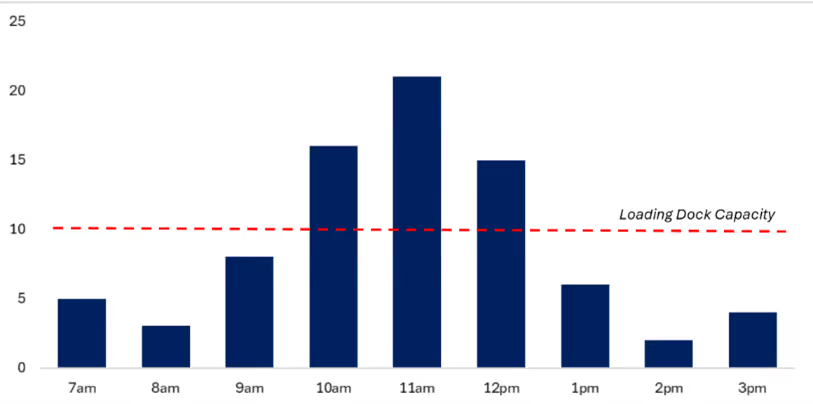
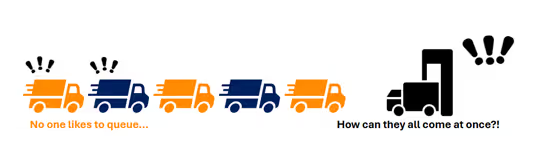
Loading docks are the lifeblood of any large venue, facilitating the smooth flow of goods in and out. However, if these areas are not strategically planned, they can become bottlenecks, causing traffic congestion not only within the venue but also on surrounding roads. Similarly, poorly designed guest car parks can lead to frustrating delays for attendees, negatively impacting their overall experience and potentially causing safety issues.
A poorly designed back of house significantly increases the cost to serve. Inefficiencies in the layout can lead to longer distances for moving goods from the loading dock to storage areas or kitchens, increasing labor and equipment costs. If waste management systems are not optimally designed, the costs and complexities of disposal can escalate quickly.
Suboptimal back-of-house design can lead to higher costs of goods sold and labor. For instance, inefficient kitchen designs might require more staff to perform the same amount of work, or lead to higher wastage of ingredients. Poorly organized storage areas can result in damaged goods or increased time spent locating items, both of which can significantly drive up costs.
The ultimate goal of any F&B and hospitality venue is to provide an exceptional experience to guests. However, if the back of house is poorly designed, it can lead to delays in service, errors in order fulfillment, and a general decrease in the quality of food and beverages. This not only impacts the venue's reputation but can also lead to reduced patronage and revenue.
In summary, the 'back of house' infrastructure is a critical component that, if not properly designed, can lead to unsafe working conditions, operational inefficiencies, increased costs, and a diminished guest experience. It's a foundational element that requires careful, strategic planning and execution to ensure the success and sustainability of any major F&B and hospitality operation.

In today's competitive landscape, businesses are continually looking for ways to improve efficiency, reduce costs, and enhance service levels. One effective strategy is using industry-specific supply chain benchmarks to identify and prioritise improvement opportunities and investments. This article explores various benchmarks, including warehouse costs, labour productivity, demand planning, transport costs, and service levels, to guide businesses in their quest for supply chain excellence.
Supply chain benchmarks are metrics used to compare an organization's performance against peers and industry best practices. These benchmarks provide a valuable baseline for understanding where a business stands in terms of efficiency, cost-effectiveness, and service delivery. They are crucial for identifying gaps, setting realistic goals, and tracking progress over time.
While generic benchmarks can provide some insights, industry-specific benchmarks are far more valuable as they consider the unique characteristics and challenges of each sector. These tailored benchmarks allow for a more accurate comparison and are instrumental in driving meaningful improvements.
Warehouse operating costs are a significant component of the overall supply chain expenses. Benchmarks in this area might include costs per square metre, costs as a percentage of revenue, or costs per unit shipped. Comparing these figures against industry standards helps identify areas where costs might be reduced, such as renegotiating leases, improving layout design, or investing in automation.
Labour productivity benchmarks, such as orders picked per hour or units handled per labour hour, are critical for understanding workforce efficiency. These benchmarks can highlight training needs, process improvements, or technological investments to boost productivity.
Effective demand planning and forecasting are vital for reducing inventory costs, improving customer satisfaction, and minimising waste. Key Performance Indicators (KPIs) and benchmarks in this area might include forecast accuracy, stockouts, or excess inventory levels. By measuring performance against these benchmarks, businesses can identify areas for improvement in their demand planning processes and technologies.
Transportation can account for a substantial portion of supply chain costs. Benchmarks such as cost per kilometre, cost per tonne shipped, or cost as a percentage of sales provide insights into transport efficiency. Businesses can use these benchmarks to negotiate better rates with carriers, optimise routes, or consider alternative modes of transportation.
Service level benchmarks, including Delivery In Full, On Time (DIFOT) or order fulfilment rates, are crucial indicators of customer satisfaction and operational efficiency. Comparing DIFOT rates against industry standards can help identify issues in order processing, inventory management, or logistics that might be impacting service quality.
Once benchmarks have been established, businesses need to analyse their performance gaps and prioritise improvement opportunities. This might involve focusing on areas with the most significant cost implications or targeting quick wins that can build momentum for broader changes. It's also essential to consider the investment required for each opportunity and the expected return.
Investments in technology, infrastructure, or process improvements should be guided by benchmark analysis. By understanding where the gaps are and what the best-in-class performance looks like, businesses can make more informed decisions about where to allocate resources to get the best return on investment.
Accurate benchmarking requires high-quality data. Businesses need to ensure they have robust systems in place for collecting and analysing data. This might involve investing in supply chain management software or improving data governance practices.
Benchmarking is not a one-time exercise. It requires ongoing monitoring and adaptation as industry standards evolve and the business grows. Companies should regularly review their benchmarks and adjust their improvement strategies accordingly.
For benchmarking to be effective, it must be embraced across the organisation. This involves communicating the importance of benchmarks, involving key stakeholders in the benchmarking process, and fostering a culture of continuous improvement.
Industry-specific supply chain benchmarks are a powerful tool for businesses looking to improve their operations. By providing a clear picture of performance relative to peers and best practices, benchmarks can guide investment and improvement strategies, leading to reduced costs, enhanced efficiency, and better service levels. However, effective benchmarking requires accurate data, ongoing monitoring, and organisational buy-in. With these elements in place, businesses can leverage benchmarks to drive significant and sustained improvements in their supply chain performance.
In navigating the complex terrain of supply chain optimization, businesses often need expert guidance to effectively utilize benchmarks and establish targets that drive competitive advantage. This is where we at Trace Supply Chain Consultants excel. Our team brings a comprehensive database of industry-specific supply chain benchmarks, coupled with the expertise to guide businesses in designing and establishing their own supply chain targets and metrics.
We understand that each business is unique, with its own set of challenges and objectives. Our approach involves:
By partnering with Trace Supply Chain Consultants, businesses can navigate the complexities of supply chain benchmarking and target setting with confidence. Our expertise and resources enable businesses to establish clear goals, make informed decisions, and drive substantial improvements in supply chain performance.

Interviewer: We're here with Shanaka Jayasinghe to dive deeper into how manufacturers can significantly enhance their competitive edge through effective Sales and Operations Planning (S&OP) and Integrated Business Planning (IBP). Shanaka, with your extensive expertise, can you provide more tangible insights into how these strategies fortify manufacturers, especially in challenging economic climates?
Shanaka Jayasinghe: Certainly. In today's fast-evolving and often unpredictable market, manufacturers need robust and responsive planning processes. S&OP and IBP are not just about balancing demand and supply; they're strategic frameworks that, when executed with precision and depth, can transform a manufacturer's responsiveness, efficiency, and ultimately, their market position.
Interviewer: Let's start with the bullwhip effect. How does it manifest in manufacturing, and what tangible steps can S&OP and IBP take to mitigate its impact?
Shanaka Jayasinghe: The bullwhip effect in manufacturing can cause drastic fluctuations in inventory levels, production schedules, and capacity planning — all leading to inefficiency and increased costs. Effective S&OP and IBP counter this by enhancing demand visibility and improving communication across the supply chain. For instance, by integrating market intelligence, consumer trends, and real-time sales data into planning models, manufacturers can better predict and respond to demand changes, dampening the oscillations caused by over or under-reacting to market signals.
Interviewer: You mentioned technologies like Kinaxis and GAINS Systems as enablers. Can you provide specific examples of how these technologies have driven S&OP and IBP success?
Shanaka Jayasinghe: Absolutely. Let's take Kinaxis, for instance. One manufacturer used Kinaxis to integrate their demand planning across multiple regions, leading to a unified view of global demand. This integration allowed them to adjust production schedules proactively, reduce excess inventory, and improve fill rates. Similarly, GAINS Systems might be used to optimize inventory levels dynamically, considering factors like lead time variability and service level targets, resulting in significant working capital reductions and service improvements.
Interviewer: How should manufacturers design their organisational structure and roles to support effective S&OP and IBP?
Shanaka Jayasinghe: An effective structure is one that promotes collaboration and accountability. For instance, having a dedicated S&OP or IBP team that spans across key functions like sales, operations, finance, and procurement can foster integrated planning and decision-making. Clear roles and responsibilities, coupled with executive sponsorship, ensure that strategic objectives trickle down into operational plans and that there's a consistent focus on achieving these goals.
Interviewer: Could you elaborate on the importance of executive sponsorship and meeting structures in these processes?
Shanaka Jayasinghe: Executive sponsorship is vital as it underscores the company's commitment to the S&OP and IBP processes. It ensures that these initiatives receive the necessary resources and attention and that decisions made are aligned with the strategic direction of the company. As for meetings, they should be structured to facilitate strategic discussions and actionable decisions. This means having the right data at hand, ensuring cross-functional representation, and maintaining a forward-looking agenda. Regular cadence and clear documentation of decisions and action items are also crucial.
Interviewer: You touched on the importance of item master data and other data elements. Can you discuss how manufacturers can effectively manage and utilise this data?
Shanaka Jayasinghe: Data is the lifeblood of effective S&OP and IBP. Item master data, supply chain master data, and transactional data must be accurate, accessible, and consistently updated. Manufacturers can achieve this through regular data quality audits, investing in data management tools, and fostering a culture where data accuracy is everyone's responsibility. Additionally, integrating data into user-friendly dashboards and planning tools can significantly enhance its utility, providing teams with the insights needed to make informed decisions.
Interviewer: Finally, what role do project management and change management play in implementing S&OP or IBP?
Shanaka Jayasinghe: These are critical. Project management ensures that the implementation is methodical and aligned with objectives, timeframe, and budget. It involves detailed planning, resource allocation, and risk management. Change management, on the other hand, focuses on the people aspect — preparing, equipping, and supporting individuals to successfully adopt new processes and systems. It's about communication, training, and ongoing support. Together, they ensure that S&OP and IBP implementations are not just technically successful but also embraced and sustained by the organization.
Interviewer: Your insights today have been incredibly comprehensive, Shanaka. Thank you for sharing your deep knowledge and practical advice on S&OP and IBP for manufacturers.
Shanaka Jayasinghe: It's been my pleasure. Remember, S&OP and IBP are about more than just planning; they're about creating a resilient, agile, and competitive manufacturing operation. With the right approach, technology, and commitment, they can drive remarkable improvements and set manufacturers on a path to sustained success.

Interviewer: Welcome, James Allt-Graham. With your extensive experience in supply chain management, we're keen to understand how Australian organisations can continually reinvent their supply chains to stay ahead. From technological advancements to organisational restructuring and major investments, there's a lot to cover.
James Allt-Graham: Thanks for having me. It's indeed a critical time for supply chains, with rapid advancements in technology and shifts in global trade dynamics. Australian organisations need to be agile and innovative to remain relevant and competitive.
Interviewer: Let's dive right in. Why must Australian organisations continually reinvent their supply chains?
James Allt-Graham: The landscape is constantly changing – economically, technologically, and socially. Organisations that don't adapt risk falling behind. Continual reinvention allows companies to stay efficient, meet evolving customer demands, and leverage new technologies and methodologies to maintain a competitive edge.
Interviewer: Speaking of technology, how important are best-of-breed demand planning software and other supply chain technologies in this reinvention?
James Allt-Graham: They're absolutely vital. Technologies like Kinaxis, GAINS Systems, and Relex offer sophisticated capabilities for demand planning, supply chain optimisation, and risk management. They provide real-time insights, predictive analytics, and advanced scenario planning, enabling organisations to make more informed, strategic decisions. By leveraging these technologies, companies can enhance responsiveness, reduce costs, and improve service levels.
Interviewer: Today's leading supply chains are also redefining skills and roles within their organisations. Can you expand on this?
James Allt-Graham: Certainly. As supply chains become more complex and technology-driven, the skills needed to manage them are also evolving. There's a growing need for data analysts, technology specialists, and strategic thinkers. Additionally, roles and relationships within the organisation, and with suppliers and customers, are shifting. Companies need to foster a culture of continuous learning and collaboration, breaking down silos and encouraging cross-functional teamwork to drive innovation and efficiency.
Interviewer: Major investments, like new distribution centres and automation, are big decisions. How should organisations approach these?
James Allt-Graham: These decisions should be strategic and data-driven. Organisations need to consider not just the immediate costs and benefits but also the long-term implications. This includes evaluating how the investment will impact agility, scalability, and resilience. For instance, investing in a new DC or automation technology might offer efficiency gains, but companies need to ensure that these investments align with their overall business strategy and customer service goals.
Interviewer: In the face of uncertainty and fast-paced changes, how crucial are agility and adaptability for supply chains?
James Allt-Graham: They're more crucial than ever. Agility and adaptability allow organisations to respond quickly to market changes, supply disruptions, or customer demands. This might involve diversifying suppliers, adopting flexible inventory strategies, or reconfiguring distribution networks. The key is to have a supply chain that is not just robust but also responsive and able to pivot as needed.
Interviewer: What role does leadership play in driving this continual reinvention?
James Allt-Graham: Leadership is fundamental. It's up to leaders to set the vision, empower their teams, and invest in the necessary resources and technologies. They need to foster a culture of innovation and resilience, encouraging experimentation and learning from failures. Strong leadership ensures that the whole organisation is aligned and committed to the journey of continual reinvention.
Interviewer: Alongside these strategies for reinvention, how is implementing supply chain sustainability becoming a priority on executive agendas?
James Allt-Graham: Sustainability is increasingly at the forefront of strategic planning, particularly in the supply chain realm. Executives understand that sustainable practices are not just ethical; they're also good for business. Consumers are demanding transparency and responsibility, regulatory pressures are intensifying, and there's a growing recognition that sustainable supply chains can be more resilient and cost-effective.
Organisations are focusing on reducing carbon footprints, minimising waste, ensuring fair labor practices, and using sustainable materials. They're also looking at how they can reduce energy usage and optimize logistics to be more environmentally friendly. By integrating sustainability into their supply chain strategies, companies are not only contributing to a healthier planet but also enhancing their brand, improving efficiency, and often realizing cost savings. It's a compelling aspect of supply chain management that's rapidly moving from optional to essential in executive strategies.
Interviewer: Thank you, James, for sharing your insights on the dynamic world of supply chain management and the necessity for Australian organisations to continually reinvent themselves. Your expertise provides a valuable roadmap for those looking to navigate these complex waters.
James Allt-Graham: It's been a pleasure. Remember, the goal isn't just to keep up with change but to anticipate and lead it. With the right strategies and mindset, organisations can turn their supply chains into a source of competitive advantage and sustainable growth.

Great consultants deliver transformative, sustainable, and lasting change by combining deep industry knowledge with innovative strategies to drive continuous improvement and competitive advantage.
Interviewer: Welcome, Shanaka Jayasinghe. As a leader in consulting with extensive experience, we're eager to understand the role of external consultants in helping Australian business executives and government officials make strategic decisions. In particular, how they contribute to designing and developing business cases for organisations stepping into new ventures or transformations.
Shanaka Jayasinghe: Thank you. It's an important topic, especially now as businesses and governments face unprecedented changes and challenges. External consultants with deep technical expertise and industry experience play a pivotal role in guiding these strategic shifts.
Interviewer: Can you elaborate on the value external consultants bring to strategic planning and business case development?
Shanaka Jayasinghe: Absolutely. External consultants bring a fresh, outside-in perspective that can be crucial for organisations looking to navigate change or embark on new initiatives. They bring deep technical expertise and a broad view of industry trends and challenges, which can significantly enhance the quality and viability of strategic plans and business cases.
Interviewer: How do consultants assist retailers in redesigning their network footprint for distribution, particularly in times of growth?
Shanaka Jayasinghe: Growth often prompts retailers to reassess their distribution networks to ensure they align with changing business needs. Consultants can provide detailed analyses of current operations, market demands, and future growth scenarios to help design a network that is efficient, scalable, and aligned with the retailer's strategic goals. They can identify opportunities for consolidation, expansion, or reconfiguration to improve service levels, reduce costs, or enter new markets.
Interviewer: With the rise of online shopping, how are consultants helping businesses invest in new, purpose-built, and automated facilities?
Shanaka Jayasinghe: The shift to online retail has significant implications for supply chain and distribution strategies. Consultants help businesses understand these implications and guide them in investing in new technologies and facilities. This might involve designing automated warehouses, implementing advanced inventory management systems, or reconfiguring logistics networks to meet the unique demands of online retail.
Interviewer: Regulations and legislation can have a big impact on businesses. How do consultants help in adapting to these changes?
Shanaka Jayasinghe: New regulations or legislative changes can require significant adjustments in operations. Consultants help businesses understand these changes, assess their impacts, and develop strategies to comply efficiently and effectively. This might involve redesigning processes, investing in new technologies, or modifying supply chain structures.
Interviewer: In times of cost pressure and uncertainty, how important is it for businesses to leverage supply chain technology effectively?
Shanaka Jayasinghe: Leveraging technology is more critical than ever. It can lead to significant improvements in efficiency, agility, and cost management. Consultants can help businesses identify and implement the right technologies for their specific needs, whether that's in logistics, inventory management, procurement, or other areas of the supply chain. They can also help integrate these technologies into existing operations to maximise their value.
Interviewer: How are geopolitical risks and climate change creating new challenges for businesses, and how can consultants assist?
Shanaka Jayasinghe: Geopolitical risks and climate change are leading to more volatile and complex operating environments. Businesses need to be more resilient and adaptable to manage these challenges. Consultants can provide risk assessments, scenario planning, and strategy development to help businesses understand and mitigate these risks. They can also guide investments in sustainability and resilience, such as diversifying supply sources, enhancing flexibility, or reducing environmental impact.
Interviewer: You mentioned the 'cut through' that specialist perspectives bring. Can you expand on this?
Shanaka Jayasinghe: Specialist consultants can quickly identify the core issues and opportunities within an organisation. They have the expertise and experience to cut through complexity and provide clear, actionable advice. This efficiency is invaluable in helping organisations move towards their desired state, particularly when time and resources are limited.
Interviewer: With the importance of specialised expertise in navigating these complex transformations, how can Trace Supply Chain Consultants specifically assist Australian businesses and government officials?
Shanaka Jayasinghe: Trace Supply Chain Consultants is an Australian-owned, capability-oriented consulting firm, uniquely positioned to assist organisations in enhancing their supply chain and business strategies. Our approach is centred around providing specialised expertise and leveraging advanced technologies to deliver tangible, measurable results for our clients.
Here's how we make a significant impact:
By partnering with Trace Supply Chain Consultants, organisations can confidently navigate their strategic transformations, knowing they have a team of experts committed to their success. Our combination of specialised expertise, advanced technologies, and a focus on tangible results makes us an invaluable partner for any business looking to enhance its operations and competitive advantage.
Interviewer: Finally, what distinguishes a great consultant from a good one?
Shanaka Jayasinghe: A great consultant combines deep expertise with a genuine understanding of the client's business and needs. They are not just problem solvers but also trusted advisors who can guide and support clients through complex and uncertain times. They bring not only technical skills but also strategic insight, creative thinking, and a commitment to delivering real value. Great consultants build lasting relationships and are considered an integral part of the client's success.
Interviewer: Your insights today have been incredibly valuable, Shanaka. It's clear that external consultants play a critical role in helping businesses and governments navigate strategic shifts and embrace new opportunities. Thank you for sharing your expertise with us.
Shanaka Jayasinghe: Thank you for the discussion. It's a pivotal time for businesses and governments, and the right guidance and support can make all the difference. I'm proud to be part of this dynamic and crucial field of work.

Interviewer: Welcome, Tim Fagan, and thank you for joining us to discuss the evolving landscape of IT transformation within Australian businesses, especially in supply chain management. In light of significant cost pressures and uncertainty, we're interested in your perspective on the shift from large-scale IT transformations to more tactical and targeted IT changes.
Tim Fagan: Thank you for having me. It's an interesting time for business executives as they navigate through these challenges. The shift in strategy towards more focused and flexible IT solutions is a reflection of the need for agility and quick wins in today's business environment.

Interviewer: Can you elaborate on why businesses are steering away from large-scale IT transformations?
Tim Fagan: Certainly. Large-scale IT transformations are often costly, complex, and carry significant risk, especially in uncertain times. They typically require substantial upfront investment and a long period before businesses see any return. In the current economic climate, executives are looking for solutions that deliver immediate value and can be adjusted as circumstances change. This means opting for smaller, more targeted changes that can be implemented quickly and cost-effectively.
Interviewer: We've seen a resurgence of best of breed systems. What's driving this comeback?
Tim Fagan: Best of breed systems offer specialised functionality that meets specific business needs without the complexity and cost of large integrated suites. They are making a comeback as businesses seek to enhance capabilities in particular areas like supply chain management, customer relationship management, or financials, without overhauling their entire IT infrastructure. These systems are often more user-friendly and quicker to implement than their integrated counterparts, making them an attractive option for businesses looking to make incremental improvements.
Interviewer: How are low code and no code solutions like Microsoft Power Apps changing the game for businesses?
Tim Fagan: Low code and no code platforms are a game-changer, enabling businesses to develop custom applications quickly and with minimal technical expertise. Tools like Microsoft Power Apps allow business users to create solutions that address specific operational challenges, automate processes, or improve data management. These platforms significantly reduce development time and cost, empower end-users, and can be continuously adapted as business needs evolve. They're a perfect example of tactical IT step-changes that deliver immediate and significant benefits.
Interviewer: You mentioned low code/no code solutions as a key tactical change. Can you discuss their return on investment?
Tim Fagan: Absolutely. Low code/no code solutions are revolutionising how businesses approach software development and IT problem-solving. One of the most compelling aspects of these solutions is their return on investment. Often, businesses see a payback period of less than 12 months with an ROI that can exceed 10:1.
The reasons behind this impressive ROI include:
This powerful combination of quick deployment, high impact, and low cost makes low code/no code solutions an attractive option for businesses looking to improve their supply chain performance and overall resilience.
Interviewer: What are the benefits of these more tactical IT changes for businesses, particularly in the supply chain?
Tim Fagan: There are several benefits. Firstly, tactical changes can be implemented rapidly, allowing businesses to respond quickly to market changes or internal challenges. This agility is crucial in maintaining competitive advantage. Secondly, they often require less investment and carry lower risk than large-scale transformations, making them more viable in times of cost pressure. In supply chain management, these targeted solutions can lead to better inventory management, improved supplier collaboration, and more efficient logistics, directly impacting the bottom line.
Interviewer: Can you provide some examples where tactical IT changes have driven significant improvements?
Tim Fagan: Sure. One company implemented a best of breed warehouse management system to address specific bottlenecks in their supply chain. This led to improved inventory accuracy and faster order processing times. Another example is a business that used a low code platform to develop a custom application for supplier performance management, significantly enhancing their procurement process and reducing costs.
Interviewer: What challenges should businesses be aware of when adopting this approach?
Tim Fagan: While tactical IT changes can offer significant benefits, businesses need to ensure they don't lead to a fragmented IT landscape. It's important to maintain a coherent overall architecture and ensure new solutions integrate well with existing systems. There's also the challenge of continuously managing and updating these solutions to meet evolving business needs.
Interviewer: How should IT leaders and executives approach these step-changes?
Tim Fagan: IT leaders need to be strategic yet flexible. They should foster a culture of innovation and empower their teams to identify and implement solutions that address specific business challenges. At the same time, they need to ensure that these changes align with the overall business strategy and IT architecture. It's about finding the right balance between innovation, agility, and coherence.
Interviewer: In this evolving landscape, how can Trace Supply Chain Consultants assist businesses in adopting these more tactical and targeted IT changes?
Tim Fagan: Trace Supply Chain Consultants are perfectly positioned to help businesses navigate and implement these strategic IT changes. Our team of experienced consultants understands the nuances of supply chain operations and the latest in IT advancements. Here's how we can assist:
By partnering with Trace Supply Chain Consultants, businesses can confidently embark on their journey toward tactical IT transformation, ensuring they're making the right investments that deliver real value.
Interviewer: Thank you, Tim, for sharing your insights on this tactical shift in IT strategy within Australian businesses. Your expertise sheds light on how companies can navigate these uncertain times with smarter, more focused IT investments.
Tim Fagan: It's been a pleasure discussing these trends. The key takeaway for businesses is that in times of uncertainty and cost pressures, flexibility and agility in IT investments can lead to significant improvements and help maintain a competitive edge. Thank you for having me.

Interviewer: Welcome, Kingston Yong, and thank you for joining us to discuss the integration of Lean Six Sigma and continuous improvement methodologies in supply chain management. As businesses seek to navigate economic challenges and enhance resilience, we're keen to understand how these methodologies can drive performance and cost management.
Kingston Yong: It's a pleasure to be here. In an increasingly competitive and dynamic environment, adopting Lean Six Sigma and continuous improvement is more than a strategic advantage; it's a necessity for Australian businesses aiming to optimise their supply chains.
Interviewer: Could you start by explaining the role and importance of Lean Six Sigma in supply chain management?
Kingston Yong: Certainly. Lean Six Sigma is a methodology that combines the waste-reducing principles of Lean with the defect-reducing focus of Six Sigma. In the context of supply chain management, it's about eliminating inefficiencies, reducing variability, and improving the quality of processes. This leads to faster, more reliable, and cost-effective operations.
Interviewer: What are the key benefits organisations can expect from adopting Lean Six Sigma methodologies?
Kingston Yong: The benefits are extensive. Firstly, Lean Six Sigma significantly enhances operational efficiency by streamlining processes and eliminating non-value-adding activities. This directly translates into faster lead times and reduced costs. Secondly, it improves quality and consistency, which enhances customer satisfaction and reduces the costs associated with defects and returns. Additionally, by fostering a culture of continuous improvement, organisations become more agile and responsive to changes, boosting their resilience and competitive edge.
Interviewer: How can businesses begin to implement Lean Six Sigma methodologies in their supply chains?
Kingston Yong: Implementation should start with a clear commitment from leadership and an understanding of the methodology's principles and tools. Businesses typically begin with training key staff members and undertaking a pilot project to address a specific supply chain issue. This provides a tangible example of the benefits and helps build momentum for wider implementation.
Interviewer: How does continuous improvement complement Lean Six Sigma in enhancing supply chain performance?
Kingston Yong: Continuous improvement is an integral part of Lean Six Sigma. It's about not being complacent and always looking for ways to optimise processes. This mindset ensures that supply chains don't just improve once but continue to evolve and adapt. It involves regularly reviewing performance, seeking feedback, and being open to innovation and change.
Interviewer: In times where cost management is particularly crucial, how does Lean Six Sigma help free up cash flows and improve business resilience?
Kingston Yong: Lean Six Sigma is particularly effective in tightening operations and reducing waste, which directly impacts costs. By improving process efficiency, businesses can reduce inventory needs, minimise excess production, and lower energy and material costs. These savings can then be reinvested into the business or used to reduce prices and improve competitiveness. Moreover, by enhancing process reliability and customer satisfaction, businesses can also see a reduction in costs related to customer complaints and returns.
Interviewer: Can you share any success stories or examples where Lean Six Sigma has transformed supply chain operations?
Kingston Yong: There are many. One notable example is a manufacturing company that implemented Lean Six Sigma to streamline its production and distribution processes. By reevaluating their inventory management and streamlining production workflows, they significantly reduced lead times and inventory levels, leading to improved cash flow and customer satisfaction. Another example is a retailer who used Lean Six Sigma to optimise their logistics and distribution network, resulting in reduced transportation costs and faster delivery times.
Interviewer: What are some of the challenges businesses might face when implementing Lean Six Sigma, and how can they overcome them?
Kingston Yong: One common challenge is resistance to change, especially from staff who are accustomed to existing processes. Overcoming this requires clear communication about the benefits, as well as involving employees in the process and providing adequate training. Another challenge is maintaining momentum after initial successes. This can be addressed by setting up a structure for ongoing improvement, such as regular reviews and performance metrics.
Interviewer: How can consultants assist businesses in adopting Lean Six Sigma and continuous improvement methodologies?
Kingston Yong: Consultants like us at Trace Supply Chain Consultants bring expertise, experience, and an external perspective that can be invaluable in implementing Lean Six Sigma. We can help train staff, facilitate projects, provide tools and templates, and offer insights from other industries and sectors. We also help maintain focus and momentum, ensuring that the implementation achieves its intended results and continues to drive benefits over the long term.

Interviewer: Thank you, Kingston, for sharing your insights today. It's clear that Lean Six Sigma and continuous improvement methodologies offer significant opportunities for Australian businesses to enhance their supply chain performance, particularly in challenging economic times.
Kingston Yong: Absolutely. The current environment makes it more important than ever for businesses to be lean, agile, and quality-focused. Lean Six Sigma and continuous improvement are powerful tools in achieving these objectives. Thank you for the opportunity to discuss these crucial strategies.

Interviewer: Welcome, Mathew Tolley, to our in-depth discussion on improving supply chain resilience against geopolitical shocks and risks. In today's volatile global environment, businesses are keen to understand how they can safeguard their operations. We're looking forward to your insights on implementing n-tier supply chain assessments and more.
Mathew Tolley: Thank you. It's crucial now more than ever for businesses to fortify their supply chains against a variety of risks. I'm eager to share how strategic assessments and adjustments can make a substantial difference.

Interviewer: To start us off, why is there a growing need for supply chain resilience in today's political and economic climate?
Mathew Tolley: Current global dynamics, including trade tensions, regulatory changes, and unpredictable events, have highlighted the vulnerability of extended, globalised supply chains. Businesses are realising that to maintain continuity and competitive advantage, they must build resilience into their supply chains. This means being able to quickly adapt to disruptions, whether they're caused by geopolitical issues, natural disasters, or market changes.
Interviewer: Can you explain what n-tier supply chain assessments are and how they contribute to resilience?
Mathew Tolley: Certainly. N-tier supply chain assessments involve analysing not just your immediate suppliers (the first tier) but also their suppliers and so on down the line. This deep dive helps map out concentration risks, critical item risks, and overall supplier health. By understanding where vulnerabilities lie, businesses can develop strategies to mitigate these risks, such as diversifying suppliers or building inventory buffers.
Interviewer: How does identifying concentration risk help businesses?
Mathew Tolley: Many businesses may find that they, or their suppliers, rely heavily on a single geographic region or supplier for critical components. This concentration can be risky if that region or supplier faces disruptions. By mapping these risks, businesses can take proactive steps to diversify their supply sources or develop contingency plans, significantly reducing potential impacts.
Interviewer: What about critical items and supplier risks?
Mathew Tolley: Identifying which items are critical to your operations and understanding the health and reliability of the suppliers providing them are essential. It's about knowing which parts of your supply chain are most vulnerable and which suppliers you need to work closely with to ensure continuity and reliability.
Interviewer: You mentioned de-globalisation trends, particularly in the US. How do you see this affecting Australian businesses?
Mathew Tolley: The US is indeed undergoing a rapid re-localisation in response to supply chain disruptions and geopolitical tensions. Australian businesses, particularly in sectors like technology, pharmaceuticals, and critical minerals, are likely to experience similar pressures. There's a growing emphasis on securing supply chains, reducing dependency on single sources, and possibly bringing production closer to home or to more politically stable regions.
Interviewer: Can focusing on resilience really lead to cost reductions and service improvements?
Mathew Tolley: Absolutely. While building resilience might initially seem like an added cost, in the long run, it leads to substantial savings by avoiding disruption costs, penalties for delayed deliveries, and lost sales. Moreover, resilient supply chains tend to be more efficient and responsive, leading to better service levels and customer satisfaction.
Interviewer: What steps should businesses take to implement n-tier supply chain assessments effectively?
Mathew Tolley: First, businesses need to commit to transparency and collaboration with their suppliers. They also need the right tools and technologies to collect and analyse supply chain data. Then, it's about continuously monitoring risks and adjusting strategies as needed. This might mean regularly updating risk assessments, diversifying suppliers, or adjusting inventory strategies.
Interviewer: How does technology fit into building supply chain resilience?
Mathew Tolley: Technology is a key enabler of resilience. Advanced analytics, AI, and blockchain, for example, can provide greater visibility and faster insights into risks. They can also help automate response strategies, like rerouting shipments or finding alternative suppliers quickly.
Interviewer: Mathew, in light of these challenges, how can Trace Supply Chain Consultants specifically assist organisations and governments in navigating the path to a more resilient supply chain?
Mathew Tolley: At Trace Supply Chain Consultants, we are well positioned to guide businesses and government entities through the complexities of enhancing supply chain resilience. Our team comprises experienced consultants who have deep expertise in various aspects of supply chain management.
By partnering with Trace Supply Chain Consultants, organisations and government bodies can confidently tackle the challenges of building a resilient supply chain. Our blend of expert advice, advanced technological tools, and comprehensive data insights positions us to guide our clients successfully through this ever-evolving landscape, helping them achieve not just resilience but also cost efficiency and service excellence in their supply chain operations.

Interviewer: Thank you, Mathew, for sharing your expertise on building resilient supply chains. It's clear that in our interconnected world, understanding and mitigating risks at all levels of the supply chain is critical for business continuity and success.
Mathew Tolley: It's been my pleasure. Remember, resilience isn't about avoiding all risks—it's about being prepared to manage and respond to those risks effectively. With the right strategies, tools, and mindset, businesses can turn their supply chains into competitive advantages, even amidst the uncertainties of today's global landscape.

Shanaka Jayasinghe: Welcome, Emma Woodberry, to our discussion on how Australian businesses can improve their overall sustainability by investing in optimising their supply chains. We're eager to delve into the strategies and benefits of sustainable supply chain management.
Emma Woodberry: Thank you, Shanaka. It's a pleasure to be here to discuss such a crucial topic. Sustainable supply chain management is not just a trend; it's a necessity in today's business landscape.

Shanaka Jayasinghe: Let's start with the basics. Why do supply chains need to become more sustainable?
Emma Woodberry: Well, Shanaka, the reasons are multifaceted. Firstly, there's a growing awareness and concern about the environmental impact of business operations. This includes emissions, waste, and the depletion of natural resources. Moreover, consumers are increasingly demanding transparency and ethical practices, making sustainability a competitive advantage. Additionally, regulatory pressures are mounting with various governments setting ambitious targets for emissions reduction and waste management.
Shanaka Jayasinghe: Emissions reduction is a hot topic. How can businesses tackle this within their supply chains?
Emma Woodberry: Emissions are a significant part of any supply chain, especially in transport and manufacturing. Businesses can invest in more efficient transportation methods, like electric vehicles or optimising routes to reduce travel distance. They can also implement energy-efficient practices in warehouses and production facilities. It's also about looking upstream and ensuring suppliers are committing to emissions reductions.
Shanaka Jayasinghe: Is there a financial benefit to investing in sustainable supply chain practices?
Emma Woodberry: Absolutely. Initially, some businesses might be hesitant, thinking sustainability is a cost rather than an investment. However, when you reduce waste, optimise routes, and improve energy efficiency, you're also reducing costs. Sustainable practices often lead to leaner, more efficient operations that are not just good for the planet but also for the bottom line.
Shanaka Jayasinghe: Let's talk about waste. How can supply chain optimisation help in waste reduction?
Emma Woodberry: Waste minimisation is critical. It starts with designing products and packaging with the end-of-life in mind, aiming for recyclability or biodegradability. Then it's about streamlining operations to reduce excess production, improving inventory management to avoid overstocking, and implementing recycling initiatives. Reducing waste not only lessens environmental impact but also cuts down costs associated with disposal and lost product value.
Shanaka Jayasinghe: Scope 3 emissions are often the largest part of a company's carbon footprint. How should businesses approach this?
Emma Woodberry: Scope 3 emissions, which include all indirect emissions in a company's value chain, are indeed challenging. It requires businesses to look beyond their immediate operations and engage with suppliers and customers to reduce emissions.The first step is understanding the Scope 3 emissions baseline within your business, identifying a target to work towards, and then putting processes in place to work towards your target. This might involve selecting suppliers with lower carbon footprints, working with customers on sustainable end-of-life product management, and investing in technologies for better emissions tracking and reporting.
Shanaka Jayasinghe: Modern slavery is a serious concern. How are businesses addressing this within their supply chains?
Emma Woodberry: It's about visibility and control. Businesses need to understand their suppliers, and encourage transparency in their operations to identify where they might be at risk of social issues. Businesses should aim to conduct thorough audits and assessments of their suppliers to ensure ethical practices. This might involve on-site inspections, third-party audits, and implementing strict supplier codes of conduct. It's not just about compliance; it's about ethical responsibility and maintaining a brand's integrity.
Shanaka Jayasinghe: Can you explain the concept of n-tier supply chain analysis and its importance?
Emma Woodberry: Certainly. Most businesses have a good handle on their direct suppliers, or the first tier. However, sustainability issues often lie deeper in the second, third, or even further tiers – this becomes especiallyimportant when we talk about Scope 3 emissions and modern slavery. N-tier analysis involves looking beyond the immediate suppliers and understanding the entire network up to the raw material extraction. This comprehensive view allows businesses to identify and address sustainability issues throughout their supply chain.
Shanaka Jayasinghe: How do network reviews contribute to sustainable supply chains?
Emma Woodberry: Network reviews allow businesses to assess their supply chain from a holistic perspective. This includes evaluating the location of warehouses and distribution centres to minimise transport emissions, looking at the efficiency of operations, and the sustainability practices of partners. By regularly reviewing and adjusting the network, businesses can ensure it aligns with sustainability goals and operates efficiently.
Shanaka Jayasinghe: Demand planning and forecasting seem critical in this context. Can you elaborate on their role?
Emma Woodberry: Effective demand planning and forecasting allow businesses to produce and stock precisely what is needed, reducing overproduction and excess inventory, which are both costly and environmentally detrimental. Advanced forecasting techniques can predict customer demand more accurately, leading to better resource allocation, reduced waste, and lower emissions.
Shanaka Jayasinghe: Finally, how can we at Trace Supply Chain Consultants assist businesses in this journey?
Emma Woodberry: Trace Supply Chain Consultants can play a crucial role in guiding businesses through the complexities of implementing sustainable supply chain practices. We can help conduct benchmarking analyses, perform network and n-tier reviews, and provide strategies for waste reduction, emissions control, and ethical sourcing. Our expertise can pave the way for a more sustainable, efficient, and cost-effective supply chain.

Shanaka Jayasinghe: In light of the complex challenges and opportunities in developing sustainable supply chains, how can Trace Supply Chain Consultants specifically assist organisations in not just reviewing their sustainability in the supply chain but also in developing and supporting the implementation of robust sustainability strategies?
Emma Woodberry: At trace. we are well-equipped to assist organisations at every stage of their sustainability journey. Initially, we conduct a comprehensive review of the current supply chain operations to identify sustainability gaps and opportunities, looking at areas such as emissions, waste management, energy use, and ethical sourcing practices.
Here are some of the ways we can make a significant difference:
By partnering with Trace Supply Chain Consultants, organisations can ensure that their approach to sustainability is strategic, comprehensive, and aligned with both their operational goals and broader corporate social responsibility objectives. With Trace's support, businesses can not only improve their sustainability performance but also strengthen their market position and achieve cost savings through more efficient, responsible supply chain operations.
Shanaka Jayasinghe: Thank you, Emma, for this insightful conversation. It's clear that by investing in sustainable supply chain practices, businesses can not only reduce costs but also enhance their market position and contribute to a healthier planet.
Emma Woodberry: Absolutely, Shanaka. It's about taking a comprehensive and strategic approach, and the benefits are well worth the investment. Thank you for having me.

In the competitive landscape of retail and manufacturing, transport costs significantly impact overall business efficiency and profitability. Organisations constantly strive to optimise these costs while maintaining service quality and responsiveness. This article explores a range of strategies that retailers and manufacturers can employ to reduce transport costs, including benchmarking analysis, network reviews, route consolidation, service assessments, and market re-tendering.
Before diving into cost reduction strategies, it's important to understand the various components that contribute to transport costs, including fuel, vehicle maintenance, driver wages, insurance, and regulatory compliance. These costs are influenced by factors such as route length, cargo volume and weight, transportation mode, and service requirements.
Conducting a benchmarking analysis involves comparing your current transport costs and service levels with industry standards or best practices. This helps identify areas where you may be overspending or underperforming.
Work closely with your existing transport and 3PL providers to understand their cost structures and service capabilities. This collaboration can reveal opportunities for cost reduction and efficiency improvements.
A thorough review of your distribution network can uncover inefficiencies and opportunities for cost savings. Consider factors like warehouse locations, customer distribution, and product flow.
Centralising distribution or employing cross-docking strategies can reduce transport distances and costs while improving delivery times.
Combining shipments to maximise vehicle capacity utilisation is a straightforward way to reduce per-unit transport costs. Effective consolidation requires careful planning and coordination but can lead to significant savings.
Advanced route planning software can optimise delivery routes for fuel efficiency and time savings. Similarly, maximising load utilisation ensures that each trip delivers the most value.
Understanding your customers' service requirements can identify areas where you may be over-delivering and incurring unnecessary costs. Engage with customers to align service levels with their actual needs.
Offering flexible delivery options can reduce costs by allowing for more efficient route planning and consolidation opportunities.
Regularly analysing the transport market for new providers, technologies, or strategies can uncover opportunities for improved efficiency and cost savings.
Periodically re-tendering your transport services encourages competition and can lead to better pricing and service offerings. Ensure the re-tendering process is transparent and considers both cost and service quality.
A TMS can provide valuable insights into your transport operations, helping to identify inefficiencies and optimise routes, loads, and schedules.
Investing in automation and IoT devices for vehicle tracking, fuel management, and maintenance can lead to long-term cost savings by improving efficiency and reducing downtime.
Developing strong relationships with transport providers, customers, and other stakeholders can lead to collaborative cost-saving initiatives and more favourable terms.
Co-loading with other businesses, even competitors, can maximise vehicle utilisation and reduce transport costs for all parties involved.
Implementing a robust monitoring and reporting system allows for continuous tracking of transport costs and service levels, helping to identify trends and areas for improvement.
Adopting a mindset of continuous improvement ensures that transport cost reduction remains a priority and that new opportunities for savings are regularly explored and implemented.
Reducing transport costs is a multifaceted challenge that requires a strategic approach, careful planning, and ongoing management. By conducting benchmarking analyses, optimising distribution networks, consolidating routes, aligning service levels with customer needs, re-tendering services, leveraging technology, fostering collaborations, and committing to continuous improvement, retailers and manufacturers can significantly reduce their transport expenses. In doing so, they not only improve their bottom line but also enhance their service quality, responsiveness, and competitive edge in the market.
Trace Supply Chain Consultants offer specialised services to help businesses reduce transport costs and enhance efficiency. Their expertise in benchmarking transport rates, optimising routes, and supporting businesses in going to market to tender transport services makes them an invaluable partner in your cost reduction journey.
Trace consultants assist in benchmarking your current transport rates against industry standards and best practices. They provide an in-depth analysis of where you stand in the market and identify opportunities where you can negotiate better terms or switch to more cost-effective options. This service is crucial for businesses looking to understand their competitive position and seeking leverage in negotiations with providers.
With a deep understanding of logistics and route planning, Trace consultants can significantly optimise your transport routes. They utilise advanced tools and their extensive industry knowledge to propose more efficient routes and strategies, leading to reduced fuel consumption, quicker delivery times, and lower overall transport costs. They consider all critical factors, including cargo specifications, delivery timeframes, and vehicle capacities, to ensure that the proposed solutions are practical and impactful.
When it's time to go to market to re-tender transport services, Trace Supply Chain Consultants can guide you through the entire process. They help prepare tender documents, identify potential service providers, evaluate proposals, and support negotiation processes. Their experience ensures that you not only get competitive rates but also partner with reliable providers who can meet your service and quality requirements.
By partnering with Trace Supply Chain Consultants, businesses can tap into a wealth of knowledge and experience that will help them navigate the complexities of transport cost optimisation. From initial benchmarking to route optimisation and tendering support, Trace provides a comprehensive suite of services designed to deliver tangible improvements and significant cost savings. With their support, businesses can confidently address their transport challenges, ensuring they achieve sustained efficiency and a competitive edge in their operations.

In the complex and rapidly evolving world of supply chain management, consultants play a crucial role in guiding businesses through challenges and opportunities. A great supply chain consultant brings a unique blend of skills and expertise that can significantly impact an organisation's efficiency, profitability, and competitive edge. This article explores the essential attributes of a top-tier supply chain consultant, including their approach to fact-based analysis, data-driven insights, and tangible value delivery, with examples of how they can drive substantial cost reductions across various supply chain components.
Great supply chain consultants possess extensive knowledge of the industry's best practices, trends, and regulatory requirements. They are well-versed in the intricacies of transport, warehousing, manufacturing, and inventory management, enabling them to provide relevant and up-to-date advice.
A fact-based, data-driven approach is fundamental in supply chain consulting. These professionals rely on quantitative analysis to understand problems, identify opportunities, and measure performance.
They use advanced data analysis tools to dissect supply chain dynamics, forecast trends, and provide insights that help businesses make informed decisions.
The best consultants don't just present data; they deliver actionable insights. They translate complex information into strategic recommendations that drive sustained, lasting change.
Their focus is on creating tangible value for the organisation. This means not only identifying areas for improvement but also implementing solutions that lead to measurable results.
Great consultants understand that change in one area of the supply chain can impact the entire system. They take a holistic view, ensuring that improvements are balanced and beneficial across all components.
Implementing change is as much about managing people as it is about managing processes. Top consultants are adept at guiding organisations through the transition, addressing concerns, and fostering a culture of continuous improvement.
Good consultants can significantly reduce transportation costs by optimising route planning, consolidating shipments, and negotiating carrier contracts. They employ advanced logistics software and analytics to identify the most efficient transport methods.
By analysing route efficiency and driver performance, consultants have helped businesses cut down on unnecessary travel, transport provider costs, kilometre reimbursements (for service clients) and fuel costs.
Consultants look at various factors in warehousing operations, such as layout, automation, and workforce management, to enhance efficiency and reduce costs.
By redesigning the warehouse layout and implementing better inventory management practices, consultants have helped organisations reduce waste, improve picking efficiency, and decrease storage costs.
In manufacturing, consultants focus on streamlining operations, reducing cycle times, and implementing lean manufacturing principles to reduce waste and improve throughput.
By introducing lean manufacturing techniques, consultants have helped manufacturers significantly reduce waste, improve product quality, and lower production costs.
Effective inventory management is crucial for reducing costs while maintaining service levels. Consultants use sophisticated forecasting and inventory optimisation tools to balance stock levels, reduce carrying costs, and minimise stockouts.
Consultants have assisted businesses in recalibrating their safety stock levels using advanced statistical models, leading to reduced inventory holding costs without compromising product availability.
Great supply chain consultants are always on the cutting edge of technology. They understand how to leverage automation, AI, machine learning, and other innovations to enhance supply chain efficiency.
They don't offer one-size-fits-all solutions; instead, they tailor their technology recommendations to fit the specific needs and capabilities of the business.
The best consultants view their role as a long-term partnership, working alongside the business to continuously identify and implement improvements.
They gain trust not through promises but through delivering measurable results that positively impact the bottom line.
A great supply chain consultant brings a unique set of skills and attributes that can transform an organisation's supply chain into a strategic asset. With their deep industry knowledge, data-driven approach, insight-led strategies, and focus on tangible value, they can identify and implement substantial cost reductions across transportation, warehousing, manufacturing, and inventory. By staying current with the latest technologies and maintaining a focus on lasting change and continuous improvement, these consultants are invaluable partners in navigating the complex and ever-changing landscape of supply chain management.