Form Submitted

Thanks for your enquiry, we'll be in touch soon.

We appreciate you taking the time to get in touch. Your message has been received and will be reviewed by a member of the Trace team within 1–2 business days.

While you wait, see what we're all about. Learn more about how Trace works, what sets us apart, and the kinds of problems we help clients solve.

Latest news & Insights

Explore insights from
the Trace team.

Explore our insights to see how we approach real-world complexity with clarity, structure, and measurable outcomes.

How investing in a MRO system can improve your working capital and service performance

February 2023
Maintenance, Repair, and Operations (MRO) is a critical function in any organisation that uses equipment, machinery, and other assets.

Maintenance, Repair, and Operations (MRO) is a critical function in any organisation that uses equipment, machinery, and other assets. MRO activities are responsible for maintaining the reliability and performance of these assets, which in turn ensures the smooth functioning of the organisation. However, MRO activities are often associated with high costs, low efficiency, and poor inventory management. These issues can have a significant impact on the working capital and service performance of the organisation. In this article, we will explore how investing in an MRO system can improve your working capital and service performance.

The MRO process involves a series of activities such as maintenance planning, scheduling, execution, inventory management, and procurement. These activities require collaboration between various departments such as production, maintenance, procurement, and finance. However, the lack of integration and coordination between these departments often leads to inefficiencies, delays, and increased costs.

Inefficient MRO processes can lead to excessive downtime, missed production targets, and reduced service levels, resulting in dissatisfied customers. On the other hand, an optimised MRO process can improve asset reliability, reduce downtime, and enhance service performance, resulting in improved customer satisfaction and increased profitability.

In this article, we will discuss the benefits of investing in an MRO system and how it can improve your working capital and service performance.

Benefits of Investing in an MRO System

1.Improved Asset Reliability

The primary objective of any MRO process is to ensure the reliability and performance of assets. An MRO system provides a comprehensive platform for maintenance planning, scheduling, and execution, which ensures that assets are maintained in optimal condition. The system allows you to schedule preventive maintenance, plan for spare parts, and manage inventory efficiently. By investing in an MRO system, you can reduce the likelihood of asset failures, which can lead to unplanned downtime and increased costs.

2. Reduced Downtime

Downtime is a critical issue in any production environment. Unplanned downtime can result in missed production targets, delayed shipments, and dissatisfied customers. An MRO system helps you identify potential issues before they become critical problems, allowing you to schedule maintenance proactively. By implementing an MRO system, you can reduce downtime, improve production efficiency, and increase profitability.

3. Lower Maintenance Costs

MRO activities can be costly, especially if they are not managed efficiently. An MRO system provides a platform for optimising maintenance activities, reducing the number of maintenance activities required, and reducing the cost of spare parts. The system also helps you identify obsolete and redundant inventory, which can be sold or disposed of, reducing inventory carrying costs.

4. Improved Inventory Management

Inventory management is a critical aspect of MRO activities. Poor inventory management can result in stockouts, excessive inventory carrying costs, and increased procurement costs. An MRO system provides a comprehensive platform for managing inventory, including spare parts, tools, and consumables. The system allows you to track inventory levels, monitor usage, and order spare parts proactively. By investing in an MRO system, you can improve inventory management, reduce inventory carrying costs, and improve service levels.

5. Enhanced Data Analysis and Reporting

An MRO system provides a platform for data analysis and reporting, which allows you to monitor key performance indicators (KPIs) such as asset reliability, maintenance costs, inventory levels, and service levels. The system provides real-time data, allowing you to identify issues proactively and make informed decisions. By investing in an MRO system, you can improve data analysis and reporting, which can help you optimise your maintenance processes, reduce costs, and improve service performance.

Contact us today, trace. your supply chain consulting partner.

How Benchmarking Transport Providers can both Reduce Costs and Drive Performance

February 2023
Improving transport operating costs and carrier performance is crucial for any logistics and transportation company.

Improving transport operating costs and carrier performance is crucial for any logistics and transportation company.

To stay competitive and profitable in today's market, businesses need to constantly look for ways to optimise their operations and reduce their expenses. One effective method for achieving this is by conducting a benchmarking analysis.

What is benchmarking analysis?

Benchmarking analysis is the process of comparing your company's performance against the performance of your competitors or other companies in your industry. This analysis can help identify areas where your company is underperforming and areas where it is outperforming others. By identifying areas where your company is lagging behind, you can work to improve those areas and boost your overall performance.

How can benchmarking analysis help improve transport operating costs?

Benchmarking analysis can provide valuable insights into how your company's transport operating costs compare to those of your competitors. By analysing your transport operating costs, you can identify areas where you are overspending and areas where you can make cost savings. This information can help you make informed decisions about how to reduce your transport operating costs and improve your bottom line.

For example, you might find that your company is spending more on fuel than your competitors. By investigating further, you might discover that your drivers are taking less efficient routes or driving at times when traffic is heaviest. Armed with this knowledge, you can take steps to optimise your routes and reduce fuel consumption, thereby lowering your transport operating costs.

How can benchmarking analysis help improve carrier performance?

Benchmarking analysis can also help you evaluate your carrier performance and identify areas where you can improve. By analysing carrier performance metrics such as on-time delivery, shipment accuracy, and customer satisfaction, you can determine where your carriers are excelling and where they are falling short. This information can help you make informed decisions about which carriers to work with and how to improve carrier performance overall.

For example, you might find that a particular carrier is consistently delivering late or with a high rate of damaged shipments. By addressing these issues with the carrier, you can work to improve their performance and ensure that your customers receive their shipments on time and in good condition.

In today's highly competitive transportation and logistics market, companies need to constantly look for ways to improve their performance and reduce their costs. Benchmarking analysis is a powerful tool that can help companies achieve both of these goals. By comparing your company's performance to that of your competitors, you can identify areas for improvement and take steps to optimise your operations. Whether you are looking to reduce your transport operating costs or improve your carrier performance, benchmarking analysis is an essential component of any successful logistics and transportation strategy.

Contact us today, trace. your supply chain consulting partner.

Warehouse Layout Design: How to Optimise Your Space and Improve Efficiency

February 2023
A well-designed warehouse layout can help your business reduce operating costs, increase productivity, and improve customer satisfaction.

Warehouse Layout Design: How to Optimise Your Space and Improve Efficiency

At trace. we understand the importance of warehouse layout design when it comes to optimising space and improving efficiency.Whether you are a FMCG, Manufacturing, Retail or Healthcare business. A well-designed warehouse layout can help your business reduce operating costs, increase productivity, and improve customer satisfaction. In this article, we will provide you with a comprehensive guide on how to optimise your warehouse layout design for maximum efficiency.

Assess Your Current Warehouse Layout

The first step in optimising your warehouse layout is to assess your current layout. This includes evaluating the sise of your warehouse, the location of your storage areas, and the flow of materials throughout your facility. By doing this, you can identify areas of your warehouse that may be underutilised, areas that may need to be reorganised, and areas that may require additional resources.

Create a Plan for Your Warehouse Layout

After assessing your current warehouse layout, the next step is to create a plan for your new warehouse layout.

This plan should include the following:

  1. Storage Areas: Designate storage areas for different types of inventory based on their sise, weight, and frequency of use. This will ensure that your warehouse is organised and efficient.
  2. Aisles: Designate aisles based on the type of material handling equipment you use in your warehouse. This will ensure that your employees can move around your warehouse safely and efficiently.
  3. Material Flow: Designate the flow of materials throughout your warehouse based on the type of inventory you have. This will ensure that your employees can easily access the inventory they need.
  4. Safety Measures: Incorporate safety measures such as proper lighting, clear signage, and designated walkways into your warehouse layout design to ensure the safety of your employees.
  5. Technology Integration: Consider integrating technology such as warehouse management systems, barcode scanners, and RFID technology to improve the efficiency of your warehouse operations.

Implement Your Warehouse Layout Plan

Once you have created a plan for your warehouse layout, the next step is to implement it. This involves physically moving inventory to their new designated areas, reorganising your aisles, and creating new walkways. It is important to communicate this plan to your employees and provide them with proper training to ensure a smooth transition.

Evaluate and Improve Your Warehouse Layout Design

Finally, it is important to evaluate and improve your warehouse layout design on an ongoing basis. This includes analysing your warehouse operations, identifying areas for improvement, and making changes to your layout design as necessary. By doing this, you can ensure that your warehouse is always optimised for maximum efficiency.

Optimising your warehouse layout design is crucial for improving the efficiency of your warehouse operations. By assessing your current warehouse layout, creating a plan, implementing it, and evaluating and improving it on an ongoing basis, you can ensure that your warehouse is organised, efficient, and safe for your employees.

At trace.  we have decardes of experience in warehouse layout design and would be happy to help you optimise your warehouse operations.

Contact us today, trace. your supply chain consulting partner.

How to Implement an Effective Integrated Business Planning Process into an FMCG Business

February 2023
In this article, we will explore the key elements of an effective integrated business planning process and why it is critical for FMCG companies to invest in robust planning technology.

As the fast-moving consumer goods (FMCG) industry continues to evolve, it is increasingly important for companies to have a robust planning capability and technology in place. With the right strategy and tools, businesses can improve their decision-making processes and ensure they remain competitive in a rapidly changing market.

In this article, we will explore the key elements of an effective integrated business planning process and why it is critical for FMCG companies to invest in robust planning technology.

Why is Integrated Business Planning Important for FMCG Companies?

Integrated business planning (IBP) is a strategic approach to managing the entire supply chain. It involves aligning the company's sales, supply chain, production & operations, and financial planning processes to improve decision-making and achieve the desired outcomes.

In the FMCG industry, where products have a short shelf life and demand is unpredictable, effective planning is crucial. Companies must be able to quickly respond to changes in market conditions, consumer demand, and supplier disruptions. IBP helps businesses stay ahead of these challenges by providing a real-time view of the entire supply chain, enabling them to make informed decisions and adjust their plans accordingly.

Key Elements of an Effective Integrated Business Planning Process

An effective IBP process should include the following key elements:

  1. Demand Planning & Inventory Optimisation: This involves forecasting future demand for products and using that information to guide production, inventory management, and distribution decisions.
  2. Sales and Operations Planning (S&OP): S&OP involves aligning the company's sales, marketing, and operations teams to ensure that the right products are produced at the right time and in the right quantities.
  3. Financial Planning: This involves incorporating financial data and forecasts into the planning process to ensure that the company's resources are being used effectively.
  4. Supply Chain Planning & MRP: This involves optimising the flow of goods and services through the entire supply chain, from raw materials to finished products.
  5. Collaboration: IBP requires close collaboration between all departments and stakeholders, including suppliers, distributors, and customers.

Why Robust Planning Technology is Critical to Ensure Success

To achieve the benefits of IBP, FMCG companies must invest in robust planning technology. The right technology can automate many of the manual processes involved in planning, reducing the risk of errors and improving the accuracy of forecasts.

Moreover, an advanced planning system can provide real-time visibility into the entire supply chain, enabling companies to quickly respond to changes in market conditions and consumer demand. This can help businesses stay ahead of the competition and make better decisions faster.

Steps to Implement an Effective Integrated Business Planning Process

  1. Assess Your Current Planning Process: Before you can implement an effective IBP process, you need to understand your current planning capabilities and identify areas for improvement.
  2. Define Your Objectives: Clearly define your objectives and the outcomes you hope to achieve with IBP.
  3. Choose the Right Technology: Invest in the right planning technology that can automate manual processes, provide real-time visibility, and support collaboration between departments.
  4. Align Your Processes: Align your sales, operations, and financial planning processes to ensure they are all working towards the same goals.
  5. Foster Collaboration: Encourage collaboration between all departments and stakeholders to ensure that everyone is working towards the same goals.
  6. Continuously Monitor and Adjust: Continuously monitor your IBP process and make adjustments as needed to ensure you are achieving your desired outcomes.

Contact us today, trace. your supply chain consulting partner.

Improving Supply Chain Sustainability for Australian Manufacturers

February 2023
As consumers and businesses alike become more conscious of the impact of their actions on the environment, sustainability has become a top priority for many organisations.

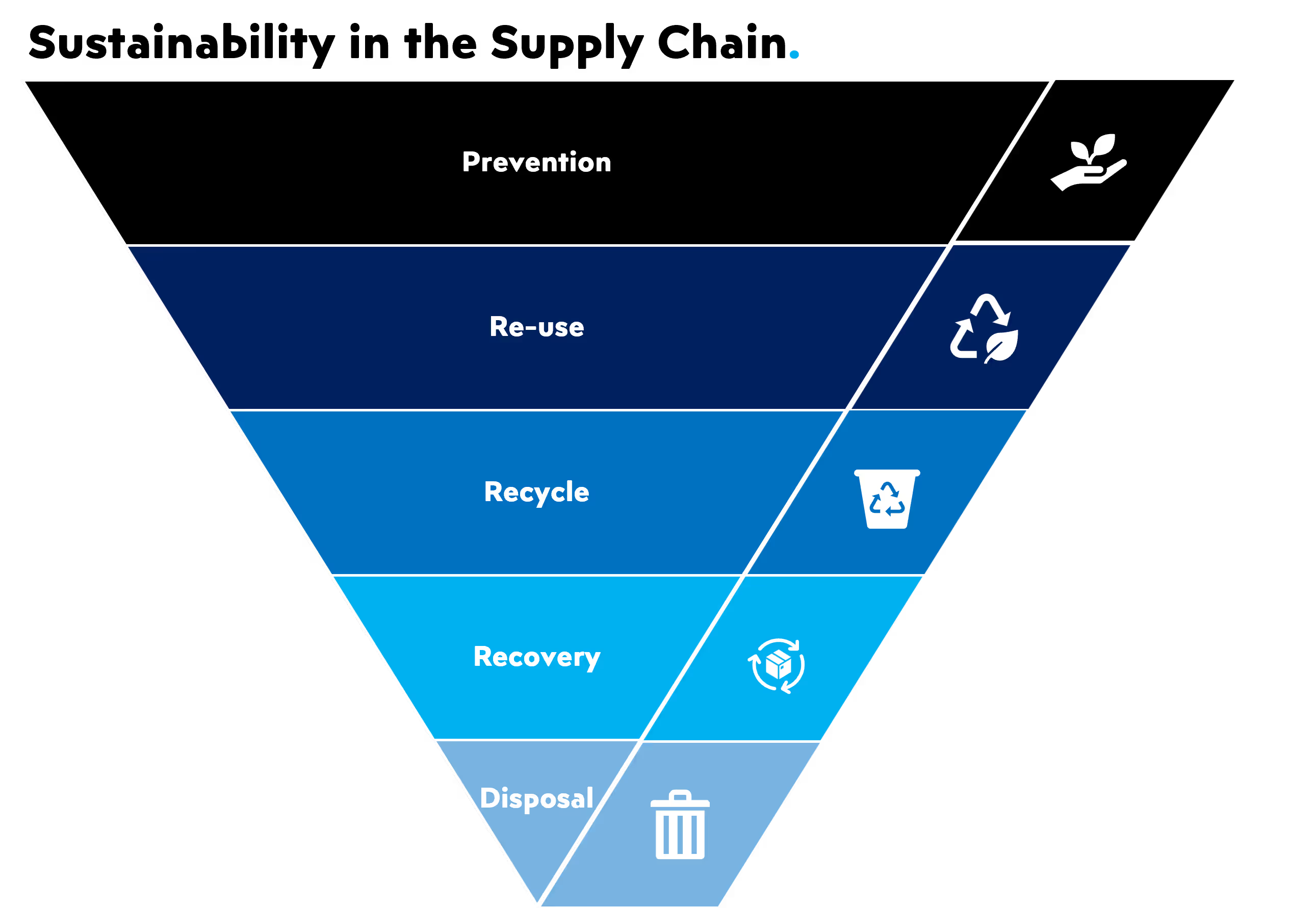
As consumers and businesses alike become more conscious of the impact of their actions on the environment, sustainability has become a top priority for many organisations. For Australian manufacturers, this means rethinking the way they manage their supply chains to minimise their impact on the environment. In this article, we will discuss the key ways that Australian manufacturers can improve the sustainability of their supply chains.

Reduce Energy and Resource Use

One of the most effective ways to improve the sustainability of your supply chain is to reduce the amount of energy and resources that you use. This can be achieved through a number of initiatives, such as optimising your production processes, using renewable energy sources, and reducing waste.

Source Materials Responsibly

Another key way to improve the sustainability of your supply chain is to source materials responsibly. This means choosing suppliers that use sustainable practices and minimising the impact of your operations on the environment. When evaluating suppliers, consider factors such as their energy use, waste management practices, and their commitment to sustainability.

Foster Collaboration and Communication

Collaboration and communication are critical to the success of any sustainability initiative. By working closely with suppliers, logistics providers, and other stakeholders, you can identify areas where you can make changes that will have a positive impact on the environment. Effective communication is also essential to ensure that everyone is working towards the same goal and that everyone understands the steps that need to be taken.

Invest in Technology

Investing in technology can also play a key role in improving the sustainability of your supply chain. For example, using technology such as IoT sensors and analytics can help you monitor your supply chain in real-time and make data-driven decisions that minimise your impact on the environment.

Improving the sustainability of your supply chain requires a holistic approach that involves reducing energy and resource use, sourcing materials responsibly, fostering collaboration and communication, and investing in technology. By taking these steps, Australian manufacturers can minimise their impact on the environment and ensure that their supply chains are sustainable for the long-term.

Contact us today, trace. your supply chain consulting partner.

Assessing Your Organisation's Supply Chain Resilience

February 2023
In today's rapidly changing business landscape, having a resilient supply chain has become more important than ever.

Supply chain resilience is the ability of a supply chain to adapt and recover from disruptions. In today's rapidly changing business landscape, having a resilient supply chain has become more important than ever. In this article, we will discuss the key steps to assess your organisation's supply chain resilience.

Conduct a Risk Assessment

The first step in assessing your organisation's supply chain resilience is to conduct a risk assessment. This involves identifying potential threats and disruptions that could impact your supply chain. Some common risks include natural disasters, supplier bankruptcy, and political instability.

Evaluate Supply Chain Processes and Procedures

Once you have identified potential threats, you can evaluate your supply chain processes and procedures to determine if they are adequate to handle the risks. For example, do you have backup suppliers in place in case of a primary supplier failure? Do you have contingency plans in place for natural disasters?

Assess Supply Chain Visibility and Communication

In addition to evaluating processes and procedures, it is also important to assess the visibility and communication within your supply chain. Having real-time visibility into your supply chain allows you to quickly identify and respond to disruptions. Good communication between suppliers, logistics providers, and internal stakeholders is also essential for effective crisis management.

Measure Performance

Finally, it is important to measure the performance of your supply chain in order to determine if it is meeting the needs of your organisation. Key performance indicators (KPIs) such as on-time delivery, lead time, and inventory accuracy can give you valuable insights into the performance of your supply chain.

Assessing your organisation's supply chain resilience requires a comprehensive approach that involves identifying potential risks, evaluating processes and procedures, assessing visibility and communication, and measuring performance. By taking these steps, you can ensure that your supply chain is ready to handle disruptions and maintain business continuity.

Contact us today, trace. your supply chain consulting partner.

Healthcare Supply Chain Strategy: Improving Patient Outcomes through Effective Planning and Logistics

February 2023
In this article, we'll explore the key elements of a successful healthcare supply chain strategy, including planning and logistics, and how these elements can help improve patient outcomes.

In the healthcare industry, ensuring that patients receive the right care at the right time is of utmost importance. A well-designed healthcare supply chain strategy can play a critical role in achieving this goal. In this article, we'll explore the key elements of a successful healthcare supply chain strategy, including planning and logistics, and how these elements can help improve patient outcomes.

Understanding the Healthcare Supply Chain

The healthcare supply chain refers to the series of processes involved in getting medical products and supplies from the manufacturer to the point of care. This includes everything from sourcing and procurement, to storage, transportation, and delivery. A well-designed healthcare supply chain strategy can help healthcare organisations stay competitive and meet the demands of an ever-changing market.

Planning for Success in the Healthcare Supply Chain

Planning is a critical component of any successful healthcare supply chain strategy. This includes developing a clear understanding of the products and supplies required for patient care, as well as the processes and technologies that can help streamline these processes.

One effective approach is to implement a demand forecasting process that allows healthcare organisations to better predict the supply and demand of medical products and supplies. This can help to reduce waste and ensure that the right products are available when they're needed. Additionally, having a clear understanding of the lead times and delivery schedules for these products can help to reduce the risk of stockouts and improve overall supply chain efficiency.

Logistics in the Healthcare Supply Chain

Logistics is another critical component of a successful healthcare supply chain strategy. This includes managing the movement and storage of medical products and supplies, as well as ensuring that these products reach the point of care in a timely and efficient manner.

To improve logistics in the healthcare supply chain, it's important to consider all aspects of the supply chain, including procurement, transportation, and warehousing. This may involve implementing new technologies, such as real-time tracking and delivery updates, to improve visibility and control over the supply chain. Additionally, having a clear understanding of the regulatory requirements and compliance requirements for medical products and supplies can help to reduce the risk of errors and improve overall logistics performance.

Improving Patient Outcomes through Effective Supply Chain Management

Ultimately, the goal of any healthcare supply chain strategy is to improve patient outcomes. By optimising supply chain efficiency and reducing costs, healthcare organisations can ensure that patients receive the right care at the right time, while also improving overall patient satisfaction.

In addition to improving supply chain efficiency, a well-designed healthcare supply chain strategy can also help to reduce waste, minimise stockouts, and improve the overall accuracy and timeliness of patient care. By focusing on these key areas, healthcare organisations can create a supply chain that is optimised for success and that supports their mission of providing high-quality patient care.

A well-designed healthcare supply chain strategy is critical to the success of any healthcare organisation. By focusing on planning and logistics, and by utilising the right tools and processes, healthcare organisations can improve patient outcomes and create a supply chain that is optimised for success. Whether you're a hospital administrator, a healthcare provider, or a supplier, it's essential to have a clear understanding of the healthcare supply chain and the role that it plays in ensuring that patients receive the right care at the right time.

Contact us today, trace. your supply chain consulting partner.

Retail Supply Chain Strategy: Optimising Your Business for Success

February 2023
With new technologies and changing customer expectations, it's more important than ever to have a solid retail supply chain strategy in place.

Retail businesses face numerous challenges in today's rapidly changing marketplace. With new technologies and changing customer expectations, it's more important than ever to have a solid retail supply chain strategy in place. In this article, we'll explore the key elements of a successful retail supply chain strategy, including how to improve supply chain efficiency, reduce costs, and increase customer satisfaction.

Understanding the Retail Supply Chain

The retail supply chain refers to the series of processes involved in getting products from the manufacturer to the end customer. This includes everything from sourcing and purchasing, to storage, transportation, and delivery. A well-designed retail supply chain strategy can help businesses stay competitive and meet the demands of an ever-changing market.

The Importance of Supply Chain Efficiency

Supply chain efficiency refers to the speed and accuracy with which products move through the supply chain. This is critical to the success of any retail business, as it can help reduce costs, improve customer satisfaction, and ensure that products are always in stock.

To improve supply chain efficiency, it's important to have a clear understanding of your supply chain processes, as well as the tools and technologies that can help streamline these processes. This may include using data analytics to track and monitor performance, automating repetitive tasks, and implementing supply chain management software to help improve visibility and control.

Reducing Costs in the Retail Supply Chain

Cost reduction is another critical aspect of a successful retail supply chain strategy. To achieve cost savings, it's important to consider all aspects of your supply chain, including procurement, transportation, and warehousing.

One effective approach is to implement a just-in-time (JIT) inventory management system, which helps to reduce the amount of inventory that needs to be held on hand. This not only reduces storage costs, but also helps to reduce the risk of stock obsolescence. Additionally, implementing a JIT system can help to improve lead times and reduce the need for expedited shipping, further reducing costs.

Improving Customer Satisfaction

Customer satisfaction is a key factor in the success of any retail business, and it's essential to consider this when developing your retail supply chain strategy. To improve customer satisfaction, it's important to focus on delivering products quickly and accurately, while also providing a positive customer experience.

One approach is to use technology, such as real-time tracking and delivery updates, to provide customers with greater visibility and control over the delivery process. This can help to build trust and improve the overall customer experience. Additionally, implementing a returns management process that is fast, efficient, and customer-friendly can also help to improve customer satisfaction.

A well-designed retail supply chain strategy is critical to the success of any retail business. By improving supply chain efficiency, reducing costs, and focusing on customer satisfaction, businesses can stay competitive and meet the demands of an ever-changing market. With the right tools and processes in place, retail businesses can create a supply chain that is optimised for success.

Contact us today, trace. your supply chain consulting partner.

How to Improve Your Cash Flow and Working Capital through Demand Planning, MRP, and Inventory Optimisation

February 2023
In today's fast-paced business world, having control over your cash flow and working capital is crucial.

In today's fast-paced business world, having control over your cash flow and working capital is crucial. One effective way to achieve this is through demand planning, Material Requirements Planning (MRP), and inventory optimisation. In this article, we'll show you how to use these strategies to improve your cash flow and working capital.

Understanding Your Current Inventory Situation

The first step in using demand planning, MRP, and inventory optimisation to improve your cash flow is to have a clear understanding of your current inventory situation. This involves examining your current inventory levels, turnover rate, and the amount of money you're tying up in inventory.

Implementing a Demand Planning System

Once you have a good grasp of your current inventory situation, it's time to implement a demand planning system. This involves forecasting future demand for your products and ensuring that you have the right amount of inventory on hand to meet that demand. By accurately forecasting demand, you can reduce the amount of money you're tying up in excess inventory and increase your cash flow.

Using Material Requirements Planning (MRP)

MRP is a production planning and inventory control system that helps you manage your inventory levels and production schedules. It takes into account the demand for your products and the availability of raw materials and production capacity to generate a detailed production schedule. By using MRP, you can ensure that your inventory levels are optimised and your cash flow is maximised.

Optimising Your Inventory Levels

Inventory optimisation involves determining the right amount of inventory to hold so that you can reduce the amount of money you're tying up in inventory while still having enough inventory on hand to meet customer demand. This can be achieved through demand planning, MRP, and by using techniques such as just-in-time inventory management and safety stock planning.

Improving your cash flow and working capital through demand planning, MRP, and inventory optimisation is an essential goal for any business. By accurately forecasting demand, managing your inventory levels, and optimising your production schedules, you can ensure that your cash flow stays positive and your working capital is managed effectively. Whether you're looking to reduce the amount of money tied up in excess inventory or improve your production efficiency, these strategies can help you achieve your goals and succeed in today's competitive business environment.

Contact us today, trace. your supply chain consulting partner.

The Essential Guide to Supplier Performance Management in Aged Care

February 2023
In order to ensure the best possible care for residents, it is essential to have a robust system in place for managing suppliers.

The aged care sector is one of the most important industries in the world, providing care and support to the elderly population. In order to ensure the best possible care for residents, it is essential to have a robust system in place for managing suppliers. The aim of this guide is to provide an in-depth understanding of supplier performance management in the aged care sector and its benefits for contingent labour.

What is Supplier Performance Management?

Supplier performance management (SPM) refers to the process of monitoring, evaluating and enhancing the performance of suppliers to meet the needs of an organisation. It involves creating a clear and effective communication channel between the organisation and its suppliers, as well as establishing performance metrics, monitoring progress and providing feedback.

Why is Supplier Performance Management Important in Aged Care?

Supplier performance management is critical in the aged care sector as it helps to ensure that residents receive the best possible care. By monitoring and evaluating the performance of suppliers, aged care organisations can identify areas for improvement, increase efficiency and reduce the risk of mistakes or oversights. Additionally, supplier performance management helps to establish a relationship of trust and transparency between the organisation and its suppliers, promoting a positive and collaborative environment.

How to Implement Supplier Performance Management in Aged Care

  1. Define Objectives: Clearly define the goals and objectives of the SPM program to ensure that it aligns with the overall mission and vision of the organisation.
  2. Identify Key Suppliers: Determine which suppliers are critical to the success of the organisation and prioritise them for performance management.
  3. Develop Performance Metrics: Establish clear performance metrics and KPIs to measure the effectiveness of suppliers.
  4. Monitor Performance: Continuously monitor supplier performance and provide feedback to suppliers on areas for improvement.
  5. Evaluate Results: Regularly evaluate the results of the SPM program to determine its effectiveness and identify areas for improvement.

The Benefits of Supplier Performance Management for Contingent Labour in Aged Care

  1. Improved Quality of Care: By monitoring supplier performance, aged care organisations can ensure that residents receive the best possible care.
  2. Increased Efficiency: Supplier performance management helps to identify areas for improvement, reducing the risk of oversights or mistakes and increasing efficiency.
  3. Enhanced Collaboration: A positive and transparent relationship between the organisation and its suppliers promotes collaboration, improving the overall performance of the organisation.
  4. Reduced Costs: By monitoring supplier performance and reducing the risk of oversights or mistakes, aged care organisations can reduce costs and improve their bottom line.

Supplier performance management is an essential component of the aged care sector. By monitoring and evaluating the performance of suppliers, aged care organisations can ensure the best possible care for residents, increase efficiency and reduce costs. The benefits of SPM for contingent labour in the aged care sector are numerous and it is crucial for organisations to implement a robust SPM program to remain competitive and achieve success.

Contact us today, trace. your supply chain consulting partner.

The Future of Workforce Planning and Scheduling for Aged Care Home Services in Australia

February 2023
The aged care industry in Australia is facing a growing demand for services, and workforce planning and scheduling will play a crucial role in meeting this demand.

Aging population and growing demand for aged care home services have made workforce planning and scheduling a critical aspect of this industry. As the need for quality care increases, the challenge of managing staffing levels and resources effectively has become more important. The aged care industry in Australia is facing a growing demand for services, and workforce planning and scheduling will play a crucial role in meeting this demand.

Key Challenges in Workforce Planning and Scheduling for Aged Care Home Services

  1. Attracting and retaining qualified staff - One of the biggest challenges in the aged care industry is attracting and retaining qualified staff. With a shortage of workers and an increasing demand for services, competition for top talent is high. This makes it important for aged care providers to offer competitive salaries and benefits, as well as opportunities for professional development.
  2. Managing staff availability and scheduling - Another major challenge is managing staff availability and scheduling. Aged care facilities must ensure that they have enough staff on hand to provide quality care to residents, while also taking into account staff availability and scheduling preferences. This can be a complex and time-consuming task, especially in facilities with high staff turnover rates.
  3. Balancing cost and quality of care - Aged care providers must balance the cost of providing quality care with the need to maintain financial stability. This can be a difficult task, as the cost of staffing, equipment, and supplies can be high. The cost of providing quality care must be balanced with the need to maintain financial stability, which can be a challenge for many aged care providers.

The Benefits of a Strong Workforce Planning and Scheduling System

  1. Improved quality of care - With a strong workforce planning and scheduling system in place, aged care providers can ensure that they have enough staff on hand to provide quality care to residents. This can improve the overall quality of care and help facilities to meet the growing demand for services.
  2. Increased efficiency - A well-designed workforce planning and scheduling system can increase efficiency by streamlining the scheduling process and reducing the time and effort required to manage staffing levels. This can help facilities to operate more effectively and efficiently, freeing up resources for other critical tasks.
  3. Better staff morale - A strong workforce planning and scheduling system can also help to improve staff morale. By giving staff a clear understanding of their schedules and responsibilities, they are able to better plan their personal and professional lives, leading to increased job satisfaction and improved performance.

In conclusion, workforce planning and scheduling is a critical aspect of the aged care industry in Australia, as it plays a crucial role in meeting the growing demand for services. With the challenges of attracting and retaining qualified staff, managing staff availability and scheduling, and balancing cost and quality of care, a strong workforce planning and scheduling system is essential. The benefits of a strong system include improved quality of care, increased efficiency, and better staff morale. By investing in a robust workforce planning and scheduling system, aged care providers can ensure that they are prepared to meet the challenges of the future and provide the best possible care to residents.

Contact us today, trace. your supply chain consulting partner.

How to Implement an Efficient Supplier Performance Management Framework

February 2023
Managing supplier performance is critical for any organisation looking to maintain a competitive edge in today's business environment.

Managing supplier performance is critical for any organisation looking to maintain a competitive edge in today's business environment. By effectively monitoring and evaluating supplier performance, organisations can improve their supply chain management, reduce costs, and increase customer satisfaction. In this article, we will provide a comprehensive guide on how to establish and execute an effective supplier performance management framework.

Understanding the Purpose of Supplier Performance Management

Supplier performance management is a systematic process of evaluating, monitoring, and improving the performance of suppliers. It helps organisations to identify areas of improvement, communicate expectations, and hold suppliers accountable for meeting agreed-upon standards. The ultimate goal of supplier performance management is to establish and maintain strong relationships with suppliers that lead to mutually beneficial outcomes.

Defining Key Performance Indicators (KPIs)

The first step in establishing a supplier performance management framework is to define key performance indicators (KPIs). KPIs are metrics used to measure supplier performance and determine areas of improvement. Some common KPIs include:

  • Lead time: the time it takes for a supplier to deliver a product or service
  • Delivery accuracy: the percentage of deliveries that arrive on time and in the correct quantity
  • Quality: the level of defects in the products or services delivered
  • Cost: the price of products or services and any associated fees
  • Communication: the responsiveness and effectiveness of the supplier in communicating with the organisation

Establishing a Communication Plan

Effective communication is essential for successful supplier performance management. Organisations should establish a clear communication plan that outlines how performance will be measured and reported. This plan should include regular check-ins with suppliers, as well as formal evaluations and performance reviews. Organizations should also provide feedback to suppliers on a regular basis to help them improve their performance and meet expectations.

Monitoring Performance

Once KPIs have been established and a communication plan is in place, organisations can begin monitoring supplier performance. This involves tracking supplier performance against KPIs on a regular basis and using this information to identify areas of improvement. Organisations can use a variety of tools to monitor performance, including spreadsheets, databases, and specialised software.

Evaluating Performance

Evaluating supplier performance is the process of reviewing supplier performance against KPIs to determine areas of improvement. Organisations should conduct evaluations on a regular basis, such as annually or semi-annually, to ensure that suppliers are meeting expectations. During evaluations, organisations should provide feedback to suppliers and work with them to identify and address any issues.

Improving Performance

Improving supplier performance is a continuous process that requires organisations to regularly evaluate and monitor performance, provide feedback to suppliers, and identify areas for improvement. Organisations should work with suppliers to develop action plans to address any issues and improve performance. In some cases, organisations may need to make changes to their own processes and systems to support supplier improvement.

An effective supplier performance management framework can help organisations improve their supply chain management, reduce costs, and increase customer satisfaction. By defining KPIs, establishing a communication plan, monitoring performance, evaluating performance, and continuously improving performance, organisations can build strong relationships with suppliers and achieve mutually beneficial outcomes.

Contact us today, trace. your supply chain consulting partner.

How to Establish and Execute an Effective Procurement Strategy

Procurement is a critical aspect of any business that requires careful planning and execution to ensure that the company obtains the best products and services at the most competitive prices.

Procurement is a critical aspect of any business that requires careful planning and execution to ensure that the company obtains the best products and services at the most competitive prices. An effective procurement strategy can help organisations achieve cost savings, improve operational efficiency, and enhance supplier relationships. In this article, we will outline the steps for establishing and executing a successful procurement strategy that can help businesses achieve their objectives.

Step 1: Assess Your Procurement Needs

The first step in establishing a procurement strategy is to assess the organisation's needs. This includes determining the types of products and services the company requires, the volume of these products and services, and the frequency with which they are needed. This information will help to identify the key suppliers, the types of contracts required, and the resources required to manage the procurement process.

Step 2: Define Procurement Objectives

Once you have assessed your procurement needs, the next step is to define the procurement objectives. These objectives should be aligned with the overall business goals and should take into account the organisation's budget, the desired level of service, and the need for cost savings.

Step 3: Develop a Procurement Plan

With the procurement objectives defined, the next step is to develop a procurement plan. This plan should outline the steps required to achieve the procurement objectives, including the selection of suppliers, the negotiation of contracts, and the management of the procurement process. The procurement plan should also include a risk management plan to minimise the potential risks associated with procurement.

Step 4: Select Suppliers

The next step in establishing a procurement strategy is to select the suppliers that will provide the products and services required. This involves evaluating the suppliers based on factors such as cost, quality, delivery times, and the level of support provided. Once the suppliers have been selected, it is important to negotiate contracts that are favorable to both parties and that meet the organisation's procurement objectives.

Step 5: Monitor and Evaluate Procurement Performance

Once the procurement process has been established and executed, it is important to monitor and evaluate the performance of the procurement strategy. This involves regularly reviewing the supplier contracts, evaluating the quality of the products and services provided, and monitoring the cost savings achieved. This information can be used to identify areas for improvement and to make changes to the procurement strategy as necessary.

Establishing and executing an effective procurement strategy is essential for organisations looking to achieve cost savings, improve operational efficiency, and enhance supplier relationships. By following the steps outlined in this article, organisations can develop a procurement strategy that will help them to achieve their procurement objectives and improve their overall business performance.

Contact us today, trace. your supply chain consulting partner.

Why 2023 is the Year to Invest in Your Supply Chain

February 2023
In today's fast-paced and ever-evolving business world, supply chain management plays a critical role in determining a company's success.

Why 2023 is the Year to Invest in Your Supply Chain

In today's fast-paced and ever-evolving business world, supply chain management plays a critical role in determining a company's success. From sourcing raw materials to delivering finished products to customers, the supply chain can make or break a business. As we enter 2023, it is more important than ever for companies to invest in their supply chains to stay ahead of the competition and achieve their goals.

The Importance of Supply Chain Management

Supply chain management involves overseeing all the activities involved in sourcing raw materials, producing and delivering finished products to customers. It encompasses everything from procurement, production, logistics, and distribution. The goal of supply chain management is to create a seamless and efficient flow of goods, information, and cash that leads to better business results.

The Benefits of Investing in Your Supply Chain

Investing in your supply chain can bring numerous benefits to your business, including:

  • Improved efficiency and productivity
  • Enhanced customer satisfaction
  • Increased profitability
  • Reduced risk
  • Competitive advantage

Improving Efficiency and Productivity

Investing in your supply chain can help streamline processes, reduce waste, and increase efficiency. For example, implementing a robust logistics system can help improve the speed and accuracy of deliveries, leading to faster turnaround times and happier customers. Investing in automation and other technological advancements can also help increase productivity and reduce the need for manual labor.

Enhancing Customer Satisfaction

A well-managed supply chain can also lead to enhanced customer satisfaction. Customers expect their orders to be delivered on time and in good condition, and a well-functioning supply chain can help ensure this. Additionally, a transparent supply chain can help build trust with customers, as they can see where their products come from and how they are made.

Increasing Profitability

Investing in your supply chain can also lead to increased profitability. By reducing waste and increasing efficiency, businesses can lower their costs and improve their bottom line. Additionally, a well-functioning supply chain can help increase sales and revenue by improving the speed and accuracy of deliveries, leading to happier customers and repeat business.

Reducing Risk

A well-managed supply chain can also help reduce risk. By having a comprehensive understanding of your supply chain, you can identify and mitigate potential risks before they become a problem. This can help protect your business from disruptions and ensure that you can continue to meet customer demands.

Achieving a Competitive Advantage

Finally, investing in your supply chain can give your business a competitive advantage. By having a well-functioning supply chain, you can differentiate yourself from your competitors and stand out in the market. This can help attract new customers and retain existing ones, leading to long-term success.

Investing in your supply chain is critical for business success in 2023 and beyond. From improving efficiency and customer satisfaction to reducing risk and achieving a competitive advantage, the benefits of a well-managed supply chain are clear. So, take the time to assess your supply chain, identify areas for improvement, and make the necessary investments to stay ahead of the competition.

Contact us today, trace. your supply chain consulting partner.

How to Minimise Transport Costs and Boost Efficiency with Transport Management Systems

February 2023
One of the biggest challenges is managing costs associated with transportation, which can quickly spiral out of control if not properly managed.

Transportation is a critical aspect of any manufacturing business, but it also comes with its own set of challenges. One of the biggest challenges is managing costs associated with transportation, which can quickly spiral out of control if not properly managed. But with the right transport management system (TMS), manufacturers can minimise these costs while boosting efficiency and effectiveness. In this article, we will explore the benefits of TMS and how manufacturers can make the most of this technology.

What is a Transport Management System?

A transport management system (TMS) is a comprehensive software solution designed to help manage the transportation of goods. It provides a centralised platform for tracking shipments, monitoring delivery status, and managing costs associated with transportation. TMS software typically integrates with other enterprise resource planning (ERP) systems, enabling manufacturers to streamline their operations and achieve greater efficiency.

Key Benefits of Transport Management Systems

A TMS can provide manufacturers with numerous benefits, including:

  • Increased Efficiency: A TMS automates many manual tasks associated with transportation, freeing up time and resources for other activities. This results in greater efficiency and productivity.
  • Improved Visibility: With a TMS, manufacturers can track shipments in real-time, making it easier to monitor delivery status and respond to any issues that arise.
  • Better Cost Management: A TMS provides manufacturers with greater visibility into transportation costs, enabling them to identify areas where they can reduce costs and improve profitability.
  • Improved Customer Service: By automating many manual tasks, a TMS helps manufacturers provide better customer service. For example, customers can track their shipments online, and manufacturers can respond more quickly to any issues that arise.

Features to Look for in a Transport Management System

When choosing a TMS, manufacturers should look for the following features:

  • Integration with ERP Systems: As mentioned, a TMS should integrate with other enterprise resource planning (ERP) systems to provide a comprehensive solution.
  • Real-Time Tracking: A TMS should provide real-time tracking of shipments, enabling manufacturers to monitor delivery status and respond to any issues that arise.
  • Cost Management Tools: A TMS should provide tools to help manufacturers manage transportation costs, including the ability to track costs by carrier, route, and shipment.
  • Reporting and Analytics: A TMS should provide robust reporting and analytics capabilities, enabling manufacturers to identify trends and make data-driven decisions.

How to Make the Most of a Transport Management System

To make the most of a TMS, manufacturers should follow these best practices:

  • Implement a Robust Data Management System: A TMS relies on accurate and up-to-date data to provide the best results. Manufacturers should ensure that their data management system is robust and secure.
  • Train Employees: Manufacturers should provide adequate training to employees to ensure that they are using the TMS to its full potential.
  • Continuously Monitor and Improve: A TMS should be continuously monitored and improved to ensure that it is providing the best results. Manufacturers should seek out feedback from employees and customers to identify areas for improvement.
  • Stay Up-to-Date with Technology: Manufacturers should stay up-to-date with the latest TMS technology to ensure that they are taking advantage of the latest features and capabilities.

Transport management systems are a critical technology for manufacturers looking to minimise transportation costs and boost efficiency. With the right TMS, manufacturers can achieve greater visibility into their operations, improve customer service, and make data-driven decisions that drive profitability. By following best practices

What exactly is a consultant and what sets great consultants apart from the rest?

February 2023
As a business, the success of your operations can often hinge on the guidance and expertise of a consultant.

Understanding the role of a consultant and the key to great consulting

As a business, the success of your operations can often hinge on the guidance and expertise of a consultant. Whether you're seeking to improve efficiency, increase revenue, or make a major change to your operations, a consultant can provide valuable insights and recommendations to help you reach your goals. But what exactly is a consultant and what sets great consultants apart from the rest?

In its most basic definition, a consultant is an expert who provides professional advice and guidance to organisations and individuals in exchange for payment. They can specialise in a wide range of fields, including finance, marketing, human resources, and more. A consultant can bring a fresh perspective and outside expertise to a company, offering new ideas and solutions that the internal team may not have considered.

However, not all consultants are created equal. So what sets the truly great consultants apart? In our experience, there are a few key qualities that make a consultant truly exceptional.

Deep industry knowledge

Great consultants have a thorough understanding of the industry they are working in. They have likely worked in the field for many years and have a wealth of experience and knowledge to draw upon. This depth of understanding allows them to identify problems and opportunities quickly and provide solutions that are well-informed and relevant to the specific needs of their clients.

Strong communication skills

A consultant's ability to communicate their ideas and recommendations clearly and effectively is crucial to their success. Great consultants have excellent verbal and written communication skills, allowing them to present their ideas in a way that is easy to understand and compelling. They also have the ability to listen actively and understand the unique challenges and goals of their clients, which allows them to provide tailored recommendations that will achieve the desired results.

A track record of success

The best consultants have a proven track record of delivering results for their clients. They have a reputation for delivering high-quality work and providing valuable insights and recommendations that drive meaningful business results. This experience and success is what sets them apart and makes them sought after by organisations looking to achieve their goals.

A flexible and adaptive approach

The business landscape is constantly changing, and great consultants have the ability to adapt to these changes and provide relevant and effective solutions. They are flexible and open-minded, able to pivot their approach when necessary to achieve the best possible results for their clients.

A consultant can be a valuable asset to any organisation, offering expert guidance and recommendations to help achieve business goals. To find a consultant who will truly deliver results, it's important to look for someone with deep industry knowledge, strong communication skills, a track record of success, and a flexible and adaptive approach.

Contact us today, trace. your supply chain consulting partner.

Why Effective Workforce Planning, Rostering, and Scheduling is Critical for Australia's Aged Care Sector

February 2023
Effective workforce planning, rostering, and scheduling can help address these challenges and ensure that older Australians receive the care they need.

Why Effective Workforce Planning, Rostering, and Scheduling is Critical for Australia's Aged Care Sector

The aged care sector in Australia is facing numerous challenges, including a rapidly aging population, increasing demand for services, and a shortage of qualified care workers. Effective workforce planning, rostering, and scheduling can help address these challenges and ensure that older Australians receive the care they need. In this article, we'll explore the key benefits of effective workforce planning, rostering, and scheduling for Australia's aged care sector.

Improve Care Quality

One of the primary benefits of effective workforce planning, rostering, and scheduling is improved care quality. By ensuring that there are sufficient care workers available to meet demand, aged care providers can provide high-quality care to older Australians. This can help to improve health outcomes, reduce the risk of falls and other accidents, and promote a positive quality of life for older Australians.

Increase Staff Satisfaction

Another key benefit of effective workforce planning, rostering, and scheduling is increased staff satisfaction. By ensuring that care workers are properly scheduled and have adequate time off, aged care providers can reduce staff burnout and turnover, and help to attract and retain skilled workers. This can help to ensure a stable and highly skilled workforce, which is critical for providing high-quality care to older Australians.

Reduce Costs

Effective workforce planning, rostering, and scheduling can also help to reduce costs in the aged care sector. By reducing the need for costly agency staff and overtime pay, aged care providers can lower their operating costs and improve their bottom line. This can help to ensure the financial sustainability of the sector, even as demand for services continues to grow.

Improve Compliance

Another key benefit of effective workforce planning, rostering, and scheduling is improved compliance with industry standards and regulations. By ensuring that care workers have appropriate levels of training and are properly scheduled, aged care providers can meet the strict standards and regulations governing the sector, and minimise the risk of regulatory fines and legal action.

In conclusion, effective workforce planning, rostering, and scheduling is critical for Australia's aged care sector. By improving care quality, increasing staff satisfaction, reducing costs, and improving compliance, this critical aspect of workforce management can help ensure that older Australians receive the care they need, and that the sector remains financially sustainable for years to come.

Contact us today, trace. your supply chain consulting partner.

Why Effective Warehouse Design is Critical for Manufacturing and Retail Businesses

February 2023
From optimising space utilisation to improving operational efficiency, a well-designed warehouse can have a significant impact on a company's bottom line.

An effective warehouse design is crucial for both manufacturing and retail businesses. From optimising space utilisation to improving operational efficiency, a well-designed warehouse can have a significant impact on a company's bottom line. In this article, we'll explore the key benefits of an effective warehouse design and why it's critical for both manufacturing and retail businesses.

Optimise Space Utilisation

One of the primary benefits of an effective warehouse design is the optimisation of space utilisation. A well-designed warehouse can help maximise storage capacity, minimise empty space, and reduce the amount of floor space needed to store goods. This can be particularly important for companies operating in a high-cost real estate market, where every square foot of space is valuable.

Improve Operational Efficiency

Another key benefit of an effective warehouse design is improved operational efficiency. A well-designed warehouse can help streamline the storage and retrieval of goods, reduce the need for manual labor, and minimise the risk of errors and damage to products. This can lead to increased productivity and reduced operating costs, which can have a positive impact on a company's bottom line.

Enhance Customer Service

For retail businesses, an effective warehouse design can also enhance customer service. A well-designed warehouse can help ensure that products are readily available for customer order fulfillment, minimise the risk of stockouts, and improve the accuracy of order picking. This can help to build customer loyalty and drive repeat business.

Support Scalability

Another key benefit of an effective warehouse design is its ability to support scalability. As a business grows and expands, a well-designed warehouse can be easily reconfigured to accommodate increased storage capacity and support new operational requirements. This can help to ensure that a company's supply chain remains effective and efficient, even as the business grows.

In conclusion, an effective warehouse design is critical for both manufacturing and retail businesses. From optimising space utilisation to improving operational efficiency, a well-designed warehouse can have a significant impact on a company's bottom line. By taking the time to carefully consider the design of your warehouse, you can ensure that your business has the best possible foundation for success.

Contact us today, trace. your supply chain consulting partner.

How to Select an Advanced Planning System for FMCG

February 2023
An advanced planning system can help businesses make better decisions, increase productivity, and ultimately, improve their bottom line.

In the fast-moving consumer goods (FMCG) industry, it's crucial to have a reliable and efficient planning system in place. An advanced planning system can help businesses make better decisions, increase productivity, and ultimately, improve their bottom line. With so many options on the market, it can be difficult to know where to start. In this article, we'll discuss the key factors to consider when choosing an advanced planning system for your FMCG business.

Consider Your Business Requirements

Before you start looking at specific planning systems, it's important to have a clear understanding of your business requirements. What are your current pain points? What are your future goals and aspirations? These are just a few of the questions you should ask yourself when determining your requirements. Once you have a solid understanding of your needs, you can start looking for a system that can meet them.

Evaluate the Functionality of the System

Once you have a clear understanding of your requirements, you can start evaluating the functionality of different planning systems. Here are a few key areas to consider:

Inventory Management

In the FMCG industry, inventory management is a critical component of the planning process. You need a system that can accurately track your inventory levels, help you make informed decisions about reordering, and provide real-time data about your stock levels.

Demand Planning

Demand planning is another important component of a planning system for FMCG businesses. The system should be able to accurately forecast future demand for your products, taking into account factors such as seasonality, promotions, and economic trends.

Supply Chain Optimisation

The right planning system can also help optimise your supply chain. A system that can automate key processes, such as ordering and delivery, can help streamline your supply chain and minimise the risk of stockouts.

Look for a User-Friendly System

In addition to functionality, it's also important to consider the user-friendliness of a planning system. A system that's difficult to use will not only slow down your team, but it can also reduce the accuracy of your data. Look for a system that's intuitive, easy to use, and has robust support and training resources.

Consider Integration with Other Systems

Finally, consider the integration of the planning system with other systems you use. If you already have an ERP system, for example, you may want to choose a planning system that integrates seamlessly with it. This can help streamline processes, minimise data entry errors, and ensure that you have access to accurate, real-time data.

Selecting the right advanced planning system is critical for success in the FMCG industry. By considering your business requirements, evaluating the functionality of different systems, looking for a user-friendly system, and considering integration with other systems, you can make an informed decision and find the right planning system for your business.

Contact us today, trace. your supply chain consulting partner.

How Supply Chains are Changing in Australia

February 2023
The Australian supply chain industry is undergoing a significant transformation, with new technologies, business models, and customer demands driving change.

The Australian supply chain industry is undergoing a significant transformation, with new technologies, business models, and customer demands driving change. This article will explore the key factors contributing to this change, and what it means for businesses and consumers in Australia.

The Rise of E-Commerce

One of the biggest factors driving change in the Australian supply chain industry is the rise of e-commerce. Online shopping has grown rapidly in recent years, with customers increasingly looking for the convenience of shopping from their homes. This shift has had a significant impact on the supply chain, as businesses scramble to find ways to meet the demands of this growing market.

One of the challenges faced by businesses is how to manage the increased complexity of e-commerce deliveries. In traditional brick-and-mortar retail, goods are often delivered to a central location, where they are then distributed to individual stores. However, with e-commerce, goods must be delivered directly to the customer's doorstep, which requires a more sophisticated and flexible delivery network.

The Impact of Technology

Another factor driving change in the Australian supply chain industry is the impact of technology. New technologies are changing the way goods are produced, stored, and transported, and businesses must adapt to stay competitive.

One of the most important technological advancements is the use of artificial intelligence (AI) and machine learning. These technologies are helping businesses to optimise their supply chains, making them more efficient and cost-effective. For example, AI can be used to predict customer demand, allowing businesses to ensure they have the right products in the right place at the right time.

Another technological development is the use of the Internet of Things (IoT), which allows businesses to track their goods in real-time. This provides valuable insights into the performance of the supply chain, and enables businesses to identify areas where improvements can be made.

The Need for Sustainability

Another factor driving change in the Australian supply chain industry is the growing need for sustainability. Consumers are becoming increasingly aware of the environmental impact of their purchases, and are looking for products and brands that align with their values.

To meet this demand, businesses are having to rethink their supply chains, finding ways to reduce their environmental footprint. This can include using more sustainable transportation methods, such as electric vehicles, or implementing recycling programs.

The Future of Supply Chains in Australia

The changes outlined above are just the tip of the iceberg when it comes to the transformation of the Australian supply chain industry. In the future, we can expect to see further advancements in technology, as well as an increasing focus on sustainability and the customer experience.

For businesses, this means staying ahead of the curve, and being open to new ideas and technologies. It also means putting the customer at the heart of everything they do, and working to create supply chains that are both efficient and sustainable.

For consumers, the future of supply chains in Australia promises greater convenience, choice, and sustainability. With new technologies making it easier to purchase goods online, and businesses becoming more environmentally responsible, customers can expect a better shopping experience, and a greener future.

Contact us today, trace. your supply chain consulting partner.

Advanced Planning Systems - Machine Learning & AI

February 2023
Machine learning and artificial intelligence (AI) are rapidly transforming the way retailers approach advanced planning systems.

Machine learning and artificial intelligence (AI) are rapidly transforming the way retailers approach advanced planning systems. These technologies are allowing retailers to automate the forecasting and planning process, making it faster, more accurate, and more effective. With machine learning and AI, retailers can optimise their supply chain processes, improve service levels, and reduce working capital.

One of the most significant benefits of machine learning and AI in advanced planning systems is their ability to automate the forecasting process. Traditional forecasting methods rely on human judgment and intuition, which can result in inaccurate predictions. Machine learning algorithms, on the other hand, use historical data and other relevant factors to create more accurate forecasts. This helps retailers to avoid overstocking or understocking their inventory, reducing the risk of stock shortages and excess stock.

Another important benefit of machine learning and AI in advanced planning systems is their ability to optimise the supply chain. These technologies can help retailers to identify the most efficient routes and modes of transportation, reducing lead times and reducing the cost of goods sold. They can also help retailers to manage their inventory more effectively, reducing the need for expedited shipments and reducing the cost of holding inventory.

One of the key ways that machine learning and AI are being used in advanced planning systems is to improve service levels. By using machine learning algorithms to forecast demand and manage inventory, retailers can ensure that they have the right products in the right place at the right time. This helps to reduce stock shortages and stockouts, improving customer satisfaction and reducing the risk of lost sales.

Working capital is also an important factor that can be improved through the use of machine learning and AI in advanced planning systems. Retailers can use these technologies to optimise their inventory levels, reducing the amount of working capital tied up in inventory. By reducing stock shortages and stockouts, retailers can also reduce the need for expedited shipments, further reducing their working capital requirements.

Another key benefit of machine learning and AI in advanced planning systems is their ability to improve the accuracy of demand forecasts. This can help retailers to avoid overstocking or understocking their inventory, reducing the risk of stock shortages and excess stock. By improving the accuracy of demand forecasts, retailers can also reduce the amount of safety stock they need to hold, further reducing their working capital requirements.

Machine learning and AI are rapidly transforming the way retailers approach advanced planning systems. These technologies are allowing retailers to automate the forecasting and planning process, making it faster, more accurate, and more effective. With machine learning and AI, retailers can optimise their supply chain processes, improve service levels, and reduce working capital. By leveraging these technologies, retailers can ensure that they have the right products in the right place at the right time, improving customer satisfaction and reducing the risk of lost sales.

Contact us today, trace. your supply chain consulting partner.

What differentiates the 'great' consultants from the 'good'?

January 2023
Not all management consulting firms are created equal.

Management consultants who specialise in supply chain can help organisations improve their supply chain operations, reduce costs, and increase efficiency. However, not all management consulting firms are created equal. There are several key differences between a good management consulting firm and a great one.

A good management consulting firm in supply chain will have a deep understanding of industry best practices and a proven track record of successfully implementing solutions for clients. They will have a team of experienced consultants with relevant backgrounds and expertise in supply chain management. They will be able to provide valuable insights and recommendations to help clients optimise their supply chain operations. They will also have a good understanding of the latest technologies and trends in the industry, and be able to help clients implement them in their operations.

A great management consulting firm will have all of the above qualities, but also the ability to tailor their approach to the unique needs and goals of each individual client. They will understand that no two clients are the same, and that a one-size-fits-all approach will not work. They will take the time to understand the client's business, goals, and challenges, and tailor their approach accordingly. They will also be able to drive significant and sustainable improvement in their clients' supply chain operations. This means that they will not only provide recommendations, but also work with the client to implement them and ensure that they are successful in the long term.

Another important aspect of a great management consulting firm is the ability to bring fresh ideas and insights to the table. This means that they will have a team of experienced consultants with diverse backgrounds and perspectives. These consultants will be able to bring new ideas and approaches to the table, which can help clients think outside the box and find new solutions to their challenges. Additionally, a great consulting firm will have a strong team of experienced consultants who can bring fresh ideas and insights to the table.

Finally, a great management consulting firm will have a strong focus on collaboration and communication. They will be able to work closely with their clients to understand their needs and goals, and will be able to communicate their recommendations clearly and effectively. They will also be able to collaborate with other departments within the client's organisation to ensure that everyone is on the same page and working towards the same goals. This focus on collaboration and communication will help to ensure that the client is fully satisfied with the consulting firm's services and that the project is completed on time and on budget.

A good management consulting firm in supply chain will have a deep understanding of industry best practices and a proven track record of successfully implementing solutions for clients. A great management consulting firm will have all of these qualities, but also the ability to tailor their approach to the unique needs and goals of each individual client, and the ability to drive significant and sustainable improvement in their clients' supply chain operations. Additionally, a great consulting firm will have a strong team of experienced consultants with diverse backgrounds and perspectives, who can bring fresh ideas and insights to the table, and a strong focus on collaboration and communication.

What services do supply chain consultants provide?

In today's globalised economy, supply chain management has become an integral part of business operations. However, managing the supply chain can be a complex and challenging task, especially for organisations that operate in multiple countries or deal with numerous suppliers. Supply chain consultants provide specialised services to help businesses optimise their supply chain processes and improve their overall efficiency. In this article, we will discuss some of the services that supply chain consultants offer.

  1. Supply Chain Strategy Development: One of the primary services that supply chain consultants provide is to help businesses develop a comprehensive supply chain strategy. This involves understanding the organisation's business objectives and identifying the key supply chain areas that require improvement. Consultants work closely with the organisation's management team to develop a customised supply chain strategy that aligns with their business goals.
  2. Supply Chain Optimisation: Once the supply chain strategy has been developed, the next step is to optimise the supply chain processes. Supply chain consultants use various tools and techniques to identify areas where processes can be streamlined, and efficiencies can be improved. They also help businesses identify and implement cost-saving measures that can reduce the overall cost of the supply chain.
  3. Supply Chain Risk Management: Supply chain consultants help businesses identify potential risks and develop strategies to mitigate them. They also help organisations develop contingency plans to deal with unexpected events such as natural disasters or supply chain disruptions.
  4. Supplier Relationship Management: The success of any supply chain depends on the strength of the relationships between the organisation and its suppliers. Supply chain consultants help businesses develop strategies to manage supplier relationships, negotiate contracts, and monitor supplier performance.
  5. Logistics and Transportation Management: Supply chain consultants also provide services related to logistics and transportation management. They help businesses optimise their transportation routes, select the best transportation mode, and negotiate rates with carriers. They also help businesses improve their warehouse and inventory management processes.
  6. Supply Chain Technology Selection & Implementation: Supply chain consultants help businesses select and implement supply chain technology solutions that can help them streamline their processes and improve their overall efficiency. This includes software solutions for inventory management, order fulfillment, and transportation management.
  7. Supply Chain Analytics: Supply chain consultants help businesses gather and analyse data to identify trends, patterns, and opportunities for improvement. They use advanced analytics tools and techniques to identify areas where the organisation can improve its supply chain performance.

Supply chain consultants provide a range of specialised services to help businesses optimise their supply chain processes, reduce costs, and improve their overall efficiency. These services include supply chain strategy development, supply chain optimisation, supply chain risk management, supplier relationship management, logistics and transportation management, supply chain technology, and supply chain analytics. By working with supply chain consultants, organisations can improve their supply chain performance and gain a competitive advantage in today's globalised economy.

Contact us today, trace. your supply chain consulting partner.

Supply Chain Sustainability in the Hospitality, Food & Beverage Sector

January 2023
The sector has a significant impact on the environment, and it is crucial it considers the importance of sustainability in their supply chain.

The hospitality, food, and beverage sector in Australia is a vital part of the country's economy, with many businesses dependent on the success of this industry. However, the sector also has a significant impact on the environment, and it is crucial that businesses in this field consider the importance of sustainability in their supply chain.

A sustainable supply chain is one that takes into account the environmental, social, and economic impact of the production and distribution of goods and services. In the hospitality, food, and beverage sector, this includes everything from the sourcing of ingredients and supplies to the disposal of waste.

One of the most significant environmental impacts of the sector is the use of energy and water. Hotels, restaurants, and other hospitality businesses use a significant amount of energy to operate, and the food and beverage sector also requires a significant amount of water for production and processing. By implementing sustainable practices in their supply chain, businesses can reduce their energy and water usage, which can have a positive impact on the environment and also save money on utility costs.

Another important aspect of sustainability in the supply chain is the sourcing of ingredients and supplies. Many businesses in the sector rely on imported goods, which can have a significant impact on the environment due to transportation emissions. By sourcing local ingredients and supplies, businesses can reduce their carbon footprint and support the local economy. Additionally, using sustainable farming practices, such as organic and biodynamic farming, can help to protect the environment and support the livelihoods of farmers.

Waste management is also a crucial aspect of sustainability in the hospitality, food, and beverage sector. The sector generates a significant amount of food waste, which can have a negative impact on the environment if not properly managed. By implementing sustainable waste management practices, such as composting and recycling, businesses can reduce their environmental impact and save money on disposal costs.

The hospitality, food, and beverage sector also has a significant social impact, and it is important for businesses to consider the well-being of their employees and the communities in which they operate. This includes ensuring fair labor practices and supporting local community development.

In conclusion, sustainability is crucial for the success of the hospitality, food, and beverage sector in Australia. By implementing sustainable practices in their supply chain, businesses can reduce their environmental impact, save money on costs, and support the well-being of their employees and the communities in which they operate. By focusing on sustainability, businesses in the sector can not only protect the environment but also improve their bottom line and build a positive reputation with customers who are increasingly interested in sustainable practices.

Contact us today, trace. your supply chain consulting partner.

Supply Chain Planning for Global Sporting Events

January 2023
Supply chain, inventory, and logistics planning are crucial for the successful organisation of global sporting events such as the Olympics and Commonwealth Games.

Supply chain, inventory, and logistics planning are crucial for the successful organisation of global sporting events such as the Olympics and Commonwealth Games. These events bring together thousands of athletes, coaches, officials, and spectators from all over the world, and require the coordination of a wide range of resources and services to ensure that everything runs smoothly, both before and during the event.

Pre-opening activities for global sporting events involve a significant amount of planning and preparation, and effective supply chain and logistics planning is crucial for ensuring that everything is in place and ready for the event to begin. This includes planning for transportation and logistics, sourcing and managing suppliers, and managing inventory.

One of the key challenges of organising a global sporting event is managing traffic congestion. With so many people coming and going from the event venues, it is essential to have a well-designed transportation plan, and loading dock operaton that can efficiently move people and goods to, from and throughout the venues.

Another important aspect of supply chain and logistics planning for global sporting events is managing food and beverage suppliers. With so many people to feed, it is essential to have a reliable and efficient system in place for sourcing and managing food and beverage suppliers. This includes both identifying and onboarding suppliers, as well as managing the inventory and logistics of food and beverage products to ensure that they are delivered to the venues on time and in the right quantities.

Logistics in event management - Freightline Carriers

In addition to managing traffic congestion and food and beverage suppliers, logistics planning for global sporting events also involves managing inventory. This includes tracking and managing the inventory of goods and supplies that are needed for the event, such as equipment, uniforms, and promotional materials. It also involves managing the inventory of goods and services that are sold at the event, such as merchandise and concessions. Effective inventory management is crucial for ensuring that the right goods and services are available at the right time and in the right quantities.

Throughout the event, effective logistics planning is just as important. This includes ensuring that there is enough security in place to ensure the safety and security of all attendees and that emergency services are readily available if needed. Also, ensuring that the infrastructure is in place and properly maintained, that the transportation and parking arrangements are working efficiently, and that enough food, water and other essentials are readily available throughout the event.

Effective communication and coordination are key to ensuring that everything runs smoothly throughout the event. This includes communicating with suppliers, vendors, and other stakeholders to ensure that everyone is on the same page and working towards the same goals. It also includes monitoring and tracking inventory and logistics in real-time to identify and address any issues that may arise.

In conclusion, supply chain, inventory, and logistics planning are essential for the successful organisation of global sporting events such as the Olympics and Commonwealth Games. It is important for both pre-opening activities as well as throughout the event. Effective coordination and communication are the key to successful supply chain, inventory, and logistics planning. This includes ensuring the smooth movement of people and goods, managing suppliers, and managing inventory to ensure that the right goods and services are available at the right time and in the right quantities. Proper planning and execution can help ensure that the event is a success for all involved.