



Empower Your Supply Chain with Next-Generation Technology Solutions

Abstract blue dotted patternAbstract blue dotted pattern

Let our experts help you harness technology to optimise your supply chain and operations.

Looking to build a solid foundation that’s both smart and cost-effective?

excelpower automatepower appspower bidataverse

Contact us today to discuss opportunities to uplift your Excel capability, and tap into the automation potential of the Microsoft Power Platform.

Ready to take the first steps into true scalability & platform agility?

DIFOTPlannerNetworkWorkforce

User Friendly Design - Built by Supply Chain Technology Experts. Click here to understand the possibilities offered through trace’s proprietary .Solutions suite

Looking to harness proven market solutions for unmatched capabilities?

kinaxisGAINSauto storeM2XLLamasoft logobestraneOrtecWindowssc analytixSAP logozycuscoupa

Contact us today to discuss opportunities to uplift your Excel capability, and tap into the automation potential of the Microsoft Power Platform.

Our Techology specialists

Meet our government and defence experts:

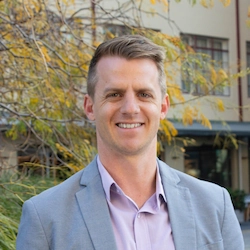
Smiling man in a light grey blazer and purple shirt stands outdoors, with trees and a building in the background.

Mathew Tolley

Trace Partner
Linked In icon

Mathew has over 15 years of experience in the public and private sector, advising senior executives on technical solutions in operations and supply chain, from design and development through to system implementation. This experience has been gained in sectors including hospitality, distribution, retail, telecommunications, fast-moving consumer goods, pharmaceutical products, food processing, after-market parts, and the Australian Defence Force.

Smiling man in a light grey blazer stands outdoors, with trees in the background featuring autumn leaves.

Tim Fagan

Senior Manager
Linked In icon

Tim has over 10 years experience in collaboratively working clients to find the right technology solution to meet their unique needs. With a background in tactical solution development, best of breed system implementation, system requirements definition, multi-language programming, (plus an undergraduate and postgraduate in Mechatronics) Tim has the expertise to support clients navigate their supply chain technology journey.

What are the typical questions we help our clients answer?

Conversation

Advisory

What are the next steps for technology in our business?

Blue tick icon
Tech Strategy & Roadmap Development
Blue tick icon
Technology Diagnostics and Assessments
Blue tick icon
Solution Design
Blue tick icon
Solution Selection &
Go To Market Support
Gears

Delivery

How can we set our business up for success with new technology changes?

Blue tick icon
System Integration, Data Analysis & cleansing
Blue tick icon
Project Governance & Management
Blue tick icon
Business Process design, Op. Model Alignment
& Change management
Blue tick icon
Support Model Design & Execution
Server

Development & Configuration

What are the solutions we need? What should they deliver?

Blue tick icon
Solution Optimisation & Refinement
Blue tick icon
Functional Requirements & Technical Design
Blue tick icon
Solution Testing & Tuning
Blue tick icon
Tactical solution Development
Binary

Data & Analytics

How is effective is our supply chain operation? How well do we leverage our data?

Blue tick icon
Performance Management
Blue tick icon
Supply Chain Modelling
& Analytics
Blue tick icon
Architecture & Data Quality Assessments
Blue tick icon
Data Governance Frameworks

Solutions we have implemented with our clients.

Checklist

Supplier DIFOT & Credit Tracking

SC Analytix’s PTC Servigistics solution optimises your service parts supply chain

Boxes

Inventory Planning Software

Review forecasted demand, uplift ordering and inventory management discipline. Effectively manage service and cost.

Network

Supplier Fulfilment Comms.

Monitor and record supplier fulfilment performance. Automatically distribute targeted communications to internal teams.

Graph

Reporting Dashboards

Unlock continuous improvement opportunities and improve responsiveness through visibility of operational performance

People

Demand Forecast & Workforce Planning

Plan for peak periods of demand, optimise workforce capacity and roster investment to meet service and cost targets.

G

Best-of-Breed Inventory Planning System Implementation

Leverage the potential of market leading inventory planning and optimisation capability.

Chef hat

Production Kitchen Planning & Recipe Management

SC Analytix’s PTC Servigistics solution optimises your service parts supply chain

Gear

Operational Asset Tracking

Maintain operational visibility of assets across the network, ensuring continuing capability exists and mitigating investment risk

Our Partnerships

AI-powered platform for supply chain design, optimisation, and simulation. Helping organisations make faster, smarter network decisions.

SC Analytix’s PTC Servigistics solution optimises your service parts supply chain

Delivering solutions for complex logistics problems

A single platform for supply chain orchestration

Helping companies fulfil their customer's promises, GAINS is the supply chain performance optimisation company

AutoStore develops order fulfilment solutions to help businesses achieve efficiency gains within the storage and retrieval of goods.

Cloud Based Transport Management System for Agriculture

Zycus is the leader in Source-to-Pay (S2P) solutions, pioneering the world's first Generative AI powered platform that helps procurement achieve 10X speed and efficiency

Precision Economics focuses on the delivery of tailored economic and quantitative work, especially in situations where existing tools are unable to answer the questions under examination

Informed 365 offer Cloud Based Solutions to Efficiently Manage Your and Your Supply Chain’s Environmental and Social Performance

Mushiny provides proven robot intelligent warehousing solutions for warehousing users, regardless of industry origin

Create unified strategic supply and demand, production, merchandising, and operations planning decisions with the RELEX AI-based platform

Coupa conquers complexity by delivering intelligent insights across supply chain, procurement, and finance

Latest Technology Insights

People & Perspectives

Supply Chain Control Tower Explained

The term "supply chain control tower" appears in every technology pitch. What it actually means, what it costs, and whether your organisation needs one is a different conversation entirely.

What Is a Supply Chain Control Tower, and Does Your Organisation Actually Need One?

"Supply chain control tower" is one of the most used and least consistently defined terms in supply chain management. It appears in technology vendor presentations, consulting proposals, analyst reports, and conference keynotes. It is used to describe everything from a $50 million global technology platform with real-time tracking across 40 countries to a PowerBI dashboard that shows inbound shipment status for a single distribution centre. The term has been stretched so far that it has become almost meaningless without context.

This matters because Australian organisations are being sold control tower solutions without a clear understanding of what a control tower is, what it is supposed to do, what it costs to build and operate, and whether the investment is justified by the value it delivers. Some organisations genuinely need a control tower. Many do not. Most would benefit more from getting the fundamentals right, accurate data, consistent processes, and basic visibility, than from investing in a sophisticated platform that sits on top of broken foundations.

This article cuts through the marketing to explain what a supply chain control tower actually is, what the different levels of capability look like, where the value comes from, and how Australian organisations should think about whether and how to invest.

What a Control Tower Actually Is

At its core, a supply chain control tower is a centralised function, supported by technology, that provides visibility across the supply chain and enables coordinated decision-making when things deviate from plan.

The word "centralised" is important. A control tower consolidates information that would otherwise be dispersed across functions, systems, and organisations (suppliers, logistics providers, internal operations) into a single view. The word "function" is equally important. A control tower is not just a dashboard or a piece of software. It is a combination of people, processes, and technology that together provide the capability to see what is happening, understand what it means, and take action.

The analogy to air traffic control is instructive. An air traffic control tower does not fly the planes. It provides the visibility and coordination that allow planes to operate safely and efficiently within a shared system. A supply chain control tower does not run the warehouse, drive the trucks, or manage the suppliers. It provides the visibility and coordination that allow those functions to operate more effectively as an integrated system.

Levels of Capability

Control towers exist on a spectrum of capability. Understanding where your organisation sits on this spectrum, and where it needs to be, is the starting point for any investment decision.

Level 1: Visibility. The most basic control tower capability is the ability to see what is happening across the supply chain. Where are inbound shipments? What is the status of purchase orders? What is the current inventory position across locations? Are there any exceptions or alerts that require attention? This level is essentially a monitoring capability: aggregating data from multiple sources (ERP, WMS, TMS, supplier portals, carrier tracking) into a consolidated view. The value comes from replacing the fragmented, manual, and often delayed information flows that characterise most supply chain operations with a near-real-time picture of current status. Most Australian organisations that invest in control tower capability are operating at this level or working toward it.

Level 2: Analytics and alerting. The next level adds analytical capability to the visibility foundation. Rather than just showing current status, the control tower analyses the data to identify patterns, detect emerging issues, and generate alerts when actual performance deviates from plan. Late shipment alerts, inventory threshold warnings, demand-supply imbalance flags, and supplier performance trend analysis are typical capabilities at this level. The value comes from shifting from reactive problem detection (finding out about issues when they become crises) to proactive issue identification (flagging potential problems while there is still time to intervene).

Level 3: Decision support. At this level, the control tower provides not just visibility and alerts but recommended actions. When an inbound shipment is delayed, the control tower models the downstream impact (which customer orders are affected, what are the alternative fulfilment options, what is the cost of each option) and presents decision options to the supply chain team. This requires more sophisticated analytics, scenario modelling capability, and integration with planning and execution systems. Few Australian organisations have reached this level of maturity, though it is where the highest value from a control tower investment is realised.

Level 4: Autonomous orchestration. The most advanced control tower capability involves automated decision-making and execution. The system detects an issue, evaluates options, selects the optimal response, and triggers the execution without human intervention (or with human oversight on exception only). This level requires deep system integration, high data quality, well-defined business rules, and a high degree of trust in the system's decision-making. It exists in pockets, for example in automated inventory replenishment or dynamic transport routing, but fully autonomous end-to-end supply chain orchestration remains aspirational for most organisations globally, let alone in Australia.

Where the Value Comes From

The value of a control tower is not in the technology itself. It is in the decisions the technology enables. Specifically, a control tower creates value in four ways.

Faster issue detection. In a supply chain without centralised visibility, issues are typically detected when they cause a downstream failure: a stockout, a missed delivery, a production disruption. By that point, the response options are limited and expensive. A control tower that detects the issue earlier, when the inbound shipment is delayed rather than when the shelf is empty, creates time. Time to find an alternative source, to adjust the production schedule, to communicate with the customer, to implement a workaround. That time has direct commercial value.

Better coordination. Supply chain decisions are interdependent. A procurement decision affects inventory. An inventory decision affects logistics. A logistics decision affects customer service. In most organisations, these decisions are made independently by different functions with incomplete information about each other's constraints and priorities. A control tower that provides a shared view across functions enables more coordinated decision-making, reducing the sub-optimisation that occurs when each function optimises its own silo.

Reduced cost of disruption. When disruptions occur, the cost of response is directly related to the speed and quality of decision-making. An organisation that detects a supply disruption early, understands the downstream impact, evaluates the response options, and executes the optimal response quickly will incur significantly lower disruption costs than one that detects the same disruption late and scrambles to respond. The control tower does not prevent disruptions. It reduces the cost of dealing with them.

Performance improvement over time. A control tower that captures data on supply chain performance, exception types, response effectiveness, and root causes provides the analytical foundation for continuous improvement. Over time, patterns emerge: recurring supplier issues, systematic forecast biases, consistent logistics bottlenecks. These patterns, visible only when data is centralised and analysed, enable targeted improvement programmes that address root causes rather than symptoms.

What It Actually Costs

The cost of a supply chain control tower varies enormously depending on scope, scale, and technology choices. A useful framework distinguishes three cost tiers.

Basic visibility (Level 1). For a mid-sized Australian organisation with a relatively simple supply chain (domestic distribution, a handful of key suppliers, a single ERP system), a basic control tower capability can be built using existing BI tools (PowerBI, Tableau), data extracts from existing systems, and a small team to operate it. The technology cost might be modest, tens of thousands of dollars per year, with the primary investment being in the people and processes needed to define the KPIs, build the data feeds, maintain the dashboards, and act on the information. This is achievable for most Australian organisations and represents the best starting point.

Integrated platform (Levels 1-2). For larger organisations with more complex supply chains (multiple facilities, international sourcing, multiple logistics providers, multiple systems), a dedicated control tower platform that integrates data from multiple sources, provides configurable alerting, and supports multi-user access typically costs in the range of several hundred thousand dollars per year for the platform, plus implementation costs and ongoing operating costs (data management, system administration, user support). The implementation timeline is typically six to twelve months.

Advanced capability (Levels 3-4). For large, complex, global supply chains requiring real-time integration, scenario modelling, and autonomous decision support, the investment can run into millions of dollars per year, with multi-year implementation programmes. These solutions are typically justified only for organisations where the supply chain is of sufficient scale and complexity that the value from improved decision-making materially exceeds the cost of the platform.

The People Dimension

The most common mistake in control tower investment is treating it as a technology project. A control tower without people who know how to interpret the data, make decisions, and drive action is an expensive dashboard that nobody uses.

The operating model for a control tower function typically includes several roles. A control tower manager who owns the function and is accountable for its performance. Analysts who monitor the dashboards, triage alerts, and conduct analysis. Coordinators who manage exception responses, liaise with suppliers and logistics providers, and escalate issues. The exact team size depends on the scope of the control tower and the complexity of the supply chain, but even a basic Level 1 control tower requires dedicated attention from at least one or two people to be effective.

The skills required are a blend of supply chain operational knowledge (understanding what the data means in practical terms), analytical capability (ability to interpret data, identify patterns, and draw conclusions), communication skills (ability to escalate issues clearly and coordinate responses across functions), and systems literacy (comfort with the technology platform and data tools).

Many organisations underestimate the people investment required and end up with a well-built platform that is under-utilised because nobody has the time, the skills, or the accountability to operate it effectively.

When You Need One and When You Do Not

You probably need a control tower if: your supply chain spans multiple geographies, suppliers, and logistics providers; you experience frequent disruptions that are detected too late to manage effectively; different functions make supply chain decisions independently without visibility of each other's constraints; you have significant working capital tied up in inventory that exists because of uncertainty and lack of visibility; or you are managing contractual commitments (customer service levels, supplier delivery windows) that require proactive rather than reactive management.

You probably do not need a control tower if: your supply chain is relatively simple (few suppliers, domestic distribution, single facility); your existing systems already provide adequate visibility of supply chain status; your supply chain issues are caused by process failures or capability gaps that a control tower would not address; or you do not have the data foundations (accurate master data, reliable transactional data, system integration) on which a control tower depends.

You almost certainly should not invest in a control tower if: your ERP data is unreliable; your inventory records do not match physical stock; your supplier master data is incomplete; or your existing systems are not integrated. A control tower built on bad data will produce bad visibility and bad decisions. Fix the data first.

A Practical Starting Point

For most Australian organisations, the right starting point is not a control tower platform. It is a control tower practice. This means defining the key supply chain metrics that matter, building a simple consolidated view of those metrics from existing data sources, establishing a regular cadence of review (daily for operational metrics, weekly for performance trends), and assigning clear accountability for monitoring, escalating, and acting on the information.

This can be done with existing BI tools, existing data, and a small dedicated resource. It does not require a six-figure platform investment. And it delivers the most important benefit of a control tower immediately: a shared, consistent, current view of supply chain performance that enables better decisions.

Once this practice is established and delivering value, the organisation is in a much better position to evaluate whether a more sophisticated platform is justified, because it understands what visibility is valuable, what data is available, where the gaps are, and what decisions the technology needs to support.

How Trace Consultants Can Help

Trace works with Australian organisations to design and implement supply chain visibility and control tower capabilities that are proportionate to the organisation's scale, complexity, and maturity.

Visibility assessment. We assess the current state of supply chain visibility across the organisation, identifying what data exists, where the gaps are, what decisions are being made with inadequate information, and where improved visibility would deliver the most value.

Control tower design. We design control tower operating models, including scope, KPIs, data architecture, technology requirements, people model, and governance. Our designs are grounded in what the organisation actually needs, not what the technology can theoretically do.

Technology selection. Where a platform investment is justified, we help organisations define requirements, evaluate options, and select the right technology for their needs and budget. We are technology-agnostic and have no commercial relationships with platform vendors.

Implementation support. We support control tower implementation from data integration through to operating model rollout, ensuring that the technology, the processes, and the people are all in place for the control tower to deliver sustained value.

Explore our Technology services →Explore our Resilience & Risk Management services →Explore our Planning & Operations services →Speak to an expert at Trace →

Getting Started

Before investing in a control tower, answer three questions. What supply chain decisions are currently being made with inadequate information? What data exists today that is not being used effectively? And who would be accountable for operating a control tower if you built one?

If you can answer those three questions clearly, you have the foundation for a productive conversation about what a control tower should look like for your organisation. If you cannot answer them, that is the work to do first, and it will deliver value regardless of whether a control tower investment follows.

The best control tower is not the most advanced one. It is the one that provides the right information to the right people at the right time to make better decisions. For many Australian organisations, that is simpler, cheaper, and more achievable than the technology vendors would have you believe.


Warehousing & Distribution

Warehouse Automation Strategy Australia

Warehouse Automation Strategy Australia
Tim Harris
April 2026
The automation question comes up in every warehouse conversation. The answer is almost never "automate everything" or "automate nothing." Here is how to get the decision right.

Automation in Australian Warehouses: What Is Real, What Is Hype, and How to Get the Investment Decision Right

Warehouse automation is one of the most discussed and most misunderstood topics in Australian supply chain. Every logistics conference features it. Every warehouse management system vendor promotes it. Every operations leader who has visited a European or Asian distribution centre has come back asking whether their operation should look like that. And every CFO who has been presented with an automation business case has asked the same question: does this actually make financial sense for us, in Australia, at our scale?

The honest answer is: it depends. Automation is not universally the right answer, and it is not universally the wrong answer. It is a design decision that should be driven by the specific characteristics of the operation, the economics of the Australian labour and property market, the volume and profile of the work being done, and the strategic objectives of the business. The organisations that get automation right are the ones that treat it as an operational design question, not a technology procurement exercise.

This article provides a practitioner's guide to warehouse automation in the Australian context: what the technology options are, where they make sense, where they do not, how to build a credible business case, and what the most common mistakes are.

The Australian Context

The automation decision in Australia is shaped by several market-specific factors that differentiate it from Europe, Asia, or North America.

Labour costs are high. Australia has some of the highest warehouse labour costs in the world. The base rate for a warehouse operative under relevant modern awards, before overtime, penalties, superannuation, and workers' compensation, is materially higher than equivalent rates in the US, UK, or most of Asia. When penalties for weekend and shift work are factored in, the fully loaded cost of a warehouse FTE in Sydney or Melbourne can reach $85,000 to $100,000 per year. This high labour cost improves the payback arithmetic for automation: the labour savings from replacing manual processes with automated ones are larger in absolute terms than in lower-wage markets.

Property costs are significant and rising. Industrial land and building costs in Sydney's western corridors, Melbourne's south-east and west, and Brisbane's trade coast have increased substantially over the past five years. Rents for modern logistics facilities in prime locations now sit at levels that make facility footprint a genuine cost driver. Automation technologies that increase storage density (such as automated storage and retrieval systems or shuttle-based systems) can reduce the required footprint, which in high-rent markets translates to meaningful savings on occupancy cost.

Scale is often modest. The Australian market is small relative to the markets where the most advanced warehouse automation has been deployed. A distribution centre handling 20,000 order lines per day is a large operation in Australia. In the US or Europe, that is a mid-sized facility. Many automation technologies have minimum throughput thresholds below which they are not economically viable. Australian operations need to assess carefully whether their volume justifies the capital investment, and whether projected growth will sustain the utilisation levels needed for the automation to deliver its business case.

Labour availability is constrained. Warehouse labour shortages have been a persistent challenge in Australian logistics, particularly in the western Sydney, south-east Melbourne, and Brisbane corridors where the largest concentration of distribution centres is located. The availability of labour, not just its cost, is increasingly a factor in the automation decision. Operations that cannot reliably staff peak periods with manual labour may need automation not just for cost reasons but for operational continuity.

Distance and geography. Australia's geographic characteristics, large distances between capital cities, concentrated population centres, and long supply lines from offshore manufacturing, create distribution network designs that are different from compact European or Asian markets. This affects the type and location of automation investment. A single national DC serving all states has different automation requirements from a hub-and-spoke network with regional facilities.

The Technology Landscape

Warehouse automation exists on a spectrum from simple mechanisation to fully autonomous operation. Most Australian operations sit somewhere in the first half of that spectrum, and for good reason.

Conveyor and sortation systems. The most mature and widely deployed automation in Australian warehouses. Conveyor systems move goods between zones (receiving, storage, picking, packing, despatch) without manual carrying. Sortation systems direct items to the correct despatch lane, packing station, or storage location. These technologies are well understood, relatively low risk, and deliver clear productivity benefits in operations with sufficient throughput to justify the capital cost. They are the foundation of most automated warehouse designs.

Goods-to-person systems. These technologies bring the product to the picker, rather than the picker walking to the product. They include shuttle-based systems (where automated shuttles retrieve totes or cartons from dense storage racking and deliver them to a picking station), carousel systems, and cube-based storage systems. Goods-to-person systems dramatically reduce picker travel time, which in a manual warehouse typically accounts for 50% to 60% of a picker's time. They also increase storage density by eliminating the aisle space required for human access. The capital cost is substantial, and the systems are best suited to operations with high SKU counts, high order volumes, and a product profile that fits the storage medium (typically smaller items in totes or cartons).

Autonomous mobile robots (AMRs). AMRs navigate the warehouse floor autonomously, moving goods between locations, delivering picks to packing stations, or transporting completed orders to despatch. Unlike traditional automated guided vehicles (AGVs), which follow fixed paths, AMRs use sensors and software to navigate dynamically, which makes them more flexible and easier to deploy in existing facilities without major infrastructure modifications. AMRs have gained significant traction in Australian warehousing over the past three years because they offer a lower capital entry point than fixed automation, can be deployed incrementally, and can operate alongside manual processes rather than requiring a complete redesign of the operation.

Robotic picking. Automated picking of individual items (piece picking) remains one of the most challenging automation problems. While robotic picking technology has advanced significantly, particularly with the application of machine learning to vision and grasping systems, fully autonomous piece picking at the speed and accuracy required for commercial operations is still limited to specific product profiles (uniform shapes, consistent packaging, limited SKU variation). For most Australian operations, robotic picking is not yet a viable replacement for manual piece picking across a diverse product range. It is, however, increasingly viable for specific applications: palletising, depalletising, case picking, and repetitive sortation tasks.

Warehouse management systems and software. Automation hardware delivers its full value only when supported by software that orchestrates the operation: directing work, optimising sequences, managing inventory, and integrating with upstream and downstream systems. A modern warehouse management system (WMS) is a prerequisite for most automation deployments, and for many operations, investing in a capable WMS and optimising the manual processes before investing in hardware automation delivers a better return.

When Automation Makes Sense

Automation is most likely to deliver a positive return in operations that have one or more of the following characteristics.

High labour intensity. Operations where labour is the dominant cost, and where a significant proportion of that labour is performing repetitive, predictable tasks (walking, carrying, sorting, palletising) that can be automated without compromising quality or flexibility.

Consistent, predictable throughput. Automation delivers its best return when it is highly utilised. Operations with stable, predictable daily throughput are better candidates than operations with extreme variability (very high peaks and very low troughs), because the automation needs to be sized for the peak but is only fully productive at or near that peak.

Constrained space. Operations where the available facility footprint is limited and expansion is expensive or impossible benefit from automation technologies that increase storage density. In high-rent markets like Sydney and Melbourne, the footprint savings alone can materially improve the business case.

Labour availability constraints. Operations that cannot reliably recruit and retain sufficient warehouse labour to meet demand, particularly during peak periods, may need automation for operational resilience as much as for cost reduction.

Growth trajectory. Operations that are growing and will need to increase throughput capacity benefit from automation that provides scalable capacity without proportional increases in labour. The business case for automation improves significantly when it defers or eliminates the need for a facility expansion.

When It Does Not

Automation is less likely to deliver a positive return in operations with the following characteristics.

Low throughput. The fixed cost of automation (capital, maintenance, software, integration) needs to be spread across sufficient volume to generate a competitive unit cost. Operations below the volume threshold for a given technology will have higher per-unit costs with automation than without it.

High product variability. Operations handling a wide range of product sizes, shapes, weights, and packaging types are harder to automate because the technology needs to handle the full range of variability. Each exception, each product that does not fit the automated process, requires a manual workaround that erodes the productivity benefit.

Short lease or uncertain tenure. Most warehouse automation has a payback period of three to seven years. If the facility lease expires in two years and renewal is uncertain, or if the business is considering a network redesign that might relocate the operation, the investment horizon may not support the automation business case.

Unstable processes. Automation amplifies whatever it is applied to. If the underlying warehouse processes are poorly designed, if the WMS is inadequate, if inventory accuracy is low, or if the operation is in the middle of a transformation, automating before stabilising the foundation will produce an automated mess, not an automated solution.

Building the Business Case

A credible automation business case requires more than a vendor quote and a labour saving estimate. It needs to account for the full cost of ownership and the full range of benefits and risks.

Capital cost. The purchase and installation cost of the automation equipment, including any facility modifications required (floor preparation, power supply, fire protection, structural reinforcement).

Integration cost. The cost of integrating the automation with existing systems (WMS, ERP, transport management, order management), which is frequently underestimated and can represent 20% to 40% of the total project cost.

Ongoing cost. Maintenance, spare parts, software licences, and the specialist technical staff required to operate and maintain the automation. These costs are often omitted from business cases that focus on capital and labour savings.

Labour savings. The reduction in warehouse labour cost, calculated on a fully loaded basis (including penalties, super, workers' comp, recruitment, and training cost) and accounting for the residual labour that will still be required alongside the automation.

Throughput and capacity benefits. The additional throughput capacity provided by the automation, and the deferred cost of the alternative (hiring more people, expanding the facility, or opening a second site) that the automation displaces.

Quality and accuracy benefits. Automation typically improves pick accuracy, reduces product damage, and improves inventory accuracy. These benefits are real but harder to quantify. They should be included in the business case where credible data supports them.

Risk. Technology risk (will it work as specified?), integration risk (will it connect to existing systems?), volume risk (will throughput reach the levels assumed in the business case?), and flexibility risk (can the automation adapt if the operation changes?). A business case that does not acknowledge and price these risks is incomplete.

The payback period for warehouse automation in Australia typically ranges from three to six years for conveyor and sortation systems, four to seven years for goods-to-person systems, and two to four years for AMR deployments (which have lower capital cost but also lower throughput impact). These are indicative ranges; the actual payback depends entirely on the specific operation.

How Trace Consultants Can Help

Trace works with Australian organisations to make informed automation decisions, grounded in operational reality rather than vendor marketing.

Automation feasibility assessment. We assess whether automation is the right investment for your operation, based on throughput analysis, labour cost modelling, space utilisation, growth projections, and a realistic assessment of the available technologies. We identify which processes are candidates for automation and which are better served by process improvement or manual optimisation.

Business case development. We build credible automation business cases that account for the full cost of ownership, the realistic benefits, the integration requirements, and the risks. Our business cases are designed to withstand CFO scrutiny, not to sell a technology.

Warehouse design and optimisation. We design warehouse operations that integrate automation with manual processes in a way that optimises the total operation, not just the automated component. This includes layout design, process design, workforce planning, and systems architecture.

Technology assessment and vendor selection. We help organisations evaluate automation technologies and vendors on a level playing field, with requirements defined by the operation rather than by the vendor's product portfolio.

Explore our Warehousing & Distribution services →Explore our Technology services →Speak to an expert at Trace →

Getting Started

Before talking to an automation vendor, talk to your operation. Understand where your warehouse labour hours are being consumed. Measure the walk time, the pick time, the sortation time, the receiving and despatch time. Identify which tasks are repetitive and predictable (good automation candidates) and which are variable and judgment-dependent (poor automation candidates). Quantify the throughput you need today and the throughput you will need in three to five years.

That operational analysis is the foundation for an informed automation decision. Without it, you are evaluating technology in a vacuum. With it, you can assess any automation proposal against the specific requirements of your operation and make a decision that is grounded in evidence rather than enthusiasm.

The right automation investment, made at the right time, for the right reasons, can transform a warehouse operation. The wrong investment, made prematurely or for the wrong reasons, creates an expensive and inflexible liability. The difference between the two is the quality of the decision-making process, not the sophistication of the technology.

Technology

AI in Supply Chain and Procurement

AI in Supply Chain and Procurement
Tim Fagan
April 2026
Every supply chain vendor now claims AI capability. Most of what they are selling is not what procurement and supply chain teams actually need.

AI in Supply Chain and Procurement: What Is Real, What Is Hype, and Where to Invest

Every supply chain technology vendor in 2026 has an AI story. Every conference presentation includes a slide about machine learning. Every RFP response mentions predictive analytics, natural language processing or autonomous agents.

The noise is extraordinary. Cutting through it to understand what AI actually does, what it does not do, and where the genuine value sits for Australian supply chain and procurement teams requires a more honest conversation than most vendors or consultants are willing to have.

This article is that conversation.

What AI Actually Means in This Context

The term "AI" in supply chain and procurement covers a broad spectrum of capability, from genuinely transformative machine learning applications through to basic automation that has been relabelled for marketing purposes.

At one end, there are applications that use machine learning models to identify patterns in large datasets that humans cannot see: demand sensing algorithms that detect shifts in buying behaviour before they appear in aggregate sales data, anomaly detection models that flag fraudulent or non-compliant invoices, and predictive maintenance systems that anticipate equipment failure based on sensor data patterns.

At the other end, there is rules-based automation that routes purchase requisitions, auto-categorises spend data, or generates templated reports. These are useful capabilities, but calling them AI is a stretch. They are workflow automation with a marketing budget.

Between these two poles sits the majority of what is currently being sold to Australian businesses: statistical models and optimisation algorithms that improve on traditional approaches but require clean data, careful configuration and ongoing human oversight to deliver value.

Understanding where your organisation sits on this spectrum, and where the genuine opportunities for value creation exist given your data maturity, is the starting point for any AI investment in supply chain or procurement.

Where AI Creates Real Value

Five application areas have moved beyond proof-of-concept and are delivering measurable value in Australian supply chain and procurement operations.

Demand Forecasting and Sensing

This is the most mature AI application in supply chain. Machine learning models that incorporate a wider range of demand signals (weather, promotional calendars, social media trends, competitor activity, economic indicators) alongside historical sales data consistently outperform traditional statistical forecasting methods.

The improvement is not marginal. Organisations that have implemented ML-based demand forecasting report forecast accuracy improvements of 10 to 30 percent at the SKU level, with the greatest improvement in categories with high variability and complex demand drivers. The commercial impact flows through to inventory reduction, service level improvement and reduced expediting cost.

The caveat is data. ML-based forecasting requires clean, granular, time-series data at a level that many Australian businesses do not currently maintain. If your demand data is aggregated, inconsistent or incomplete, the AI model will underperform a well-managed statistical forecast. Fix the data before you buy the tool.

Spend Analytics and Classification

Procurement teams have been classifying and analysing spend data for decades. AI accelerates and improves this process by automatically categorising transactions against a taxonomy, identifying misclassified spend, detecting maverick purchasing patterns and surfacing consolidation opportunities across business units or geographies.

The value here is speed and coverage. A traditional spend analysis project takes weeks of manual data cleansing and classification. An AI-powered tool can process millions of transactions in hours and classify them with 85 to 95 percent accuracy. The procurement team's time shifts from data preparation to insight generation and action.

Supplier Risk Monitoring

Traditional supplier risk assessment is a point-in-time exercise: a questionnaire sent during onboarding, a financial health check at contract renewal, maybe an annual review for critical suppliers. AI-powered risk monitoring is continuous. It scans public data sources (news feeds, financial filings, regulatory actions, ESG incidents, social media) and flags changes in supplier risk profile in near-real time.

This is particularly valuable in the current geopolitical environment, where supply chain disruptions can emerge quickly from trade policy changes, sanctions, logistics bottlenecks or natural disasters. The Australian businesses that were best prepared for recent disruptions were, disproportionately, the ones that had invested in continuous risk monitoring capability.

Invoice and Contract Compliance

AI models that compare invoice line items against contracted rates, detect duplicate payments, identify pricing anomalies and flag non-compliant charges are delivering genuine ROI in accounts payable and procurement operations. The value is in the exceptions they surface: the overcharges, the duplicates, the rate mismatches that would otherwise be processed and paid without scrutiny.

For organisations with high transaction volumes and complex contract structures, the savings from AI-powered compliance checking can be substantial, often recovering 1 to 3 percent of total spend in previously undetected leakage.

Warehouse and Logistics Optimisation

Within warehouse operations, AI is being applied to labour planning (predicting workload by shift and zone), pick path optimisation (reducing travel time in the warehouse), inventory positioning (placing fast-moving stock in optimal locations), and exception management (predicting and resolving bottlenecks before they affect throughput).

In logistics, route optimisation algorithms that incorporate real-time traffic, weather and delivery window constraints have been in use for years, but the latest generation of models is materially more capable. The shift from static to dynamic route optimisation, where routes are adjusted in real time as conditions change, is where the current value frontier sits.

Where AI Does Not Yet Deliver

Honesty about the limitations is as important as enthusiasm about the opportunities.

Autonomous procurement decision-making is not ready for production. The concept of "agentic AI" that independently selects suppliers, negotiates terms and places orders without human involvement is technically feasible in narrow, low-risk categories. For anything material, the risk of an AI making a procurement decision without human judgement is too high. The technology will get there, but not in the next two to three years for most Australian businesses.

Strategic category management remains a human discipline. AI can surface insights, identify patterns and model scenarios. It cannot replace the commercial judgement, relationship management and stakeholder navigation that effective category management requires. The best AI applications in category management are decision-support tools, not decision-making tools.

Small-data environments do not benefit from ML. If your organisation has three years of monthly demand data for 200 SKUs, a well-configured statistical model will outperform an ML algorithm that needs orders of magnitude more data to train effectively. AI is not a substitute for basic planning discipline in businesses that lack the data volume to support it.

A Practical Investment Framework

For Australian supply chain and procurement teams considering AI investment, the framework is straightforward.

Start with the problem, not the technology. Identify the two or three operational pain points that consume the most time, cost the most money, or create the most risk. Then assess whether an AI-powered solution addresses those pain points better than a process improvement or a simpler technology.

Assess your data readiness. AI is only as good as the data it operates on. If your data is fragmented, inconsistent, incomplete or siloed, invest in data infrastructure first. This is not as exciting as an AI pilot, but it delivers more value.

Run a pilot with clear metrics. Before committing to a platform, run a time-boxed pilot on a defined problem with measurable success criteria. Compare the AI-powered output against your current approach. If the improvement is material and repeatable, scale. If it is marginal, investigate why before investing further.

Build internal capability. AI tools require configuration, monitoring and ongoing refinement. If you outsource all of this to the vendor, you lose the ability to adapt the tool to your specific context. Invest in the internal skills (data analysis, model configuration, exception management) needed to own the capability over time.

How Trace Consultants Can Help

Trace helps supply chain and procurement teams navigate the AI landscape with commercial pragmatism, cutting through the vendor noise to identify where AI creates genuine value for your specific operation.

AI readiness assessment: We assess your data maturity, process maturity and organisational readiness for AI adoption, identifying the highest-value use cases and the prerequisites that need to be in place before investment.

Technology selection support: We help procurement and supply chain teams evaluate AI-powered tools against their actual requirements, rather than against vendor marketing claims, ensuring the technology fits the problem.

Demand planning and forecasting improvement: We design and implement demand planning processes that incorporate advanced analytics and ML-based forecasting where the data supports it, and structured statistical methods where it does not.

Process redesign for AI-enabled operations: We redesign procurement and supply chain processes to take advantage of AI capabilities, ensuring that the technology is embedded in the operating model rather than bolted on as an experiment.

Explore our Technology services →

Explore our Planning and Operations services →

Explore our Procurement services →

Speak to an expert at Trace →

Procurement Cost-Out Programs for Indirect Spend & Services

Indirects and services quietly swallow budgets—cleaning, security, maintenance, IT, freight, labour hire, professional services. Here’s how to run a procurement cost-out program that sticks, and how to take it to market with confidence.
Learn more

In Conversation at Trace: David Carroll on operating models, co-design, and making change stick

In the first edition of In Conversation at Trace, Management Consultant David Carroll reflects on operating model design, co-design, and what it takes to turn strategy into execution across government, defence, and private enterprise.
Learn more

Why Planning your Loading Dock Is the Missing Piece in Your Logistics Strategy

Dock scheduling software, like Mobiledock, can optimise loading dock operations by managing delivery times, reducing bottlenecks, and aligning resources. This article explores the cost-saving benefits, such as labour reduction and improved efficiency.
Learn more

What Makes a Management Consultant Great vs. Good: The Shift Towards Specialisation

The difference between good and great management consultants lies in their ability to offer specialised, tailored solutions. Discover how Trace Consultants helps businesses succeed with a specialised approach across supply chain strategy, forecasting, warehouse design, and more.
Learn more

Interview with Shanaka Jayasinghe: The Critical Role of BOH Logistics in Designing Sustainable Hospital Facilities

By considering these logistics principles, we can build hospital facilities that ensure consistency in patient care, clinical outcomes, and efficient operations for staff and patients.
Learn more

Sustainable Changes to Operating Models to Support Large Scale Cost Reduction Programs: An Interview with James Allt-Graham, Partner of Trace Consultants

Discover sustainable strategies for cost reduction with insights from James Allt-Graham, Partner at Trace Consultants.
Learn more

Navigating the Future of Planning: A Conversation with Mathew Tolley on Software Selection Excellence

Dive into an exclusive interview with Mathew Tolley, where we unravel the secrets to successfully selecting advanced planning software.
Learn more

Australia's Defence Supply Chains: Acqusition may win battles, but only Sustainment can win a war.

Dive into the critical role of Australia's defence supply chains in ensuring military readiness. This blog explores the importance of sustainment over acquisition, delving into heavy asset management, MRO logistics, and the key attributes that secure a competitive edge in uncertain times. Learn how demand planning, service delivery, and innovative logistics execution keep the ADF battle-ready.
Learn more

Interview with Tim Fagan: Navigating IT Transformation in Australian Businesses

Join us in a conversation with Tim Fagan on how Australian businesses are improving supply chain performance and reducing costs through tactical IT changes and best of breed systems.
Learn more

Interview with Mathew Tolley: Enhancing Supply Chain Resilience Amidst Geopolitical Shocks

Join industry expert Mathew Tolley in discussing how Australian businesses can fortify their supply chains through strategic n-tier assessments and resilience-building practices.
Learn more

Interview with Emma Woodberry: Driving Sustainability Through Supply Chain Optimisation

Join Emma Woodberry in exploring how retailers and manufacturers can enhance sustainability and reduce transport costs through strategic supply chain optimisation.
Learn more