


Fertiliser, Food, and Freight: The Second-Order Supply Chain Shock Most Australian Executives Aren't Planning For
The headlines are about petrol prices. The boardroom conversations are about diesel. But the supply chain shock that will define Q3 and Q4 2026 for Australian retailers, food service operators, FMCG businesses, and agriculture is not the fuel crisis itself. It is the second and third-order effects that are still working their way through the system: fertiliser shortages, agricultural input cost inflation, and the compounding effect of elevated freight surcharges on every link in the food supply chain.
These effects operate on longer lag times than fuel prices. They are harder to see in real time. And for most Australian executives outside the agricultural sector, they are not yet on the radar. That is a problem, because by the time they show up in supplier cost claims and category P&Ls, the window for proactive response has already closed.
This article traces the physical mechanics of the fertiliser and food supply chain disruption, maps the timeline of impact for Australian businesses, and provides a practical framework for modelling the cost exposure before it arrives.
The Fertiliser Crisis: Bigger Than Most People Realise
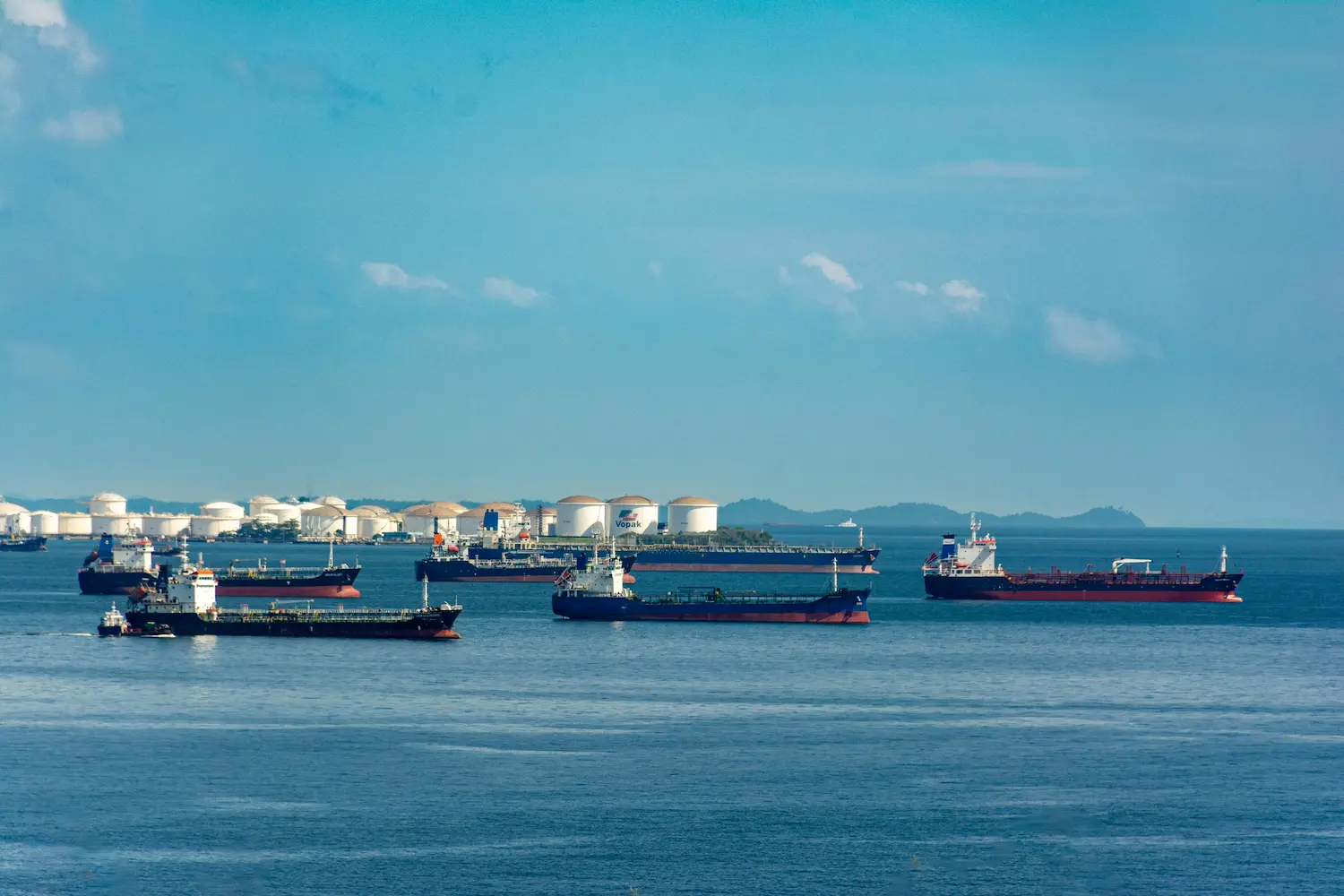
The Strait of Hormuz is not just an oil chokepoint. It is a fertiliser chokepoint. Roughly 20 to 30% of globally traded fertiliser, including urea, ammonia, phosphates, and sulphur, normally transits through the strait. The Persian Gulf is the world's dominant production region for nitrogen-based fertilisers, with Saudi Arabia, the UAE, and Qatar supplying approximately 42% of Australia's total fertiliser import value in 2024.
Australia consumed 8.7 million tonnes of fertiliser in 2024, valued at A$5.5 billion. Of that, 7.9 million tonnes were imported. Domestic production is negligible: Australia's only urea manufacturing facility (Incitec Pivot's Gibson Island plant) closed in 2022, and the planned Perdaman facility in Western Australia will not be operational until mid-2027 at the earliest. Australia's largest ammonia plant has also been shut for maintenance during the crisis.
The numbers tell the story. Urea, which accounts for 44% of Australia's fertiliser consumption, has surged from around A$850 per tonne in late February to over A$1,400 per tonne in recent weeks: an increase of more than 60%. Nearly a million tonnes of fertiliser cargo are physically stranded in the Gulf. Fertilizer Australia, the sector's peak body, has warned the government that further shipping disruptions would have "catastrophic impacts on domestic agricultural output in the 2026 season."
Unlike oil, there are no internationally coordinated strategic reserves for fertiliser. No government stockpile to release. No emergency mechanism to bridge the gap. When fertiliser supply is disrupted, the only responses are to source from alternative origins (at higher cost and longer lead times), reduce application rates (accepting lower crop yields), or defer planting entirely.
Why the Timing Is Critical for Australia
The Hormuz closure could not have come at a worse time for Australian agriculture. Winter grain crops are typically sown between April and June. Most growers had secured 70 to 80% of their planting fertiliser (primarily MAP and DAP) before the crisis, but supplies of post-planting nitrogen inputs, specifically urea and urea ammonium nitrate, are now critically short.
This distinction matters. Planting fertiliser goes into the ground at sowing. Nitrogen top-up is applied during the growing season to drive protein content and yield. Without adequate nitrogen, crops still grow, but yields and quality fall materially. For wheat, the difference between a well-fertilised crop and an under-fertilised one can be 20 to 30% in yield and a downgrade from milling quality to feed quality, which carries a significant price penalty.
Industry analysts estimate Australia's wheat plantings could drop 10 to 12% this year, with further reductions in canola, which is a nitrogen-hungry crop. Some growers are shifting to less fertiliser-intensive crops like barley and pulses. Others, particularly those carrying high debt or coming off years of drought, may choose not to plant at all.
The ripple effects are significant. Australia is the world's fourth-largest wheat exporter. A material reduction in planted area or yield does not just affect individual farm economics. It reduces national export volumes, tightens domestic supply, and contributes to upward pressure on global grain prices at a time when Northern Hemisphere production is facing the same fertiliser constraints.
Tracing the Cost Transmission Into Food and Grocery
For executives in retail, FMCG, and food services, the question is: when and how does this show up in my cost base? The answer requires tracing three parallel cost transmission pathways, each with a different timeline.
Pathway 1: Freight surcharges (already arriving)
Every product that moves by truck, rail, or ship carries a fuel cost component. With diesel up 30 to 50% and major freight operators flagging 15 to 20% surcharge increases, this is the first and most visible cost impact. It is already flowing through to distribution centre operations, store deliveries, and last-mile logistics. For a national grocery chain or FMCG distributor, freight typically represents 3 to 8% of cost of goods sold. A 15 to 20% increase in freight costs adds 0.5 to 1.5 percentage points to total COGS, which is material on thin retail margins.
Timeline: immediate to 4 weeks.
Pathway 2: Supplier cost claims on materials and packaging (arriving now through May)
Packaging materials (plastics, glass, cardboard, aluminium) carry significant embedded energy costs. So do processing and manufacturing inputs. Suppliers who absorb these increases for a few weeks will eventually pass them through as formal cost claims to their retail and food service customers. The lag depends on contract structures, supplier cashflow resilience, and the pace of raw material inventory turnover.
Most FMCG and grocery suppliers operate on 60 to 90-day cost review cycles. Claims filed in April and May will reference cost increases accumulated since early March. The scale of individual claims will vary, but procurement teams should expect a broad-based wave of cost increase requests across categories with high energy, transport, or packaging input cost weightings.
Timeline: 4 to 12 weeks.
Pathway 3: Agricultural input cost inflation (arriving Q3)
This is the slow-burn pathway, and the one least visible to most executives today. Fertiliser costs are flowing into planting decisions right now. Those decisions will determine yield outcomes in the second half of the year. At the same time, on-farm fuel and chemical costs are rising, increasing the farm-gate cost of production for everything from grain and oilseeds to vegetables, dairy, and livestock feed.
The transmission mechanism is not instant. Grain harvested in Q4 2026 was planted in Q2 at higher input cost. Livestock producers feeding that grain face higher costs through the second half. Dairy and meat production costs rise accordingly. Fresh produce growers facing both fertiliser and fuel cost increases are already reducing planting schedules: half of Australian vegetable growers have reported they will run out of fertiliser within three weeks, and 27% have already cut production.
For grocery retailers and food service operators, this means farm-gate price increases on fresh produce, dairy, grain-based products, and meat that begin arriving in Q3 and persist into Q4. Food price inflation of 4 to 8% above baseline is a credible central estimate, with higher outcomes possible if the crisis extends and Northern Hemisphere production is also affected.
Timeline: 12 to 24 weeks.
The Compounding Effect: When All Three Pathways Converge
The critical insight for supply chain and procurement leaders is that these three pathways do not operate in isolation. They compound.
A product that costs more to grow (fertiliser), more to process (energy), more to package (materials), and more to deliver (freight) accumulates cost increases at every stage. A loaf of bread, for example, carries the cost of wheat (fertiliser and fuel-dependent), milling (energy-dependent), packaging (materials-dependent), and distribution (diesel-dependent). Each input has increased, and the cumulative effect is larger than any single line item suggests.
For a category manager looking at a supplier cost claim in June, the challenge is separating out how much of the claimed increase is driven by genuine input cost escalation versus opportunistic margin recovery. That requires granular visibility into the cost structure: what proportion of the product's cost is transport, what proportion is raw material, what proportion is energy, and how each of those has moved since the crisis began.
Organisations with mature should-cost models, clean input cost indices, and established supplier engagement processes will be able to validate claims quickly and negotiate from a position of knowledge. Those without that capability face a binary choice: accept claims at face value (and overpay), or reject them across the board (and risk supplier exits or service degradation at a time when alternative supply is scarce).
What This Means for Specific Sectors
Grocery and Supermarkets
National grocery chains face cost pressure across virtually every category simultaneously. Fresh produce (fuel and fertiliser), dairy (feed costs and energy), bakery (wheat and energy), packaged goods (materials and freight), and chilled/frozen (cold chain energy costs) are all exposed. The cumulative effect across a full-range supermarket could be a 3 to 6% increase in cost of goods sold by Q3, which translates to hundreds of millions of dollars annually for a major chain.
The strategic procurement response is to prioritise early engagement with key suppliers on a category-by-category basis, validate cost claims against independently sourced input cost data, and identify categories where substitution, reformulation, or specification changes could mitigate the impact.
FMCG and Packaged Goods
FMCG manufacturers face a margin squeeze between rising input costs and retailer resistance to shelf price increases. The pressure is greatest in categories with high raw material content (cleaning products, personal care, packaged food) and high transport intensity (beverages, bulky goods). Manufacturers with strong brands and limited private label competition have more pricing power. Those in commoditised categories face the hardest trade-off between margin and volume.
Food Services and Hospitality
Hotels, integrated resorts, quick-service restaurants, and contract caterers face a particularly acute version of the problem. Food and beverage cost structures are being compressed from above (input cost inflation) and below (consumer resistance to menu price increases in a cost-of-living environment). Unlike grocery retail, where price adjustments can be made weekly, many hospitality operators work with quarterly or seasonal menus, contracted rates for events and conferencing, and brand standards that limit substitution.
The scenario modelling priority is to stress-test the F&B P&L under a 15 to 25% increase in combined food and energy input costs over two quarters. For a large hospitality operator with $50 to $100 million in annual F&B procurement, the exposure is $7.5 to $25 million. Menu engineering, supplier rationalisation, waste reduction, and procurement process improvement become urgent operational levers, not long-term optimisation projects.
Agriculture
Farmers are the first link in the chain and the most exposed to both cost increases and physical supply constraints. Grain growers are making planting decisions right now with incomplete information about fertiliser availability and price. Livestock producers are watching feed costs rise and making stocking decisions that will affect production volumes for months. Vegetable growers are already cutting production schedules.
The farm-level response to high input costs has a direct downstream impact on every business that relies on agricultural output. Reduced plantings mean tighter supply. Tighter supply means higher prices. Higher prices mean more cost pressure on everyone from supermarkets to food manufacturers to restaurant operators.
A Practical Modelling Framework for Executives
Step 1: Map your food and agricultural input cost exposure
Identify which products and categories in your business have significant exposure to agricultural inputs, packaging materials, energy, and freight. Rank them by spend and by sensitivity to input cost changes. Focus on the top 15 to 20 categories that account for the bulk of your cost base.
Step 2: Build a timeline of expected cost impacts
Use the three-pathway framework above to map when cost increases are likely to arrive for each category. Freight surcharges are here now. Supplier cost claims on materials and packaging will peak in April to June. Agricultural input cost inflation will arrive in Q3. Overlay these timelines to understand the cumulative impact across your portfolio.
Step 3: Model three cost scenarios across a 6-month horizon
Scenario A (resolution by May): freight surcharges moderate, supplier claims are manageable, agricultural impact is limited. Total COGS increase: 2 to 4%.Scenario B (crisis extends through Q3): freight remains elevated, supplier claims accelerate, farm-gate prices rise materially. Total COGS increase: 5 to 8%.Scenario C (prolonged disruption into Q4): compounding effects across all three pathways, potential physical shortages in some categories. Total COGS increase: 8 to 12%.
Step 4: Identify your response levers
For each scenario, define the actions available: supplier renegotiation, specification changes, menu or range engineering, alternative sourcing, inventory buffer adjustments, and pricing pass-through. Quantify the impact of each lever and sequence them by speed of implementation and scale of effect.
Step 5: Engage suppliers before claims arrive
The organisations that engage suppliers proactively, with a clear framework for cost validation and a collaborative approach to shared problem-solving, will get better outcomes than those that wait for claims to land and then react defensively. Understanding your suppliers' own exposure to the same pressures is the foundation for a negotiation that protects both parties.
How Trace Consultants Can Help
Trace Consultants works with Australian retailers, FMCG businesses, hospitality operators, and food service organisations to build practical, data-driven responses to supply chain cost pressure. Our team brings deep procurement expertise and sector-specific operational knowledge to every engagement.
Procurement cost modelling and scenario analysis. We build rapid scenario models that map your food, packaging, energy, and freight cost exposure across your procurement portfolio, identify the categories most at risk, and quantify the financial impact under multiple disruption scenarios. Learn more about our procurement capability.
Supplier engagement and cost validation. We work alongside your procurement team to prepare for and respond to supplier cost claims, using independently sourced input cost data and should-cost modelling to separate genuine increases from margin recovery. Explore our procurement services.
F&B and back-of-house optimisation. For hospitality and food service operators, we help design procurement operating models, centralised ordering systems, and cost-of-goods frameworks that provide real-time visibility over input costs and margin performance. See our BOH logistics capability.
Supply chain strategy for retail and FMCG. From network design to inventory policy to supplier diversification, we help organisations build supply chains that are resilient to sustained cost pressure and supply disruption. Explore our strategy and network design services.
Where to Begin
The second-order supply chain shock from the Hormuz crisis is not speculative. The fertiliser is not on the water. The planting decisions are being made right now. The cost transmission pathways are well understood, and the timelines are predictable within reasonable bounds.
The executives who will protect margins and maintain competitive position through the second half of 2026 are those who model the impact now, engage suppliers early, and activate response levers before the cost pressure becomes unavoidable.
The fuel crisis got everyone's attention. The food and fertiliser crisis will determine who navigates 2026 successfully and who doesn't.
Read more supply chain insights from Trace Consultants.
Contact our team to discuss your procurement and supply chain priorities.