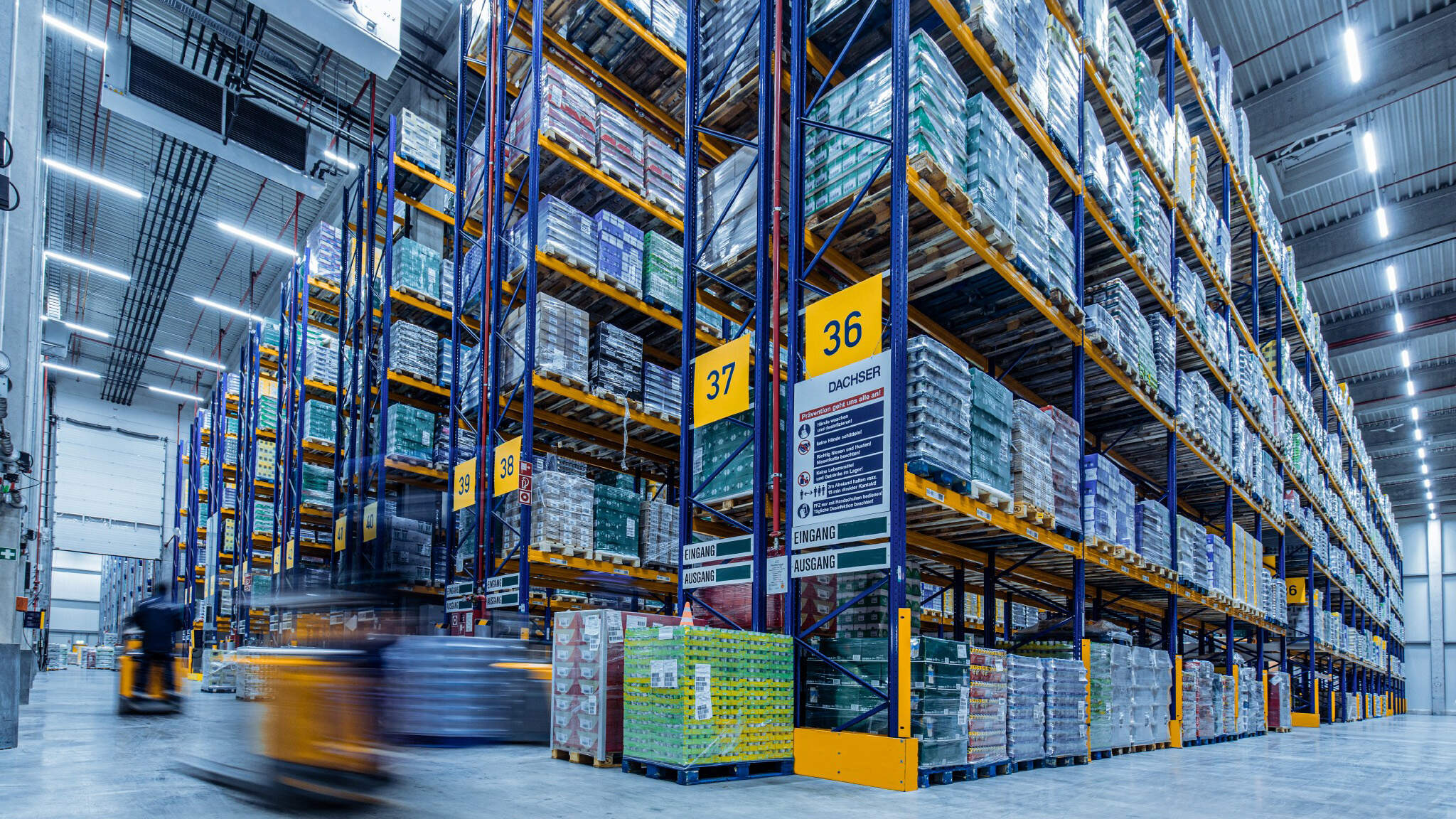


Warehouse automation has moved from “nice to have” to a serious boardroom conversation across Australia. Labour markets are tight, customer expectations are unforgiving, and the cost of getting fulfilment wrong (late, incomplete, damaged, unsafe) is visible in every dashboard that matters: customer experience, cost-to-serve, working capital and staff retention.
But here’s the trap: automation is not a single decision. It’s a design choice—one that sits at the intersection of your network strategy, building constraints, systems landscape, order profile, and the way your teams actually work at 2am on a Monday when things go sideways.
This article is a practical, vendor-aware guide to the major warehouse automation options and how to choose what’s right for your business. We’ll cover solutions and providers commonly considered in Australia, including Ocado Storage, Attabotics, AutoStore, Dematic, Swisslog, SSI Schäfer, Vanderlande, Geek+, GreyOrange, Daifuku, Mecalux and Hai Robotics. We’ll also share a decision framework you can use to pressure-test the business case—before you commit to a solution that looks brilliant in a demo but struggles in your operation.
Start with the job to be done (not the robot)
Most automation projects disappoint for one simple reason: the organisation buys a machine before it agrees on the problem.
Before you talk to any vendor, get crisp on these questions:
- What constraint are we trying to remove? Labour availability, pick speed, accuracy, storage density, safety, temperature, travel time, congestion, uptime, or all of the above?
- What is the order profile that drives your cost-to-serve? Singles vs multi-line, each-pick vs carton-pick, store replenishment vs eCommerce, wave vs waveless, peakiness, returns volume, service cut-offs.
- What is the product profile? SKU count, velocity distribution, cube/weight variability, fragile items, hazardous goods, expiry/batch requirements, temperature zones, packaging consistency.
- What is the physical reality? Clear height, column grid, slab capacity, fire services, power, IT rooms, mezzanine potential, yard and dock constraints.
- What is the tolerance for downtime and change? Can you afford a cutover? Do you need a parallel run? How seasonal is your peak?
- What does “flexible” mean for you? Ability to scale volume? Add SKUs? Shift channels? Expand the site? Move buildings?
Automation should be the output of this thinking—not the starting point.
A quick map of automation types (and where they fit)
When people say “warehouse automation”, they’re usually mixing a few categories together. Splitting these out makes selection far easier.
1) Mechanisation (lower complexity, faster wins)
Mechanisation improves flow and reduces manual effort without full robotics. Examples include:
- Conveyors and carton handling
- Put walls
- Sortation (shoe sorters, cross-belt, tilt-tray)
- Pick-to-light, voice picking, RF scanning
- Carton erectors, lid closers, labellers
Mechanisation can deliver meaningful productivity and safety improvements, often with less integration complexity than robotics—especially if your process discipline and data quality aren’t where they need to be yet.
2) Goods-to-person (GTP)
GTP brings inventory to a stationary picker/packer. This reduces walking and can increase pick rates and accuracy. It tends to shine when:
- You have high eCommerce volume (especially single-line orders)
- You have constrained labour or high travel time
- You want tighter control of quality (scan discipline, verification, put-to-light)
GTP options include cube-based systems (often associated with AutoStore), grid-based systems (often associated with Ocado Storage), and 3D robotic storage concepts (often associated with Attabotics), along with shuttle-based AS/RS designs used by many integrators.
3) AS/RS (Automated Storage and Retrieval Systems)
AS/RS automates storage and retrieval for pallets, cartons or totes using cranes, shuttles, or high-density storage modules. It can work well when:
- You need high-density storage (expensive footprint)
- You have stable product dimensions and packaging
- You can commit to building integration and capex
- You need repeatable, high uptime operations
4) AMRs and AGVs (Autonomous Mobile Robots / Automated Guided Vehicles)
AMRs move around the warehouse without fixed infrastructure. They can:
- Move totes/carts to reduce walking
- Support “pick assist” workflows
- Move pallets and replenish zones
- Increase flexibility if your layout changes
Providers in this space often include Geek+, GreyOrange and Hai Robotics (among others), plus many integrators offering AGV/AMR ecosystems.
5) Robotic piece picking (the frontier—powerful, but not always “plug and play”)
Robotic arms with vision systems can pick individual items. This is improving rapidly, but success depends heavily on:
- Packaging consistency (shapes, reflectivity, fragility)
- Item presentation (bin/tote configuration)
- Exception handling (what happens when a robot can’t pick?)
This category is increasingly relevant, but it’s still an area where pilots and proof-of-value matter.
Providers vs integrators: who actually delivers the outcome?
A useful distinction:
- Technology providers supply a core automation product (robots, grid, shuttles, software stack).
- System integrators design the end-to-end solution, engineer it into your building and processes, integrate systems (WMS/WCS/WES), and commission the site.
In practice, large automation programs involve multiple parties: a provider, an integrator, and your internal teams (ops, IT, safety, finance, property). The real risk sits in the seams—interfaces, responsibilities, change management, and commissioning.
Comparing major automation options (where they typically fit)
Below is a practical view of the named solutions and providers. It’s not a feature checklist—it’s a “fit for purpose” lens.
AutoStore (and similar cube-storage concepts)
What it is: High-density storage using a cube grid, with robots on top retrieving bins and delivering them to ports (goods-to-person).
Where it typically fits well:
- High SKU count with many “small-to-medium” items
- eCommerce or spare parts fulfilment with lots of each-picks
- Sites where footprint is expensive and density matters
- Operations chasing consistent throughput and accuracy
Watch-outs to plan for:
- The grid can become a strategic asset—great if your growth assumptions are right, painful if your business model changes.
- Exception handling still matters: oversized items, fragile items, awkward packaging.
- Port design and replenishment discipline are as important as the robots.
When it’s often the right call: When travel time is your enemy and your order profile rewards fast, controlled each-picking with high density.
Ocado Storage (grid-based automated fulfilment)
What it is: Grid-based automated storage and retrieval designed for high-throughput fulfilment, commonly associated with grocery-style operations but adaptable depending on design.
Where it typically fits well:
- Very high throughput environments
- Tight customer cut-offs and high service expectations
- High “flow” operations where throughput and orchestration matter as much as storage
- Businesses prepared for a larger, more engineered solution
Watch-outs to plan for:
- This is not a “small project”. You’ll need strong governance, engineering readiness, and robust upstream planning.
- The business case must include commissioning risk, ramp-up curves, and peak contingency.
When it’s often the right call: When you’re running a high-volume fulfilment engine and you need a step-change in throughput, not just incremental efficiency.
Attabotics (3D robotic storage and fulfilment concept)
What it is: A 3D storage and retrieval approach that aims to combine density with robotic movement, often positioned as a modern alternative to traditional AS/RS layouts.
Where it typically fits well:
- Businesses seeking a high-density, highly automated GTP-style solution
- Networks with significant growth and a desire to “design once, scale hard”
Watch-outs to plan for:
- As with any highly engineered system, ensure you pressure-test maintainability, spares strategy, local support, and ramp-up risk.
- Validate how the solution handles your exceptions and variability, not just the “happy path”.
When it’s often the right call: When density and throughput are strategic, and you’re ready to invest in engineered automation with a clear operating model behind it.
Dematic, Swisslog, SSI Schäfer, Vanderlande, Daifuku, Mecalux (major integrators / solution houses)
These organisations typically deliver end-to-end engineered automation—often combining conveyors, sortation, shuttles, AS/RS cranes, pallet handling, software controls, and integration services.
Rather than thinking of these as “single products”, think of them as design-and-deliver partners.
Where they typically fit well:
- Large DCs with mixed flows (pallet in, carton out, store + eCom, returns)
- Sites needing conveyors + sortation + AS/RS in one coherent solution
- Businesses that need bespoke engineering around building constraints
- Operations with clear standards and governance discipline
Watch-outs to plan for:
- Scope clarity is everything. Ambiguity in interfaces (WMS/WCS/WES, MHE boundaries, IT infrastructure, civil works) can blow out cost and timelines.
- Make sure the solution is designed around your order profile and labour model, not a generic reference design.
- Plan for operational readiness: training, maintenance, spares, and support model.
When they’re often the right call: When your problem is bigger than a single technology—when you need a designed system that orchestrates multiple flows reliably.
Geek+ and GreyOrange (AMR-led warehouse automation)
What it is: Autonomous mobile robots supporting pick-assist, goods movement, putaway, replenishment, and sometimes sortation workflows—typically with software to orchestrate tasks.
Where they typically fit well:
- Rapidly changing environments where flexibility matters
- Sites where you want to automate travel without major fixed infrastructure
- Businesses that want to scale gradually (add robots as volume grows)
- Operations seeking a faster time-to-value than engineered AS/RS
Watch-outs to plan for:
- AMRs don’t automatically fix bad slotting, bad replenishment, or poor master data.
- Traffic management, congestion, and safety design must be engineered, not assumed.
- Integration still matters (especially if you need orchestration across zones).
When it’s often the right call: When you want a flexible automation layer that reduces walking and boosts throughput without rebuilding the whole warehouse.
Hai Robotics (and similar tote-to-person / robotic ASRS variants)
What it is: Robot-driven storage and retrieval models that often sit between classic GTP and AS/RS—frequently used for tote handling and high-density storage with flexible deployment.
Where it typically fits well:
- eCommerce and omni-channel fulfilment
- High SKU environments needing density and speed
- Businesses seeking scalable automation without the same fixed grid constraints as some alternatives
Watch-outs to plan for:
- As with any tote-based automation, validate your cartonisation/pack process, exception handling, and replenishment model.
- Confirm local support, spares, and maintenance capability.
When it’s often the right call: When you need high-density, high-speed each-pick fulfilment with a modular pathway to scale.
The decision framework: choosing what’s right (without getting dazzled)
Here’s a practical way to shortlist options that actually suit your operation.
Step 1: Match the solution to your order profile
- High volume, each-pick, tight cut-offs: Goods-to-person (AutoStore, Ocado Storage, Attabotics, tote-to-person systems), plus sortation and packing automation.
- Mixed store + eCom, heavy cartons, multiple temperature zones: Integrated solutions (Dematic, Swisslog, SSI Schäfer, Vanderlande, Daifuku, Mecalux) combining conveyors, sortation, shuttles, pallet automation.
- Fast-changing layout, need quick wins: AMRs (Geek+, GreyOrange, Hai Robotics) plus targeted mechanisation.
- Pallet-heavy operations (inbound, bulk storage, high reach): Pallet AS/RS, shuttle systems, AGVs for pallet movement, and strong dock-to-stock process redesign.
Step 2: Be honest about variability and exceptions
Automation loves consistency. Your warehouse probably isn’t consistent.
Make a list of the “awkward stuff”:
- Oversized and weird-shaped SKUs
- Fragile items, liquids, or crush risk
- Promotional spikes and kitting
- Returns grading and rework
- Quality checks, compliance labelling
- Split-case picking vs full-case
- Temperature transitions
Your automation solution doesn’t need to handle 100% of tasks, but it must handle the right 80–95% while leaving a workable path for the rest.
Step 3: Pressure-test the business case (the numbers people forget)
A credible automation business case includes far more than “labour savings”.
Common value drivers:
- Reduced travel time and higher pick rates
- Improved accuracy and fewer credits/returns
- Better space utilisation (avoid a new building or defer expansion)
- Safety improvements and reduced manual handling
- Longer cut-off times and improved service (revenue protection)
- Reduced reliance on labour hire during peak
- Better inventory integrity (less shrink, fewer write-offs)
Common costs and risks that get missed:
- Building works (slabs, fire, power upgrades, mezzanines)
- Systems integration (WMS/WCS/WES), testing and environments
- Maintenance labour, spares, service contracts, and lifecycle refresh
- Operational downtime during cutover and commissioning ramp-up
- Process redesign effort, training, and change management
- Peak contingency (how you’ll fulfil orders if automation is down)
- Data cleansing and master data governance (it’s never “good enough” until you try to automate)
If you don’t quantify these, you don’t have a business case—you have a hope.
A note on outcomes: what “good” can look like (when done properly)
Across automation and warehouse technology programs, the strongest outcomes usually come from a combination of process discipline + systems enablement + the right level of mechanisation/automation—not from robotics alone.
For example, in one Australian operation, a warehouse technology uplift materially reduced manual handling (around the 90% mark) once the process design and controls were aligned with the physical site. In another case, operational changes combined with system improvements delivered a step-change in supplier on-time performance (order flow stabilisation can be just as valuable as pure pick speed).
The point isn’t the exact percentage. The point is that measurable results are achievable—but only when the solution is designed around your reality, not a generic template.
How Trace Consultants can help (and why “solution agnostic” matters)
Warehouse automation decisions have long tails. Once you pour the slab, sign the contract, and train the workforce, the solution becomes part of your operating model for years. That’s why independent, fact-based decision support is so valuable.
Trace Consultants typically supports clients across four practical stages:
1) Strategy and option framing (before vendors shape the narrative)
- Confirm the job to be done, constraints, and success measures
- Map current flows and quantify the real drivers of cost-to-serve
- Build a shortlist of automation concepts that match the order profile
- Identify prerequisites (layout, master data, slotting, replenishment rules, systems)
2) Business case development you can defend
- Create a scenario model: “do nothing”, “process only”, “mechanisation”, “automation”
- Quantify capex, opex, productivity, service impacts, and implementation risk
- Build a benefits realisation plan (who owns what, when benefits land, how to track them)
3) Vendor and integrator selection (without the theatre)
- Turn requirements into a structured RFx process
- Compare solutions on fit, not just features
- Validate assumptions with site data, not generic benchmarks
- Clarify interfaces and responsibilities to avoid scope gaps
4) Delivery governance and operational readiness
- Program governance, risk management and stage gates
- Testing strategy, cutover planning, and hypercare approach
- Workforce change management and readiness
- Performance measurement post go-live to lock in benefits
The best automation projects feel “boring” in governance terms—because risks are surfaced early, decisions are documented, and operations are prepared well before the first robot arrives.
Practical selection checklist (use this in your next workshop)
If you want a simple way to keep selection grounded, ask each provider/integrator these questions:
- Show us how the solution handles our exceptions (not just the ideal flow).
- What does peak look like, and what breaks first?
- What assumptions are you making about our replenishment and slotting?
- What is the integration architecture (WMS/WCS/WES), and who owns each interface?
- What is the maintenance model (spares, uptime SLAs, local support, escalation paths)?
- What is the commissioning ramp-up curve, and what contingency do we need?
- What are the building prerequisites (power, floor, fire, height, temperature control)?
- What data quality is required (dimensions, weights, barcodes, serialisation, batch/expiry)?
- What operational roles change, and what training is required?
- What does a bad day look like, and how do we keep shipping?
Good vendors can answer these clearly. Great integrators can show you how they’ll make it real in your building, with your people, under your constraints.
The bottom line
Warehouse automation can be transformative—but only if you treat it as an operating model decision, not a procurement exercise. The “right” solution is the one that matches your order profile, respects your constraints, integrates cleanly with your systems, and comes with a realistic path through commissioning and change.
If you’re weighing options like AutoStore, Ocado Storage, Attabotics, or AMR-based approaches from Geek+, GreyOrange or Hai Robotics—or considering an engineered automation program through Dematic, Swisslog, SSI Schäfer, Vanderlande, Daifuku or Mecalux—start with the job to be done, build a defensible business case, and pick the solution that fits your reality.
And if you’d like a vendor-agnostic partner to help you frame the options, model the business case, and run a clean selection and delivery process, Trace Consultants can help.
Question to close: If you made the decision today, would you still be confident in the business case when peak hits—and the warehouse is under pressure?