Stay informed with expert perspectives, industry trends, and practical strategies from the Trace Consultants team. Our insights explore the challenges and opportunities shaping supply chains today, helping you make confident, informed decisions.
You don't buy rare earths. You buy the motors, magnets and components that contain them, several tiers up a supply chain concentrated in one country that's now restricting the flow.
Critical Minerals: A Supply Chain Risk for Organisations That Don't Mine Anything
Critical minerals usually arrive as a mining and geopolitics headline: rare earths, export controls, great-power competition, ASX resource stocks. For most organisations, that framing makes it feel like someone else's issue, a matter for miners, governments, and investors. It is not. Critical minerals have become a live supply chain risk for organisations that do not mine anything and never touch a rare earth element directly, because their products and operations depend, often invisibly and several tiers up the chain, on materials whose supply is concentrated in a single country that has shown, repeatedly, that it will restrict the flow.
Through 2025 and into 2026, the theoretical risk of that concentration became an operational reality. A series of Chinese export controls on rare earths and related materials disrupted global supply, exposed how dependent Western industries are on a chokepoint they had largely ignored, and turned critical minerals from a slow-burn strategic concern into an immediate question for any supply chain that relies on motors, magnets, batteries, electronics, or advanced manufacturing. That covers a very large share of the modern economy.
This article is for supply chain, procurement, and operations leaders whose organisations depend on critical minerals, whether they know it yet or not. It explains the nature of the vulnerability, why it is a buyer's and operator's problem rather than only a miner's, where Australia sits, and what a practical supply chain response looks like. It stays in the supply chain lane: visibility, sourcing, inventory, and resilience, not mining, geology, or investment, which are not ours to advise on.
The vulnerability, plainly stated
The heart of the problem is concentration in one part of the supply chain. Critical minerals themselves are reasonably dispersed in the ground around the world. What is not dispersed is the processing and refining capacity that turns raw ore into usable materials. China dominates that midstream to an extraordinary degree: it accounts for roughly 91 per cent of the world's processed rare earths, and majorities of refined lithium, nickel, cobalt, graphite, and manganese, the materials underpinning batteries, magnets, motors, and the energy transition. Rare earths are the least geographically diversified of all, with China holding the commanding share of separation and refining.
That single fact, that the rocks are everywhere but the processing is concentrated in one country, is the strategic vulnerability. It means that even where alternative mining exists, the world still has to route material through one country's processing to make it usable, and that gives that country a chokepoint it can open or close. For the rest of the world, including Australia and its allies, this is a substantial and, until recently, under-managed exposure.
The risk became real
What turned this from a textbook concern into an operational one was the move from owning the chokepoint to using it.
In April 2025, China introduced export controls on several heavy rare earth elements, the dysprosium, terbium, and similar materials critical for electric vehicles, wind turbines, motors, and defence systems, along with related compounds and magnets. The immediate effect was that rare earth exports effectively ground to a halt as exporters waited for approvals under a new and opaque licensing regime. Later in 2025, the controls were broadened into a comprehensive, extraterritorial regime under which foreign-made products containing even a small proportion of Chinese-origin rare earths, or made using Chinese processing technology, required a licence, extending one country's regulatory reach across global supply chains.
What followed is just as instructive as the controls themselves. Through late 2025 and into 2026 there were mutual stand-downs and suspensions between the major powers, with measures paused into late 2026, and China formalised a dedicated industrial and supply-chain security framework. The pattern, restrict, negotiate, suspend, restrict again, demonstrates that this is now a live, repeatable lever of policy, not a one-off event. For a supply chain leader, the lesson is not the detail of any single measure, which will keep changing, but the structural reality underneath: a critical input on which your operations may depend can be restricted, delayed, or licensed away with little notice, and the vulnerability is permanent until the underlying concentration changes.
Why it is a buyer's problem, not just a miner's
Here is the reframe that matters most for organisations that do not see themselves as part of this story. You almost certainly do not buy rare earths or critical minerals directly. You buy the things made from them: the permanent magnets in motors and generators, the batteries in equipment and vehicles, the electronics in your products, the components in your machinery. The critical mineral exposure is embedded several tiers up your supply chain, inside parts and assemblies bought from suppliers who bought them from other suppliers, and it is usually invisible from where you sit.
That makes this, at its core, an n-tier supply chain problem of exactly the kind that has become a recurring theme across modern supply chain risk. The dependency that can stop your production is not your tier-one supplier; it is a material constraint two, three, or four tiers up, in a component you never specified at the mineral level. Electric vehicles, renewable energy equipment, electronics, industrial motors, batteries, and defence systems are all exposed this way, and the organisations that assemble, distribute, or rely on those products inherit the exposure whether or not they have ever thought about it. Seeing that exposure requires deliberately tracing your supply chain beyond the first tier to find where critical minerals and the components containing them actually enter, and most organisations have never done it.
Where Australia sits
Australia occupies an unusual and, in principle, advantageous position in all of this. It is exceptionally well endowed, home to more than forty of the minerals identified as critical, and the world's leading destination for rare earth exploration investment. The federal government has moved to capitalise on this through the Future Made in Australia agenda, considering measures such as strategic stockpiling, production tax credits, and expanded support for domestic processing, and through international arrangements including the US-Australia Critical Minerals Framework aimed at building allied mining and processing capacity. New Australian processing and refining capacity is coming online, positioning the country as a potential alternative node in a supply chain the West is urgently trying to diversify.
That is the genuinely positive part of the story, and it matters. But it comes with an honest caveat that supply chain leaders should not gloss over: building sovereign and allied processing capacity at scale takes years, the West still lacks some of the key processing technologies, and self-sufficiency remains a long road. The vulnerability is live now, even as the capacity to address it slowly builds. Organisations cannot simply wait for sovereign capacity to mature and assume the problem will resolve itself; they have to manage the exposure in the interim, while supporting and eventually leveraging the alternative capacity as it becomes available.
The supply chain response
A practical response to critical minerals risk draws on the same resilience disciplines that apply to other concentrated, geopolitically exposed supply chains, applied specifically to critical inputs.
See the exposure through n-tier visibility. The first and most valuable step is to trace your supply chain beyond the first tier to identify where critical minerals and the components containing them enter, where the concentration and single points of failure sit, and which of your products and operations depend on them. This visibility is the foundation, and for critical minerals it almost always reveals dependencies the organisation did not know it had.
Diversify sources and, crucially, processing. Reducing reliance means qualifying alternative suppliers, sources, and processing routes, including the emerging non-China and Australian and allied capacity as it comes online. Because the chokepoint is in processing rather than mining, diversification has to reach the processing stage to be meaningful, and it should be weighed on total cost and risk rather than unit price alone. This is core sourcing and procurement strategy.
Hold strategic inventory of the most exposed inputs. Just as governments are considering strategic stockpiling, organisations can selectively buffer the critical inputs that are most exposed and hardest to substitute, accepting the carrying cost as insurance against a supply interruption that would halt production. The discipline is selectivity: buffer the genuinely critical and constrained, not everything.
Pursue design and substitution where possible. Where product design allows, reducing dependence on the most constrained materials, or qualifying substitutes, removes exposure at the source. This is a longer-term lever but a powerful one.
Secure supply contractually and engage suppliers. Longer-term agreements, transparency requirements on sub-tier sourcing, and contractual security for critical inputs help stabilise supply and surface the n-tier exposure that suppliers might otherwise keep opaque.
Plan in scenarios. Because the policy environment will keep shifting, model critical-minerals supply shocks, further controls, licensing delays, sudden unavailability, and test your supply chain against them in advance, the same scenario-planning and wargaming discipline that applies to tariffs and other disruptions. This connects to the broader supply chain resilience work that should sit over the whole network.
Opportunity as well as risk for Australian organisations
For Australian organisations, the situation is double-edged in a way worth recognising. They carry the same buyer-side exposure as everyone else, through the components and equipment they rely on. But they also sit in a country building the very sovereign and allied capacity the world is seeking, which creates an opportunity to secure more resilient, more local supply over time and, for some, to participate in the new supply chains being built. For Australian manufacturers, energy-transition players, and defence-adjacent organisations, building critical-input resilience now is both prudent risk management and strategic positioning for an environment in which secure, traceable, allied supply is becoming a competitive advantage in its own right.
How Trace Consultants can help
At Trace Consultants, we help organisations manage critical minerals risk as the supply chain and procurement problem it is for buyers and operators. We do not advise on mining, geology, or investment; we work on the visibility, sourcing, inventory, and resilience that determine whether a critical-input disruption stops your operations or merely tests them.
We map your critical-input exposure to n-tier depth. We trace where critical minerals and the components containing them enter your supply chain, beyond the first tier, so you can see the dependencies and single points of failure that are otherwise invisible.
We design the sourcing and diversification response. Through our procurement practice, we help qualify alternative suppliers, sources, and processing routes, including emerging Australian and allied capacity, weighed on total cost and risk.
We design strategic inventory and resilience. We help determine which critical inputs warrant buffering and how much, and build the inventory and planning approach that balances the carrying cost against the risk of interruption.
We build the scenario planning. We help model critical-minerals supply shocks and test your supply chain against them, so your response is prepared rather than improvised, drawing on our resilience work.
Start by finding out whether you are exposed, because most organisations are and do not know it. Trace your supply chain beyond the first tier to identify where critical minerals and the components built from them enter, and which of your products and operations would be affected if that supply were restricted. That map is the foundation for everything else, and it is the step almost everyone skips.
From there, prioritise the most exposed and least substitutable inputs, and work the levers in sensible order: diversify sources and processing where you can, buffer the genuinely critical inputs, pursue design alternatives over time, secure supply contractually, and build the scenario planning to stay ahead of a policy environment that will keep moving. Engage with the emerging Australian and allied capacity as it comes online, both as an alternative source and, for some, as an opportunity.
Critical minerals are no longer a distant resources story. They are a demonstrated, repeatable chokepoint in supply chains that reach into a vast range of products and industries, and the organisations exposed are mostly ones that have never thought of themselves as critical-minerals dependent. The ones that map their exposure, build resilience, and position for the more secure supply being built will be far better placed than those who keep treating it as someone else's problem until the day a component simply stops arriving.
This article is general information about supply chain risk and does not constitute investment, financial, or legal advice.
Resilience & Risk Management
Thank you! Your submission has been received!
Oops! Something went wrong while submitting the form.
WMS vs ERP Warehouse Module: Which Does Your Business Actually Need?
The most common decision facing Australian operations leaders considering warehouse technology is also the most poorly answered: do we use the warehouse module inside our ERP, or do we buy a dedicated Warehouse Management System? The ERP vendor will tell you their module is enough. The WMS vendor will tell you it absolutely is not. Both have a commercial interest in the answer. Neither is wrong in every case, but neither is right in every case either.
This guide is the decision framework that should sit between those two conversations. It covers the genuine capability difference between an ERP warehouse module and a dedicated WMS, the thresholds at which each becomes the right answer, the vendor pairings that work well in Australian operations, indicative cost ranges, and the SAP-specific situation that has made this decision unavoidable for many businesses through 2026.
The fundamental difference
An ERP warehouse module is software designed to integrate warehouse activity into the broader ERP data model. It sits inside the ERP, shares the ERP data model, and treats the warehouse as one function among many: finance, sales, procurement, manufacturing, warehouse. Its design centre is consistency with the rest of the ERP.
A dedicated Warehouse Management System is software designed from the ground up to direct, optimise, and record physical warehouse activity. It treats the warehouse as the entire problem. Its design centre is operational performance: pick rates, accuracy, throughput, slotting, labour productivity, and automation orchestration.
That difference in design centre shows up in three places that matter. The first is depth of warehouse-specific functionality (slotting algorithms, wave logic, task interleaving, labour standards, voice and vision picking, automation orchestration). The second is the user experience for warehouse operators (purpose-built mobile RF interfaces with task-directed workflows versus general-purpose ERP screens adapted for scanning). The third is the ability to handle the operational complexity of high-volume, multi-channel, or automated warehouses.
For simple warehouses, the difference does not matter much. For complex warehouses, it matters enormously.
When the ERP warehouse module is the right answer
The ERP warehouse module is typically the right answer when several of the following are true. Single-site or low-complexity multi-site operations. Under approximately 2,000 active SKUs. Order volumes that are predictable and not seasonally peaked. Limited or no warehouse automation. Standard pick-pack-ship flows without complex value-add or kitting. No 3PL or multi-client requirements. The warehouse is one function inside a broader business rather than the core operating engine.
In these conditions, the integration benefit of an ERP-embedded module (one data model, no integration build, native finance and inventory consistency, lower total cost) typically outweighs the capability gap. The warehouse is simple enough that you do not need the extra capability a dedicated WMS provides, and you would be paying for headroom you will not use.
The leading ERP-embedded warehouse modules considered in the Australian market include SAP EWM (embedded in SAP S/4HANA), Oracle NetSuite WMS, Microsoft Dynamics 365 Warehouse Management, and Oracle Fusion Warehouse Management. Each has its own strengths and limitations, which are covered later.
When a dedicated WMS becomes the right answer
A dedicated WMS becomes the right answer once any of the following thresholds are crossed. Active SKU count beyond approximately 2,000. Multi-site distribution where network-level inventory visibility, transfer optimisation, and consistent process management matter. Warehouse automation (conveyors, sortation, AS/RS, AMRs, goods-to-person systems, putwalls) that needs orchestration. Omnichannel fulfilment where the same DC handles bricks-and-mortar replenishment, ecommerce, and wholesale. 3PL operations with multi-client architecture, billing, and EDI requirements. Regulated environments (health, aged care, defence, food) requiring strict lot, batch, serial, and chain-of-custody control. High-throughput operations where pick rate, accuracy, and dock-to-stock time are commercially critical.
The compounding rule matters here. Crossing one threshold marginally does not necessarily require a dedicated WMS. Crossing two or three at once usually does. A single-site mid-market FMCG distributor with 3,000 SKUs but no automation, simple wholesale flows, and predictable volumes might be perfectly served by an ERP module. A single-site retailer with 1,500 SKUs but heavy omnichannel ecommerce volume, automation, and intense peaks will almost certainly outgrow an ERP module quickly.
The 2025 Gartner Magic Quadrant for Warehouse Management Systems identified six Leaders in the dedicated WMS space: Manhattan Associates, Blue Yonder, SAP, Oracle, Infor, and Infios (the new brand for what was Körber Supply Chain Software, rebranded in March 2025). These are the platforms most often considered when the ERP module is no longer enough.
The SAP situation: a forced decision through 2026
For Australian businesses running SAP, the WMS-versus-ERP-module question has become unavoidable. Mainstream maintenance for SAP Warehouse Management (LE-WM) ended on 31 December 2025, with SAP providing a final transition window to 31 May 2026 for specific on-premise customers per published SAP guidance. Beyond that, SAP WM customers must move to one of three options: SAP S/4HANA Stock Room Management (a basic warehousing continuation built on the LE-WM data model, with limited future investment per SAP's published position), SAP Extended Warehouse Management (SAP's strategic warehouse management product, embedded in S/4HANA or deployed as a decentralised solution), or a third-party WMS replacing the SAP warehouse functionality entirely.
This is one of the cleanest forced decisions on this question in the Australian market. SAP WM customers face a real choice in 2026: invest in Stock Room Management for basic continuation, step up to SAP EWM for SAP's strategic option, or use the migration as the trigger to evaluate whether a best-of-breed WMS is the right long-term answer. The right answer depends on warehouse complexity, automation roadmap, integration architecture, and whether the broader S/4HANA transformation is a forcing function or a constraint.
For Australian organisations facing this decision now, the worst answer is delay. The migration window is not large, the SAP EWM consulting market is finite, and the cost of running unsupported software past the deadline scales quickly.
What the major ERP warehouse modules actually do
The capability gap between ERP warehouse modules and dedicated WMS platforms has narrowed over the past decade. ERP modules are more capable than they were five years ago. Dedicated WMS platforms have also moved on, so the gap remains, but the location of the gap has shifted.
SAP Extended Warehouse Management (EWM) is SAP's strategic warehouse management product and is positioned by SAP as the long-term replacement for SAP WM. EWM is genuinely capable and is recognised in the Gartner Magic Quadrant as a Leader. It is particularly strong in process manufacturing, life sciences, chemicals, and industries with strict regulatory and traceability requirements. The trap with EWM is assuming it is the "free" option because it sits inside SAP. Implementation effort and configuration complexity are comparable to standalone WMS platforms, and the Australian SAP EWM consulting market is thinner than the broader S/4HANA market.
SAP S/4HANA Stock Room Management is SAP's continuation option for organisations on SAP WM that need basic warehouse functionality going forward. It reuses major parts of the LE-WM data model and covers basic warehouse processes. Per SAP's published roadmap, there is no further investment planned in Stock Room Management as EWM is the strategic solution. For organisations with very simple warehouses and no growth in complexity, Stock Room Management can be the pragmatic choice. For most others, it is a stop-gap.
Oracle NetSuite WMS is a warehouse management module within the NetSuite ERP platform that supports core processes including receiving, putaway, RF-scanned picking and packing, wave management, cycle counting, and shipping integration. For businesses already running NetSuite as their ERP, it provides a tightly integrated option with no separate integration to build. The publicly documented limitations cluster around 3PL multi-client operations, deep automation and robotics integration, advanced customisation, and very high-volume multi-location networks. For standardised single-site or low-complexity multi-site operations on NetSuite, it is a credible answer. For complex operations, the limitations show up quickly.
Microsoft Dynamics 365 Warehouse Management is the warehouse management capability within Dynamics 365 Supply Chain Management. It has matured significantly and is increasingly considered for mid-market warehouses where the broader organisation is standardised on the Microsoft stack. Its capability is credible for standard distribution operations and has improved automation integration in recent releases.
Oracle Fusion Warehouse Management is Oracle's cloud-native warehouse management capability, separable from but well-integrated with Oracle Cloud ERP. It is a credible enterprise option, particularly for organisations already standardised on Oracle Cloud applications.
The pattern across all four is the same: the modules handle standard warehouse operations well and integrate natively with the ERP. They struggle, to varying degrees, with deep automation orchestration, 3PL multi-client complexity, high-throughput omnichannel operations, and the most specialised industry-specific use cases. Whether those struggles matter depends on the warehouse.
The decision framework: six tests
When advising Australian operations leaders on this decision, six tests typically separate "ERP module is enough" from "dedicated WMS required".
The SKU and throughput test. Under approximately 2,000 active SKUs and stable order volumes is typically ERP-module territory. Beyond that, the decision becomes more nuanced. Beyond approximately 10,000 active SKUs or high-volume daily order counts, a dedicated WMS is usually required.
The network test. Single-site or two-site low-complexity networks are typically ERP-module territory. Multi-site networks with significant inter-site transfer, network-level inventory optimisation, or differentiated DC roles usually need a dedicated WMS.
The automation test. Manual or lightly mechanised warehouses can run on ERP modules. Anything orchestrating conveyors, sortation, AS/RS, AMRs, or goods-to-person systems is typically a dedicated WMS decision. Some ERP modules can integrate to automation, but dedicated WMS platforms are usually purpose-built for it.
The channel complexity test. Single-channel wholesale or B2B distribution can typically be handled by an ERP module. Omnichannel fulfilment combining store replenishment, ecommerce, and wholesale from the same DC almost always benefits from a dedicated WMS, particularly for waveless or order-streaming fulfilment patterns.
The 3PL test. If you are a Third-Party Logistics provider, the answer is almost always a dedicated WMS with multi-client architecture. ERP warehouse modules are not designed for multi-client billing, EDI breadth, and per-client workflow configuration. For more on the 3PL-specific WMS decision, our Warehousing and Distribution practice covers the operational lens that informs this choice.
The regulatory test. Industries with strict lot, batch, serial, expiry, recall, chain-of-custody, or audit-trail requirements (health, aged care, food, defence, life sciences) often benefit from a dedicated WMS or from one of the more capable ERP modules (notably SAP EWM and Oracle Fusion Warehouse Management) configured to the regulatory requirement.
The right approach is to walk all six tests honestly. If five or six come back "simple", the ERP module is usually right. If three or more come back "complex", a dedicated WMS is usually right. If the answer is borderline, the deciding factor is typically the five-year roadmap. Buying for today's complexity is cheaper. Buying for the complexity coming in 24 to 36 months is wiser.
Vendor pairings: which dedicated WMS pairs well with which ERP
If the decision goes to a dedicated WMS, integration architecture becomes the next consideration. Some pairings are smoother than others.
SAP S/4HANA ERP paired with SAP EWM is the natural pairing where SAP is the strategic ERP standard. Where the warehouse complexity warrants more than EWM offers, or where the local EWM partner ecosystem is a constraint, organisations on S/4HANA also consider Manhattan Active Warehouse Management, Blue Yonder Warehouse Management, or Infios. All three have established integration patterns with S/4HANA.
Oracle Cloud ERP pairs naturally with Oracle Fusion Warehouse Management. Where complexity exceeds Oracle Fusion's capability, Manhattan and Blue Yonder are the dominant alternatives, with proven Oracle integration.
Oracle NetSuite pairs naturally with NetSuite WMS for simple operations. For more complex operations or 3PL use cases, NetSuite is most commonly paired with Microlistics, CartonCloud (for SME 3PLs and transport operators), Made4net, or Softeon.
Microsoft Dynamics 365 pairs naturally with Dynamics 365 Warehouse Management. For greater capability, Dynamics 365 is increasingly paired with Manhattan Active WM, Blue Yonder, or Infios at the enterprise end, and Microlistics at the mid-market.
Smaller ERPs (MYOB, Xero, Cin7, Unleashed, Pronto, Greentree, Attaché, and similar) typically lack credible embedded warehouse modules for anything beyond very simple operations. CartonCloud is a common pairing for SME 3PLs and transport operators. .Store, the Trace WMS platform, is designed specifically for mid-sized Australian businesses needing structured warehouse management with any ERP, on a low-code, ERP-agnostic architecture.
The integration architecture is rarely the deciding factor on its own, but it is rarely irrelevant. Smooth integration patterns reduce implementation risk, lower ongoing support cost, and improve the speed of future changes. Worth weighing in the selection.
Indicative cost comparison
Cost comparisons between ERP modules and dedicated WMS platforms are easy to do badly. The five-year total cost picture rarely matches the headline.
For an ERP warehouse module activated as part of an existing ERP environment, the incremental cost is typically the user licensing for warehouse operators, an implementation effort to configure the module and connect to RF devices, and potentially additional licensing for advanced capabilities. Indicative ranges sit at hundreds of thousands rather than millions for most mid-market deployments. For organisations going through an ERP transformation, the warehouse module configuration is often folded into the broader programme.
For a dedicated WMS implementation, the cost ranges previously published in our Australian WMS Buyer's Guide typically run $400,000 to $1.2 million for a mid-market single-site implementation, $1.5 million to $4 million for multi-site mid-market rollouts, and $5 million to $20 million-plus for enterprise-scale national programmes. Add 15 to 25 per cent of the total for integration to the ERP, the TMS, the ecommerce platform, and any automation kit.
On a five-year total cost of ownership basis, the gap between an ERP module and a dedicated WMS narrows considerably once integration, ongoing licensing, internal support, and the operational cost of complexity-driven workarounds are all in scope. The ERP module is rarely as cheap as it first appears. The dedicated WMS is rarely as expensive as it first appears. Both should be modelled properly before the decision is made.
Common failure modes in this decision
In our experience advising Australian operations leaders, three failure modes recur in this decision.
Choosing the ERP module by default because it is "already paid for". It is not. The implementation effort, the user licensing, the operational compromises required to fit the warehouse to the module, and the cost of later having to replace it are all real. The ERP module should win on fit, not on assumed inclusion.
Choosing a dedicated WMS for an operation that does not need it. A small single-site distributor with 1,500 SKUs, stable B2B volumes, and no automation buying a Tier 1 enterprise WMS will absorb capital and leadership attention they did not need to spend. The ERP module would have served them well.
Underestimating integration when going dedicated. A dedicated WMS that does not talk cleanly to the ERP, the TMS, and the ecommerce platform is worse than no WMS at all. Integration is not a checkbox. It is a designed, tested, performance-validated workstream that typically accounts for 15 to 25 per cent of programme cost.
Avoiding all three requires honest assessment of the operation today, the operation in five years, and the architecture that supports both.
How Trace Consultants can help
Trace Consultants advises Australian organisations across the full warehouse technology journey, including the WMS-versus-ERP-module decision. Our positioning is deliberate: vendor-agnostic, partner-led, and senior on every engagement.
Operating model and warehouse strategy. Before any technology decision, we work with the leadership team to define the future-state warehouse operating model: network footprint, role of each DC, target service levels, automation roadmap, and the role technology plays in supporting the commercial strategy. This sits inside our Strategy and Network Design practice.
Technology selection. We run vendor-agnostic selections across ERP warehouse modules and dedicated WMS platforms. Our role is to test the operation against the capability of both, identify the right answer for the next five years, and run a structured selection that includes scripted demonstrations, partner evaluation, and a defensible commercial outcome. This is delivered through our Technology practice.
Implementation oversight and programme assurance. The buyer-side role through implementation is as important as the selection itself. We sit on the client side of the table through detailed design, build, testing, and go-live, providing assurance on the partner, the technology, the data, the integration, and the change. This is delivered through our Project and Change Management practice.
Warehouse operations and labour productivity. Our Warehousing and Distribution practice covers the operational layer underneath the technology: DC design, slotting, pick path optimisation, labour productivity, and automation strategy.
.Store: Trace's WMS for mid-sized Australian businesses. Where the right answer is a structured, fast-to-deploy, ERP-agnostic platform sitting outside the ERP module, we offer .Store. Sitting alongside our broader operational technology suite, .Store is part of our Technology offering.
If you are early in this decision, the first step is not a vendor demo. The first step is the six-test honest assessment: SKU and throughput, network, automation, channel complexity, 3PL, regulatory. Followed by the five-year roadmap question: where does the operation need to be in 24 to 36 months, and what does that demand of the technology?
If both point to the ERP module, configure and go. If both point to a dedicated WMS, run a structured selection. If the answer is borderline, the deciding factor is usually the trajectory of complexity, not today's state.
Frequently asked questions
Do I need a WMS or can I extend my ERP? ERP warehouse modules are typically credible for simple, low-volume, single-site operations with limited automation and under approximately 2,000 active SKUs. Once you cross multiple complexity thresholds (multi-site, automation, omnichannel, high SKU count, 3PL, regulatory complexity), a dedicated WMS becomes the right answer.
Is SAP EWM the right choice if we run SAP S/4HANA? Often, but not automatically. SAP EWM is genuinely capable and is recognised as a Gartner Magic Quadrant Leader. The trap is assuming it is the cheap or low-risk option because it sits inside SAP. Implementation effort, configuration complexity, and partner capability are the deciding factors. Manhattan, Blue Yonder, and Infios are credible alternatives for S/4HANA customers where the warehouse complexity warrants more than EWM offers.
What is the difference between SAP WM and SAP EWM? SAP WM (LE-WM) was SAP's classic warehouse management module, integrated into ECC and supported in S/4HANA compatibility mode. SAP EWM is SAP's strategic warehouse management product, with significantly broader functional capability covering complex slotting, labour management, automation integration, and advanced fulfilment patterns. Per SAP's published roadmap, EWM is the long-term strategic solution.
What happens to SAP WM after 2025? Mainstream maintenance for SAP LE-WM in S/4HANA compatibility mode ended on 31 December 2025, with a final transition window to 31 May 2026 for specific on-premise customers per published SAP guidance. After that, customers must move to SAP S/4HANA Stock Room Management, SAP EWM, or a third-party WMS.
Does NetSuite WMS work for a 3PL? It is generally not the recommended answer for serious 3PL operations. NetSuite WMS is documented as having limitations around multi-customer billing, contract-specific workflows, value-added services, and high-volume multi-location 3PL scenarios. Most NetSuite-based 3PLs pair NetSuite with a dedicated 3PL WMS like CartonCloud, Microlistics, or one of the enterprise platforms.
When does an ERP warehouse module stop being enough? Typically when several complexity thresholds compound. Active SKUs beyond approximately 2,000, multi-site networks requiring optimisation, warehouse automation that needs orchestration, omnichannel fulfilment, 3PL operations, or regulatory environments requiring deep traceability. Crossing one threshold marginally rarely forces the decision. Crossing two or three usually does.
Is Microsoft Dynamics 365 Warehouse Management capable enough for a mid-market business? It can be, for standardised warehouse operations on the Microsoft stack. Its capability has matured significantly. For complex automation, omnichannel, or 3PL use cases, organisations typically pair Dynamics 365 with a dedicated WMS like Manhattan Active WM, Blue Yonder, Infios, or Microlistics rather than relying on the embedded module.
Will a dedicated WMS deliver more value than the cost difference? It depends on warehouse complexity. For simple operations, no. For complex operations, often yes. The value drivers are pick accuracy, throughput, labour productivity, inventory accuracy, and the operational data needed to manage the warehouse as a precision operation. Modelling the value case requires honest assessment of current performance versus achievable performance, not vendor claims.
Can I start with the ERP module and move to a dedicated WMS later? Yes, and many organisations do. The risk is that the operational data, master data hygiene, and process discipline built on the ERP module may not transfer cleanly to the dedicated WMS. The implementation effort can be larger than a greenfield WMS deployment because legacy assumptions and workarounds need to be unwound. Worth weighing in the decision.
The WMS-versus-ERP-module decision is rarely binary, and the wrong framing of the question creates the wrong answer. The right framing starts with the operation, walks the complexity tests honestly, and works forward to the five-year position. Then, and only then, does the platform conversation start.
If you are facing this decision now, particularly under the SAP WM transition pressure, the rigour of the assessment matters more than the choice between two credible options.
What makes a 3PL WMS different, how the major platforms compare for Australian 3PLs in 2026, and the selection framework that protects your implementation.
Best WMS for Australian 3PLs: A Vendor Comparison and Selection Guide
For most businesses, a Warehouse Management System is back-office infrastructure. For a Third-Party Logistics provider, the WMS is the product. It is what you sell, how you sell it, how you bill it, and what your clients judge you on. Get the WMS right and you can scale clients faster, run higher margins, and win business off competitors. Get it wrong and you are stuck servicing every new client with custom workarounds, leaking margin through billing errors, and losing clients to 3PLs whose platforms make their lives easier.
The Australian 3PL market is unforgiving. Margins are thin, client expectations are rising, ecommerce growth has rewritten what fulfilment means, and a generation of warehouse-savvy clients now expect cloud portals, EDI integration, and real-time visibility as table stakes. This guide cuts through the noise on WMS selection for Australian 3PLs in 2026: what makes a 3PL WMS different, who the credible vendors are at each tier, what to actually evaluate, what it costs, and where most 3PLs come unstuck.
What makes a 3PL WMS different from a standard WMS?
A standard WMS manages one business operating its own warehouse for its own purposes. A 3PL WMS manages many businesses operating in the same warehouse, with different rules, different stock owners, different rate cards, different reporting requirements, and different integrations. That single architectural difference creates a long list of capability requirements that standard WMS platforms either do not have, or have bolted on as an afterthought.
A 3PL WMS must credibly support:
Multi-client architecture. Each client's stock, orders, locations, business rules, and data are logically partitioned. One client's audit cannot see another client's data. SKU masters, units of measure, and product hierarchies are per-client. Business rules (FEFO, FIFO, allocation logic, replenishment triggers) are per-client. This is not a UI feature. It is a data model decision that has to be made early in a platform's design life.
Activity-based billing engine. Storage fees by pallet-day, location-day, or cubic-metre-day. Handling fees by line, unit, or carton. Value-add services like labelling, kitting, repackaging, and returns processing. Surcharges for after-hours, hazardous goods, refrigerated handling. Minimum monthly fees and tiered volume rates. Without a credible billing engine, the finance team is doing it in Excel, revenue is being captured incompletely, and there are too many client conversations about what was actually performed.
Client portal and self-service. Each client expects a branded view of their own stock, their own orders, their own service performance, and their own billing data. They want to place orders, run reports, and track shipments without picking up the phone.
EDI and API breadth. Every client comes with their own systems. A 3PL WMS will be integrating with NetSuite, Shopify, BigCommerce, Magento, SAP, Oracle, Dynamics, Cin7, Unleashed, Xero, MYOB, and a long tail of bespoke ERPs. The platform has to make new client integration cheap and fast, because client onboarding velocity is a primary growth lever for 3PLs.
Per-client service level reporting. DIFOT, order accuracy, dispatch time, inventory accuracy, dock-to-stock time, and exception rates need to report per client, not just at warehouse level. Quarterly business review conversations live or die on this data.
Configurable workflows per client. One client wants paper pick slips with a wet signature. Another wants voice-directed picking. A third wants RF scan with mandatory weight capture. A 3PL WMS has to handle all three concurrently in the same warehouse without bespoke development for each new arrangement.
If a vendor shortlist includes platforms that do not credibly do all six of these, they are not 3PL WMS platforms. They are warehouse management systems that are about to be misused.
The Australian 3PL WMS vendor landscape in 2026
Australia's 3PL WMS market splits into three tiers based on the scale and complexity of the 3PL operation. The decision is not "which is best". The decision is "which tier matches the business now, and where will it be in five years".
Tier 1: enterprise 3PL platforms
These are the platforms running some of the largest 3PL networks globally. In the Australian context, they are credible for 3PLs with national or multi-country operations, large enterprise clients with significant integration depth, and the scale to justify multi-million-dollar implementations.
Manhattan Active Warehouse Management is the cloud-native flagship from Manhattan Associates. Manhattan was named a Leader in the 2025 Gartner Magic Quadrant for Warehouse Management Systems and is widely regarded among consultants and analysts as one of the deepest platforms for complex, high-volume, multi-tenant 3PL operations. Its publicly documented capabilities include client partitioning, order streaming for waveless fulfilment, and AI-driven slotting and labour management. It is also expensive and demands a sophisticated buyer. For 3PLs running national networks for blue-chip retail and FMCG clients, it is hard to beat.
Manhattan SCALE is the second Manhattan product relevant to 3PLs, particularly for mid-to-large 3PLs that need deep billing capability via Manhattan Billing Management. SCALE remains in active use across many 3PLs internationally and continues to be supported alongside Manhattan Active WM.
Blue Yonder Warehouse Management was named a Leader in the Gartner Magic Quadrant for Warehouse Management Systems for the fourteenth consecutive time in 2025, and was publicly announced as a preferred WMS provider for GXO. For Australian 3PLs aligned with global platform standards, particularly those servicing multinational clients, Blue Yonder is a credible enterprise option.
Infios WMS is the new brand for what was Körber Supply Chain Software, which rebranded as Infios in March 2025 at a launch event in Melbourne. The Infios WMS portfolio includes platforms with a long heritage in 3PL deployments globally (including HighJump-derived products). Infios also now includes MercuryGate TMS following the 2024 acquisition, which matters for 3PLs running integrated warehouse-transport operations.
Tier 2: mid-market and Australian-relevant 3PL specialists
Microlistics WMS 3PL is one of four product variants from Microlistics (alongside Enterprise, Chilled, and Express), and is specifically designed for multi-site, multi-client 3PL operations. Microlistics is Melbourne-headquartered and has been owned by ASX-listed WiseTech Global since 2017. It is one of the few WMS platforms designed and built in Australia for the Australian market, with local engineering, local support, and integration into the WiseTech CargoWise ecosystem. For Australian 3PLs in the mid-market segment, particularly those with cold chain, multi-site, or freight-forwarding-adjacent operations, Microlistics is typically a default consideration.
Tecsys Elite WMS was positioned as a Challenger in the 2025 Gartner Magic Quadrant. Tecsys publicly positions the platform around healthcare, 3PL, and complex distribution. For 3PLs with healthcare clients carrying strict regulatory, traceability, and chain-of-custody requirements, Tecsys is one of the few platforms in market that directly targets that complexity.
Softeon and Made4net are credible mid-market options with international 3PL deployments, particularly for ecommerce-heavy 3PLs requiring high-throughput pick-pack operations and modern automation orchestration. Their Australian footprint is smaller than the platforms above, which is worth weighing in any selection.
Tier 3: cloud-native SME 3PL platforms
CartonCloud is an Australian-built cloud platform designed specifically for small-to-mid 3PLs and transport operators. The platform combines WMS, TMS, and billing in a single integrated cloud product, prices on a subscription model suited to small 3PLs, and is positioned around fast client onboarding. For Australian 3PLs at the smaller end of the market, particularly those with a transport-and-warehouse blend, CartonCloud is often the right answer. It can also be a credible component of a hybrid model where SME clients are serviced on CartonCloud and enterprise accounts on a Tier 1 platform.
.Store is the Trace Consultants WMS platform, built for mid-sized Australian businesses including 3PLs that need structured warehouse management without enterprise-scale complexity or cost. It is built on low-code principles, is ERP-agnostic, and sits inside Trace's broader operational technology suite covering planning, workforce scheduling, DIFOT tracking, and network analytics.
Microsoft Dynamics 365 Supply Chain Management is increasingly considered by businesses standardised on the Microsoft stack. For complex multi-client 3PL operations, it usually requires additional capability layered on top, and is more commonly seen as an in-house logistics platform than a pure 3PL WMS.
What to actually evaluate beyond the feature list
Standard vendor demos focus on functional capability. For a 3PL, functional capability is necessary but not sufficient. The factors that determine whether a WMS investment pays back are operational and commercial.
Client onboarding speed. One of the biggest constraints on 3PL growth is how fast a new client can be stood up. Ask each vendor: from contract signature with a new client, how many calendar days until they are live and shipping? Ask for references. For a simple client, the answer should be days. For a complex one, weeks. If the answer is two to three months as standard, the platform is a growth handbrake.
Integration template library. A modern 3PL WMS should have pre-built integration patterns or templates for the major ecommerce platforms (Shopify, BigCommerce, Magento, WooCommerce), the major ERPs (NetSuite, SAP, D365, Oracle, Cin7, Unleashed), the major freight platforms (carrier integration layers), and the major EDI standards. Each custom integration avoided per client is a faster onboarding and a higher gross margin.
Billing flexibility and audit trail. Can the platform bill a client for storage at one rate in one location and another rate in another, with seasonal surcharges, minimum monthly fees, and tiered volume discounts? Can value-add services be charged with full audit traceability? Can a billing run itemise every charge so a client can audit it line by line? If any of these is "with customisation", it will hurt later.
Client portal capabilities. Is the portal white-labelled? Can each client get a branded URL? Can clients enter orders, run reports, raise queries, and access ePOD documents? Is it mobile-friendly? In 2026, 3PL clients increasingly expect this as a default, not a premium.
Local implementation partner depth. A platform with limited local consulting capacity is a risk regardless of how good the global product is. The named consultants who will deliver the implementation, their CVs, and references from comparable Australian projects should all be part of the evaluation. The platform might be excellent. If the local delivery team is thin, the project will struggle.
Roadmap alignment. Where is the vendor investing? AI-driven slotting, robotic orchestration, predictive labour, embedded carbon reporting? A three-year roadmap should align with where the 3PL is going.
Commercial flexibility. Most 3PLs do not have predictable volumes. Volumes scale with new client wins and contract losses. Subscription models that scale with usage are usually better than fixed enterprise licences. This is worth negotiating hard.
For a broader view on how WMS selection fits into operating model design, the Warehousing and Distribution practice page covers the operational lens we apply to every WMS engagement.
Indicative WMS cost ranges for Australian 3PLs
Cost depends on scale, complexity, platform tier, and the depth of integration and automation in scope. The ranges below are indicative based on typical Australian programmes and are intended as a planning guide, not a quotation.
Small 3PL (single site, under 20 active clients, under $20 million revenue): cloud platforms in this segment typically sit in the $30,000 to $150,000 per year subscription range, with implementation services of $50,000 to $200,000 depending on configuration and integration scope.
Mid-market 3PL (multi-site, 20 to 100 active clients, $20 million to $100 million revenue): platform implementations typically run $500,000 to $2.5 million all-in, with annual platform costs running 15 to 25 per cent of implementation cost on an ongoing basis.
Large 3PL (national or multi-country, 100-plus active clients, $100 million-plus revenue): Tier 1 implementations typically run $2 million to $10 million-plus depending on the number of sites, the depth of integration, and the level of automation being orchestrated.
These ranges include software, implementation services, integration build, data migration, training, hardware (scanners, mobile devices, printers), and contingency. They do not include the operational cost of the change programme inside the business: project team time, client communications, parallel running, and the productivity dip during stabilisation. Budget another 20 to 30 per cent for those costs.
The cost line that 3PLs most consistently underestimate is integration. A 3PL with 40 active clients has at least 40 active integrations, and each new client adds one or two more. The right thing to budget for is integration capability over the life of the platform, not just integration project cost at go-live.
Where 3PL WMS implementations underdeliver
In our experience advising Australian operations leaders, 3PL WMS implementations underdeliver for five recurring reasons. None of them are about the platform.
Billing configuration is underestimated. 3PLs often assume their billing rules will configure straightforwardly. They rarely do. Real-world 3PL rate cards have legacy quirks, client-specific exceptions, and grandfathered arrangements that are not in any contract. Cleaning up the rate card during implementation is mandatory work and is typically larger than initial estimates suggest.
Client onboarding effort is underestimated. Migrating active clients onto a new WMS is a series of mini-projects, not one project. Each client has integrations to rebuild, data to migrate, workflows to configure, and people to retrain. Phasing the cutover by client is usually smarter than a big-bang go-live, and very few implementation plans start that way.
Integration debt accumulates. Treating client integrations as one-off project tasks rather than building a re-usable integration framework. The first client integration takes a week. The fortieth should take days. If it does not, the platform investment is being undermined by accumulating technical debt.
The operating model is not redesigned. Implementing a new WMS without redesigning the operating model means digitising current workarounds. Implementation is the opportunity to reset pick strategy, slotting, replenishment, and labour model. Doing both at once is harder, but doing the WMS without the operating model rarely captures the value.
Client communication is treated as an afterthought. 3PL clients are paying for service continuity. A WMS change that disrupts their experience without proper communication damages relationships. A 3PL WMS go-live is a client management exercise as much as a technology exercise.
The common thread: these are leadership, design, and delivery challenges, not technology challenges.
How Trace Consultants can help
Trace Consultants advises Australian 3PLs across the full WMS journey, from operating model design through vendor selection to implementation oversight and post-go-live optimisation. Our positioning is deliberate: vendor-agnostic, partner-led, and senior on every engagement.
3PL operating model and proposition design. Before any vendor conversation, we work with the leadership team to define the operating model: target client segments, service levels, pricing architecture, network footprint, and the role technology plays in the commercial proposition. This sits inside our Strategy and Network Design practice.
WMS selection and procurement. We run vendor-agnostic selections across the Tier 1, Tier 2, and Tier 3 platforms relevant to Australian 3PLs. We are not paid by any vendor, and our recommendations are based on fit, not relationship.
Implementation oversight and programme assurance. Implementation success depends on the buyer being a strong, informed client. We sit on the client side of the table through detailed design, build, testing, and go-live, providing assurance on the partner, the technology, the data migration, the integration build, and the change. This is delivered through our Project and Change Management practice.
Warehouse operations and labour productivity. Our Warehousing and Distribution practice covers the operational layer underneath the WMS: DC design, slotting, pick path optimisation, labour productivity, and automation strategy.
.Store: Trace's WMS for mid-sized Australian businesses, including 3PLs. Where the right answer is a structured, fast-to-deploy, ERP-agnostic platform rather than a Tier 1 enterprise build, we offer .Store. Sitting alongside our broader operational technology suite, .Store is part of our Technology offering.
If you are an Australian 3PL operator early in the WMS journey, start with three honest answers. What is the operating model gap the current platform cannot close, in commercial terms? How will the client mix and service offering look in five years, and what does that demand of the platform? What is the client onboarding velocity today, and what does it need to be to hit growth targets?
If those answers point to a platform change, the next step is a structured selection. Not a shortlist of three vendors and four demos. A proper evaluation that starts with the operating model, defines the requirements, scripts the demonstrations, and assesses the implementation partner separately from the platform.
Frequently asked questions
What is the best WMS for a small Australian 3PL? For 3PLs at the smaller end of the market with a limited number of clients, CartonCloud is often a strong fit given its Australian build, cloud-native architecture, integrated WMS and TMS, and subscription pricing. .Store is a credible alternative where structured warehouse management with adjacent planning and workforce capabilities matters.
What is the best WMS for a mid-market Australian 3PL? Microlistics WMS 3PL is typically a default consideration given its Australian engineering, local support, and purpose-built 3PL design. Infios is a leading mid-market option globally and is increasingly visible in the Australian market following its 2025 rebrand. Tecsys is a strong fit where healthcare 3PL is part of the client mix.
What is the best WMS for a large Australian 3PL? Manhattan Active Warehouse Management and Blue Yonder are the most-deployed Tier 1 platforms in this segment globally. Infios is a credible third option. Manhattan SCALE remains in active deployment among mid-to-large 3PLs using Manhattan Billing Management.
Is CartonCloud capable enough for a serious 3PL? It is a credible, well-built platform within its segment. It is positioned for SME 3PLs and transport operators, not for national 3PL operations running blue-chip retail or FMCG accounts at scale. Matching the platform to the operation matters more than picking the most-discussed name.
How much does a 3PL WMS cost in Australia? Indicative ranges by 3PL scale are covered in the cost section above. Small 3PLs typically spend tens of thousands to low hundreds of thousands to implement plus an annual subscription. Mid-market 3PLs typically spend several hundred thousand to a few million all-in. Large 3PLs typically spend several million on Tier 1 programmes.
Can a 3PL WMS handle billing, or do we need a separate billing system? Modern 3PL WMS platforms generally include native billing engines, though the depth of capability varies. Manhattan SCALE with Manhattan Billing Management, Infios, Microlistics WMS 3PL, CartonCloud, and Tecsys all market native billing capability. Selections in 2026 should generally target a single integrated WMS-and-billing platform unless there is a strong reason to separate them.
How long does it take to onboard a new client on each platform? Onboarding speed varies significantly by platform, by integration complexity, and by the maturity of the 3PL's own onboarding process. SME-focused cloud platforms are positioned around days-to-weeks. Mid-market and Tier 1 platforms typically take weeks to months depending on integration depth. Onboarding speed is one of the most important commercial metrics to validate during selection with reference customers, not just vendor claims.
Is Microlistics still independent? Microlistics has been owned by ASX-listed WiseTech Global since 2017. It continues to operate as a distinct product line with development and support based in Melbourne.
What did Körber rebrand to? Körber Supply Chain Software rebranded as Infios in March 2025, with the global launch event held in Melbourne. The underlying WMS platforms continue under the Infios brand alongside MercuryGate TMS.
Can a 3PL run multiple WMS platforms? Yes, and some do. A hybrid model where one platform handles SME clients and a Tier 1 platform handles enterprise accounts can be commercially sensible. The trade-off is operational complexity: two platforms means two sets of training, two sets of integrations, and two sets of reporting. Worth modelling carefully before committing.
A 3PL's WMS is its product. It is what clients buy, how the operation runs, how revenue is captured, and what determines whether the business can scale or stalls at its current size. The right platform, well-implemented, becomes a competitive advantage that compounds for a decade. The wrong platform, badly implemented, becomes the constraint that limits every commercial conversation.
If you are evaluating a WMS for your 3PL operation in 2026, the rigour of the selection matters more than the choice between two credible vendors at the same tier.
A comprehensive WMS selection guide for Australian businesses: when you need one, how to evaluate Manhattan, Blue Yonder, Infios, Microlistics, .Store and others, with realistic cost and timeline benchmarks.
The Australian WMS Buyer's Guide 2026: Selection, Vendors, Cost, and Implementation
Most Australian businesses approach Warehouse Management System (WMS) selection the wrong way around. They start with a shortlist of vendors, sit through six demos, and end up choosing the system whose sales team was most polished, not the system best suited to their operation. Eighteen months later, when go-live is six months late and the project is double budget, the inquest begins.
A WMS is one of the highest-leverage technology investments an Australian operations leader will ever make. It is also one of the easiest to get wrong. This guide is the comprehensive answer to the questions buyers actually ask: what is a WMS, when do you need one, who are the credible vendors in the Australian market in 2026, what does it cost, how long does it take, and how do you stop your implementation joining the long list of cautionary tales.
What is a Warehouse Management System?
A Warehouse Management System is software that directs and records every physical movement of inventory inside a warehouse or distribution centre. It tells receivers where to put stock, tells pickers which item to pick next and which location to go to, confirms each scan, manages replenishment between bulk and pick locations, drives putaway and slotting, runs cycle counts, and produces the real-time data needed to run the warehouse as a precision operation.
A WMS is not the same as inventory management software, an ERP warehouse module, or a stock control spreadsheet. The distinction matters: inventory management software tells you what stock you own and where it lives. A WMS tells your people what to do next and confirms they did it correctly. That difference is the difference between visibility and control.
Modern WMS platforms also act as the orchestration layer for warehouse automation. If you are running, or planning to run, conveyors, sortation, goods-to-person systems, autonomous mobile robots (AMRs), or automated storage and retrieval systems (AS/RS), your WMS is the brain that coordinates them with manual processes.
When does an Australian business actually need a WMS?
You need a dedicated WMS when at least one of the following becomes true:
You are managing more than around 2,000 active SKUs and your pick accuracy or stock accuracy is no longer acceptable. You operate from multiple sites and your inventory visibility across the network is unreliable. You are introducing automation that requires system-directed task management. You are running, or moving to, an omnichannel fulfilment model where the same DC services bricks-and-mortar replenishment, ecommerce, and wholesale flows. You are a 3PL, in which case your WMS is your product. You are a manufacturer running production-to-warehouse flows that need lot, batch, and serial traceability. You are in a regulated environment (health, aged care, defence, food) where chain-of-custody, recall traceability, and audit trails are non-negotiable.
The trigger is rarely a single one of these. It is usually two or three compounding at once: SKU growth, an ERP upgrade, a new DC, a major customer requirement, or a board mandate to lift service levels. By the time the cost of doing nothing is obvious to everyone, you are usually already two years behind where you needed to be.
The Australian WMS vendor landscape in 2026
The Australian WMS market splits into three layers. Picking the right layer matters more than picking the right vendor within it. Most failed selections happen because a buyer chose from the wrong layer.
Tier 1: enterprise WMS platforms
These are the deep, configurable platforms that dominate the upper end of the Australian market. The 2025 Gartner Magic Quadrant for Warehouse Management Systems identified six Leaders: Manhattan Associates, Blue Yonder, SAP, Oracle, Infor, and Infios. All six are credible options for large Australian operations, but they are not interchangeable.
Manhattan Associates is the most-deployed enterprise WMS in Australia at the top end of the market. Manhattan Active Warehouse Management is fully cloud-native and is the platform behind operations like Officeworks and many large Australian retailers. Manhattan wins where complexity is high: omnichannel fulfilment, complex slotting, integrated labour management, and deep automation orchestration. It is also expensive, and the implementation partner ecosystem in Australia is smaller than the platform deserves.
Blue Yonder (formerly JDA) was named a Leader for the 14th consecutive year in 2025. Blue Yonder's strength is the breadth of its supply chain platform: WMS sits alongside TMS, demand planning, and order management on a common platform, which matters if you are pursuing end-to-end transformation rather than a point WMS solution.
SAP Extended Warehouse Management (EWM) is the default consideration for any organisation running SAP S/4HANA. EWM is genuinely capable, particularly in process manufacturing, pharmaceuticals, and complex distribution. The trap is assuming EWM is the "free" option because it sits inside SAP. Implementation effort and configuration complexity are comparable to standalone platforms, and the local SAP EWM consulting market is thinner than for ECC or S/4HANA generally.
Oracle Warehouse Management Cloud is the strongest cloud-native enterprise option from the ERP suite vendors, and is genuinely separable from Oracle ERP. It is a credible choice even outside Oracle ERP environments, particularly for retail and distribution.
Infor WMS (formerly Infor Supply Chain Execution) is strongest in food and beverage, chemicals, and process industries, and is well-supported in Australia.
Infios is the rebranded Körber Supply Chain Software, with the rebrand launched in Melbourne in March 2025. Infios brings together the former Körber WMS platforms (including HighJump heritage) and MercuryGate TMS under a unified brand. It is a genuine challenger in the Australian mid-to-large segment, with particular strength in 3PL and complex distribution.
Tier 2: mid-market and Australian-relevant specialists
Microlistics is a Melbourne-headquartered WMS vendor owned by ASX-listed WiseTech Global since 2017. It is one of the only WMS platforms designed and built in Australia, and it punches above its weight in the local mid-market. Four product variants cover the spectrum: WMS Enterprise (full-feature), WMS Chilled (cold storage), WMS 3PL (multi-client), and WMS Express (rapid implementation). Microlistics is a strong default consideration for any Australian mid-market operation that values local engineering, local support, and integration into the broader WiseTech CargoWise ecosystem.
Tecsys Elite WMS was positioned as a Challenger in the 2025 Gartner Magic Quadrant. It is purpose-built for healthcare, 3PL, and complex distribution, and is increasingly relevant in Australian health and aged care supply chains.
Made4net and Softeon are credible mid-market options with growing Australian presence, particularly in retail and ecommerce fulfilment.
Tier 3: cloud-native, SME, and adjacent platforms
CartonCloud is an Australian-built cloud WMS designed for small-to-mid 3PLs and freight forwarders. It is the right answer for a 3PL turning over single-digit millions that needs multi-client functionality without a six-figure implementation.
Microsoft Dynamics 365 Supply Chain Management includes warehouse management capability that has matured significantly. For mid-market businesses already on D365 Finance and Operations, it is a defensible choice for non-complex warehouse environments.
.Store is Trace Consultants' own WMS, designed specifically for mid-sized Australian businesses that need structured warehouse management without enterprise-scale complexity or cost. Built on low-code principles, .Store deploys fast, integrates with any ERP, and sits inside Trace's broader operational technology suite. It is the right answer where Tier 1 enterprise WMS would be over-engineered and where SME platforms lack the structure required.
The point of this segmentation is not that any layer is "better". The point is that buying a Tier 1 enterprise WMS for a five-warehouse mid-market FMCG business with no automation will sink the implementation under its own weight. Buying CartonCloud for a 200,000-line-a-day omnichannel DC will sink the operation under its own weight. Match the platform to the operation.
A selection framework that actually works
A defensible WMS selection follows five disciplined steps. Most failed selections skip three of them.
Step 1: Build the operating model first, the requirement second. Define how your warehouse should run, not how it currently runs. If you select a WMS to support your existing manual workarounds, you have just digitised your inefficiencies. Confirm your future-state pick strategy, slotting approach, automation roadmap, integration architecture, and labour model before you write a line of requirements.
Step 2: Write a real requirements document. Not a 400-line tick-box spreadsheet copied from a vendor RFP template. A document that distinguishes mandatory functional capability, automation orchestration requirements, integration scope, performance criteria (throughput per hour, scan-to-confirm latency), reporting requirements, and data migration scope. Short, sharp, and clear about what matters most.
Step 3: Shortlist by tier, not by familiarity. Identify the right tier for your operation first. Then take three vendors from that tier into detailed evaluation. Three is the right number. Two is not enough to create commercial tension. Four wastes evaluation effort.
Step 4: Test what matters in scripted demonstrations. Generic vendor demos prove nothing. Provide each vendor with the same scripted scenarios drawn from your actual operation: a complex multi-line ecommerce pick wave, a cold-chain putaway with batch and expiry, a 3PL client onboarding, a return into damaged stock. Watch how each platform handles them. The differences will be obvious.
Step 5: Evaluate the implementation partner separately from the platform. The platform might be excellent. The partner you are buying it with might be terrible. The reverse is also true. The single biggest predictor of WMS implementation success in Australia is the depth and quality of the local implementation team. Ask for the named consultants who will deliver the work, their CVs, and references from comparable Australian projects.
WMS implementation cost in Australia: what to actually budget
There is no single answer to "how much does a WMS cost in Australia". There are realistic ranges by operation scale.
For a single-site mid-market operation (under 50 users, under 20,000 SKUs, limited automation), a Tier 2 platform implementation typically lands between $400,000 and $1.2 million all-in. That covers software (cloud subscription or perpetual licence), implementation services, integration build, data migration, training, hardware (scanners, mobile devices, printers), and a sensible contingency.
For a multi-site mid-market operation (two to four DCs, 50 to 150 users, integrated automation), expect $1.5 million to $4 million depending on the platform tier and the automation footprint.
For an enterprise-scale rollout (large national distribution network, deep automation, omnichannel, multi-country), the range is $5 million to $20 million-plus over the full programme, with implementation services typically running 1.5 to 2.5 times the software cost.
Cloud subscription pricing has compressed the upfront capital cost but rarely reduces the total five-year spend. The shift is from capex to opex, not from "expensive" to "cheap".
The cost line most often underestimated is integration. A WMS that does not talk cleanly to your ERP, your TMS, your e-commerce platform, your carrier integration layer, and your automation kit is worse than no WMS at all. Budget 15 to 25 per cent of total programme cost for integration, even if your vendor tells you it is "standard".
Implementation timeline: realistic phases
A credible mid-market single-site WMS implementation runs nine to fourteen months from contract signature to stable go-live. Anyone promising significantly shorter is either selling a stripped-down deployment or setting you up for a problem.
Phase one is mobilisation, detailed design, and configuration: three to four months. Phase two is build, integration development, and data migration: three to five months. Phase three is testing (unit, integration, user acceptance, performance) and pilot: two to three months. Phase four is go-live and hyper-care stabilisation: one to two months.
Multi-site rollouts add three to six months per additional site after the first, depending on whether sites are templated or genuinely different in process.
The most common scheduling failure is under-investing in testing. Performance testing in particular: you do not want to discover at 4am on go-live morning that your pick-pack-ship throughput collapses at peak load. Run realistic peak-volume tests before cutover, not after.
Why WMS implementations fail (and how to avoid it)
In our experience advising Australian operations leaders, WMS implementations underdeliver for five recurring reasons. None of them are about the technology.
Weak operating model design. The team selected a system to fit current-state processes rather than designing the future state first. You can configure your way out of bad processes only so far before the system starts to creak.
Underestimating change management. Picking from a paper list and picking from a scanned, system-directed task are fundamentally different jobs. Pickers, leading hands, shift managers, and supervisors all need to adopt new behaviours. If your change effort is a slide pack and a one-hour training session, your go-live will struggle.
Master data debt. Item master records, location data, BOMs, units of measure, supplier data. A WMS is only ever as good as the data it runs on. Most organisations underestimate the master data clean-up effort by a factor of two to three.
Integration treated as a checkbox. Treating ERP, TMS, e-commerce, and automation integration as a "standard package" rather than a designed, tested, and performance-validated workstream.
Partner mismatch. Picking a partner because they were cheapest, fastest, or most familiar rather than because they had genuinely demonstrated capability on comparable Australian projects.
These are not technology problems. They are leadership, design, and delivery problems. Which is exactly why a vendor-agnostic advisor on your side of the table is worth the cost.
Trace Consultants advises Australian organisations across the full WMS journey, from operating model design through vendor selection to implementation oversight and post-go-live optimisation. Our positioning is deliberate: we are vendor-agnostic, partner-led, and senior on every engagement.
Operating Model and Network Design. Before we touch a vendor shortlist, we work with your team to define how the warehouse should run, what role each DC plays in the network, and what the future-state operating model looks like. This sits inside our Strategy and Network Design practice.
WMS Selection and Procurement. We run vendor-agnostic selections across Tier 1, Tier 2, and Tier 3 platforms. We have evaluated and worked alongside Manhattan, Blue Yonder, SAP EWM, Microlistics, Infios, Tecsys, CartonCloud, Dynamics 365, and our own .Store platform on real Australian client engagements. We are not paid by any vendor.
Implementation Oversight and Programme Assurance. Implementation success depends on the buyer being a strong, informed client. We sit on your side of the table through detailed design, build, testing, and go-live, providing assurance on the partner, the technology, and the change. This is delivered through our Project and Change Management practice.
Warehouse and Distribution Operations. Our Warehousing and Distribution practice covers the operational lens: DC design, slotting, pick path optimisation, automation strategy, and labour productivity. A WMS implementation that does not lift any of these is not worth doing.
.Store: Trace's WMS for mid-sized Australian businesses. Where the right answer is a structured, fast-to-deploy, ERP-agnostic platform rather than a Tier 1 enterprise build, we offer .Store. Sitting alongside our broader operational technology suite, .Store is part of our Technology offering.
If you are early in the journey, start by writing a one-page answer to four questions. What is the operating model gap your current system cannot close? What are the two or three triggers driving the timing now? What is the future-state automation and integration footprint over five years? What is the size and sector profile of your operation, and therefore which WMS tier is right?
If you cannot answer those four questions clearly, you are not ready to talk to vendors. If you can, you are ready to start a structured selection process.
Frequently asked questions
How much does a WMS cost in Australia? For a mid-market single-site implementation, budget 200k to 900k all-in. Multi-site mid-market rollouts run 900k to $2 million. Enterprise-scale national programmes run from $2 million to $10 million-plus.
How long does a WMS implementation take? Nine to fourteen months for a single-site mid-market deployment. Add three to six months per additional site for multi-site rollouts.
Do I need a WMS or can I extend my ERP? ERP warehouse modules are credible for simple, low-volume, single-site operations with limited automation. Once you cross 2,000 active SKUs, run multi-site, introduce automation, or run omnichannel flows, a dedicated WMS becomes the right answer.
What is the difference between Manhattan and Blue Yonder? Both are Tier 1 Gartner Magic Quadrant Leaders. Manhattan tends to win on deep WMS-specific capability, complex retail and omnichannel fulfilment, and labour management. Blue Yonder wins where you want WMS as part of a broader end-to-end supply chain platform including TMS, demand planning, and order management.
Is SAP EWM the right choice if we run SAP S/4HANA? Often, but not automatically. SAP EWM is genuinely capable, particularly in process manufacturing and regulated industries. The trap is assuming it is the cheap or low-risk option because it sits inside SAP. Implementation effort and partner capability are the deciding factors.
Is Microlistics still independent? Microlistics has been owned by ASX-listed WiseTech Global since 2017. It continues to operate as a distinct product line with development and support based in Melbourne, and is one of the few WMS platforms genuinely built in Australia.
What did Körber rebrand to? Körber Supply Chain Software rebranded as Infios in March 2025, with the launch event held in Melbourne. The underlying WMS platforms (including HighJump heritage) continue under the new brand alongside MercuryGate TMS.
What is the best WMS for a 3PL? Depends on scale. CartonCloud is the right answer for sub-$20 million 3PLs. Microlistics WMS 3PL and Infios are strong mid-market options. Manhattan and Tecsys dominate the upper end. The 3PL-specific decision criteria (billing engine, client onboarding speed, EDI breadth) matter more than generic WMS features.
Can I implement a WMS without barcoding? Technically yes, but you should not. Scan-confirmed task execution is what delivers the accuracy and productivity benefits a WMS exists to provide. If barcoding is not in your operating model, you are buying inventory tracking software, not a WMS.
A well-selected and well-implemented WMS will lift accuracy, productivity, throughput, and visibility in your warehouse for a decade or more. A poorly selected one will absorb capital, drain leadership time, and damage your operation. The difference is rarely the platform. It is almost always the rigour of the selection, the strength of the operating model design, and the quality of the team delivering the implementation.
If you are starting a WMS journey in 2026, get the foundations right.
Senior Consultant Joe Bryant discusses his rapid progression from graduate to senior consultant, his sustainability research with Professor George Panas, and why competing priorities are the biggest obstacle to turning sustainability intentions into real change.
Joe joined Trace as a graduate in December 2024 and is now a Senior Consultant working across sustainability, cost optimisation, and strategic advisory. Alongside his client work, Joe developed interactive sustainability workshops with Professor George Panas at the University of Melbourne, exploring practical initiatives for reducing Scope 3 emissions. His economics background shapes how he thinks about trade-offs, incentives, and finding solutions that deliver on multiple goals.
We sat down with Joe to talk about what's driven his progression, what surprised him about supply chain work, and why competing priorities stop sustainability from moving beyond good intentions.
Joe Bryant, Senior Consultant
You started at Trace as a graduate in December 2024 and you've already accelerated to Senior Consultant. That's a pretty impressive trajectory! What's driven that progression, and what have been the steepest learning curves in your first year?
JB: You’re right, its been a pretty wild and fast ~18 months. When I first started, I made a commitment to myself to put my hand up and get involved in as many projects as possible. A year and a half later, that sentiment has remained, and paid off in progressing my development.
Learning, gaining experience, and being comfortable with making mistakes has been key. I consistently attempt to apply the lessons learnt, incorporate feedback, and minimise how often I’m repeating the same mistakes.
In terms of learning curves, some have been fun whilst others more tedious. Starting a new project with a new client, starting largely unfamiliar with the intricacies of how they work, and catching yourself up to speed is exciting. Put in the time, and before you know it, you find yourself understanding, debating, and challenging others on the organisation of complex systems or how to mitigate risks in really niche scenarios. Those learning curves are riveting.
In a more macro sense, in my time at Trace I’ve found myself consistently reevaluating how I work and balance my priorities. Whilst I’ve always aimed to keep a high work ethic and drive with work, learning how to efficiently harness my time and mental capacity has been challenging. It is the type of self-improvement that has no true end goal, and can be difficult to stick to, however I’m fairly confident it will pay off in the long term. I’m looking forward to how I can improve in this way.
Coming from an economics background, you're trained to think in terms of trade-offs, incentives, and systems. How does that lens influence the way you help clients make decisions?
JB: At the high-level, recognising when stakeholder incentives may clash and how that may guide biases is crucial. For the most part, everyone is doing what they believe is best for their team/project/company. When various teams come together, finding the right path that can align all relevant parties is crucial.
When it comes to the more detail-oriented projects, I’m very thankful for how an economics background trains you to challenge assumptions, look at how different processes work together, and explore creative solutions. Whilst my day-to-day work is likely fairly far from the more advanced microeconomic models and charts, understanding the application of game theory, and the principles of decision making echoes a lot closer to home.
You've worked on an array of projects spanning commercial waste management, workforce planning, and cost optimisation. What's surprised you most about the variety of problems clients bring to Trace?
JB: Prior to beginning at trace, I had a narrow understanding of what “Supply Chain” meant. My exposure was limited to operational logistics and inventory management. Meanwhile, my time so far has opened my horizons to include fields such as workforce planning, procurement, and strategic advisory. I’ve learnt how to adopt new technologies, work with varied teams, and communicate complex, new ideas. You always have to be ready to learn a lot and approach a problem from a new angle.
That being said, seeing the similarities in underlying problems was also quite surprising. People want their work to be seen and barriers to be lifted. Everyone is trying to do the best with the resources they have at their disposal. Recognising this, and doing whatever possible to equip stakeholders with the best information for decision making is crucial.
Sustainability clearly drives a lot of your work. When you're advising clients on reducing emissions or building more sustainable operations, what's the biggest obstacle that prevents good intentions from becoming real change?
JB: Competing priorities often constrain the pursuit of sustainable goals. Everyone would like to be more environmentally friendly, but when it comes at the cost of significant time, cost, or efficiency, it is often pushed down the priority list. Projects can easily face scope review, reconsideration, and before you know it the implemented solution is a fraction of the initial design.
Circuit-breaking this pattern requires a bit of creativity. It is often the out-side of the box solutions that can achieve dual goals of financial/process improvements as well as emissions reductions. My research work with Professor George Panas from Melbourne University has helped me equip that lens and find the right solution for the client.
With the right solutions, some clever framing, and clear consideration we can really help the client make lasting change.
What are some final tips for starting out a career in consulting?
JB: A few nuggets of advice pop into mind straight away.
Be curious! Doing what you can to understand new ideas, systems, and processes always pays off well. Asking smart questions is the best way to get smarter.
Take the initiative. Trying to solve an issue yourself, and then asking for confirmation or clarity is always better than simply giving up and asking for help.
Find a balance. You can't do everything, right now. Prioritising tasks and projects by urgency is an art, and consciously making time outside of work for the goals you have and people around you is a necessity.
People & Perspectives
In Conversation at Trace: Emma Woodberry on sustainability, circular supply chains, and transformation
Senior Manager Emma Woodberry reflects on her career across high-stakes operations and Big Four consulting, discussing what circular supply chains actually require, and where sustainability still has ground to cover.
At Trace, Emma bridges operational expertise with sustainability transformation. She's a supply chain specialist with deep experience in circular economy design, change management in heavily regulated industries, and back-of-house logistics. Her strength is seeing patterns across vastly different environments and asking the questions that expose risk before it compounds.
We sat down with Emma to talk about what shaped her approach to problem-solving, what circular supply chains actually require in practice, and why embedding sustainability into operations is harder than most organisations want to admit.
Emma Woodberry, Senior Manager & Sustainability Lead
You've led supply chain operations in defence, advised global clients at PwC, and now lead sustainability at Trace. That's a pretty extraordinary range. Looking back, what experiences have been most formative in how you solve problems today?
EW: The defence years shaped me more than anything else. When you're managing supply chains in that environment, the stakes are critical, the wrong part missing at the wrong time isn't a KPI problem, it's a mission problem. That pressure teaches you to think in systems, to find the weak link before it finds you, and to stay calm when complexity is at its peak. I came away with a deep respect for operational discipline, but also for the people on the ground who actually make things work.
What I didn't expect was how naturally that translated into sustainability. On the surface, defence logistics and sustainability couldn't look more different but both are fundamentally about managing risk across long, interdependent chains where the consequences of getting it wrong compound over time. At Trace, I find myself drawing on that same instinct: where's the fragility? What are we not seeing? Who bears the cost if this breaks? The context has changed, but the way I approach a problem really hasn't.
Sustainability in supply chains is shifting from compliance to competitive advantage. We’re seeing organisations embed sustainability considerations into route planning, network design, and supplier selection. What's driving that shift, and how are the leaders in this space actually operationalising sustainability rather than just reporting on it?
EW: We’ve definitely seen the shift from nice to have to a regulatory compliance led must have, and now into the competitive advantage space.The organisations we’re seeing getting ahead are the ones who’ve put in the work and got the data right — not just the glossy sustainability report. Scope 3 emissions are a good example, a lot of organisations can tell us their headline number but not where it comes from or which supplier is driving it. The gap between reporting and understanding is closing, but understanding and taking action is where competitive advantage really sits.
You've worked extensively in back-of-house logistics, particularly in complex environments like stadiums and large venues. With Brisbane preparing for the 2032 Olympics, what are the critical logistics challenges that organisers need to be thinking about now?
EW: Brisbane 2032 is operating with a distributed model across multiple venues and regions, which multiplies the coordination challenge enormously. The critical decisions about network design need to happen now. How will goods flow between venues, where will there be consolidation points, how will surge volumes be handled without disrupting regular supply chains? Infrastructure lead times are a lot longer than most realise, decisions over the next two years will lock in constraints that will require operational workarounds and risk mitigations later.
Circular supply chains are gaining momentum, but implementation often lags behind intention. What does a circular supply chain actually look like in practice, and where do organisations typically struggle to close the loop?
EW: A circular supply chain isn't a recycling program or a take-back scheme bolted onto a linear process. It's when end-of-life thinking is embedded in design from the start, and material flows are tracked with the same rigour as cost and lead times. Practically, this means knowing what your products are made of at a component level, having pathways to recover those materials, and most importantly, having suppliers who are willing and capable of receiving them back or repurposing them. The organisations doing this well have essentially redesigned their supplier relationships, not just their packaging.
Where most organisations struggle is the reverse logistics part. Getting products out to customers is a system built over decades. Getting it back used to be an afterthought, and while it's gained momentum in the last few years, it’s still under-resourced, poorly tracked, and there’s a lack of clearly defined commercial models to sustain it. There's also a data problem: circularity depends on knowing what you have, where it is, and what condition it's in at recovery, and most supply chain systems aren't built for that. Additionally, there is a system-level gap. Procurement teams are still largely rewarded on unit cost, not lifecycle value, which means circular options that cost more upfront get deprioritised even when the total-cost case is sound. Closing the loop isn't only a logistics challenge, it's a governance and measurement challenge as well.
You've led transformations in highly regulated, risk-averse environments like defence and health. What makes change so difficult in these settings, and what strategies actually work when you're trying to shift entrenched systems and processes?
EW: Regulated and risk-averse environments are likely resistant to change because the cost of getting it wrong is genuinely high, and the system has been deliberately designed to protect against failure. In defence, a process failure doesn't mean a missed KPI, it can mean an aircraft doesn't fly or a person doesn't come home. In health, the stakes are equally concrete. So when you come in with a transformation agenda, you're up against a deeply rational risk equation that has been reinforced over years of operating in high-consequence environments.
Credibility can be a game changer. In these environments, trust is critical and it's earned through demonstrated competence and consistency, not just through a flashy slide deck or a business case alone. The other thing that consistently separates successful transformations from stalled ones is how you handle compliance and risk framing. Most change programs treat regulation as a constraint to work around. The smarter approach is to position the change as the risk-reduction mechanism, showing that the current process is actually the higher-risk option, whether that's a manual system creating error exposure, a legacy procurement approach creating supply vulnerability, or a siloed data environment creating compliance blind spots. When you can reframe the conversation from "change is risky" to "not changing is riskier," you're speaking the language these organisations already understand.
Looking ahead, what shifts in how organisations approach sustainability are you most excited or optimistic about, and where do you think the industry still has significant ground to cover?
EW: ’m looking forward to seeing the divide between sustainability and operations continue to reduce and eventually disappear. For a long time, and even now, sustainability is treated as a separate function, and with siloed reporting and initiatives. What we’re starting to see more of, particularly in the organisations that are leading in this space, is sustainability logic being embedded directly into operational decision-making. Procurement teams pricing in carbon alongside cost. Network design teams modelling emissions as a real constraint, not an afterthought. That integration is where the real leverage is, and it's starting to happen at scale in a way it wasn't three or four years ago.
We've all become very good at producing sustainability narratives, but not so much the harder work like supplier engagement beyond tier one, meaningful scope 3 accountability, and being honest when a target is off track rather than reframing it. The compliance frameworks coming through will force some organisations' hands to increase rigour, but regulation tends to set a floor not a ceiling. The organisations that will lead are the ones that treat the standard as a starting point rather than a destination, and are willing to have uncomfortable conversations with their suppliers, their customers, and their own leadership about what progress actually looks like. I’m optimistic for the shift in sustainability, even though there is still a lot of work to be done.
Technology
Master Data in Supply Chain: The Unglamorous Thing That Breaks Everything Else
Most supply chain problems trace back to the same root cause: data that nobody owns, nobody maintains, and nobody fully trusts. This piece covers what master data is, how it breaks operations, and how to fix it without turning it into a technology project.
Master data is the foundational information that defines your products, suppliers, customers, locations, and organisational structure. It is the reference data that every system in your supply chain relies on: your ERP, your warehouse management system, your transport management system, your procurement platform, your planning tools, and your reporting environment. When master data is accurate and consistent, these systems work. When it is not, nothing works properly, and the organisation spends an extraordinary amount of time and money compensating for a problem it does not fully understand.
This is not a technology problem, although technology is often blamed. It is a governance problem. Most Australian organisations have no formal ownership of master data, no standardised processes for creating or maintaining it, no quality metrics, and no accountability for the downstream consequences of getting it wrong. The result is a supply chain that runs on data nobody trusts, systems that produce outputs nobody believes, and decisions that are made on instinct because the numbers cannot be relied upon.
The cost of poor data quality manifests across the supply chain as inventory inaccuracies, procurement errors, planning failures, reporting inconsistencies, and technology implementations that fail to deliver their promised benefits. Master data is the most unglamorous and most consequential problem in supply chain management.
What is master data in a supply chain context?
Master data is the relatively static reference data that describes the core entities in your business. It is distinct from transactional data, which records events such as orders, shipments, and invoices, and from analytical data, which is derived from transactions for reporting purposes. Master data defines the "what" and "who" that transactions happen against.
In a supply chain context, the key master data domains are:
Product (material) master data. Every SKU, raw material, component, and finished good in your supply chain has a master record. That record defines the item's description, unit of measure, weight, dimensions, storage requirements, shelf life, sourcing information, cost, classification codes, and the various identifiers used by different systems. A single product might have a different code in the ERP, the WMS, the customer's system, and the supplier's system. The product master is supposed to hold all of these relationships together.
Supplier master data. Every supplier has a master record containing legal entity details, contact information, payment terms, bank details, ABN, compliance status, approved product catalogue, lead times, and performance history. In a typical mid-to-large Australian organisation, the supplier master contains duplicates, inactive records, incomplete fields, and inconsistencies that create real operational and financial problems.
Customer master data. Delivery addresses, order requirements, pricing agreements, credit terms, and service level commitments. Errors in customer master data cause deliveries to go to the wrong address, invoices to be sent to the wrong entity, and pricing disputes that consume commercial team bandwidth.
Location master data. Warehouses, distribution centres, stores, production sites, and delivery points. Each location has attributes that affect logistics planning: address, operating hours, receiving capability, storage capacity, and geographic coordinates. Inaccurate location data causes route planning errors, delivery failures, and logistics cost blowouts.
Organisational master data. Cost centres, business units, legal entities, and the hierarchies that connect them. This data drives how costs are allocated, how reporting is structured, and how approvals flow. Errors here produce misleading financial reports and broken approval workflows.
How does bad master data break the supply chain?
The effects of poor master data are pervasive, but they rarely present as a master data problem. They present as operational problems that get treated symptomatically while the root cause goes unaddressed.
Planning failures. If the product master contains incorrect lead times, the planning system will generate purchase orders and production orders with the wrong timing. If weights and dimensions are wrong, the logistics plan will underestimate transport requirements. If the bill of materials is inaccurate, production will order the wrong quantities of components. Every planning system is only as good as the data it plans against. An organisation that invests in an advanced planning tool but has poor master data will get precisely the same quality of plan it had before, just faster.
Procurement errors. Duplicate supplier records are one of the most common and most costly master data problems. When the same supplier exists under multiple records, the organisation loses visibility of total spend with that supplier, misses volume discount thresholds, and risks processing duplicate payments. Australian organisations are not immune to this problem; they are simply less likely to have measured it.
Inventory inaccuracy. If the system records a product in cases of 12 but the physical product arrives in cases of 10 because the unit of measure was set up incorrectly, every receipt, every count, and every pick will be wrong. If the system weight is 5kg but the actual weight is 7kg, pallet configurations will be wrong, truck loads will be underestimated, and storage locations will be misallocated. These errors compound over time and create a chronic gap between what the system says and what physically exists.
Reporting that nobody trusts. If cost centres are mapped incorrectly, logistics costs get allocated to the wrong business unit. If product hierarchies are inconsistent, category-level reporting is unreliable. If supplier classifications are incomplete, spend analysis produces incomplete results. The most common response is for analysts to extract data and manually reconcile it in spreadsheets, creating a shadow reporting environment that consumes enormous effort and introduces its own errors.
Technology implementations that fail. This is the most expensive consequence. ERP implementations, WMS deployments, planning system rollouts, and procurement platform transitions all depend on clean, consistent master data. Data migration is consistently cited as one of the top three reasons for delays and cost overruns in supply chain technology projects. Organisations that do not invest in data cleansing and governance before a technology implementation will discover the problem during go-live, when the cost of fixing it is far higher.
Why does nobody fix it?
If master data is so important, why is it so consistently neglected? Several structural factors explain the pattern.
It is not anyone's job. In most organisations, nobody owns master data. The IT team maintains the systems but does not own the content. The business teams create and use the data but do not see data quality as their responsibility. The result is a gap in accountability where everyone assumes someone else is managing it.
The cost is invisible. Poor master data does not appear as a line item in the P&L. Its cost is embedded in inefficiency, rework, and missed opportunities that are difficult to attribute. The warehouse team knows that inventory counts do not match. The procurement team knows that spend reports are unreliable. The planning team knows that lead times in the system are wrong. But each of these problems is treated as a local issue rather than a symptom of a systemic master data problem.
Data quality degrades gradually. Master data does not fail catastrophically. It degrades over time as records are created inconsistently, as changes are not propagated across systems, as new products and suppliers are added without following established standards, and as mergers and acquisitions bring in data from systems with different structures and conventions. The degradation is gradual enough that the organisation adapts through workarounds rather than addressing the root cause.
It is not exciting. Master data governance does not have the appeal of an AI implementation, a new planning system, or a supply chain control tower. It is process-oriented, detail-heavy, and unglamorous. It is difficult to get executive sponsorship for a master data programme because the benefits, while substantial, are distributed across the organisation rather than concentrated in a single visible outcome.
How do you fix master data?
Fixing master data is not a technology project. It is a governance programme that uses technology as an enabler.
Step 1: Assign ownership
Every master data domain needs a business owner: someone accountable for the quality, completeness, and consistency of that data. Product master data should be owned by the supply chain or product team. Supplier master data should be owned by procurement. Customer master data should be owned by the commercial team. These owners are not doing the data entry. They are setting the standards, approving exceptions, and being held accountable for data quality metrics.
Step 2: Audit the current state
Before you can fix the data, you need to understand how bad it is. Run a data quality audit across your key systems: ERP, WMS, procurement platform. Measure completeness (what percentage of mandatory fields are populated), accuracy (does the data match reality), consistency (is the same entity described the same way across systems), and duplication (how many duplicate records exist for suppliers, products, and customers). This audit will quantify the problem and provide the baseline for measuring improvement.
Step 3: Define standards and governance
Establish naming conventions, mandatory fields, classification structures, and approval workflows for creating and modifying master data records. Document these in a master data governance policy. The policy does not need to be elaborate: it needs to be clear, enforceable, and owned. For each domain, define who can create records, who approves them, what fields are mandatory, and what naming conventions apply.
Step 4: Cleanse the data
This is the labour-intensive step. Systematically work through each domain, deduplicating records, filling in missing fields, correcting errors, and standardising formats. Start with the domains that have the highest operational impact: typically supplier master and product master. For large data sets, automated data matching and cleansing tools can accelerate the process, but human review is always required for ambiguous matches and complex records.
Step 5: Build it into the operating rhythm
Data quality is not a one-off project. It is an ongoing discipline. Build master data quality metrics into your monthly reporting. Conduct periodic audits. Include data quality requirements in the onboarding process for new products, suppliers, and customers. Make data quality a standing agenda item in your S&OP or operations review. The organisations that sustain master data quality are the ones that treat it as an operational process, not a project.
Why does master data matter so much for technology projects?
If your organisation is planning an ERP upgrade, a WMS implementation, a new procurement platform, or any other supply chain technology project, master data should be one of the first workstreams, not an afterthought.
Data migration involves extracting data from the old system, transforming it to fit the new system's requirements, and loading it into the new environment. If the source data is inaccurate, incomplete, or inconsistent, the migration transfers those problems into the new system. Organisations that lift and shift dirty data into a new platform are paying for a system that produces the same unreliable outputs as the old one.
Best practice is to start the data cleansing workstream six to twelve months before go-live, depending on the scale and complexity of the data. This gives sufficient time to audit, cleanse, and validate the data before migration. It also provides an opportunity to redesign the master data governance processes for the new system, establishing the standards and workflows that will prevent the data from degrading again after go-live.
The investment in data quality before a technology implementation is the most cost-effective investment in the entire programme. It is what determines whether everything else delivers its promised value.
What does master data have to do with AI readiness?
Organisations exploring AI and machine learning in their supply chain need to understand that master data quality is the prerequisite, not an optional input.
AI models are trained on data. If the training data contains errors, duplicates, and inconsistencies, the model will learn from those errors and produce outputs that reflect them. The principle of garbage in, garbage out applies with particular force to machine learning, because the algorithms are designed to find patterns in whatever data they are given, including patterns that reflect data quality problems rather than genuine operational signals.
Demand forecasting models trained on shipment data with inconsistent units of measure will produce unreliable forecasts. Supplier risk models built on duplicate supplier records will underestimate concentration risk. Inventory optimisation algorithms running on inaccurate lead times and incorrect safety stock parameters will recommend the wrong stock levels.
Before investing in AI, invest in the data foundations that AI depends on. The organisations getting the most value from AI in supply chain are the ones that got their master data right first.
How can Trace Consultants help?
Trace Consultants helps Australian organisations get their supply chain data foundations right, whether as a standalone data quality programme or as part of a broader technology implementation or supply chain improvement initiative.
Master data audit and assessment. We assess the quality, completeness, and consistency of your supply chain master data across ERP, WMS, procurement, and planning systems, quantifying the operational and financial impact of data quality gaps.
Data governance design. We design master data governance frameworks: ownership structures, standards, approval workflows, and quality metrics that ensure data quality is maintained as an ongoing operational discipline.
Technology implementation data readiness. We lead the data cleansing and migration workstream for supply chain technology projects, ensuring master data is accurate, consistent, and fit for purpose before it enters the new system.
Procurement and supplier data management. We clean and consolidate supplier master data, eliminating duplicates, completing missing fields, and establishing the governance processes that prevent the problem from recurring.
Start with a focused audit of your two most critical domains: product master and supplier master. Measure completeness, accuracy, consistency, and duplication. Quantify the operational impact: how many planning errors, procurement duplicates, inventory discrepancies, and reporting inconsistencies can be traced back to data quality? That audit will tell you whether you have a manageable housekeeping exercise or a systemic governance problem that needs structured attention.
The organisations that get master data right do not treat it as a technology initiative. They treat it as a foundational operating discipline, like safety or quality, that underpins everything else the supply chain does. It is not exciting it is essential.
If your systems produce outputs nobody believes, the problem is probably upstream of the technology. Trace runs master data audits that quantify the gap and identify where to start.
What is the difference between master data and transactional data?
Master data is the relatively static reference information that describes core business entities: products, suppliers, customers, and locations. Transactional data records events that happen against those entities: orders placed, shipments made, invoices processed. Master data changes infrequently and deliberately. Transactional data is generated continuously by business operations. When master data is wrong, every transaction that references it is affected.
Which master data domains should a supply chain organisation prioritise?
Product master and supplier master typically have the highest operational impact in a supply chain context. Errors in product master data affect planning, inventory management, logistics, and system integrations. Errors in supplier master data create procurement inefficiency, spend visibility gaps, and payment risks. These two domains are the right starting point for most organisations.
How do you measure master data quality?
The four standard dimensions are completeness (what percentage of mandatory fields are populated), accuracy (does the data reflect reality), consistency (is the same entity described the same way across systems), and duplication (how many duplicate records exist). A data quality audit measures each dimension across your key systems and provides a baseline for tracking improvement over time.
How long does a master data cleansing programme take?
It depends on the volume of data, the number of systems involved, and the severity of the quality issues. A focused cleanse of supplier and product master data in a mid-sized organisation typically takes 3 to 6 months. For large, complex organisations with multiple ERP instances and legacy systems, the timeframe is longer. Starting the cleansing workstream 6 to 12 months before a technology go-live is best practice.
Why does master data quality matter for AI?
AI and machine learning models learn from the data they are trained on. If that data contains errors, duplicates, and inconsistencies, the model will incorporate those patterns into its outputs. Demand forecasting, supplier risk management, and inventory optimisation algorithms all depend on accurate master data to produce reliable results. Poor master data produces poor AI outputs, regardless of the sophistication of the model.
Procurement
Procurement in Australian Universities: The Cost Lever Most Haven't Pulled
Australian universities are facing the most severe financial pressure in a generation. International student caps, real-terms funding cuts, declining domestic enrolments in some disciplines, and rising operating costs have pushed the majority of the country's 39 public universities into deficit or close to it. The response has been predominantly on the cost side: job cuts, course closures, and restructuring. Nearly 4,000 positions were cut across the sector in 2025, with further reductions forecast through 2027.
What has received far less attention is the billions of dollars that universities spend on goods and services every year, and how poorly most of that spend is managed. Procurement in Australian higher education is, with a handful of exceptions, immature, fragmented, and operating well below the standard that would be expected in any similarly sized commercial organisation. The consequence is that universities are paying more than they need to for everything from IT services and facilities management to laboratory consumables, travel, and professional services, while cutting the academic staff and programmes that define their core mission.
This article covers where the procurement opportunity sits in Australian universities, why it has been neglected, and what a structured approach looks like.
What is the scale of the procurement opportunity in Australian universities?
Australian universities collectively generate approximately $45 billion in annual revenue. A significant proportion of that revenue is spent on the goods and services that keep a university operating: facilities management, IT infrastructure and services, laboratory equipment and consumables, construction and capital works, professional services including the $700 million per year spent on consultants, travel, catering, cleaning, security, energy, printing, and a long tail of miscellaneous spend.
The addressable procurement spend for a large Australian university sits between $300 million and $800 million per year. For a mid-sized regional university, the figure is lower but still significant: $100 million to $300 million.
In most sectors, organisations of this scale would have a well-resourced procurement function with category managers, strategic sourcing capability, contract management processes, and spend analytics. In most Australian universities, procurement consists of a small team focused primarily on compliance and process rather than commercial outcome. The function is typically understaffed relative to the volume and complexity of spend it manages, and it sits low in the organisational hierarchy, often reporting into finance or corporate services rather than having a seat at the executive table.
The result is predictable. Spend is fragmented across faculties and business units, supplier relationships are managed locally rather than centrally, contracts are rolled over without competitive tension, and the university as a whole has limited visibility of what it spends, with whom, and on what terms.
Why is university procurement different from other sectors?
University procurement operates under constraints that affect how improvement programmes need to be designed.
Decentralised decision-making. Universities are inherently decentralised. Faculties, schools, research centres, and professional service divisions operate with significant autonomy. Procurement decisions are often made at the faculty or departmental level by academics and administrators who have no procurement training, no visibility of the university's total spend in a category, and no commercial incentive to seek the best deal. The same category of goods or services is frequently procured by multiple business units, from different suppliers, at different prices, on different terms.
Academic culture. There is a cultural resistance in many universities to corporate-style procurement disciplines. Academics view their purchasing decisions as an extension of their academic freedom, and any process that constrains their choice of supplier or product can be perceived as bureaucratic interference. Effective university procurement works with the academic culture, not against it.
Complex stakeholder environment. Universities serve multiple stakeholders: students, academic staff, professional staff, research funding bodies, government, industry partners, and the broader community. Procurement decisions often involve trade-offs between cost, quality, sustainability, local economic impact, and research requirements. A laboratory purchasing a specialist reagent for a funded research project has different procurement needs from the facilities team renewing a cleaning contract.
Compliance and probity requirements. Public universities are subject to government procurement policies and public accountability requirements. They must demonstrate value for money, probity, and transparency. In some states, they are subject to the same procurement frameworks as government agencies. These requirements add process overhead but also provide a framework within which structured procurement can operate effectively.
Long procurement cycles. University governance structures mean that significant procurement decisions often require approval through committees, councils, or executive teams. This adds time to procurement cycles and requires procurement teams to plan further ahead than they might in a more agile commercial environment.
Where do the savings typically sit?
Not all university spend is equally addressable. The categories with the highest savings potential are those where spend is fragmented, competition exists, and the university has not applied commercial rigour.
IT services and infrastructure. This is often the largest single category of non-staff expenditure. Enterprise software licensing, cloud services, managed IT services, hardware procurement, and telecommunications collectively represent hundreds of millions of dollars across the sector. Many universities are locked into legacy contracts that have not been competitively tested, or are paying enterprise pricing for services that could be procured more efficiently through aggregated arrangements. Software licensing in particular is an area where universities frequently overpay due to poor licence management, shelfware (licences purchased but not used), and failure to leverage sector-wide agreements.
Facilities management and maintenance. Cleaning, security, grounds maintenance, building maintenance, and minor works are typically managed through standing contracts or panel arrangements that may not have been competitively tested for several years. Many universities have not treated FM procurement with the commercial rigour it warrants given the spend involved.
Professional services. Australian universities spent over $700 million on consultants in recent years, a figure that attracted significant public scrutiny. Management consulting, legal services, audit, communications, and specialist advisory services are often procured without competitive process, through direct engagement based on existing relationships. Establishing structured panels with competitive rate cards, defined scopes, and performance accountability can deliver significant savings while maintaining access to quality advice.
Laboratory equipment and consumables. Scientific equipment, chemicals, reagents, and laboratory consumables represent a major spend category for research-intensive universities. This spend is highly fragmented, with individual researchers often selecting suppliers based on product familiarity rather than commercial terms. Aggregating demand across faculties and leveraging the university's total volume can deliver meaningful unit cost reductions without constraining product choice.
Travel. Domestic and international travel for conferences, research collaboration, and administration is a significant and often poorly managed spend category. Many universities have travel policies but limited compliance, with bookings made outside preferred arrangements. A well-managed travel programme with mandated booking channels, negotiated airline and accommodation agreements, and clear policy enforcement can deliver meaningful savings.
Construction and capital works. Universities are major builders: laboratories, student accommodation, teaching facilities, and research infrastructure represent billions of dollars in capital expenditure across the sector. Procurement of construction services, from design consultants through to head contractors and specialist trades, is often managed by project teams with limited procurement capability. Structured procurement processes for capital works can deliver material savings on project costs.
Energy. Electricity and gas represent a growing cost pressure for universities with large campus footprints. Energy procurement is often managed by the facilities team on a transactional basis rather than as a strategic category. Structured energy procurement, including market analysis, contract negotiation, demand management, and renewable energy sourcing, can deliver meaningful savings and support the university's sustainability commitments. Several Australian universities have signed power purchase agreements for renewable energy, but many others are still buying energy on standard retail contracts at above-market rates.
What is the University Procurement Hub and how does collaborative procurement work?
One of the most promising developments in Australian university procurement is the growth of collaborative procurement arrangements. The University Procurement Hub (UPH), operated by Higher Education Services, provides a platform for universities to aggregate purchasing power across institutions, delivering direct savings through collective volume.
Collaborative procurement works well for categories where the product or service is sufficiently standardised: office supplies, laboratory consumables, energy, telecommunications, and certain IT categories. It works less well for categories that are highly specific to an individual university's requirements, such as specialist research equipment or bespoke professional services.
For individual universities, the question is how to complement collaborative arrangements with their own strategic procurement capability. The sector-wide arrangements capture the more accessible savings. The deeper savings, those that come from category strategy, supplier negotiation, contract management, and demand management, require the university to invest in its own procurement function.
What does a structured procurement improvement programme look like?
For a university moving from basic procurement compliance to strategic procurement, the pathway is well established.
Spend visibility first. Most universities do not have a clear, consolidated view of what they spend, with whom, and on what terms. Building this visibility through spend analysis of accounts payable data, contract registers, and purchasing card transactions is the essential first step. The spend analysis will reveal the fragmentation, the concentration, and the specific categories where the opportunity is largest.
Prioritise categories. Not every category needs the same level of procurement attention. Prioritise based on spend value, savings potential, contract expiry timing, and ease of implementation. IT, FM, professional services, and laboratory consumables typically emerge as the highest-priority categories.
Build category strategies. For each priority category, develop a procurement strategy: what does the supply market look like, what is the university's current commercial position, what is achievable, and what is the recommended approach to market? This might involve a competitive tender, a contract renegotiation, a supplier consolidation, or a demand management initiative, depending on the category.
Run structured go-to-market processes. When the strategy calls for competitive process, run it properly: clear specifications, well-structured evaluation criteria, genuine competitive tension, and commercial negotiation. This is where the savings are captured.
Implement contract management. The savings identified through procurement need to be protected over the life of the contract through active contract management: compliance monitoring, performance reviews, price adjustment governance, and structured renewal or retender processes. Without contract management, procurement savings erode over time.
Build internal capability. Sustainable procurement improvement requires internal capability. This does not mean building a large procurement team. It means investing in a small number of capable people with the skills and authority to manage the university's highest-value spend categories strategically.
Why is now the right time?
The convergence of financial pressure and structural reform in Australian higher education creates a window for procurement improvement that did not exist five years ago.
The Universities Accord is driving universities to rethink their operating models. International student caps are constraining the revenue growth that previously masked operational inefficiency. The public scrutiny of university spending, including the $700 million consultant spend highlighted in Senate Estimates and the ABC Four Corners investigation, is creating board-level and council-level accountability for cost management that procurement teams can leverage.
Several universities have already moved. The University Procurement Hub is gaining traction. Individual institutions are investing in procurement capability for the first time. But the sector as a whole remains early in the journey.
For most universities, procurement improvement represents the single largest cost reduction opportunity that does not involve cutting staff, closing courses, or reducing research activity. The question for university leadership is not whether procurement improvement is worth pursuing. It is whether they can afford to keep ignoring it while cutting the academic staff and programmes that define their institutional identity.
If your university is managing hundreds of millions in spend without structured procurement oversight, the diagnostic is the right place to start. A spend analysis, contract review, and opportunity assessment can typically be completed in four to six weeks.
Trace Consultants works with Australian organisations to improve procurement capability and deliver commercial outcomes. Our experience spans government, commercial, and institutional sectors, and we understand the specific dynamics of procurement in complex, stakeholder-rich environments.
Spend analysis and opportunity assessment. We analyse university procurement spend to identify the highest-value improvement opportunities and develop a prioritised programme of work.
Category strategy and go-to-market. We develop category strategies for priority spend areas and manage competitive procurement processes that deliver better commercial outcomes while meeting probity and compliance requirements.
Procurement operating model design. We design procurement functions that are appropriately scaled and structured for the university environment, balancing commercial capability with the compliance and governance requirements of a public institution.
Contract management frameworks. We design contract management processes that protect the value established through procurement and ensure ongoing supplier accountability.
Start by understanding your spend. A procurement diagnostic covering spend analysis, contract review, and opportunity identification can typically be completed in four to six weeks. It will tell you where the savings sit, what they are worth, and what it takes to capture them.
The universities that navigate the current financial pressure most effectively will be the ones that treat procurement as a strategic function, not an administrative process. The savings available through better procurement are significant, sustainable, and do not require cutting a single academic position.
If procurement is the cost lever your university hasn't pulled yet, we're worth talking to.
Why is procurement underdeveloped in Australian universities?
Universities are inherently decentralised, with faculties and departments making purchasing decisions independently and often without commercial procurement expertise. Procurement has historically been treated as a compliance function rather than a commercial one, and it typically sits low in the organisational hierarchy with limited authority over the university's total spend. The result is fragmentation, missed savings, and contracts that roll over without competitive tension.
What categories offer the highest savings potential in university procurement?
IT services and infrastructure, facilities management, professional services, laboratory equipment and consumables, travel, construction and capital works, and energy are consistently the highest-value categories. These share common characteristics: significant spend, fragmented purchasing across business units, and limited application of competitive procurement discipline.
What is the University Procurement Hub?
The University Procurement Hub (UPH), operated by Higher Education Services, is a collaborative procurement platform that aggregates purchasing power across Australian universities to deliver savings through collective volume. It works well for standardised categories such as office supplies, laboratory consumables, energy, and telecommunications. Universities typically need to complement UPH participation with their own strategic procurement capability to capture deeper savings in more complex or institution-specific categories.
How long does a university procurement improvement programme take?
A spend analysis and opportunity assessment can typically be completed in four to six weeks. A structured procurement improvement programme, covering category strategy development, go-to-market processes, and contract management implementation across priority categories, typically runs 12 to 18 months for the initial phase. Building sustainable internal procurement capability is a longer-term investment that runs alongside the programme.
Does better procurement require cutting supplier relationships or constraining academic choice?
Not necessarily. Effective university procurement works with the academic culture, not against it. The goal is to aggregate demand where standardisation is appropriate, apply competitive discipline where it delivers value, and leave genuine academic discretion intact for categories where product specificity or research requirements justify it. Many procurement improvements, demand aggregation, contract renegotiation, licence management, and travel policy compliance, do not constrain academic choice at all.
I do less travel and more thinking these days. Here is how I think Australian supply chains are being rebuilt this decade, what is actually changing in commercial operations, where the real cost-out is, and why the next ten years will be won by execution rather than strategy.
How I Think Australian Supply Chains Are Being Rebuilt This Decade
For a stretch a couple of years back, I was on the Melbourne to Perth flight every week. Some of my clearest thinking about supply chains happened at thirty thousand feet over the Nullarbor on a Thursday evening. That pattern compressed when our third arrived in November. The travel is lighter now, the house is busier, and the thinking happens at the eleven o'clock dream feed and on the cab ride into Sydney. The setting changes. The thinking continues.
The conversation, lately, is some version of this. The supply chain we built for the last decade is not going to work for the next one, and we need to fix it without spending more, in fact probably while taking cost out, while also adding new layers of regulation and resilience and reporting that did not exist five years ago, and finding the people to do the work, and putting some kind of artificial intelligence into the mix because the board has asked.
I have had a version of that conversation in retail, FMCG, hospitality, property, industrial manufacturing, health and aged care, financial services, and construction in the last six months. The products are different. The margins are different. The customers are different. The conversation is identical.
This is what I think has shifted, what I think comes next, and what I think the leaders I respect should be doing about it. It is not a list of trends. It is what I actually think, including the parts that are unpopular with my own profession.
The end of single-source efficiency
Australian supply chain practice for the last thirty years was built on a single big idea. Find the lowest landed cost. Source it from a single, scaled supplier. Build the network around the inventory. Optimise the working capital. Hold a small safety buffer. Repeat.
It worked, for a long time. The economics were genuine. China matured into the world's manufacturer at a pace that flattered every cost-out program it touched. Container freight got cheaper in real terms, year after year. Trade liberalised, mostly. A generation of supply chain leaders built careers on landed-cost models that assumed all of this would continue. A generation of boards backed them.
Then 2020 happened, and 2021, and 2022, and we are all still standing in the rubble pretending we have moved on.
The events themselves have been written about exhaustively. What I think gets written about less honestly is the cumulative effect on Australian boards. The pandemic stockouts. The Suez Canal blockage. The Chinese trade sanctions on barley, beef, wine, and lobster. The 2022 fertiliser crisis. The 2023 AdBlue scare, when the diesel additive that keeps every modern truck running nearly ran out across the country. The collapse of the global liquid urea supply when one country decided to keep its production at home. The Hormuz fuel exposure that we modelled across a dozen sectors earlier this year. None of these were defence stories. They were commercial stories. They hit retailers, manufacturers, transport operators, mining companies, hospitality groups, and farmers. They did not feel like supply chain shocks at the time. They felt like operational ambushes.
What happened in the boardroom over those four years, in my view, is that concentration risk got repriced. Not in a dramatic, revolutionary way. In a quiet, steady, line-item way. Risk committees started asking different questions. Internal audit started flagging single-source dependencies that used to be invisible. CFOs who had spent a decade praising lean inventory started asking whether maybe a bit more buffer was prudent, just in case. Procurement teams who had been measured purely on landed cost started getting questions about supplier geography that they did not have ready answers for.
The shift I now see, almost universally, is that single-source-is-cheapest has stopped being a defensible position with most boards. It is not that boards have abandoned cost. They have not. Cost discipline is, if anything, more demanding than it was. The shift is that "cheapest" no longer wins an argument by itself. It has to be defended against a residual risk position, an alternative-supplier scenario, and a question about what happens if the country of origin has a bad year.
For most commercial operators, the answer is not full reshoring. The maths does not work, and frankly most of the people writing those articles have not had to defend the unit economics in a board pack. The answer is some form of deliberate redundancy. A second source, often regional, sometimes domestic. A modest inventory buffer in critical categories. A tighter relationship with the primary supplier so you find out about problems earlier. Maybe a small investment in onshore finishing, packaging, or assembly that lets you respond to demand changes faster.
This sounds simple. It is not. Building a credible second source for a category that has been single-sourced for a decade takes eighteen to thirty months. It costs working capital. It requires a procurement team capable of managing a portfolio rather than running a tender. And it has to be funded, paradoxically, while the same procurement team is being asked to deliver year-on-year cost savings on the existing book.
The companies I see making genuine progress on this are the ones who have stopped framing resilience and cost-out as competing priorities. They have figured out that, done well, deliberate redundancy is a cost-management strategy, not a cost burden. A second source disciplines the primary supplier on price. A small onshore capability prevents the catastrophic stockout that dwarfs the line-item premium. A sensible buffer reduces expediting costs, air freight, and customer-service compensation. The framing is "redundancy as insurance with a positive return profile," not "redundancy as a tax on resilience."
The companies still struggling are the ones who treat resilience as something the risk function does and cost-out as something the procurement function does and never reconcile the two.
Sovereign capability is now a commercial question
A specific version of the resilience argument has been getting most of the political airtime, which is sovereign capability. The framing tends to come dressed in defence language because the most visible Australian programs in this space are defence programs, and politicians enjoy speaking about submarines and frigates more than they enjoy speaking about urea.
This is a mistake of audience. Sovereign capability has become a commercial question, and the operators figuring it out fastest are not in defence.
Walk into a major Australian retailer right now and you will find someone, usually quite junior, building a list. The list is the SKUs whose primary source of supply is a single country, in many cases a single facility, where a ninety-day disruption would create a material problem. The list is shorter than people expect, but the items on it are more concentrated than people expect. Once you have the list, the conversation changes. It is no longer "how do we cut three percent from the cost of goods." It is "what would it cost to make sure we could replace these in ninety days, and is that less or more than the disruption cost of not being able to."
I have done versions of this work for retailers, FMCG manufacturers, health groups, hospitality operators, and infrastructure clients in the last twelve months. The patterns repeat. The number of genuinely critical, single-source, single-country SKUs is usually between ten and thirty. The cost of building credible alternative supply for those SKUs, properly scoped, is usually between one and three percent of the total category spend. The avoided cost of a single realistic disruption event, properly modelled, is usually a multiple of that. The economics work. They almost always work.
What stops the work from getting done is not the economics. It is the absence of someone to own it. Procurement is set up to run tenders, not to build supply optionality. Risk is set up to monitor exposures, not to fund mitigations. Operations is set up to keep the lines running, not to invest in things that are not on a critical path today. Finance is set up to ask whether this quarter's number is on track. Sovereign capability work, in commercial organisations, falls in the gap between all of these functions. The companies making progress are the ones who have figured out where to put the accountability, usually within a strengthened procurement or strategy and network design function, and who have given that role enough air cover to make decisions that look, at first glance, like cost increases.
The deeper point is that sovereignty in the commercial world is not about national pride or government policy. It is about which fifteen things you cannot afford to be without. The framing on a recent diligence I worked on was: if our top customer asked us tomorrow whether we could guarantee continuity of supply across our material categories, in writing, what would we say. The honest answer in most cases is "we could not." The next question is "what would it take to be able to."
That is a commercial question. It is also one of the cleanest cost-and-risk problems I have worked on in years, because the answer is bounded, the work is concrete, and the value, if you do it well, shows up in two places. It shows up in the avoided-loss line, where you can model the disruption cost. And it shows up in the procurement line, because the existence of a credible second source disciplines pricing on the first.
The defence programs in the public eye are the most visible expression of this shift, and they will be the case studies that get written about for the rest of the decade. I would rather you spent your time on the version of the question that lives inside your own organisation. It is more valuable, more tractable, and more urgent. The people building the lists right now are not waiting for the policy environment to settle.
The trade architecture has permanently changed
The third thing I think has shifted, and the one most clients still mentally treat as temporary, is the global trade architecture.
The decade from roughly 2008 to 2018 was the high-water mark of trade liberalisation as a default. Free trade agreements proliferated. Tariffs trended down. Cross-border supply chains grew more complex because the friction was getting less, not more. Most of the planning assumptions baked into Australian commercial supply chains were laid down in this period. You could plan a five-year sourcing strategy on the assumption that the trade environment in year five would be roughly the trade environment in year one, with some adjustments at the margin.
That assumption is gone. It is not coming back.
The recent shifts in US trade policy, the periodic Chinese sanctions episodes, the new European tax on imports based on their carbon footprint, the various export controls that have been brought in on critical minerals and advanced computer chips for national security reasons, the steady maturing of trade policy as a routine instrument of geopolitical pressure, all of these point in the same direction. Tariffs, sanctions, and export controls are now policy tools that any government will use, predictably, in response to events that have nothing to do with your supply chain. You should plan for that, the way you plan for currency volatility or interest rate changes. It is now part of the operating environment.
What this means in practical terms, for an Australian importer or exporter, is that the question of where you source from is no longer adequately answered by "wherever is cheapest." You need a coherent geographic portfolio. The companies I see doing this well have stopped trying to find a single best country to source from and have started thinking in portfolios. Keep a strong position in China for the categories where the cost advantage is genuinely structural and the geopolitical risk is manageable. Build a meaningful second position somewhere in Southeast Asia, usually some combination of Vietnam, Indonesia, Thailand, Malaysia, occasionally the Philippines. Add an Indian or domestic capability for specific categories where the strategic case is strongest. Manage that portfolio actively, the way you would manage a portfolio of customers or financial assets, rather than passively.
This is harder than it sounds. Running a sourcing strategy across three or four geographies, instead of one, is materially more demanding. Lead times are longer in most of the alternative geographies. Quality systems are different. Logistics infrastructure is uneven. The supplier base is less mature. The trade agreements are different. The freight forwarding network is fragmented. Most procurement teams in Australia are not built for this. They were optimised for a single-geography world and the muscle for genuine portfolio management has atrophied.
There is also a quieter cost that does not get talked about much. Diversifying out of China at scale, in most categories, makes your overall cost go up. Not enormously. Three to seven percent in most cases I have worked on. Sometimes more in highly automated categories where Chinese productivity is genuinely structural. The boards that are doing this well have accepted the cost increase and committed to make it back through working capital release, network optimisation, automation, and tighter supplier management. The boards that are not are doing one of two things. They are either pretending the cost increase will not happen, in which case the procurement team will eventually disappoint them. Or they are using the trade environment as an excuse to avoid the diversification, in which case they will eventually be ambushed by the next round of policy changes.
I do not think this is a crisis. I think it is a permanent recalibration, and the operators who treat it as a temporary disruption to be waited out will be the ones who get caught when the next round comes.
Cost-out has not gone anywhere. It has compounded.
If there is a single sentence that best describes what has actually changed in commercial supply chains over the last three years, it is probably this. The list of things the supply chain function is expected to deliver has roughly doubled, and the budget has not.
Three years ago, a reasonably senior supply chain leader in an Australian commercial business was expected to manage cost-of-goods, optimise working capital, run a credible procurement function, keep the network operating, and report on a few performance metrics. The agenda was wide enough.
Today, that same person is expected to do all of the above, and manage emissions reporting across their entire supplier base under the new climate disclosure rules, and respond to regulator-driven supply chain mapping requirements where they apply, and assess and mitigate concentration risk across their critical categories, and evaluate and pilot artificial intelligence applications across planning and procurement, and navigate the people and skills shortage that is hitting most of their function, and keep delivering year-on-year cost reduction because the CFO has not changed her view about the size of the procurement savings target.
The budget has not doubled. The team has not doubled. In many cases the team has shrunk because the previous round of cost-out included the supply chain function itself. The expectation that all of this gets done in parallel, with the same or fewer resources, is the thing that makes the current operating environment genuinely difficult, in a way that boards and CEOs do not always appreciate.
This is the texture I think most commentary about supply chains misses. Resilience, sustainability, technology, talent, sovereignty, and compliance are not replacing cost-out. They are stacking on top of it.
What has shifted, sharper than the volume of work, is the defensibility of the cost-out itself. Boards have been burned, repeatedly, by transformation programs that promised double-digit savings and delivered fragments. They have grown sceptical. The CFO who used to accept a procurement savings claim at face value now wants to see the baseline, the methodology, the assumptions, the run-rate, and the verifiable benefit. The savings number is not enough. The argument supporting the savings number is what gets scrutinised.
The way through this is not to hide from it. It is to invest in the analytical infrastructure that makes the defence of the saving easy. Historical headcount data going back four or five years. Org charts at multiple points in time. Activity-based costing, where it is feasible. A clear methodology written down before the conversation gets political. Reframing where it makes the message easier without compromising the substance. "Cost avoidance" rather than "cost reduction" lands better in some forums; the dollars are the same.
The deeper point I would make to any commercial leader running a cost-out program right now is that the operators who win this decade will not be the ones who promise the biggest savings. They will be the ones who promise defensible savings, and then deliver them. The premium on credibility is rising sharply. Boards are tired of being disappointed. Procurement leaders, supply chain leaders, and the consultants advising them, would do well to take that seriously.
I have come to think of cost-out, sovereignty, sustainability, technology, and resilience as a single integrated problem rather than five competing ones. The companies making the most progress are the ones who understand that resilience well done releases cost, sustainability well done finds waste, and technology well done takes labour out of the right places. The framing is not "how do I deliver cost-out and all this other stuff." It is "how do I deliver cost-out through all this other stuff." That is a more useful posture.
Australia has a productivity problem, and supply chains are part of the answer
There is a force operating underneath every conversation I described above that is bigger than any single company's supply chain agenda. Australia has a productivity problem.
The Productivity Commission has been documenting it for years. Treasury has flagged it in successive intergenerational reports. The numbers are stark by historical standards. Australia's productivity growth over the last decade has been at multi-decade lows. Output per hour worked has barely moved. Real wages cannot grow, sustainably, faster than productivity does, which means the productivity slowdown is also the wages slowdown, and the cost-of-living problem, and the housing affordability problem, and the budget problem, all of which connect back to the same root.
I am not an economist and I will not pretend to know all the levers that contribute to it. Migration patterns, capital investment intensity, energy costs, regulatory complexity, the mix of industries we have built. All of those matter. What I am qualified to say is that supply chains, operations, procurement, and workforce planning sit closer to the productivity question than most public commentary acknowledges.
Roughly half of every dollar of operating cost in most Australian commercial businesses goes through the supply chain or the labour roster in some way. Inventory carrying cost. Logistics. Procurement. Production planning. Workforce scheduling. Distribution. The processes that determine what a business sources, where it sources from, how it gets it to the customer, who does the work, and how the work is organised. If you make those processes ten percent more productive, you have moved a bigger lever than almost any other change a business can make.
The problem is that most Australian commercial operations are not anywhere near the productivity frontier. The forecasts are still run in spreadsheets. The networks are designed around facilities that were chosen for reasons that no longer apply. The procurement processes are run on systems that were modern in 2008. The rosters are built by hand. The decisions are made on data that arrives a week too late. The operating model is the operating model the business inherited, and nobody has been given the air cover to rebuild it.
This is the gap that the rebuild I have been describing through this piece is supposed to close. Smarter network design takes cost out and reduces lead times, which is productivity. Better technology takes routine work out of the day and lets people focus on the decisions that matter, which is productivity. Targeted AI in planning and procurement compresses analytical time and improves decision quality, which is productivity. Workforce planning that matches labour to demand more accurately reduces wasted hours, which is productivity. Resilience-driven dual sourcing, done well, improves supplier performance and reduces emergency expediting, which is productivity. Each of the themes in this article, taken seriously, is also a productivity story.
I do not think Australia's productivity problem gets solved by a single national policy. It gets solved by ten thousand commercial decisions to invest in better operations, better systems, better processes, and better people. Most of those decisions sit with the same operators I have been writing about all along. The leaders who treat their supply chain rebuild as a productivity investment, not just a cost-out exercise, are doing some of the most useful work in the country right now, in my view. They will not get the credit for it the way a politician gets credit for a press release. But the cumulative effect on Australia's economic performance over the next decade is, I suspect, larger than most policy packages will manage.
That, I think, is part of why this work matters. It is not only commercial. It is national.
Targeted benefits, faster, beats big platform transformation
Let me say this directly because I think it is the most important practical shift in supply chain technology in the last three years and most boards have not yet understood it.
The era of multi-year, multi millian dollar dollar transformation programs that promised everything and delivered fragments is over. It is over because boards will not fund it any more, and it is over because they should not have to. The capability stack now available to a moderately well-organised supply chain or procurement function makes the old transformation logic obsolete.
The new logic, the one I think the operators ahead of the curve are running, is roughly this. Identify a specific, measurable benefit pool. A category where forecast accuracy is poor and inventory is inflated. A function where invoice processing is taking up disproportionate time. A spend area where you do not really know where the money is going. A planning cycle where the analytical work consumes more time than the decisions it informs. Stand up a focused capability against that benefit pool. A new planning system selected, deployed, and operationalised. A pilot using smarter forecasting tools that pick up shifts in customer behaviour earlier than traditional models do. Better analytics on your spend data, feeding the next sourcing wave. An automated invoice processing tool. AI assistants handling routine procurement tasks end-to-end in a single category. Deliver the benefit inside six to twelve months. Measure it. Then go again, with the next benefit pool.
This is not a less ambitious model than the old transformation programs. It is more ambitious, because it is real. The old model promised forty million in benefits over three years and routinely delivered eight to twelve. The new model targets two to four million in a single category in nine months and routinely delivers it. Stack four or five of those over three years and the cumulative benefit is larger than the old transformation, the cash payback is materially faster, the organisational learning is deeper, and the risk profile is much lower because each phase stands on its own.
What I have seen change in the buying pattern, over the last twelve to eighteen months, is interesting and worth noting. Clients are increasingly asking for selection and implementation as a single piece of work, rather than separating them. The old model had a strategy firm pick the technology, then a system integrator implement it, then maybe an operations consultancy come in to operationalise it. Three vendors, three contracts, three sets of incentives, and a value leakage at every handoff. The new model wants one team to pick the right tool, embed it in the operation, and stay around long enough to make the value real. That is a different commercial offer, and it is the one most clients I speak to now genuinely want.
There is a frame I have used in a number of recent conversations that seems to land. The work in any consulting engagement breaks roughly into three zones. The early zone, where the strategic direction is set, the problem is framed, and the conviction is built. The middle zone, where the analysis happens, the models get built, the options get evaluated, the slides come together. The late zone, where the change actually has to happen on the floor, in the system, with the people doing the work.
Artificial intelligence does the middle zone genuinely well, and it is going to do it far better, and far cheaper, every twelve months. It does not do the early zone well, because conviction is a human act and an AI cannot have a coffee with a CEO who is wrestling with the trade-off between capital investment and short-term earnings. It does not do the late zone well either, because change management is fundamentally a relationship business and an AI cannot sit with a supervisor who is afraid the new system is going to make their team redundant.
This is going to reshape what supply chain technology is worth, and what supply chain people are worth, faster than most leadership teams have priced in. The planners and category managers who survive the next decade will be the ones who can do the strategic edge of their work and the execution edge of their work, with AI doing the analytical middle for them. The ones who built their careers on being faster and more accurate than the next person at building a model in Excel will struggle, because they were running a race that no human is going to win.
The honest counter-point, and it is a serious one, is that most Australian commercial businesses do not yet have the data foundations to run any of this well. The forecast accuracy uplift you can achieve from the smarter, machine-learning-based forecasting tools is real, sometimes very large, but it depends on having clean, detailed sales history at a product level, going back several years. The value of any tool that analyses where your money goes depends on consistent, well-coded supplier data. The AI assistants that promise to handle routine procurement tasks end-to-end depend on processes that are documented well enough to automate. The first investment for most clients I work with is not the AI tool. It is the unsexy, frustrating, slow work of fixing the master data, integrating the systems, and cleaning up the processes that the technology is supposed to sit on top of. Boards do not love this conversation, because there is no glamorous press release at the end of it. But the businesses that do this work are the ones who get to be in the AI conversation in three years' time. The ones that skip it will buy expensive software that fails to perform, blame the vendor, and conclude that AI is hype.
I think the next decade is going to separate Australian businesses, fairly cleanly, into two groups. The ones who built the data foundation and used AI to genuinely change their operating model, and the ones who put a chatbot on the front of an unchanged process and called it transformation. The cost gap between those two groups will be large enough to determine winners and losers in most commercial categories.
Procurement has quietly become a regulated function
There is a separate force at work in commercial supply chains that I think is underappreciated, even by people inside procurement.
The function used to be a commercial discipline. You ran tenders, negotiated contracts, managed suppliers, reported savings. The skills were commercial, analytical, and relational. Compliance existed, in modern slavery, in anti-bribery, in sanctions screening, but it was a side activity. The main game was commercial.
In the last three years, the compliance side has exploded, and it is no longer a side activity. It is the main game in several large commercial categories.
Australia's new mandatory climate reporting regime is the most obvious driver. The largest companies, those above $500 million in revenue, started reporting their direct emissions and electricity emissions from the start of 2025, with their full supply chain emissions becoming mandatory from their second reporting year. Mid-sized companies, above $200 million, follow from July 2026. Smaller companies above $50 million from July 2027. Within eighteen months, virtually every large and mid-sized Australian commercial business will be reporting on emissions across its full supply chain, which by definition sits across the supplier base, which means it sits on the procurement function's desk.
Then there is the new operational risk standard the banking regulator has brought in for the financial services industry. It now requires banks, insurers and super funds to map their critical service providers, work out where they have dangerous concentration, and prove they could keep operating if a major supplier went down. The work I have seen this generate inside major Australian banks is significant. It is not a one-off mapping exercise. It is an ongoing operational discipline that cuts through procurement, vendor management, technology, and risk. Procurement teams in financial services are now responsible for evidencing supplier resilience to a regulator, not just managing supplier cost. The shift in skill profile required is genuine.
Add modern slavery reporting, which is now reaching its second wave of maturity with stronger expectations on supplier engagement and remediation. Add the regulations covering critical infrastructure, which have expanded the perimeter of what gets treated as critical and brought new sectors into supply chain reporting obligations. Add the various environmental, social and governance reporting frameworks that have been brought in across different industries and states, all of which map onto the same supplier base. The cumulative effect is that procurement, which used to be a commercial function with a compliance overlay, is becoming a compliance-and-commercial function. The compliance is not optional, the data trail has to withstand external assurance, and the work has to happen at scale.
Most procurement teams in Australia are not built for this and do not yet know it. The capability profile that won in 2018, strong commercial negotiators with category depth, is still necessary but no longer sufficient. The new profile needs that, plus the ability to design data collection from suppliers, plus the ability to integrate emissions and operational risk data into category strategies, plus the ability to evidence the work to internal and external assurance providers, plus the ability to maintain all of this as the regulatory perimeter keeps expanding.
This shows up commercially in two ways. It shows up in the supplier conversation, where the top fifty suppliers in any large business are now being asked, in some combination, for their emissions data, modern slavery disclosures, evidence of business continuity planning, evidence of their cyber security, and proof that they could keep delivering if something went wrong. The good suppliers are starting to charge for this work, or to penalise customers who ask for it inconsistently. The poor suppliers are giving evasive answers, which is its own form of risk. It also shows up in the procurement contract itself, which is becoming a compliance instrument, with clauses on emissions reduction, supplier audit rights, data sharing, and resilience obligations. The negotiation is now harder, slower, and more multi-dimensional than it used to be.
The leaders who are getting this right are doing two things. They are investing in the data and process infrastructure that makes regulated procurement sustainable, rather than trying to spreadsheet their way through it. And they are being clear, internally, that this work is not a tax. It is a competitive advantage when done well. Knowing more about your supplier base than your competitors do is genuine value, and the regulators have just done procurement leaders the favour of mandating that they do the work.
The workforce squeeze, and the service line it has created
I have written before about the supply chain talent shortage in Australia, and most of what I said then I still believe. The mid-level capability is structurally short. The pipeline from universities is thin. The skill profile required has shifted faster than the supply of people has updated. The sectors competing for the same analytical and commercial talent, finance, technology, consulting, private equity, are all paying more than supply chain has historically paid. The geographic concentration in Sydney and Melbourne makes it harder still for clients in Perth, Brisbane, Adelaide, and the regions.
I do not think we are solving this fast enough as a profession or as a country. I am happy to be wrong, but the data and the conversations I am in keep saying the same thing. The mid-level, eight-to-fifteen years experience, capable of running a category, leading a planning cycle, owning a transformation, comfortable with technology and commercial work and a bit of regulation on top, is the scarcest profile in the market. Salaries are climbing for genuinely good people. Transformation programs are stalling because the people to lead them are not available. Internal promotions are happening earlier than they used to, which is good for individuals but creates fresh capability gaps below.
What I want to add to that conversation, because it is visible in our pipeline in a way that I had not fully appreciated until this year, is that workforce planning, rostering optimisation, and operating model design for labour-intensive operations have become one of the most actively bought services in the commercial market. Not as a constraint on supply chain transformation. As a service line in their own right.
Aged care providers are buying rostering optimisation, hard, because the regulatory environment has lifted the floor on care minutes (the minimum direct care time each resident must receive each day) and the labour cost base has gone up faster than the funding model. Health groups are buying it because nursing labour is the single largest controllable cost in a hospital and the workforce shortage means every roster is now a constraint problem. Hospitality groups are buying it because casual labour is the dominant variable cost in their P&L and the regulatory environment has tightened materially. Financial services are buying workforce planning for complaints handling, scams response, and compliance functions where caseload is volatile and the consequences of under-staffing are direct customer harm. Industrial operators are buying it for shift optimisation in plants where the mix of permanent, casual, and contract labour is structurally complicated.
The common thread is that labour, in labour-intensive commercial operations, is the cost-out frontier most operators have not yet worked over. Procurement has been worked over for a decade. Inventory has been worked over for five years. Network design has had its turn. The labour cost stack, in most labour-intensive commercial businesses, has not been touched at the same level of sophistication. The savings available are typically four to twelve percent of the relevant cost base, sometimes more in operations where the legacy roster has accumulated drift over several years. That is a large number. It is also defensible, because the methodology is concrete, the data is auditable, and the change is observable in week-on-week roster cost.
The reason this is not better understood, I think, is that workforce planning has historically lived in HR rather than in supply chain or operations. The discipline has been seen as a compliance and people-cost function, not as an operating-model lever. The leaders who are unlocking value from this work right now are the ones who have moved it into operations, given it analytical horsepower, treated it as a planning problem with hard constraints, and put a senior person in charge of it. It is, frankly, very similar to running a good demand and supply planning cycle (what supply chain people call S&OP). The grammar of demand, supply, capacity, and constraint maps almost directly. The teams who have made that connection are the ones doing the most interesting work.
This connects back to the broader talent shortage. The same scarcity that makes the work hard, also makes the work valuable. If labour is structurally hard to find and structurally expensive, then optimising how you use the labour you have is structurally valuable. The two things are related, and the leaders thinking about them as a single integrated problem are pulling away from the ones who treat them separately. And every hour that gets used better, instead of wasted, is a small but real contribution to the productivity number Australia desperately needs to lift.
How supply chain consulting is being reshaped, and what the market actually rewards now
This is the section I have been thinking about the longest, because the easiest thing for a consultant to do is write a self-serving piece about how the market needs more of what their firm does. I will try to avoid that. What I want to describe here is what I think is actually happening to the supply chain consulting market, including the parts that I find uncomfortable.
The same force I described earlier, about artificial intelligence compressing the analytical middle, is reshaping consulting at least as fast as it is reshaping operations. The work in any engagement breaks into three zones. The early zone, where the problem is framed, the conviction is built, the strategic direction is set. The middle zone, where the analysis happens, the models get built, the slides come together. The late zone, where the change has to happen on the floor.
The middle zone is what most large consulting firms have been selling, profitably, for the last twenty years. Big teams of analysts and managers, building decks and models, with a partner showing up for the steering committee. That work is being commoditised, fast. A capable senior consultant with the right tools can now produce, in a week, the analytical output that used to take a team of four most of a month. The economics of pyramid-shaped consulting firms depend on selling the middle at high enough rates and high enough volumes to fund the partner overhead. Those economics are quietly cracking, and the firms that depend on them are starting to feel it.
What is not being commoditised, in fact what is becoming more valuable, is the early zone and the late zone.
The early zone, the work of framing the right problem, building the conviction to act, and helping a CEO or COO see something they could not see before, is fundamentally a senior judgement business. It does not scale through analyst leverage, and it does not get faster with AI. It depends on the cumulative pattern recognition of a person who has seen forty versions of the situation and can tell, within the first conversation, which version this one is. That capability is rare, expensive, and increasing in value.
The late zone, the work of making the change actually happen, is fundamentally a relationship and execution business. It also does not scale through analyst leverage. It depends on consultants who can sit in a steering committee and read the politics, who can spot the supervisor on the floor whose buy-in will determine whether the new process sticks, who can find the right phrase to land the change with a sceptical board chair. That capability is also rare and increasingly valuable, partly because the AI tools that are making the analytical middle cheaper are also making the operational complexity higher, which means more change management, not less.
If I am right about this, then the supply chain consulting market is being repriced in a way that most firms have not yet acknowledged. The day rate for a senior consultant doing real strategic or execution work should be going up. The day rate for a junior or mid-level analyst doing work that AI can now do better should be going down. The shape of a sustainable consulting firm in this market is therefore senior-heavy, deliberately. Not because seniors look better in front of a client, although they do. Because the work the market actually rewards now is the work that seniors do.
I think about the return on fees a lot, probably more than is healthy. The number I keep coming back to, across the engagements I am proudest of, is around twelve to one. For every dollar a client spends with us, roughly twelve come back to them in benefit. Cost out, working capital release, service uplift, risk avoided, value protected. That number is not a marketing line and I will not put it on the website without underlining it five times. It is the lens I use, internally, to decide whether work is worth doing. If we cannot see a credible path to ten to one, I think we should not be in the room. The reason this matters more in the next decade than it did in the last is that boards no longer have patience for fees-to-value ratios of two or three to one, which is what most large transformation programs actually deliver when you measure them honestly.
There is a phrase one of my partners uses that I have come to think of as the most important sentence we have written down about how we work. He says our job is to be the most helpful person in the room, not the smartest. I think about that a lot. It is a deceptively important distinction.
The smartest person in the room writes the cleverest deck. The smartest person in the room can quote the latest McKinsey research. The smartest person in the room is on the slide with the diagonal arrows. That work is being eaten alive by artificial intelligence. The model can write that deck for you in twenty minutes, and the model is getting cheaper every quarter.
The most helpful person in the room is different. The most helpful person is the one the operator actually calls when something goes wrong on a Sunday night. The one who flagged the risk three months ago and was right. The one who knows the difference between what the slide says and what the supervisor is actually going to do on Monday morning. The one who will tell the truth about whether the program is going to work, even when it is not the easy truth to tell. The market for clever decks is collapsing. The market for the person you call on a Sunday night is, if anything, growing.
I would much rather build a firm that does the second thing well than the first thing brilliantly. That has consequences. It means we hire more slowly than firms our size usually do, and we hire seniors more aggressively than juniors. It means we say no to engagements where we cannot see the multiple, even when the work is interesting. It means we invest in our people in ways that look uneconomic if you only look at this quarter. It means we charge more than some of our peers for the senior end of the work, and noticeably less than others for the mid-level work, because we are deliberately trying to buy our seniors back from the analytical middle that AI is going to take over anyway. It also means we lean hard on the idea that the decision a senior consultant brings into a CEO conversation is the genuinely valuable bit, not the deck that supports it.
For what it is worth, the questions I would ask any consulting firm right now if I were hiring one are these. Who actually does the work, the senior people or the analysts. Whether the pricing model depends on a pyramid that AI is going to compress. Whether they will commit to a credible return on fees, or whether the conversation only ever lives in day rates. Whether the senior people in the room have actually run operations themselves, or whether they have only consulted on them. None of these are silver bullets. I do think they tell you something useful about which firms have done the work to figure out what their job actually is in this new market, and which have not.
The next decade gets won by execution
I want to land the piece on the thing I am most certain about, which is that the next decade in Australian supply chains will be won by execution rather than strategy.
I do not say this dismissively about strategy. The strategic shifts I have been describing through this piece are real and matter. They will determine the shape of the playing field. But when I look across the operators I respect, the ones genuinely pulling ahead, the consistent characteristic is not strategic brilliance. It is operational obsession. They show up. They follow up. They check the data. They change what is not working. They do the unglamorous, painstaking, sustained work of making a thing actually function.
Australian commercial history is full of cautionary tales of programs that made sense on paper and fell over in delivery. Major retail systems that were going to revolutionise inventory management and ended up costing more than they saved. Procurement transformations that delivered the savings on paper and lost them in the second year because the operating model never caught up. Network redesigns that won the modelling exercise and never made it to operational stability. AI pilots that produced beautiful business cases and quietly stalled when the data turned out to be worse than the slide assumed. Workforce planning programs that built the model and never made the rosters change. The pattern is so consistent, across so many companies and sectors, that I have come to think of it as the default outcome rather than the exception.
The leaders who pull ahead, against this default, share a few characteristics. They are unreasonably specific about what they are trying to deliver. They measure it. They expose the measurement to scrutiny. They keep the senior team uncomfortable about the work even when it is going well, because they have learned that complacency is what kills programs. They invest in the unglamorous middle of the work, the data, the processes, the capability building, the change management, more than they invest in the launch event. They are willing to slow down at the right moments. They understand that the program ends not when the technology goes live but when the operating model has truly absorbed it.
In a world where AI can produce a strategy paper in twenty minutes and a board deck in forty, the constraint on value creation is no longer the quality of the analysis. It is the quality of the execution. That has been true for a long time. It is more true now than it has ever been, because the analytical edge is collapsing toward zero and the execution edge is becoming the entire competitive moat.
A note from home
I am writing this on a Sunday afternoon, with a six-month-old asleep in the next room. The firm is busier than it has ever been. We are almost four years into building Trace, and the senior team is more behind the steering wheel than they were even a year ago, which has changed the shape of my week in ways I did not predict. There is a clarity that comes with that, which I had not expected.
I think about the work I want to do for the next decade in a way I did not think about it five years ago. I am less interested in being busy, and more interested in being useful. Less interested in being clever, and more interested in being honest. Less interested in winning the deck, and more interested in moving the needle for an operator who actually has to make a hard call on Monday morning.
That is what I am betting on, professionally. That is what the firm I helped build is for. We are senior-heavy because the work that matters is senior work. We are deliberately small because we believe in the multiple, not the headcount. We say openly that being the most helpful person in the room is more valuable than being the smartest, because we have seen the evidence in our own engagements. And we think the next decade in Australian supply chains will reward exactly that posture, more than the previous decade did.
There is one more reason, less commercial than the others. Australia's productivity problem is not going to be solved by a single policy. It will be solved by ten thousand operators making their operations better, slowly and seriously. Helping with that is, in our view, some of the most useful work an Australian supply chain consulting firm can do right now.
If you have read this far, the most likely reason is that you are wrestling with some version of the problems I have been describing. The cost-out program that has gone political. The technology investment that needs to land in nine months. The supplier base that no longer feels safe. The workforce model that is straining under regulation and shortage. The board that wants resilience and Scope 3 and AI and savings, all of them, all at once.
I would be happy to talk about any of it. Not because we are the only ones who can help, we are not, but because most of these problems get easier when you can talk them through with someone who has seen a number of versions of them. That conversation, more often than not, is what gets the work moving.
Most procurement technology implementations underdeliver not because the platform is wrong, but because the organisation wasn't ready for it. We've written a practical guide to getting the selection right.
Procurement technology is a significant investment. Enterprise source-to-pay platforms from vendors like SAP Ariba, Coupa, JAGGAER, Ivalua, and GEP can cost $200,000 to over $500,000 annually in licensing alone, with implementation costs of $300,000 to $1 million or more on top. Mid-market procure-to-pay tools are less expensive but still represent a material commitment of budget, time, and organisational change capacity. The Gartner Magic Quadrant for Source-to-Pay Suites in 2026 evaluated 13 providers, reflecting a market that is mature, competitive, and genuinely confusing for buyers.
The problem is not that good technology does not exist. It does. The problem is that most procurement technology selection processes are vendor-led rather than requirements-led. Organisations attend demonstrations, get drawn in by capabilities they may never use, and select a platform based on feature lists and sales presentations rather than a rigorous assessment of what their procurement function actually needs, what their organisation can realistically implement, and what level of technology matches their current process maturity.
The result, more often than anyone in the industry likes to admit, is an expensive platform that is underutilised, poorly adopted, and delivers a fraction of its promised value. The vendor blames the client for poor adoption. The client blames the vendor for overselling. Neither is entirely wrong.
This article covers how to select procurement technology properly: what to assess before you talk to vendors, how to evaluate platforms, what drives total cost of ownership, and where organisations consistently get it wrong.
What should you assess before talking to any vendor?
Start with process maturity, not technology. The single most important principle in procurement technology selection is that technology should match the maturity of the procurement function it is designed to support.
An organisation with no structured procurement processes, no spend visibility, no category management discipline, and no contract management framework does not need an enterprise source-to-pay suite. It needs to build the foundational processes first, using relatively simple tools, and then invest in technology that automates and enhances those processes once they are established.
An organisation with a mature procurement function, structured category management, active supplier management, and a well-governed contract portfolio is ready for a platform that provides spend analytics, automated workflows, supplier collaboration, and strategic sourcing support.
Buying technology ahead of process maturity is one of the most expensive mistakes in procurement. The platform sits underutilised because the organisation does not have the processes, data, or people to use it effectively.
Before talking to any vendor, assess your procurement function's maturity across five dimensions:
Spend visibility: Do you know what you spend, with whom, on what terms?
Process standardisation: Are procurement processes consistent across the organisation?
Supplier management: Do you actively manage supplier performance and relationships?
Contract management: Are contracts stored, tracked, and actively governed?
Analytics capability: Can you generate insights from your procurement data?
Your technology selection should address the gaps identified in this assessment, not leapfrog them.
What does procurement technology actually do?
The procurement technology market is segmented into several categories, and understanding the distinctions matters for selection.
Source-to-pay (S2P) suites cover the full procurement lifecycle: sourcing events (RFx management, auctions, supplier evaluation), contract management, requisitioning and purchasing, catalogue management, invoice processing, and payment. The major enterprise players are SAP Ariba, Coupa, JAGGAER, Ivalua, and GEP SMART. These platforms are designed for large organisations with dedicated procurement teams and the implementation capacity to deploy a comprehensive suite.
Procure-to-pay (P2P) platforms focus on the transactional side: purchase requisitions, approvals, purchase orders, goods receipt, invoice matching, and payment. Tools like Procurify, Precoro, and Basware sit here. P2P platforms suit organisations whose primary need is controlling and automating the purchasing process rather than managing strategic sourcing.
Spend analytics tools provide visibility into procurement spend: what is being spent, with which suppliers, across which categories, and at what prices. Deploying standalone spend analytics before investing in a broader platform is a sensible approach, because spend visibility is the foundation for every other procurement improvement.
Specialist tools address specific procurement disciplines: contract lifecycle management (CLM), supplier risk management, e-sourcing, and catalogue management. These can be deployed as standalone solutions or integrated with a broader S2P or P2P platform.
The right choice depends on what your procurement function needs most urgently and what your organisation can realistically implement. A mid-market Australian business with $50 million in addressable spend does not need an enterprise S2P suite built for a $5 billion multinational. A P2P tool with solid spend analytics and contract tracking may deliver everything that organisation needs at a fraction of the cost and implementation effort.
How should you run the selection process?
A rigorous technology selection process separates requirements definition from vendor evaluation. Collapsing these two stages is where many organisations go wrong.
Step 1: Define requirements. Before engaging any vendor, document what you need the technology to do. Express this as business requirements, not feature requirements. "Provide consolidated spend visibility across all business units within 30 days of transaction" is a business requirement. "Must have a drag-and-drop dashboard builder" is a feature requirement. Business requirements ensure you are evaluating platforms against what matters to your organisation, not against what the vendor is best at demonstrating.
Step 2: Assess the market. Research the platforms relevant to your size, sector, and requirements. The Gartner Magic Quadrant, Spend Matters SolutionMap, and G2 reviews provide useful starting points. Shortlist three to five platforms that appear to match your requirements and request demonstrations.
Step 3: Structure the demonstrations. Do not let vendors run their standard demonstration. Provide each vendor with a scripted scenario based on your actual procurement processes and ask them to demonstrate how their platform handles it. This ensures you are comparing platforms on the same basis, and that the demonstration reflects your reality rather than the vendor's best-case scenario.
Step 4: Evaluate total cost of ownership. Licensing fees are only part of the cost. Implementation (which for enterprise platforms can take 6 to 18 months), data migration and cleansing, integration with your ERP and finance systems, training, change management, and ongoing administration all contribute to total cost. Request detailed cost breakdowns from each vendor, including professional services for implementation, and build a five-year total cost of ownership model that includes all elements.
Step 5: Check references. Speak to organisations of similar size and complexity that are using the platform. Ask about implementation experience, time to value, user adoption, ongoing support quality, and whether the platform has delivered its promised benefits. Vendor-provided references will be positive. Ask for contacts the vendor does not volunteer.
Step 6: Negotiate commercially. Procurement technology is a competitive market and pricing is negotiable. Multi-year commitments, phased rollouts, and volume-based pricing all provide levers. Do not accept the first commercial proposal.
What factors are specific to the Australian market?
Integration with local ERP environments. The Australian mid-market is heavily weighted toward SAP, Oracle, Microsoft Dynamics, and NetSuite. The procurement technology you select must integrate cleanly with your ERP for purchase order generation, goods receipt, invoice matching, and payment processing. Native integrations are always preferable to custom-built connectors, which are expensive to build and expensive to maintain through ERP upgrades. Ask vendors specifically about their integration with your ERP platform, not about their integration capabilities in general.
GST and Australian tax compliance. Procurement technology needs to handle Australian GST correctly, including the nuances of taxable and GST-free supplies, input tax credits, and the treatment of imported goods and services. Platforms designed primarily for the US or European market may not handle Australian tax requirements natively, requiring configuration or workarounds that add complexity and risk.
Local support and implementation capability. Enterprise procurement platforms are global products, but implementation and support are local. Assess whether the vendor has an Australian implementation team or relies on global partners. Time zone differences, local market knowledge, and the ability to provide on-site support during implementation all matter. Some vendors have strong Australian presence; others rely on implementation partners whose quality varies.
Government procurement requirements. For organisations that procure on behalf of government or sell into government, the technology must support Australian compliance requirements: AusTender reporting, Indigenous procurement tracking, modern slavery reporting, and the specific documentation and approval workflows required by Commonwealth and state procurement frameworks. Not all global platforms handle these requirements out of the box.
Phased implementation suits the Australian mid-market. Many Australian organisations are mid-market by global standards. Starting with spend analytics and P2P automation before expanding to strategic sourcing and supplier management allows organisations to build capability and demonstrate value before committing to the full suite. This approach also reduces implementation risk and spreads cost over a longer period, which is often more palatable to boards that are cautious about large technology investments.
Should you build or buy procurement technology?
For most organisations, buy is the better long-term decision for anything beyond basic P2P automation.
The build approach has lower upfront cost but higher long-term maintenance cost, and creates a dependency on internal developers who may move on. The buy approach has higher upfront cost but lower maintenance cost, and provides access to vendor innovation and regular feature updates.
Building your own procurement workflows using low-code platforms or custom ERP development can work for simple P2P automation: purchase requisitions, approvals, and PO generation. It rarely works for the more complex capabilities dedicated procurement platforms provide, including spend analytics, sourcing event management, contract lifecycle management, and supplier performance tracking.
The exception is organisations with genuinely unique requirements that no commercial platform addresses. This is rarer than many IT teams believe.
Where do organisations consistently get it wrong?
Buying the biggest platform because it feels safer. Enterprise S2P suites are powerful, but they are designed for organisations with the scale, budget, and internal capability to deploy and maintain them. A mid-market organisation that buys an enterprise suite because it is the market leader will pay enterprise prices, face enterprise implementation timelines, and often achieve mid-market adoption. That is a poor return.
Underestimating implementation effort. The vendor demonstration makes everything look straightforward. The reality of implementation, data migration, ERP integration, process redesign, user training, and change management is not. Organisations that budget for the licence but not for the implementation end up with a partially deployed platform that frustrates users and undermines the business case.
Ignoring user adoption. The best procurement platform delivers zero value if procurement staff, budget holders, and approvers do not use it. User adoption is driven by ease of use, quality of training, strength of change management, and whether the platform genuinely makes people's jobs easier. Platforms that are powerful but difficult to use will see low adoption, workarounds, and a return to email and spreadsheets.
Selecting technology before fixing data. Procurement technology depends on clean, consistent master data: supplier records, product catalogues, cost centres, and approval hierarchies. Implementing procurement technology on top of dirty data produces automated chaos rather than automated efficiency. Data cleansing and governance should be a prerequisite for technology implementation, not an afterthought.
Failing to plan for the ongoing operating model. Procurement technology requires ongoing administration: maintaining catalogues, managing user access, updating workflows, monitoring system performance, and managing vendor releases. Organisations that do not plan for this find that the platform degrades over time as catalogues become outdated, workflows drift from actual processes, and the system gradually loses relevance.
Letting IT drive the selection. Procurement technology should be selected by the procurement function, with IT providing input on integration, security, and infrastructure. When IT leads, the evaluation tends to prioritise technical architecture and integration elegance over the practical question of whether the platform will make procurement staff more effective. The best selection processes are led by procurement, with IT as a key stakeholder.
Underestimating supplier onboarding. Every procurement platform requires suppliers to interact with it in some way: submitting invoices through a portal, responding to sourcing events, maintaining catalogue content, or providing compliance documentation. If your key suppliers will not use the platform, its value diminishes significantly. Assess supplier readiness as part of the selection process and build supplier onboarding into the implementation plan from the start, not as a late-stage activity.
Not sure where your procurement function sits? Trace runs procurement maturity assessments that tell you what technology you're ready for, and what to fix first.
How can Trace Consultants help with procurement technology selection?
Trace Consultants helps organisations select and implement procurement technology that matches their maturity, their requirements, and their capacity to sustain it.
Procurement maturity assessment. We assess your procurement function's current maturity and identify the technology requirements that will deliver the highest value, ensuring you invest in technology that matches your readiness.
Technology selection support. We manage the end-to-end selection process: requirements definition, market assessment, vendor shortlisting, structured demonstrations, total cost of ownership analysis, reference checks, and commercial negotiation.
Implementation oversight. We provide independent oversight of procurement technology implementations, ensuring the project stays on track, integration with your existing systems is properly managed, and the change management programme drives genuine adoption.
Data readiness. We lead the data cleansing and governance workstream that ensures your master data is fit for purpose before the new platform goes live.
Start by being honest about where your procurement function sits today. If you do not have spend visibility, structured processes, or clean master data, fix those first. They are cheaper to address than a technology implementation, and they are prerequisites for the technology to deliver value.
If your procurement function is mature enough for technology investment, run a proper selection process. Define your requirements before you talk to vendors. Evaluate total cost of ownership, not just licence fees. Check references. And negotiate, because this is a competitive market and every vendor wants your business.
The organisations that get the most value from procurement technology treat it as an enabler of a well-designed procurement function, not as a substitute for one.
If you're evaluating procurement technology, or wondering whether you're ready to, we'd love to chat.
What is the difference between source-to-pay and procure-to-pay?
Source-to-pay (S2P) covers the full procurement lifecycle from sourcing and supplier selection through to payment. Procure-to-pay (P2P) focuses on the transactional purchasing process: requisitions, approvals, purchase orders, invoice matching, and payment. S2P suites suit larger organisations managing strategic sourcing alongside transactional purchasing. P2P platforms suit organisations whose primary need is controlling and automating day-to-day purchasing.
How much does procurement technology cost in Australia?
Enterprise source-to-pay platforms can cost $200,000 to over $500,000 annually in licensing, with implementation costs of $300,000 to $1 million or more. Mid-market procure-to-pay tools are considerably less expensive. A five-year total cost of ownership model should account for all elements: licensing, implementation, integration, training, and ongoing administration.
How long does a procurement technology implementation take?
Enterprise platform implementations typically take 6 to 18 months. Mid-market P2P implementations can be completed more quickly, particularly when data is clean and integration requirements are straightforward. Phased implementations, starting with spend analytics or P2P before expanding to strategic sourcing, allow organisations to demonstrate value earlier and reduce implementation risk.
What is the biggest reason procurement technology implementations fail?
Poor adoption. The platform may be technically deployed, but if procurement staff, budget holders, and approvers do not use it, it delivers no value. Adoption failures are usually rooted in inadequate change management, insufficient training, or a platform that is too complex for the organisation's actual needs.
Do Australian organisations have specific procurement technology requirements?
Yes. Australian-specific requirements include GST compliance, AusTender reporting for government-connected organisations, Indigenous procurement tracking, and modern slavery reporting. Integration with locally common ERP platforms (SAP, Oracle, Microsoft Dynamics, NetSuite) is also a practical requirement that global vendors do not always handle cleanly without configuration.
Planning, Forecasting, S&OP and IBP
Implementing a Sales and Operations Planning (S&OP) Process
Sales and operations planning (S&OP) is a strategic management process that aligns sales, production, inventory, and financial planning to ensure all facets of a business are working in harmony.
Sales and operations planning (S&OP) is a cross-functional management process that connects demand forecasting, supply planning, inventory management, and financial planning into a single agreed operating rhythm. When it works, leadership has a forward-looking view of the business and a structured forum for making trade-off decisions before those decisions get made by default. Most Australian businesses have an S&OP process, fewer have one that genuinely works.
What Are the Key Benefits of Implementing S&OP?
The case for S&OP comes down to one thing: better decisions, made earlier, when options still exist.
Decision-making improves because the process forces trade-offs into the open. When supply cannot meet demand at acceptable cost, a functioning S&OP surfaces that gap weeks in advance. When a financial risk is emerging from the operational picture, it appears in the planning cycle rather than in the monthly accounts, when it is already too late to do much about it.
Inventory performance improves because the demand and supply plans are connected. Organisations running a functioning process consistently carry less excess stock while maintaining or improving service levels. They are responding to a forward view of demand, not reacting to it after the fact.
Cross-functional alignment follows naturally. Sales, operations, and finance are working from the same set of numbers rather than optimising independently against each other, which eliminates the bilateral renegotiations that consume planning teams in businesses without a functioning process.
The cost savings are a consequence of all of the above. Fewer emergency replenishments, less inventory write-off, less expedited freight. They compound over time.
What Are the Essential Steps in the S&OP Process?
A well-designed S&OP process runs on a monthly cycle with five distinct steps. Each has a clear owner, a defined output, and a handoff to the next.
Step 1: Data gathering and statistical forecast (Week 1)
The demand planning function produces an unconstrained statistical forecast based on historical data, adjusted for known events such as promotions, range changes, and seasonality. This is the starting point, not the answer.
Step 2: Demand review (Week 2)
The commercial team reviews the statistical forecast and overlays forward-looking inputs: customer commitments, promotional plans, pricing decisions, and new product launch timing. The output is a consensus demand plan, owned by the commercial function.
Step 3: Supply review (Weeks 2-3)
Supply chain and operations assess whether the demand plan can be fulfilled within current capacity, inventory, and supply constraints. Where gaps exist, they develop options with costs and risk profiles attached.
Step 4: Pre-S&OP reconciliation (Week 3)
Demand and supply views are brought together and the trade-offs are identified and quantified. A small cross-functional team prepares the decisions that need to be made at the executive review, with options and recommendations. Most organisations underinvest in this step. It is the one that determines whether the executive review is productive.
Step 5: Executive S&OP review (Week 4)
Senior leadership reviews the reconciled plan, makes trade-off decisions, approves the operating plan for the cycle, and reviews actions from the previous cycle. This meeting should take 60 to 90 minutes. If it takes three hours, the pre-work was not done properly. If it takes 20 minutes, the decisions are not being made.
How Does Technology Support S&OP Implementation?
Technology supports S&OP, it does not fix a broken one. That distinction matters more than most vendors will tell you.
The highest-value technology investment in planning is usually not the platform itself. It is the data integration work that produces a clean, timely, granular demand and supply dataset. Most planning failures are fundamentally data failures: the forecast is wrong because the input data is incomplete, late, or disaggregated in a way that makes it unusable. Fixing the data pipeline often delivers more improvement than the platform selection.
Once the process is functioning and the data is sound, modern planning tools add genuine value. Systems such as Kinaxis, o9 Solutions, Blue Yonder, and SAP IBP automate the statistical baseline, enable scenario modelling, and provide a single platform for commercial and operational inputs. ERP integration removes the manual data transfers that introduce errors and delay.
The sequencing principle is simple: fix the process design, the data foundations, and the organisational habits first. Technology should accelerate a process that already works.
How Do You Build Cross-Functional Collaboration in S&OP?
The hardest part of S&OP is not the process design. It is the culture change, and most implementation guides underestimate how hard that is.
S&OP requires functions to share information they would often rather keep private. Sales does not want to share pipeline detail because it might be held to the number. Operations does not want to expose capacity constraints because it might be told to solve them with less. Finance does not want to reconcile to a demand plan it did not build because it does not trust the forecast. These are not irrational positions. They are rational responses to organisational environments that have historically punished transparency.
A functioning S&OP process requires a culture where transparency is safe, trade-offs are discussed openly, and accountability is collective. The most important cultural shift is moving from blame to learning. When the forecast is wrong, and it will be wrong regularly because demand is inherently uncertain, the process should ask what was not seen and how to see it earlier next time. If it punishes inaccuracy, people stop sharing honest numbers.
Structure helps: clear communication channels, shared objectives, technology that enables real-time information sharing. But none of it works without the cultural foundation underneath it.
What Demand Forecasting Techniques Work Best for S&OP?
Forecast accuracy is not primarily a data science problem, it is an organisational one.
The statistical baseline matters: historical analysis provides patterns, trends, seasonality, and the measured impact of past promotions. This is where most demand planning processes start, and where many of them stop. The forecasts that consistently outperform are the ones that combine that statistical foundation with structured commercial input, the promotional calendar, pricing decisions under consideration, new product launch timing, and customer range review outcomes from the sales team.
Bringing that commercial intelligence into the demand review, on time and in a usable form, is the practical challenge that separates functioning from underperforming S&OP processes in Australian FMCG and retail. Advanced analytics and machine learning can improve statistical accuracy for high-volume SKUs with clear patterns, but the return on that investment is limited if the commercial inputs are absent or unreliable.
What Impact Does S&OP Have on Supply Chain Performance?
A functioning S&OP process improves supply chain performance across multiple dimensions at once. Service levels improve because supply constraints are identified and resolved weeks in advance rather than managed reactively when a stockout occurs. Inventory levels improve because the demand plan is reliable enough to base replenishment decisions on, rather than being padded to compensate for forecast uncertainty. Lead times improve because production and procurement decisions are made on the right horizon.
The compounding effect is significant and, in practice, often underestimated before implementation. Better forecasts mean less safety stock. Less safety stock means cleaner inventory signals. Cleaner signals mean better production scheduling. Better scheduling means more reliable service, which reduces the commercial pressure to overforecast in the first place.
What KPIs Should You Track for S&OP?
The most useful S&OP metrics are the ones that measure whether the process is producing decisions and whether those decisions are improving business performance.
Forecast accuracy at the SKU and customer level is the foundation. Measuring the gap between the consensus demand plan and actual sales, and tracking it over time, creates the accountability that drives improvement. It is uncomfortable when the numbers are poor. It is essential regardless.
On-time delivery in full (DIFOT) connects S&OP quality to customer outcomes. If the process is working, DIFOT should improve over time as supply constraints are anticipated rather than reacted to.
Inventory turns measure the efficiency of the working capital tied up in stock. Working capital position and financial variance against plan close the loop between operational performance and commercial outcomes. When these are tracked within the S&OP process rather than only in the monthly accounts, leadership gets an early warning system that budget reviews cannot provide.
What Are the Most Common Challenges in S&OP Implementation?
The failure modes in Australian S&OP implementations are consistent enough that they are worth naming plainly.
Resistance to change is the most universal. Established workflows are comfortable, and the transparency S&OP requires is genuinely uncomfortable for functions used to managing their own numbers.
Data inaccuracy undermines everything downstream. A demand plan built on incomplete or inconsistent data produces forecasts nobody trusts, which produces the cultural problems described above. Investing in data quality before process design is the right sequence, not the other way around.
Limited executive support is the most common cause of S&OP deterioration after a successful launch. Without visible commitment from senior leadership, the process drifts back toward a reporting ritual within 12 to 18 months. The S&OP executive review needs people with authority to make decisions, not delegates who can only relay them.
Unclear ownership means nobody is accountable for the process as a whole. S&OP lives in the gap between functions, and without a process owner with genuine cross-functional authority, it tends to get absorbed into whichever function runs the meetings and slowly loses its teeth.
How Does S&OP Evolve into Integrated Business Planning?
Integrated Business Planning extends S&OP to connect operational planning with financial management and strategic decision-making. Where S&OP is primarily concerned with balancing supply and demand over a rolling 3 to 18-month horizon, IBP brings in portfolio strategy, capital allocation, and the multi-year financial outlook.
The prerequisite for IBP is a mature, functioning S&OP process. Attempting IBP without that foundation is one of the more expensive planning mistakes Australian businesses make. The additional complexity amplifies the failure modes of a weak S&OP process rather than resolving them. Get the foundation right, then build on it.
How Trace Helps Australian Businesses Implement S&OP
Trace Consultants works with FMCG, retail, manufacturing, and distribution businesses across Australia and New Zealand to design, implement, and improve S&OP processes. Our practitioners have built and run planning processes inside businesses as well as advised on them, which means we recognise the difference between a process that looks right on paper and one that will survive contact with an actual organisation.
Our S&OP diagnostic assesses your current planning process against the common failure modes, identifies where the process is breaking down, and produces a clear improvement roadmap. It typically takes two to three weeks.
For businesses ready to redesign, we build the end-to-end S&OP cadence: roles, meeting structures, decision frameworks, templates, and KPIs. We support the first three to six cycles of implementation to embed the new operating rhythm before stepping back.
Where demand planning is the root cause of underperformance, we work with commercial and supply chain teams to improve forecast accuracy, establish demand signal discipline, and build the analytical capability to sustain a functioning process over time.
For businesses with a mature S&OP foundation, we design IBP frameworks that connect operational planning to financial management in a way that is practical for the scale and complexity of the business.
S&OP is a decision-making process focused on balancing supply and demand over a rolling planning horizon. IBP extends that to integrate financial planning and strategic decision-making alongside the operational plan. IBP is the natural next step for businesses where S&OP is already working. For businesses where the basic S&OP mechanics are still failing, pursuing IBP first amplifies the existing failure modes rather than resolving them.
What is the most common reason S&OP fails?
The most widespread failure is the transformation of a decision-making process into a reporting ritual. The monthly cycle runs, the slides get prepared, the numbers get reviewed, and the business goes back to making decisions the same way it did before the process existed, through bilateral conversations between sales and supply chain and reactive adjustments when the plan misses. An S&OP meeting where no decisions are made is not an S&OP meeting.
What are the signs that S&OP isn't working?
The symptoms are familiar: the forecast is consistently wrong and nobody trusts it, supply chain constraints appear as surprises rather than being anticipated, the same issues reappear each cycle because actions from the previous one were never completed, and the people in the room don't have the authority to make the decisions the process requires of them.
Who needs to be in the S&OP executive review?
The managing director or general manager and the heads of each relevant function. If those people delegate down, the meeting loses its power to make decisions. One of the most damaging failure modes in mid-market Australian businesses is an S&OP meeting run by the supply chain team and attended by mid-level representatives from other functions who cannot commit their teams to anything.
How do you know when S&OP is actually working?
A functioning process produces decisions, not reports. Every cycle starts with a review of actions from the previous one. The demand plan is genuinely forward-looking, not primarily built on historical sales data. The financial forecast and the operational plan are connected. And the top trade-offs for the cycle are resolved in the room rather than deferred to bilateral conversations afterward.
Technology
Warehouse Automation: When to Invest in Australia
April 2026
Trace Insights
April 2026
Not every warehouse needs automation. Many Australian businesses that do need it are evaluating it the wrong way. Here's what a rigorous decision actually looks like.
The global warehouse automation market is valued at approximately $30 billion in 2026, growing at close to 19 percent annually. In Australia, the combination of labour shortages, rising wages, e-commerce growth, and increasing customer expectations around delivery speed and accuracy is pushing warehouse automation onto the capital agenda of organisations that had previously considered it a future investment rather than a current priority.
The technology is real and the results are demonstrable. Automated storage and retrieval systems (AS/RS) can increase usable space by up to 40 percent. Goods-to-person systems can improve picking productivity by 200 to 300 percent. Autonomous mobile robots (AMRs) navigate dynamically through a facility without fixed infrastructure. The capability is there.
So is the risk. Warehouse automation is a significant capital commitment, typically $2 million to $20 million or more depending on scale and complexity. Payback periods of 18 to 36 months are achievable but not guaranteed. Implementation takes 6 to 18 months. And 80 percent of warehouses globally still operate largely manually, which means the majority of businesses have decided, whether deliberately or by default, that automation is not yet right for them.
The Australian market has its own dynamics. Labour costs are high by global standards, making the labour savings component of the business case more compelling here than in lower-wage markets. Industrial real estate in the major logistics corridors is expensive, making space-saving technologies more attractive. But the market is also relatively small, which means fixed costs of automation are spread across lower volumes, and the technology suppliers and integrators available locally are fewer than in Europe or North America.
This article covers when warehouse automation makes sense, how to evaluate the business case rigorously, and where Australian businesses consistently get the decision wrong.
When does warehouse automation make sense?
Not every warehouse needs automation, and not every business that could benefit should invest now. The decision should be driven by operational need, not technology enthusiasm.
Labour is the binding constraint. If your warehouse operations are consistently limited by the ability to recruit, retain, and manage labour, automation moves from a productivity tool to an operational necessity. In Australia, warehouse labour shortages are structural across the transport, postal, and warehousing industry, from pick-pack operators through to forklift drivers and warehouse supervisors. If labour availability is capping your throughput, driving overtime costs, or creating quality and safety issues, automation addresses the root constraint rather than treating the symptoms.
Volume is growing faster than floor space. If demand growth is outpacing your physical warehouse capacity, you face a choice: lease or build additional space, or extract more throughput from the existing footprint. AS/RS systems can increase storage density by 40 to 60 percent compared to conventional racking. Goods-to-person systems can double or triple pick rates per labour hour. For organisations in high-rent logistics corridors, particularly in Sydney's western suburbs and Melbourne's south-east, the cost per square metre of additional warehouse space makes the automation business case more compelling than it would be in lower-cost locations.
Accuracy and quality are non-negotiable. Manual picking in a high-SKU environment has an inherent error rate, typically 1 to 3 percent even with barcode scanning and pick-to-light systems. For organisations where order accuracy has direct commercial consequences, including pharmaceutical distribution, food safety compliance, or high-value consumer goods, automation can reduce error rates to below 0.1 percent. That improvement may justify the investment on quality grounds alone.
The operation runs multiple shifts or 24/7. Automation delivers the greatest labour cost savings in operations that run extended hours, where labour cost is multiplied by shift premiums, weekend rates, and the management overhead of a multi-shift workforce. A single-shift operation may not generate sufficient labour savings to justify automation. A three-shift operation almost certainly will.
How do you build a rigorous automation business case?
The business case for warehouse automation must be built on your operational reality, not vendor projections.
Start with the operational baseline. Before evaluating any technology, document your current operation in detail: throughput volumes by order type, pick rates per labour hour, error rates, labour costs including overtime, casuals and agency, space utilisation, and current and projected growth rates. This baseline is what the automation business case is measured against. Without an accurate baseline, the ROI calculation is fiction.
Model total cost of ownership, not just capital cost. The capital cost of automation equipment is the most visible number but not the most important one. Total cost of ownership over a five-year horizon should include: capital equipment and installation, facility modifications (floor loading, power supply, fire protection, HVAC), software licensing and integration with your WMS and ERP, commissioning and testing, training and change management, ongoing maintenance and spare parts, energy consumption, and the cost of operational disruption during implementation. Vendor proposals typically highlight the capital cost and headline labour savings. Your business case needs to capture the full picture.
Be honest about volume assumptions. The most common error in warehouse automation business cases is over-optimistic volume projections. An ROI calculation that assumes 20 percent annual growth for five years produces a compelling payback period. If growth turns out to be 8 percent, the payback extends significantly. Run sensitivity analysis across volume scenarios: what does the ROI look like at 50 percent of projected growth? At flat volumes? At a demand decline? If the business case only works at the optimistic end of the range, it is not robust.
Quantify both tangible and intangible benefits. Tangible benefits include labour cost reduction, space savings, error reduction, and throughput improvement. Intangible benefits include improved safety (reduced manual handling injuries), customer satisfaction (faster and more accurate fulfilment), scalability (handling demand peaks without proportional labour increase), and data quality (automated systems generate richer operational data). The tangible benefits drive the financial case. The intangible benefits can tip the decision when the financial case is marginal.
Account for the transition. Implementation is not costless. Budget for 3 to 6 months of reduced productivity during commissioning and ramp-up. Plan for dual operation, running existing manual processes alongside the new automated systems during the transition period. Factor in the cost of training existing staff and recruiting the technical staff needed to maintain and operate the automation once it is live.
What factors are specific to the Australian market?
High labour costs. Australian warehouse labour is expensive by global standards. A warehouse operator in Sydney or Melbourne earns $55,000 to $75,000 per year, with casuals and agency workers costing more on an hourly basis. Forklift operators earn $60,000 to $85,000. Team leaders and supervisors earn $80,000 to $110,000. Add superannuation, workers' compensation, and overhead, and the fully loaded cost per warehouse FTE is significant. This makes the labour savings from automation more compelling in Australia than in lower-wage markets.
Expensive industrial real estate. Prime warehouse space in Sydney's western corridor runs at $150 to $200 per square metre per annum. Melbourne's south-east is similar. AS/RS systems that increase storage density can defer the need for additional warehouse space, which at these rental rates represents a material annual saving.
Long supply lines for automation equipment. Most warehouse automation equipment is manufactured in Europe, Japan, or China. Lead times for AS/RS systems, AMR fleets, and sortation systems are typically 6 to 12 months from order to delivery. Australian businesses need to plan automation projects further ahead than their European or North American counterparts, where equipment is sourced closer to the point of installation.
Robotics-as-a-Service. The emergence of RaaS models, where robots are leased on a per-unit or per-pick basis rather than purchased outright, is particularly relevant for the Australian mid-market. RaaS reduces the capital barrier to entry, converts a fixed cost to a variable cost, and allows organisations to scale automation up or down with demand. For businesses that are uncertain about volume growth or lack the capital budget for a full automation investment, RaaS provides a lower-risk entry point.
Where do businesses consistently get it wrong?
Automating a broken process. If your warehouse processes are poorly designed, inconsistent, or undocumented, automating them produces automated inefficiency, not automated efficiency. The prerequisite for automation is a well-designed process. If your receiving, putaway, picking, packing, and dispatch processes have not been optimised for the current operation, optimise them first. Process redesign alone often delivers meaningful throughput and accuracy improvements, and it makes subsequent automation more effective.
Letting the vendor drive the solution. Automation vendors sell automation. Their incentive is to recommend the solution that maximises their revenue, not necessarily the solution that maximises your ROI. An independent assessment of your operational requirements, conducted before you engage vendors, ensures the technology you evaluate matches your actual needs rather than the vendor's product portfolio.
Over-automating. Not every process in the warehouse needs to be automated. The highest ROI typically comes from automating the highest-volume, most repetitive processes: picking in a high-SKU environment, storage and retrieval in a space-constrained facility, or sortation in a high-volume dispatch operation. Automating low-volume, high-variability processes often delivers poor returns because the flexibility required to handle variability is expensive to build into automated systems.
Underinvesting in the WMS. Automation equipment executes tasks. The warehouse management system (WMS) orchestrates the operation: directing work, managing inventory, optimising workflows, and integrating with the ERP. Investing in automation equipment without a capable WMS is like buying a high-performance engine without the drivetrain to deliver it. The WMS investment should precede or accompany the automation investment, not follow it.
What does a phased approach look like for Australian businesses?
For many Australian businesses, the right answer is not automate everything now or do nothing. It is a phased approach that builds automation capability incrementally, starting with the processes where the return is clearest and the risk is lowest.
Phase 1: Foundation. Implement or upgrade your WMS to provide real-time inventory visibility, directed picking, and ERP integration. Optimise your warehouse layout and processes. Introduce barcode scanning or RFID if you have not already. These steps are low-cost, low-risk, and deliver immediate productivity and accuracy improvements. They also create the data foundation that subsequent automation depends on.
Phase 2: Targeted automation. Automate the single highest-volume, most repetitive process in your operation. This might be pick-to-light or voice-directed picking for high-volume SKUs, automated conveyor and sortation for dispatch, or AMRs for pallet movement. Start with one process, prove the ROI, build internal confidence and capability, and use the results to build the case for further investment.
Phase 3: Integrated automation. Expand automation across multiple processes, integrating them through a warehouse execution system (WES) or an advanced WMS that orchestrates both manual and automated workflows. This is where goods-to-person systems, AS/RS, and robotic picking come into play for organisations with the volume and complexity to justify them.
Phase 4: Intelligent automation. Overlay AI and machine learning to optimise workflows dynamically: predictive slotting, demand-responsive labour allocation, and real-time throughput optimisation. This is where the leading edge of Australian warehouse technology currently sits. It requires a mature data environment, a capable WMS or WES, and operational teams that can work effectively with algorithmic decision support.
Most Australian mid-market businesses should be somewhere between Phase 1 and Phase 2. The organisations that leap to Phase 3 or 4 without the foundations in place are the ones that underdeliver on their automation investment. The phased approach manages risk, builds capability, and ensures each investment is justified by demonstrated operational need rather than technology ambition.
Not sure whether automation is the right investment for your operation right now? Trace runs warehouse automation readiness assessments that tell you where you stand, what's worth fixing first, and what the business case actually looks like.
Trace Consultants helps Australian organisations make better warehouse automation decisions, from the initial assessment through to vendor selection and implementation oversight.
Automation readiness assessment. We assess your current warehouse operations, quantify the performance baseline, and determine whether automation is the right investment given your volume profile, growth trajectory, and operational constraints.
Business case development. We build rigorous automation business cases with full total cost of ownership modelling, volume sensitivity analysis, and realistic implementation timelines, giving your CFO and board the information they need to make an informed decision.
Vendor-independent technology evaluation. We evaluate automation technologies and vendors against your specific operational requirements, ensuring you invest in the right solution for your operation rather than the most impressive demonstration.
Process optimisation. Before automation, we optimise your warehouse processes to ensure you are automating an efficient operation, not an inefficient one.
Start with the baseline, not the technology. Document your current throughput, labour costs, error rates, and space utilisation. Project your volume growth over five years under realistic assumptions. Identify the specific operational bottleneck that automation would address. Then, and only then, evaluate the technology options that match your requirements.
The organisations that get the best outcomes from warehouse automation treat it as an operational investment decision, not a technology purchase. They build the business case from the operation up, not from the vendor brochure down. That discipline is what separates an automation investment that delivers on its promise from one that becomes an expensive piece of infrastructure waiting for a problem it was never quite right for.
If warehouse automation is on your capital agenda, we're worth talking to before you talk to vendors.
How much does warehouse automation cost in Australia?
Warehouse automation projects typically range from $2 million to $20 million or more, depending on scale and complexity. Total cost of ownership over five years should account for capital equipment and installation, facility modifications, software licensing, ERP and WMS integration, training, change management, and ongoing maintenance. The capital equipment cost is the most visible figure but rarely the only significant one.
What is a realistic payback period for warehouse automation in Australia?
Payback periods of 18 to 36 months are achievable for well-designed automation investments in operations with the right volume profile, labour cost base, and space constraints. Payback periods extend when volume assumptions prove optimistic, implementation costs are higher than anticipated, or the automation is not well-matched to the operational profile.
What is the difference between an AMR and an AS/RS system?
Autonomous mobile robots (AMRs) navigate dynamically through a warehouse to move goods between locations without fixed infrastructure. Automated storage and retrieval systems (AS/RS) use fixed racking and mechanical systems to store and retrieve goods at high density. AMRs suit operations that need flexible, scalable automation for movement and picking. AS/RS suits operations where maximising storage density in a constrained space is the primary objective.
What is Robotics-as-a-Service and is it right for Australian businesses?
Robotics-as-a-Service (RaaS) allows organisations to lease robots on a per-unit or per-pick basis rather than purchasing them outright. This converts a fixed capital cost to a variable operating cost and allows organisations to scale automation up or down with demand. For Australian mid-market businesses that are uncertain about volume growth or lack the capital budget for a full automation investment, RaaS provides a lower-risk entry point.
Should we fix our warehouse processes before automating?
Yes. Poorly designed or inconsistent warehouse processes produce automated inefficiency when automated, not automated efficiency. Optimising your receiving, putaway, picking, packing, and dispatch processes before investing in automation ensures the technology is applied to a well-designed operation. Process optimisation also tends to deliver meaningful productivity and accuracy improvements in its own right, and it creates a cleaner foundation for the automation that follows.
Ownership of supply chain outcomes is being diluted by AI, fractional roles, duplicated systems, and permanent science projects. Even compliance is not safe. Here is what to do about it.
The Age of Diluted Accountability in Supply Chains
Ask a simple question in most large Australian supply chain functions today. Who owns this? Watch what happens.
You will get a list. You will get an org chart. You will get a RACI that somehow makes three different people accountable for the same outcome. What you will not get is a name.
This is not an accident. It is the accumulated result of several trends landing at the same time: AI absorbing the analytical middle of every decision, the rapid rise of fractional and advisory roles, the duplication of systems and data sets across functions, and a culture of permanent pilots that never quite arrive at a conclusion. The net effect is what we are calling the age of diluted accountability.
It is showing up in every sector we work in. Retail, FMCG, hospitality, government, defence, infrastructure, health, and aged care. And most worryingly, it is showing up in the compliance-driven corners of organisations where accountability is supposed to be clearest of all.
This is an argument for doing something about it.
What diluted accountability actually means
Diluted accountability is not the absence of process. Most organisations have more process than they did five years ago, not less. It is the condition where ownership of an outcome is so distributed across roles, systems, advisors, and algorithms that nobody is genuinely answerable when things go wrong, and nobody has the authority to act decisively when things go right.
You see it in the way decisions get described. "We've aligned with stakeholders." "The model recommended this." "The policy says." "Procurement is working with the business." These are not decisions. They are descriptions of decision-making processes in which no individual has put their name on the outcome.
The shorthand test is simple. When a result is bad, can you point to the person who owns fixing it? When a result is good, can you point to the person whose judgement produced it? If the answer to either question is a committee, a workstream, a system, or an advisor, accountability is diluted.
AI has absorbed the analytical middle. Nobody replaced what it moved
The biggest structural change in supply chain decision-making over the past three years is the quiet industrialisation of AI across the analytical layer. Demand forecasting, inventory optimisation, supplier risk scoring, contract review, freight optimisation, store replenishment, workforce rostering. Tasks that used to sit with analysts and planners are increasingly performed by tools, often with no human in the loop until the decision is ready to be made.
This is not the problem. In our own AI philosophy at Trace, we have argued consistently that AI should own the analytical middle of most engagements. It is faster, more consistent, and better at handling the combinatorial complexity of modern supply chains than any human team. The value is real, and the direction of travel is right.
The problem is what happens at either end.
At the front end, someone still has to frame the question. What are we solving for? What constraints actually matter? Whose interests are we weighing? These are judgement calls that require commercial, operational, and ethical context. Too often, they have become a checkbox in a software configuration rather than a considered act of leadership. The model inherits the framing, and the framing inherits the blind spots of whoever set up the tool last.
At the back end, someone still has to make the call. The model produces a recommendation. A human is meant to review it, apply judgement, and act. But when an analyst receives fifty AI-generated recommendations a week, review collapses into rubber-stamping. When a senior leader receives a summary of the summary of the summary, the accountability for the outcome has been laundered through so many layers that nobody can honestly claim to have made the decision.
This is the accountability grey zone of AI-assisted decision-making. The algorithm did not decide. The analyst did not decide. The manager who approved the batch did not decide. The system that executed the order did not decide. And yet the decision was made.
When it goes wrong, the conversation that follows is revealing. Nobody can explain why the decision was made. Nobody is willing to say they owned it. The post-mortem produces better guardrails for the next time, but no named accountability for this time. The cycle repeats.
Fractional roles and the erosion of end-to-end ownership
The second trend compounding the problem is the rise of fractional, interim, and advisory roles across the senior layers of Australian organisations.
Fractional CFOs. Fractional heads of supply chain. Interim procurement leaders. Part-time chief data officers. Strategic advisors who sit somewhere between the board and the executive. Consulting partners who are functionally embedded for six months at a time.
Many of these arrangements are rational. Not every organisation can justify a full-time senior executive in every discipline. Fractional talent brings experience that smaller and mid-market businesses could never afford on a permanent basis. Interim executives stabilise functions during transition periods. Advisors inject outside perspective that insiders cannot provide.
The issue is not any one of these roles. The issue is the cumulative effect.
In a growing number of organisations, the senior supply chain function is now a patchwork of fractional and advisory contributors. The fractional head of supply chain is two days a week. The data strategy advisor is there for the transformation programme. The procurement consulting partner runs the tender process. The operations interim fills the gap until a permanent hire is made. The AI lead is a vendor-supplied specialist on secondment. Each person is capable. Each person is well-intentioned.
But nobody is carrying the full weight of the function across a multi-year horizon. Nobody is present for the full arc of a decision, from framing through execution through consequence. Nobody accumulates the scar tissue that real accountability produces.
Fractional leaders arrive with their own frameworks, make recommendations, and leave before the consequences land. Successors inherit a set of decisions they did not make and often do not fully understand. Knowledge walks out the door on a quarterly cycle. What remains is a function that looks well-resourced on paper and is quietly leaking accountability in practice.
This is not a criticism of fractional talent. Many of the best people we work with operate in fractional capacities, often because it is the only way to secure them. It is a criticism of the governance gap that surrounds them. Without a named permanent owner in each functional area, fractional contributions compound rather than resolve the accountability problem.
Duplicated systems and data sets: three versions of the truth
If you want to see diluted accountability in its most tangible form, look at the data landscape of any large Australian organisation.
Walk through the supply chain function of a typical mid-to-large enterprise and you will find an ERP that holds the master inventory record, a warehouse management system with its own view of stock, a bolt-on planning tool that pulls from both but reconciles to neither, a transport management system with yet another data structure, a demand forecasting tool that runs off a subset of the planning data, a supplier risk platform with its own view of supplier status, a sustainability reporting tool drawing from procurement extracts that are themselves drawn from the ERP, a data lake, a data warehouse, and a handful of department-level SharePoint libraries holding what people quietly refer to as the real numbers.
Every one of these systems was purchased to solve a problem. Every data set was created to answer a question nobody could answer before. Individually, these were rational investments. In aggregate, the result is a decision-making environment in which different parts of the organisation are literally looking at different realities.
When nobody trusts the same numbers, nobody can be held accountable for them. An executive who is asked to own the inventory position can reasonably point out that three different systems disagree on what the inventory position is. The accountability question becomes a data question, which becomes an integration question, which becomes a multi-year transformation programme. The original question of who owns the outcome is lost in the scaffolding.
The problem is made worse by shadow systems. When the official systems are not trusted, teams build their own. The planner's Excel model. The procurement team's Power BI dashboard. The category manager's working file. These shadow systems are often more accurate than the official ones, which is precisely why they exist. But they are invisible to governance, immune to audit, and dependent on the continued presence of the individual who built them. When that person leaves, the real view of the function leaves with them.
Good data architecture is not a technology problem. It is an accountability problem. A single source of truth for each operational metric forces the organisation to decide who owns that metric. Without it, ownership is negotiable, and accountability becomes a matter of whose spreadsheet gets to the boardroom first.
Science projects that never end
The fourth driver of diluted accountability is the proliferation of what we call permanent science projects. Pilots, POCs, trials, and initiatives that were meant to run for a defined period and produce a decision, but instead become part of the organisational furniture.
Every organisation we work with has them. The AI forecasting pilot that was scoped for six weeks and is now in month eighteen. The digital twin initiative that has generated three steering committee papers and zero operational changes. The procurement analytics platform that has been live for two years and is still described as being in proof-of-concept. The traceability trial that keeps getting its scope revised rather than concluded.
Science projects are not the problem. Unmanaged science projects are. A pilot without a decision deadline is not a pilot. A POC without a kill criterion is not a proof of concept. A trial that outlives its sponsor, its business case, and its original technology stack is not a trial. It is a liability dressed up as innovation.
The accountability cost of permanent science projects is specific and severe. Operational decisions get deferred because the pilot might change the answer. Investment in core capability is starved because the science project is expected to render it obsolete. Teams develop expertise in running pilots rather than in running operations. And the original sponsors who could have made the call to scale or kill have moved on, taking the decision authority with them.
Good governance of science projects is not complicated. Every pilot should have a named executive sponsor with the authority to scale or kill. Every pilot should have a decision deadline, not just a review date. Every pilot should have a kill criterion agreed in advance. And every pilot should produce a written decision at the deadline, with a named person on the paper.
Organisations that do this end up with fewer pilots and more operational improvement. Organisations that do not end up with science projects as a permanent substitute for decisions.
Even compliance is not safe
The most unsettling part of this pattern is that it is now showing up in compliance-driven areas, where accountability is supposed to be the clearest.
Modern slavery. Product safety. Food safety. Biosecurity. Critical infrastructure security. Cyber supply chain. Quality assurance. These are areas where regulators, boards, and the public expect a single named owner who can answer questions, explain decisions, and bear consequences. And yet, in engagement after engagement, we find that accountability in these areas has been quietly diluted by the same forces described above.
Ask who owns the modern slavery statement in a large retailer. The answer is typically "the ESG team, working with procurement, with input from legal, and endorsed by the supplier risk committee." Press on who actually owns the statement, who would be called into a regulator's office if that statement turned out to be materially misleading, and the answer gets vaguer.
Ask who owns supplier security assessment in a critical infrastructure operator. "Cyber reviews the technical controls. Procurement manages the onboarding. The business owner signs off the contract. Risk aggregates the findings." Ask who is accountable for the decision to onboard a supplier with residual cyber risk, and the answer becomes a committee.
Ask who owns product traceability in a food manufacturer. "Quality owns the system. Supply chain owns the data. IT maintains the platform. Operations runs the daily checks." Ask who would personally be called to account if a contaminated product reached consumers, and the answer is often a legal construct rather than a person.
This is dangerous. Regulators and courts do not accept committee-based answers when something goes wrong. They look for individuals. When they cannot find one, they create one, usually by default and usually someone who did not expect to be holding the liability.
Boards are beginning to notice. Directors of Australian companies are increasingly asking their executives a version of the same question: who is the named, single point of accountability for this compliance outcome? Where the honest answer is "nobody", directors are insisting on change. This is a welcome trend, and organisations that get ahead of it will find themselves in a better position than those who wait for a regulatory event to force the issue.
What good looks like
Reversing diluted accountability does not mean reverting to rigid hierarchies or abandoning AI, fractional talent, or innovation pilots. All of those are here to stay and, when properly governed, all of them are net positive. What it does mean is applying a small set of disciplines consistently.
A named owner for every outcome, not just every process. Processes have owners already. Outcomes often do not. The distinction matters. An outcome owner is the person who is personally answerable for the result, regardless of how many systems, functions, and advisors contributed to it. For every material operational outcome (service level, inventory accuracy, procurement savings, compliance posture, cost-to-serve), a named executive should be on the record as the owner.
AI positioned as decision support, not decision maker. The framing matters. AI that is positioned as the decision maker creates accountability ambiguity by default. AI that is positioned as decision support, with a named human decision maker on every material output, preserves accountability by design. This is particularly important for compliance-adjacent decisions.
Science projects with explicit decision deadlines and kill criteria. Every pilot should have a sponsor, a deadline, a success threshold, and a kill criterion agreed in advance. No pilot should outlive the executive who sponsored it without an explicit decision to continue.
A single source of truth for each operational metric. This is a technology problem, a data governance problem, and an accountability problem, in that order. Organisations that invest in data architecture that enforces single sources of truth find that accountability follows the data, not the other way around.
Compliance accountability vested in a named executive. Compliance-driven outcomes should be owned by a named person at the executive level, not by a committee. The committee can advise. The executive is on the hook.
None of this is revolutionary. What is remarkable is how rare it has become.
How Trace Consultants can help
Trace works with Australian organisations across retail, FMCG, hospitality, government, defence, infrastructure, and health and aged care to restore accountability across supply chain, procurement, and operations functions. Our approach deliberately combines senior practitioner leadership with AI-enabled analytical depth, reflecting our view that AI should own the analytical middle while humans own problem framing, judgement, and implementation.
Operating model and organisational design. We help organisations redesign supply chain and procurement operating models so that accountability is named, clear, and supported by the right structure, roles, and decision rights. See Organisational Design for how we approach this.
Planning, operations, and decision governance. We work with planning and operations leaders to restore clean lines of accountability across S&OP, inventory, forecasting, and service level decisions, including the governance layer around AI-enabled planning tools. See Planning and Operations.
Procurement accountability and category ownership. We redesign procurement functions so that category managers own outcomes, not just processes, and so that compliance obligations (modern slavery, supplier risk, ESG) sit with named owners rather than committees. See Procurement.
Technology and data architecture. We help organisations rationalise duplicated systems and data sets, establish single sources of truth for operational metrics, and right-size their supply chain technology stack. See Technology.
Resilience and risk governance. We work with boards and executive teams to name ownership for supply chain risk, compliance, and resilience outcomes, and to put the governance layer in place that supports it. See Resilience and Risk Management.
Project and change management. We take pilots, POCs, and transformation programmes and bring them to a decision. When a programme is stuck, the fix is rarely more analysis. It is clear governance, named accountability, and a deadline. See Project and Change Management.
Restoring accountability is less about transformation than it is about clarity. Most of the work is in the first four weeks.
Start by mapping the ten most material operational and compliance outcomes in the function. For each, ask a single question. Who is the named, permanent, accountable owner? Where the answer is a committee, a fractional role, a system, or a vendor, that is where the work is.
Then look at the science project portfolio. List every pilot, POC, and trial currently running. For each, ask two questions. When is the decision deadline? What is the kill criterion? Anything without clear answers to both questions should be paused until it has them.
Finally, look at the data landscape. Pick the three or four metrics that matter most to the function (service level, inventory accuracy, supplier performance, procurement savings, a compliance indicator). For each, identify the authoritative system and the authoritative owner. Where there is disagreement, resolve it at the executive level and write it down.
This is not a multi-year programme. It is a set of decisions that can be made in weeks. The organisations that make them recover something that gets harder to recover the longer it is left. The organisations that do not will continue to accumulate the costs of diluted accountability, in service failures, compliance events, and the quiet erosion of decisiveness that makes operational functions great.
The age of accountability is worth reclaiming
AI is not going away. Fractional talent is not going away. Systems will continue to proliferate. Pilots will continue to get funded. None of that is the enemy. The enemy is the quiet slide into a world where nobody owns anything, where every decision is a collective product of systems and advisors, and where the answer to "who is accountable" is a list.
Australian organisations that notice this early and reverse it will build a durable advantage. They will move faster. They will be more trusted by their regulators, their boards, and their customers. They will attract the kind of senior talent that wants to own outcomes, not manage committees. And they will find that many of the problems they thought were technology problems or transformation problems were accountability problems all along.
Diluted accountability is a choice, not an inevitability. It is worth the effort to make a different one.
Asset Management and MRO
Part 3 of 3 - Mogami: Sustainment Is the Real Prize
Multi-jurisdictional supply chains are now the norm, not the exception. The Mogami deal is a live case study in how Australian industry integrates global IP with local sustainment, and where the real commercial value sits.
Part 3 of 3 - Multi-Jurisdictional Supply Chains and the Sustainment Prize: The Mogami Model
The Australian Mogami-class frigate is a Japanese ship with American weapons, Norwegian missiles, European integration choices, and Australian final assembly. That is not a compromise. It is the modern reality of complex capability supply chains.
Any Australian organisation that builds, operates, or sustains complex assets (whether that is a hospital, a distribution network, a manufacturing plant, or a data centre) is navigating the same multi-jurisdictional reality. Single-country, single-source supply chains are faster to design and cheaper to run in steady state. They are also the most brittle when geopolitics, trade policy, or logistics disruption move against them.
This is Part 3 of our three-part Trace Insights series on the Mogami deal and its supply chain implications. In Part 1 we examined the sovereign capability shift the deal signals. In Part 2 we unpacked the capacity and workforce realities that will determine whether it succeeds. Here we look at the multi-jurisdictional supply chain architecture of the program and the lessons for any Australian supply chain leader navigating global complexity.
The Mogami Supply Chain Map
The Australian Mogami is a genuinely international product. Consider the actual supply chain:
The hull and platform come from Mitsubishi Heavy Industries in Japan for the first three ships, and from the Henderson Defence Precinct in Western Australia for the remaining eight. Japanese on-board systems, including radars, sonars, electronic warfare, and information processing, come from Mitsubishi Electric, NEC, Hitachi, Fujitsu, and Oki Electric Industry. The surface-to-air missiles are American Evolved Sea Sparrow Missile (ESSM) Block 2. The lightweight torpedoes are American Mk 54. The antiship missiles are Norwegian Kongsberg Naval Strike Missile (NSM). The vertical launch system is American Mk 41. Australian industry contributes final integration, test, acceptance, and long-term sustainment.
That is four different national industrial bases, multiple tier 1 primes in each, and hundreds of tier 2 and tier 3 suppliers across all of them. Each jurisdiction brings its own export controls, certification requirements, intellectual property regimes, and political risk profile. Each supplier relationship requires separate contracting, quality assurance, and long-term sustainment arrangements.
This is the norm for complex capability supply chains now. It is also increasingly the norm for non-defence supply chains in any industry where global specialisation and geopolitical risk both matter.
The "Zero Change" Myth and Why It Matters
The Mogami program was announced with a "zero change" philosophy relative to the original Japanese design. The logic was defensible: Hunter-class taught the industry that specification changes destroy programs. Start with a proven design, build it as-is, deliver on time.
Zero change has not survived contact with reality. The Australian variant now incorporates American weapons, Norwegian missiles, European radar integration choices, and Australian certification requirements. Each change is individually defensible. Collectively they are exactly the kind of scope expansion that has derailed past programs.
The Mogami experience is a universal lesson in complex supply chain integration. Pure "plug and play" almost never survives first contact with local requirements, regulatory regimes, and stakeholder politics. The realistic objective is not zero change. It is disciplined change, where every variation is assessed for downstream impact before it is approved.
For Australian organisations integrating global technology platforms, global supplier relationships, or global operating models into Australian operations, the same discipline applies. The temptation to customise is constant. The cost of customisation is usually underestimated. The organisations that succeed are the ones who say no to most change requests and invest heavily in the few that are genuinely necessary.
Sustainment Sovereignty: The Real Prize
The most important sentence in the Mogami program is the one that gets the least attention. The Commonwealth has stated that Australia is developing "an initial capability to sustain and operate the upgraded Mogami class frigates in Australia, supported by Australian industry and workers."
Sustainment is where the real long-term value of the program sits, and where the most durable commercial opportunity lives for Australian suppliers.
The build program is a fifteen-year effort. The sustainment program is a thirty-to-forty-year effort. The lifetime cost of sustaining a complex platform typically exceeds the cost of building it by a factor of two to three. The sustainment supply chain is where the long tail of revenue, skills, and industrial capability sits.
For the Australian industrial base, securing a meaningful share of the Mogami sustainment value is more important than the share of the build value. Build work is lumpy and specialist. Sustainment work is steady, recurring, and builds cumulative capability. The Commonwealth understands this, which is why sustainment sovereignty is explicit in the program's design.
The same principle applies across complex asset supply chains in other sectors. Any organisation running critical infrastructure, complex equipment, or specialist fleets should be asking: who owns the sustainment capability, where does the real maintenance and repair expertise live, and what happens if the OEM relationship deteriorates. The answers often reveal a much deeper dependency on foreign capability than the organisation realised.
The Tier 2 and Tier 3 Opportunity
For Australian tier 2 and tier 3 suppliers, the Mogami program is a generational opportunity. But the opportunity is not evenly distributed. The suppliers that will benefit most are the ones with three characteristics.
First, defence certification. ITAR qualification, Australian defence industry accreditation, and relevant ISO certifications are the entry fee. Organisations without these credentials will be locked out of the direct supply chain and limited to the deeper tiers.
Second, technology transfer readiness. The Japanese primes, particularly Mitsubishi Heavy Industries and the combat systems suppliers, will be transferring significant technology and manufacturing know-how into Australia. The Australian suppliers best positioned to absorb that transfer will be the ones with existing engineering and manufacturing capability that can extend into the new domain, not greenfield startups trying to learn the entire capability from scratch.
Third, long-term commercial relationships with the Australian primes. Austal, Civmec, BAE Systems, and the broader Henderson supplier ecosystem will be the pathway into the program for most tier 2 and tier 3 businesses. Building those relationships now, before the contracts are let, is how competitive advantage accrues. Suppliers who wait until 2029 will find themselves bidding into a supply chain that has already been effectively populated.
The broader lesson for Australian supply chain leaders is that major industrial programs reshape the supplier landscape far beyond the program itself. Capability, capacity, and commercial relationships developed in service of one major program tend to become platforms for other programs and other sectors. The Australian organisations that invest in supplier development now will be the ones best positioned across the next decade of Australian infrastructure, manufacturing, and technology investment.
Regional Sustainment and the MRO Hub Opportunity
There is a further dimension to the Mogami program that is not yet widely discussed but is commercially significant. New Zealand has expressed interest in acquiring the upgraded Mogami as a replacement for its own frigate fleet. The Japanese and New Zealand defence ministers have committed to continued discussion on a possible frigate deal.
If New Zealand proceeds, Henderson becomes a regional maintenance, repair, and overhaul (MRO) hub for Mogami-class frigates across the Indo-Pacific. The commercial economics of the Australian industrial base change materially when the sustainment market extends from eleven ships to fifteen or twenty. Scale unlocks investment, investment unlocks capability, and capability unlocks further work.
The same logic applies to other allied navies operating Japanese, American, or European naval platforms in the region. Australia's geography, infrastructure, and industrial base position Henderson as a natural MRO hub for Indo-Pacific naval operations, particularly as geopolitical tensions constrain access to Chinese and other commercial shipyards.
This is a supply chain strategy question, not just a defence industrial policy question. Australian organisations operating in adjacent sectors (logistics, engineering services, precision manufacturing, technology integration) should be thinking about what regional hub positioning looks like for their own operations.
Lessons for Non-Defence Supply Chains
The Mogami supply chain architecture is extreme in scale and complexity, but the principles it embeds are directly applicable to Australian supply chains across retail, FMCG, health, infrastructure, and government.
Integrated supply chains require integrated governance. A supply chain spanning four national jurisdictions, multiple primes, and hundreds of suppliers cannot be managed transactionally. It requires governance structures that surface risk early, coordinate across commercial boundaries, and make integrated decisions about trade-offs between cost, quality, and time. Most Australian organisations have governance structures designed for a simpler supply chain reality and have not updated them for current complexity.
Sustainment capability is the most under-valued asset on the balance sheet. Boards routinely focus on capital cost, unit cost, and operating cost. They rarely focus on sustainment capability, repair infrastructure, and long-term supplier relationships. These are the things that determine resilience when disruption hits, and they are the things that degrade quietly over years of cost-down pressure.
Tier 2 and tier 3 supplier relationships are strategic assets. The commodities approach to supplier management (shortest list, lowest price, shortest contract) produces brittle supply chains. The strategic approach (genuine partnership, honest forecasts, fair commercial terms, capability investment) produces resilient supply chains. The difference shows up in disruption, not in steady state.
Multi-source, multi-jurisdiction is the baseline, not the exception. Any critical supply chain node that depends on a single supplier in a single country is a risk the organisation is choosing to carry. Sometimes that choice is the right one. More often it is a legacy arrangement that was never stress-tested against current geopolitical reality. The Mogami program is a recognition at national policy level that multi-jurisdictional is now the operating assumption.
How Trace Consultants Can Help
The multi-jurisdictional supply chain complexity embedded in the Mogami program is the same complexity our clients are navigating across retail, FMCG, health, infrastructure, and government contexts. Global sourcing strategy, supply chain risk management, sustainment capability design, and supplier ecosystem development are core capabilities across the Trace practice.
Procurement Strategy and Category Management. We help Australian organisations design procurement strategies that balance cost, service, and resilience across global supply bases. Our procurement services cover category management, strategic sourcing, supplier rationalisation, and procurement operating model design. We have deep experience in complex multi-jurisdictional supply chains across public and private sector clients.
Resilience and Risk Management. Multi-jurisdictional supply chains require deliberate risk frameworks that translate geopolitical, commercial, and operational risk into concrete supplier, inventory, and logistics decisions. Our resilience and risk management practice includes senior leaders with direct Commonwealth supply chain resilience experience, and we have applied these frameworks across retail, FMCG, health, and critical infrastructure contexts.
Strategy and Network Design. Supply chain network design is where multi-jurisdictional strategy becomes operational. We help organisations design networks that balance global sourcing, regional hubs, and local presence to deliver cost, service, and resilience outcomes. Our strategy and network design work combines analytical modelling with operational judgement.
Technology Enablement. Multi-jurisdictional supply chain visibility, control, and integration require the right technology platform. Our technology practice helps organisations select, implement, and optimise supply chain technology to support global operating models.
Where to Begin
If your organisation operates across multiple jurisdictions, sources globally, or runs complex supply chains with significant offshore dependency, four immediate diagnostics are worth running.
First, build an honest supply chain dependency map. Not the procurement spend analysis. The actual physical and commercial dependency map that shows where your critical flows originate, who controls them, and what your alternatives are. Most organisations discover dependencies they did not know they had.
Second, run a sustainment capability audit. For your critical assets, who actually maintains and repairs them, where does the engineering expertise live, and what happens if the OEM relationship deteriorates or geopolitics changes access. The answers often expose capability gaps that have built up quietly over years.
Third, review your supplier ecosystem strategy. Beyond the tier 1 primes, how well do you understand your tier 2 and tier 3 supplier base, and how strong are your commercial relationships. In a tightening supplier market, these relationships are protective assets. In a loosening market, they are optimisation opportunities. Either way, they are strategic, not transactional.
Fourth, stress-test your multi-jurisdictional governance. If a disruption event required coordinated decisions across multiple suppliers in multiple jurisdictions, would your governance structure surface the issue, assemble the right decision-makers, and execute a coordinated response. Most governance structures cannot, and this is a significant operational risk that boards rarely see until it matters.
The Bigger Picture
The Mogami program is the most visible expression of a broader shift in how Australia, and Australian industry, thinks about complex supply chains. Single-country dependency is no longer an acceptable operating assumption. Multi-jurisdictional supply chains, sustainment sovereignty, and deliberate tier 2 supplier ecosystem development are becoming the new baseline.
These principles are now being applied at national scale in defence. They are already being applied at organisational scale across Australian retail, FMCG, health, infrastructure, and government. The organisations that understand this shift, and that build the procurement, operations, and governance capability to operate in it, will outperform those that continue to run supply chains designed for a simpler world.
The Mogami program will be watched closely across the Australian industrial base for the next fifteen years. Whether it succeeds will shape how Australia thinks about sovereign capability, concurrent programs, and multi-jurisdictional supply chains for a generation. For supply chain leaders across every sector, it is a live case study in the realities, opportunities, and hard choices that now define complex supply chain management in Australia.
Asset Management and MRO
Part 2 of 3 - Australia's Defence Concurrency Challenge
Australia is attempting to run more concurrent major industrial programs than at any time since WWII. The workforce, capacity, and supplier constraints are real, and the lessons extend well beyond defence.
Part 2 of 3 - The Henderson Question: Concurrency, Capacity, and the Workforce Squeeze Behind Australia's Defence Build-Out
The Mogami frigate deal signed on 18 April 2026 commits Australia to building eight advanced stealth frigates at Henderson, Western Australia, from the early 2030s. It is a transformational industrial program. It is also running directly into three other transformational industrial programs competing for the same workforce, the same suppliers, and in some cases the same physical shipyards.
Australia is attempting to execute more concurrent major defence industrial programs simultaneously than at any point since the Second World War. The Mogami program overlaps with the AUKUS nuclear submarine build-out, the Hunter-class frigate program at Osborne, and a growing pipeline of landing craft, patrol boats, and support vessels across Henderson and elsewhere. Each program on its own would stretch Australia's industrial base. All of them at once is a different problem entirely.
This is Part 2 of our three-part Trace Insights series on the Mogami deal and its supply chain implications. In Part 1 we examined what the deal signals about sovereign capability strategy. Here we unpack the capacity and workforce realities that will actually determine whether it succeeds, and the lessons for any Australian organisation running concurrent major programs.
The Henderson Reality
The Henderson Defence Precinct is the Australian end of the Mogami program. It is also one of the busiest industrial sites in the country. Austal Defence Shipbuilding, Civmec, and BAE Systems all operate major facilities there, alongside a growing tier 2 supplier base.
Austal is currently the designated national shipbuilder in the west, executing the Guardian-class patrol boat program and a concurrent medium landing craft program. It has signed a Strategic Shipbuilding Agreement with the Commonwealth that positions it as the likely lead for the local Mogami build. Civmec has just finished its Offshore Patrol Vessel work and is transitioning into a significant Landing Ship Transport program, with a new build hall capable of accommodating frigate-sized hulls. BAE Systems operates the precinct's maintenance and upgrade capability. There is also an ASC submarine sustainment facility in the same precinct.
The Commonwealth's stated precondition for the local Mogami build is "successful consolidation of the Henderson Defence Precinct." That phrase is doing an enormous amount of work. It implies that the current multi-entity industrial structure cannot absorb the Mogami program as-is. Something has to change. Whether that is commercial consolidation, facility expansion, shared infrastructure, or a combination of all three is still being worked through. What is clear is that eight frigates on top of existing programs requires fundamentally more capacity than Henderson has today.
The AUKUS Overlay
The Henderson capacity question does not exist in isolation. It sits inside a national defence industrial program in which AUKUS is the gravitational centre.
The AUKUS submarine build-out, planned for Osborne in South Australia and with significant sustainment activity in Western Australia, will absorb an enormous share of Australia's naval engineering and manufacturing workforce over the next two decades. Nuclear-qualified welders, systems engineers, naval architects, combat systems specialists, and program managers are already in short supply. AUKUS, Mogami, Hunter, and the broader surface fleet expansion will all be drawing from the same workforce pool.
The Commonwealth's own analysis has acknowledged that the AUKUS program requires Australia to build an engineering and manufacturing workforce at a scale and pace that has no recent precedent. The Mogami program adds demand on top of that. The Hunter-class program at Osborne adds more. The landing craft and support vessel programs add more again.
The mathematics is unforgiving. You cannot train a ten-year nuclear-qualified naval engineer in eighteen months. You cannot conjure a workforce of 10,000 skilled tradespeople in Western Australia without pulling them from other sectors, raising wages, and accepting significant attrition elsewhere.
Workforce Economics: The Real Bottleneck
The Commonwealth has referenced 10,000 high-skilled jobs in Western Australia as a benefit of the Mogami program. It is also the central risk.
Australian skilled trades wages in defence-adjacent sectors are already rising faster than general wages. Expect that pressure to intensify as Mogami, AUKUS, and Hunter ramp concurrently. Mining and resources, construction, and general manufacturing will all lose workers to the defence primes. The flow-on effect into supply chain, procurement, and operations roles in adjacent sectors will be real.
This is the workforce reality that every Australian organisation needs to factor into its next three to five year planning:
Skilled trades wages in construction, manufacturing, engineering, and logistics in WA and SA will outpace general wage growth significantly over the next decade. Any capital project, industrial operation, or supply chain network with exposure to these labour markets should be stress-testing its cost base.
Retention will matter more than recruitment. With multiple major defence programs bidding for the same talent, the organisations that hold their teams together through better culture, career pathways, and working conditions will outperform those who rely on market rates alone.
Tier 2 and tier 3 suppliers to the defence primes will experience severe capacity constraints. If your organisation relies on any of these same suppliers for engineering services, precision manufacturing, specialist logistics, or technology integration, expect longer lead times and selective customer service.
Interstate and international labour mobility will accelerate. Expect to see skilled migration programs expand, state-based incentive programs grow, and organisations compete for talent far beyond their traditional catchment.
This is not a defence problem. It is a national workforce redistribution, and any Australian organisation that assumes labour market conditions over the next decade will resemble the last decade is planning against a reality that has already changed.
The Tier 2 and Tier 3 Capacity Gap
Beyond the primes, the real supply chain question is the Australian tier 2 and tier 3 supplier base. These are the specialist engineering firms, precision manufacturers, software integrators, logistics providers, and technical consultancies that do the actual work under the prime contractors' banners.
Australia's tier 2 and tier 3 industrial base is relatively small by international comparison, concentrated in a handful of cities, and already operating near capacity. The Mogami program will require a significant expansion of this base to support an Australian content target, skills transfer from Japanese suppliers, and long-term sustainment capability.
The opportunity is real. The challenge is that expanding tier 2 and tier 3 capacity takes years, not quarters. It requires capital investment, workforce growth, certification (including ITAR and defence-specific accreditations), and the development of commercial relationships with the primes that do not exist today. Organisations that start positioning now will have competitive advantage. Organisations that wait until the contracts are let will find themselves shut out of a generational opportunity.
The knock-on for non-defence supply chains is that Australian tier 2 and tier 3 capacity is finite. The same engineering services firms, precision manufacturers, and specialist logistics providers that will grow defence workload will have less capacity for retail, FMCG, health, and infrastructure clients. Expect lead time pressure, pricing inflation, and supplier prioritisation conversations across the board.
The Hunter-Class Cautionary Tale
The Hunter-class frigate program at Osborne is the closest available case study for what happens when a major Australian naval program runs into industrial reality. The program has absorbed significant cost overruns and schedule delays, largely driven by specification changes relative to the original UK Type 26 design.
The lesson every defence industrial leader has absorbed from Hunter is that specification discipline is the single most important variable in program success. Every change introduced after contract signing compounds through engineering, supply chain, manufacturing, and test. A 5 per cent design variation can translate to a 25 per cent cost and schedule variation by the time it works through the supply chain.
The Commonwealth has tried to learn this lesson with Mogami. The stated philosophy has been "zero change" from the Japanese baseline design, precisely to avoid Hunter's trajectory. In practice, zero change has already become partial change: American weapons systems (ESSM, Mk 54), Norwegian antiship missiles (NSM), and European integration choices are replacing the original Japanese configuration. Each of those changes is defensible individually. Collectively they are the kind of creeping scope expansion that killed the Hunter schedule.
Whether Mogami maintains discipline through the next decade is the program's central execution risk. It is also the principle every Australian organisation running a complex transformation program needs to internalise. Scope discipline is the single highest-leverage decision in program delivery. Every change costs more than it appears to cost at the moment it is approved.
Principles for Running Concurrent Major Programs
The Mogami, AUKUS, and Hunter concurrency problem is an extreme version of a challenge every large Australian organisation faces. How do you run multiple major transformation programs simultaneously without destroying the quality of each one?
A few principles that hold across defence, retail, FMCG, health, and government contexts:
Sequence ruthlessly. The temptation to run everything in parallel to hit board-committed timelines is strong and usually wrong. A staggered sequence where each program has a window of executive attention, workforce priority, and supplier capacity delivers better outcomes than five programs all peaking simultaneously.
Budget the workforce, not just the money. Financial budgets are well understood. Workforce budgets (who is available, where, for how long, with what skills) are routinely under-planned. Most program failures trace back to workforce constraints that were visible in advance and ignored.
Contract for capacity, not just capability. In a constrained supplier market, the contract that secures guaranteed capacity (engineers, hours, facility time) is worth more than the contract with the best unit rate. Procurement leaders who understand this shift are protecting their programs. The ones who are still optimising for unit cost are losing access to the suppliers that can actually deliver.
Invest in the tier 2 supplier relationship. The primes will always look after themselves. Your program outcomes depend on the specialist engineering, technical, and logistics firms in the next layer down. Build genuine commercial relationships with these suppliers. Pay on time. Share forecasts. Treat them as partners rather than commoditised inputs.
Discipline scope changes with extreme prejudice. Every change request should go through a formal assessment that makes the downstream cost and schedule impact visible before it is approved. Organisations that manage this well deliver. Organisations that do not, do not.
How Trace Consultants Can Help
Concurrent program delivery, workforce capacity planning, and supplier capacity management are core capabilities across the Trace practice. We work with Australian organisations across defence, infrastructure, retail, FMCG, health and aged care, and government on the operational realities of delivering complex change at pace.
Strategic Workforce Planning. We help organisations quantify the workforce required to deliver their strategic agenda, identify capacity gaps, and design the recruitment, retention, and capability build programs needed to close them. Our strategic workforce planning work has been applied across retail, aged care, health, and government contexts where workforce is the binding constraint on growth.
Project and Change Management. We deliver complex transformation programs with senior consulting teams rather than junior delivery models, which matters when the program is high-stakes and the margin for error is small. Our project and change management practice combines structured delivery methodology with the practical judgement that comes from running major programs for ASX 100 and Commonwealth clients.
Organisational Design. Delivering concurrent programs requires the right operating model, governance, and role clarity. Our organisational design work helps organisations build structures that can actually execute, rather than structures that look right on an org chart.
Planning and Operations. The workforce and capacity questions we discuss above are operational realities, not strategy slides. Our planning and operations practice works with operations leaders on the S&OP, IBP, scheduling, and capacity planning disciplines that make concurrent programs deliverable.
Where to Begin
If you are running multiple major programs concurrently, or about to, three immediate diagnostics are worth running.
First, build an honest workforce demand forecast across your program portfolio. Not an aspirational one. A realistic one that accounts for ramp-up time, attrition, and skills availability in your actual labour market. Most organisations find their concurrent program portfolio is materially over-committed against available workforce when they look at it this way.
Second, stress-test your tier 2 supplier capacity. If your programs all hit peak demand in the same quarter, which suppliers will be overloaded, and what is your mitigation. Usually the answer involves longer-term contracts with your most critical suppliers or deliberate investment in alternative capacity.
Third, review your scope change discipline. In the last twelve months, how many change requests were approved on each program. What was the cumulative cost and schedule impact. Most organisations are surprised by what they find when they actually measure this.
These three diagnostics will tell you more about whether your program portfolio is deliverable than any executive steering committee report.
The Bigger Picture
The Mogami program will succeed or fail on execution, not strategy. The same is true of every major transformation program running in Australia right now. The strategic rationale is usually sound. The capacity, workforce, and supplier realities are where programs break.
Australian organisations that understand this shift, and that build operational capability around concurrency, workforce planning, and supplier capacity, will outperform those that continue to plan as if labour, capital, and supplier capacity are infinite.
In Part 3 we examine the multi-jurisdictional supply chain architecture of the Mogami program, the sustainment sovereignty question, and how Australian industry plugs into complex global build models. It is where the long-term commercial opportunity actually sits.
Asset Management and MRO
Part 1 of 3 - What Mogami Means for Australian Supply Chains
The Mogami deal is not just about frigates. It is the clearest signal yet that sovereign supply chain capability is now national policy, and what that means for Australian industry goes well beyond defence.
Part 1 of 3 - What Mogami Means for Australian Supply Chains: The Sovereign Capability Shift
On 18 April 2026, Australia signed a contract in Melbourne that will reshape the Australian industrial base for two decades. The initial A$10 billion commitment to Japan's Mitsubishi Heavy Industries for the first three of eleven upgraded Mogami-class frigates, with the remaining eight to be built in Western Australia, is the largest defence export deal in Japan's postwar history. The total program is expected to approach A$20 billion across its life.
For Australian supply chain, procurement, and operations leaders, this deal is more than a headline. It is the clearest policy signal yet that sovereign supply chain capability has moved from rhetoric to balance sheet. Whether your organisation sits in defence, retail, FMCG, health, infrastructure, or government, the Mogami program is a live case study in how Australia is now thinking about industrial resilience, multi-jurisdictional supply chains, and the real cost of sovereignty.
This is Part 1 of a three-part Trace Insights series. In this piece we unpack what the deal actually signals about sovereign supply chain strategy and what it means for organisations well beyond the defence sector.
The Deal in Brief
Mitsubishi Heavy Industries will build the first three upgraded Mogami-class general purpose frigates in Japan for the Royal Australian Navy, with the first delivery scheduled for 2029 and operational deployment in 2030. The remaining eight ships will be built at the Henderson Defence Precinct in Western Australia from the early 2030s, subject to consolidation of the precinct. The upgraded Mogami will carry American and European weapons systems (ESSM Block 2, Mk 54 lightweight torpedoes, Kongsberg's Naval Strike Missile), integrated with Japanese sensors, radars, and combat systems from suppliers including Mitsubishi Electric, NEC, Hitachi, Fujitsu, and Oki Electric.
The Commonwealth has linked the program to tens of billions of dollars in defence investment in Western Australia and around 10,000 high-skilled jobs. The frigates replace Australia's ageing Anzac-class and form the backbone of what the Government has described as continuous naval shipbuilding in the west.
That is the headline. The substance is considerably more interesting.
Why This Is a Sovereign Supply Chain Story, Not a Shipbuilding Story
For decades, Australia's default approach to complex capability procurement has been binary: either buy finished product from an allied nation, or attempt a bespoke domestic build with heavy local content mandates. Both models have delivered uneven results. The first creates long-term dependency on foreign sustainment pipelines. The second has produced schedule and cost overruns in programs like the Hunter-class frigate and the earlier Collins-class submarine.
The Mogami deal is a different structural model. It is neither a pure import nor a pure local build. It is a hybrid in which foreign intellectual property, Japanese manufacturing discipline, and Australian industrial capacity are deliberately stitched together over a ten to fifteen year transition. Three ships offshore to establish the platform and prove delivery pace. Eight ships onshore to absorb technology, skills, and sustainment capability into the Australian industrial base.
That structure is the point. It is a template for how Australia now thinks about sovereign capability in a world where pure self-sufficiency is economically unrealistic but pure dependency is strategically unacceptable.
The Four Principles Embedded in the Mogami Model
Strip away the defence specifics and four principles emerge that apply to any Australian organisation thinking seriously about supply chain sovereignty.
Principle 1: Sovereignty is about sustainment, not just manufacture. The Commonwealth's stated rationale for building eight ships in Australia is not primarily about the hulls. It is about embedding the engineering, maintenance, repair, and overhaul capability to keep the fleet operational for thirty years without foreign dependency. For any Australian organisation running critical assets (hospitals, distribution networks, manufacturing plant, energy infrastructure) the same logic applies. Owning the asset is table stakes. Owning the capability to sustain, repair, and upgrade it is where resilience actually lives.
Principle 2: Sovereignty costs more in the short term and pays back in the long term. The first three ships built in Japan will deliver faster and cheaper than the eight built in Australia. That is simply the economics of existing capacity versus capacity being built. The Commonwealth has accepted that premium deliberately because the alternative, another two decades of foreign sustainment dependency, carries a strategic cost that does not appear on any spreadsheet. Australian boards making build-versus-buy decisions on their own critical capability need to weight long-term optionality, not just short-term cost.
Principle 3: Multi-jurisdictional supply chains are now the norm. The Australian Mogami will integrate Japanese hull and sensors, American combat systems and weapons, Norwegian antiship missiles, and Australian-built final assembly and sustainment. That is not a design failure. It is the best available answer when no single nation can build the whole capability alone. Australian procurement leaders across every sector are discovering the same reality. Single-source single-country supply chains are faster to design and cheaper to run, and they break catastrophically when geopolitics shifts.
Principle 4: Industrial base capacity is a national security asset. The Mogami program's success depends on the consolidation of the Henderson Defence Precinct, a multi-year industrial reorganisation involving Austal, Civmec, BAE Systems, and tier 2 suppliers. The Commonwealth is effectively underwriting that consolidation because it has concluded that Australian industrial base capacity, not just military capability, is the binding constraint on national resilience. The same logic is starting to drive sovereign manufacturing policy in pharmaceuticals, critical minerals, and food processing.
What This Means Beyond Defence
The Mogami deal is the most visible expression of a shift that is already underway across Australian supply chains.
Australian retailers who spent the 2010s optimising for the lowest landed cost from single Asian manufacturing hubs are now quietly rebuilding dual-source arrangements and holding more strategic inventory in country. The lessons from COVID-era stockouts and the Suez Canal blockage have not been forgotten, even if they have been de-prioritised in quarterly earnings calls.
Australian FMCG manufacturers are re-shoring specific categories, not wholesale, but deliberately for products where import exposure has proven brittle. AdBlue, urea, and specialty fertilisers are the recent memorable examples. Each one exposed a supply chain that looked efficient on paper and collapsed under a single geopolitical or logistics disruption.
Australian health and aged care operators are rethinking their consumables, pharmaceuticals, and medical device supply chains after the pandemic exposed how thin the domestic safety stock actually was. Sovereign manufacturing capacity in these categories is now a procurement strategy question, not just a policy question.
Australian infrastructure and property operators, particularly in critical sectors like data centres, airports, and ports, are rebuilding their facilities management and engineering sustainment capability after decades of offshoring it to global primes. The underlying pattern is the same as Mogami: own the sustainment, partner for the build.
The Real Test: Can Australia Execute?
The principles are sound. The execution risk is real. Australian industrial history is full of programs where the strategy made sense on paper and the delivery fell over in practice. The Hunter-class frigate is the cautionary tale sitting directly alongside the Mogami program: same country, same Navy, same shipbuilding objective, very different trajectory.
The critical differences this time are pace and discipline. Mitsubishi Heavy Industries has a thirty-five year record of on-time delivery to the Japan Maritime Self-Defense Force. The Commonwealth has committed to a "zero change" philosophy (though that has already been partially compromised by weapons system integration) precisely because it understands that specification drift is what destroys programs of this scale. Whether that discipline holds across a fifteen-year program spanning multiple Defence Ministers and industry cycles is the open question.
For Australian supply chain leaders watching this play out, the Mogami program will be a live demonstration of whether Australian industry can absorb complex foreign IP, stand up sovereign sustainment, and manage multi-jurisdictional supplier integration at scale. If it succeeds, the model will be replicated in other sectors. If it struggles, the policy appetite for sovereignty-led procurement across government will cool quickly.
How Trace Consultants Can Help
The strategic shift embedded in the Mogami program is the same shift happening across our client base in retail, FMCG, health and aged care, hospitality, and government. Sovereign capability thinking, multi-jurisdictional supply chain design, and resilience-weighted procurement are now core operating questions, not policy theory.
Supply Chain Strategy and Network Design. We help Australian organisations redesign their supply networks to balance cost, service, and resilience, including sovereign capability analysis, dual-source strategies, and strategic inventory positioning. Our work on strategy and network design directly addresses the build-versus-buy and domestic-versus-import trade-offs the Mogami program is navigating at national scale.
Resilience and Risk Management. We design supply chain risk frameworks that translate geopolitical, natural, and operational disruption risk into concrete supplier, inventory, and logistics decisions. Our resilience and risk management practice draws on deep experience in national supply chain resilience, including Partner-level experience in the Commonwealth's Office of Supply Chain Resilience.
Procurement Strategy. Sovereign capability is meaningless without a procurement operating model that can actually deliver it. We help organisations redesign category strategies, supplier segmentation, and contracting models to support long-term sustainment rather than just transactional cost reduction. Explore our procurement services for category management, strategic sourcing, and supplier rationalisation.
Government and Defence Advisory. We work with Commonwealth and State agencies, defence primes, and critical infrastructure operators on supply chain strategy, procurement, and operations. Our government and defence practice combines senior consulting experience with direct public sector and defence industry backgrounds.
Where to Begin
If your organisation is asking the sovereign capability question seriously, the starting point is not a strategy paper. It is a clear-eyed view of where your supply chain is genuinely exposed.
First, map your critical flows. Identify the ten to fifteen SKUs, services, or capabilities whose failure would materially disrupt your operations or customers. Most organisations find this list is shorter than they expected and more concentrated than they realised.
Second, trace the actual dependency chain. Who makes it, where, under what commercial arrangement, with what alternate sources. A surprising number of "Australian" supply chains dissolve at tier 2 or tier 3 into single-country concentration.
Third, price the optionality. Calculate what it would cost to build dual-source, near-shore, or sovereign capability for the critical few. Then weigh that cost against the actual business disruption cost of a realistic failure scenario. In most cases the sovereignty premium is smaller than boards assume.
Fourth, build the program. Sovereign capability is not a procurement project. It is a multi-year transformation that touches network design, supplier contracting, workforce capability, and technology.
The Bigger Picture
The Mogami deal will be remembered as the moment Australia formalised a new industrial model. Not full self-sufficiency, which is economically unviable for a country of 27 million people. Not passive dependency, which has become strategically unacceptable. A third way in which foreign capability and domestic industrial base are stitched together deliberately, with sovereignty measured in sustainment rather than manufacture.
That model is already reshaping procurement, supply chain, and operations strategy across Australian industry. The leaders who engage with it early will shape how their organisations navigate the next decade of supply chain volatility. The ones who treat it as a defence-sector curiosity will find themselves retrofitting solutions under pressure.
In Part 2 we examine the capacity and workforce realities that will determine whether the Mogami program succeeds, and the lessons for any Australian organisation running concurrent major transformation programs.
Procurement
Strategic Procurement for Cost Reduction and Efficiency Gains
Learn how strategic procurement, digital tools, and supplier management can help CFOs achieve significant cost reductions and efficiency improvements in various sectors.
Strategic procurement is a structured approach to managing how an organisation buys goods and services, with the goal of reducing costs, improving efficiency, and managing supplier risk. Unlike transactional purchasing, which treats each buy as an independent event, strategic procurement manages spend as a portfolio: grouping categories, building supplier strategies, and aligning every purchasing decision to the organisation's commercial and operational goals. For Australian organisations facing sustained cost pressure, supply disruption, and tighter compliance obligations, it is one of the highest-return improvements available.
What is strategic procurement?
Strategic procurement covers the full lifecycle of how an organisation sources and manages external spend. It includes understanding what is being spent and with whom, developing category strategies that reflect market conditions and business priorities, running well-structured go-to-market processes, negotiating contracts that protect value over the long term, managing supplier performance actively, and building the governance to sustain improvement.
The contrast with transactional procurement is sharp. A transactional function raises purchase orders, runs tenders when contracts expire, and measures success by whether the process was completed. A strategic function measures success by whether costs came down, whether suppliers performed, and whether the organisation is better positioned commercially than it was twelve months ago.
Why strategic procurement matters for Australian organisations
Australian organisations face a specific set of procurement challenges that make strategic procurement more important, and more difficult, than in comparable markets overseas.
Supply markets in Australia are concentrated. In many categories, there are only two or three credible suppliers nationally, which limits the competitive tension available through traditional tender approaches. Procurement strategies that rely on competition alone often underperform in this environment.
Regulatory and compliance obligations are tightening. Modern slavery reporting, Australian Sustainability Reporting Standards, Indigenous procurement targets, and Commonwealth and state procurement rules are all creating obligations that procurement functions need to build into their strategies and supplier frameworks, not manage as afterthoughts.
And the talent market is tight. Category managers, sourcing specialists, and procurement professionals with genuine commercial expertise are among the hardest roles to fill in Australia. Strategic procurement needs to be designed to work with the team you have, not the team you wish you had.
The key components of strategic procurement
1. Spend analysis and visibility
Strategic procurement starts with understanding where money is actually going. In most Australian organisations, spend data is fragmented, inconsistently categorised, and difficult to interrogate at a category or supplier level. Without this foundation, every other improvement is built on guesswork.
A spend analysis consolidates data across business units and systems, classifies it into meaningful categories, identifies concentration and leakage, and surfaces the categories with the greatest improvement potential. It is the fact base that makes everything else possible.
Category management groups similar goods and services into categories and applies a structured strategy to each, based on the specific dynamics of the supply market and the organisation's needs. It is the most effective way to move from reactive purchasing to proactive commercial management.
Well-executed category management typically delivers savings of 5 to 15% of category spend. Beyond cost, it improves supplier performance, reduces risk, and creates a framework for continuous improvement. Organisations without category management are almost certainly paying more than they need to and missing opportunities they do not know exist.
Many organisations have more suppliers than they need. Fragmented spend across too many suppliers reduces purchasing power, increases administrative overhead, and makes it harder to build the relationships that drive better performance and innovation.
Supplier consolidation involves identifying where spend can be concentrated with fewer, better-managed suppliers to unlock volume benefits and reduce complexity. It needs to be balanced against the risk of over-consolidation: single-source dependency in a concentrated supply market creates vulnerability. The right answer for most organisations is deliberate rationalisation, not maximum consolidation.
4. Strategic sourcing and go-to-market
Running a sourcing event well is more than issuing a tender. Strategic sourcing means choosing the right approach for the category and the market, whether open tender, select tender, negotiation, or a panel arrangement. It means writing a scope of work that reflects what the business actually needs, designing evaluation criteria that identify genuine capability rather than the best proposal writer, and negotiating across the full range of commercial levers, not just price.
In Australia's concentrated supply markets, this often means investing more in pre-market engagement and supplier relationship development than in competitive tension alone.
Purchase price is rarely the total cost. A supplier with the lowest unit price but poor delivery performance, high administrative overhead, or quality issues that require rework can cost significantly more than a slightly more expensive alternative that delivers reliably.
Total cost of ownership (TCO) analysis captures the full cost of a procurement decision: acquisition, operating, maintenance, quality, administrative, and end-of-life costs. It is particularly valuable for capital equipment, outsourcing decisions, offshore versus domestic sourcing comparisons, and any category where the price is a small fraction of the lifecycle cost.
The value negotiated during a sourcing process erodes quickly if contracts are not actively managed. Scope creep, rate drift, performance failures, and unmanaged variations are endemic in organisations where contracts are filed and forgotten after award.
Effective contract management involves clear scope documentation, meaningful KPIs with financial consequences for non-performance, regular structured reviews with suppliers, and governance frameworks that assign accountability for contract outcomes. It is as important to strategic procurement as the sourcing event itself.
7. Supplier relationship management
Strategic suppliers deserve more than a performance scorecard. The organisations that get the most from their supply base invest in genuine collaboration: sharing planning information, working jointly on cost reduction and innovation, and building relationships where suppliers want to prioritise their business.
How to implement strategic procurement in practice
Start with a spend diagnostic
Before any other initiative, get a clear picture of what is being spent, with whom, at what rates, and against what contracted terms. This is not glamorous work, but it consistently reveals more opportunity than the next sourcing event.
Pick the highest-value categories first
Not every category needs a strategic approach. Focus the effort on the categories where spend is highest, where the supply market has genuine improvement potential, and where contracts are due for renewal. A well-executed strategy in three categories will deliver more value than a superficial one across fifteen.
Fix the process before the technology
The most common procurement technology mistake is implementing a platform before the underlying processes are sound. A well-designed procure-to-pay process with clean data and clear governance will deliver more value than an expensive platform deployed on a broken process.
Build internal capability alongside external support
Strategic procurement requires skills that many organisations are still developing: spend analytics, market intelligence, commercial negotiation, and category management. External support can accelerate progress, but the goal should always be to build internal capability that sustains improvement independently over time.
Common mistakes in strategic procurement
Treating cost reduction as the only objective. Procurement that optimises for price at the expense of risk, service, and supplier relationship quality creates problems that cost more to fix than the savings achieved.
Starting with technology. Procurement technology is an enabler. Implemented before processes, governance, and data quality are in place, it automates dysfunction rather than improving it.
Neglecting contract management. Sourcing well but managing contracts poorly is like winning a negotiation and then not reading the contract. The value leaks out over the contract term.
Ignoring the supply market. Procurement strategies designed without genuine market intelligence produce surprises: insufficient competition, underestimated switching costs, or commercial terms the market is unwilling to accept.
Doing it once and walking away. Category strategies go stale. Supply markets change. Supplier performance drifts. Strategic procurement is an ongoing management discipline, not a one-off project.
Strategic procurement across different sectors
Strategic procurement looks different depending on the industry.
In government and defence, it must operate within strict probity, transparency, and value for money frameworks. Commonwealth, state, and local government each have their own procurement rules, and the consequences of non-compliance are significant.
In healthcare and aged care, procurement must balance cost with continuity of care, compliance with therapeutic goods regulations, and the specific supply chain challenges of multi-site health networks.
In retail and FMCG, it must respond to margin pressure, demand volatility, and the challenge of managing supplier relationships in categories where the balance of power often sits with the supplier rather than the buyer.
In property, hospitality, and venues, procurement spans high-value facilities management categories, food and beverage supply, and back-of-house logistics with highly variable demand patterns.
In infrastructure and construction, procurement strategy is a delivery-critical function in a capacity-constrained market where the choice of contract model and the quality of the go-to-market process directly determines project outcomes.
A well-executed strategic procurement programme delivers cost savings of 5 to 15% of addressable spend, improved supplier performance and accountability, reduced supply chain risk, stronger commercial governance, and internal capability that sustains the improvement. Well-run engagements typically return five to fifteen times the investment in consulting fees through identified savings and contract improvements.
How Trace Consultants can help
Trace Consultants is a specialist procurement and supply chain consulting firm working with government and commercial organisations across Australia. Our procurement work covers spend analysis and opportunity identification, category strategy development, go-to-market and sourcing execution, contract optimisation, supplier performance management, operating model design, and capability uplift.
We are technology-agnostic and vendor-neutral. Our engagements are senior-led, meaning the people who design your engagement are the people who deliver it.
What is the difference between strategic procurement and traditional purchasing?
Traditional purchasing is transactional: it focuses on processing orders and running tenders when required. Strategic procurement is proactive: it manages spend as a portfolio, develops category strategies aligned to business goals, actively manages supplier relationships, and measures success by commercial outcomes rather than process completion.
How much can strategic procurement save?
Well-executed category management and strategic sourcing typically deliver savings of 5 to 15% of addressable spend, depending on the starting point and the maturity of existing arrangements. For organisations with limited procurement maturity, the opportunity is often higher. Trace has averaged a 12:1 return on fees across client engagements since inception.
How long does it take to see results from strategic procurement?
Quick wins from spend consolidation, rate renegotiation, and contract leakage recovery are typically visible within four to twelve weeks. Larger structural improvements through category strategy and operating model redesign deliver over a three to twelve month horizon.
What categories benefit most from strategic procurement?
Categories with high spend, concentrated suppliers, long-term contracts, or significant service complexity tend to benefit most: facilities management, labour hire, professional services, logistics, IT, and indirect spend categories. Direct materials and capital equipment also offer significant opportunity where TCO analysis reveals gaps between price and total lifecycle cost.
How does strategic procurement differ for government organisations?
Government procurement operates under specific legal and probity frameworks that shape how organisations can go to market. Commonwealth, state, and local government all have distinct procurement rules covering thresholds, open tender requirements, value for money obligations, and supplier selection criteria. Strategic procurement in government must deliver commercial value within these constraints, not despite them.
Contract Management: Why Most Procurement Savings Never Hit the P&L
Procurement teams are good at running competitive processes. They analyse the spend, develop the strategy, go to market, evaluate responses, negotiate terms, and sign a contract that delivers better pricing, better service levels, or both. The CFO is briefed on the savings. The business case is updated. Everyone moves on to the next project.
Twelve months later, the actual spend against that contract tells a different story. The negotiated rates are not being applied consistently. Volume commitments that triggered discounts have not been met because the business units are still buying from the old suppliers. Price escalation clauses have been triggered without challenge. Scope creep has pushed spend above the contracted terms without a formal variation. The supplier is invoicing at rates that do not match the contract, and nobody is checking. The performance metrics that were part of the deal are not being measured, let alone managed.
This pattern is so common that it has a name: savings leakage. Research consistently estimates that 20 to 40 percent of negotiated procurement savings are lost through poor contract management in the period after the deal is signed. On a $5 million savings programme, that represents $1 million to $2 million in value that was captured on paper but never delivered to the bottom line.
The root cause is simple. Procurement teams are structured, incentivised, and measured on the pre-award process: sourcing, negotiation, and deal completion. Post-award contract management, the work of ensuring the contracted terms are actually applied, complied with, and delivering value over the life of the contract, receives a fraction of the attention, resource, and governance.
This article covers where procurement savings leak, why it happens, and how to build a contract management capability that protects the value your procurement function works hard to create.
Where Savings Leak
Non-compliance with contracted rates. The most direct form of leakage. Suppliers invoice at rates that differ from the contract, either through error or through deliberate rate creep. In categories with complex rate cards, multiple service tiers, or volume-dependent pricing, the invoiced rates can drift above the contracted rates without anyone noticing. Regular invoice audits against the contract rate card are the most basic contract management discipline, and most organisations do not do them systematically.
Maverick spend. The contract is in place, but business units continue purchasing the same goods or services from non-contracted suppliers. This happens because the contract has not been communicated effectively, because the procurement system does not enforce compliance, or because individual buyers prefer their existing supplier relationships. Maverick spend undermines the volume commitments that the contract pricing was based on, which can trigger volume shortfall penalties or simply reduce the buying power that the negotiation was designed to leverage.
Unmanaged scope creep. Over the life of a contract, the scope of work delivered by the supplier often expands beyond what was originally contracted. Additional services, extended coverage, new locations, or higher service levels are added informally, without a formal variation that adjusts the pricing and terms accordingly. The supplier delivers the additional scope and invoices for it, often at rates that are not competitively tested. Over a three-to-five year contract, unmanaged scope creep can increase total spend by 15 to 25 percent above the original contract value.
Unchallenged price escalation. Many contracts include annual price escalation provisions linked to CPI or other indices. These provisions are legitimate, but they need to be actively managed. Is the correct index being applied? Is the escalation calculated correctly? Is the base to which the escalation applies correct? In a multi-year contract, compounding escalation errors create a material gap between what the contract intended and what is actually being paid. Organisations that do not validate escalation calculations at each adjustment point are overpaying, sometimes significantly.
Performance not measured or enforced. Contracts typically include service level agreements (SLAs) or key performance indicators (KPIs) with associated service credits or abatement provisions. If the performance is not measured, the SLAs are not enforced. A supplier that is consistently underperforming on delivery times, response times, or quality metrics but never faces consequences has no commercial incentive to improve. The service credits that were negotiated as a risk management mechanism become a paper exercise because nobody is tracking the data.
Auto-renewal without review. Contracts that automatically renew without a structured review process lock the organisation into pricing and terms that may no longer be competitive. A contract that was competitive three years ago may not be competitive today. Auto-renewal provisions are convenient for the supplier and convenient for the procurement team, but they bypass the competitive discipline that ensures value for money. Every contract renewal should be treated as a procurement decision, not an administrative formality.
Why It Happens
Contract management is nobody's full-time job. In most organisations, the person who negotiated the contract moves on to the next sourcing event once the deal is signed. The ongoing management of the contract falls to an operational manager, a finance team member, or a procurement person who is already stretched across multiple categories. Contract management is an additional responsibility, not a primary one, and it consistently loses priority to more urgent tasks.
The incentive structure rewards deals, not delivery. Procurement teams are typically measured on savings identified through sourcing events: the difference between the old price and the new price. They are rarely measured on savings realised: the actual financial benefit that flows through to the P&L over the life of the contract. This creates an incentive to close deals and move on rather than to invest time in ensuring those deals deliver their promised value.
Contracts are hard to access and harder to interpret. Many organisations store contracts in shared drives, email archives, or filing cabinets where they are difficult to find and difficult to interpret. The operational team managing the supplier relationship may not have easy access to the contract, or may not have the commercial expertise to interpret the rate card, the escalation provisions, or the performance framework. If the people managing the supplier cannot easily check what was agreed, they cannot enforce it.
Data is not connected. Validating contract compliance requires connecting contract terms to transactional data: purchase orders, invoices, and payment records. In many organisations, the contract lives in one system (or a shared drive), the purchase orders in another, and the invoices in another. Without a connection between these data sources, systematic compliance checking is impractical, and ad hoc spot-checks miss most of the leakage.
How to Fix It
Assign contract ownership. Every significant contract needs a named owner who is accountable for its performance. This person does not need to be a dedicated contract manager for each contract. It can be the category manager, the operational manager, or a procurement specialist with a portfolio of contracts. What matters is that someone is explicitly responsible for monitoring compliance, managing the supplier relationship, and ensuring the contract delivers its intended value.
Build a contract management calendar. For every active contract, document the key dates and actions: annual price review dates, performance review schedule, option exercise dates, renewal or retender trigger dates, and any milestone deliverables. This calendar should be maintained centrally and reviewed monthly. The most common form of savings leakage, auto-renewal at stale terms, is entirely preventable with a calendar that triggers action at the right time.
Conduct regular invoice audits. For high-value contracts, compare a sample of invoices against the contracted rates at least quarterly. Check that the correct rates are being applied, that the rates match the agreed seniority or service levels, that escalation has been calculated correctly, and that disbursements and expenses are within the contracted parameters. Invoice audits are the simplest and most immediate way to identify and recover savings leakage.
Measure and enforce performance. If the contract includes SLAs or KPIs, measure them. Establish a regular performance review cadence with the supplier, typically quarterly for significant contracts. Report performance against the agreed metrics. Apply service credits or abatement where performance falls below the threshold. This discipline not only protects service quality but also establishes the contractual and commercial framework within which the supplier relationship operates.
Track realised savings, not just negotiated savings. Change how the procurement function measures success. Report not just the savings identified through sourcing events but the savings actually realised in the P&L over time. This requires connecting procurement savings to financial outcomes, which is harder than tracking negotiated savings but infinitely more valuable. Organisations that measure realised savings create accountability for the post-award phase that negotiated savings metrics do not.
Invest in contract management technology. Contract lifecycle management (CLM) tools provide a centralised repository for contracts, automated alerts for key dates, integration with procurement and finance systems for compliance checking, and dashboards that give procurement and operational teams visibility of contract status and performance. The investment is modest relative to the value it protects. A CLM tool for a mid-market organisation can cost $30,000 to $100,000 annually, which is a fraction of the savings leakage it prevents.
Where Leakage Is Worst: Categories to Watch
Some procurement categories are structurally more prone to savings leakage than others. Understanding which categories carry the highest leakage risk helps prioritise contract management effort.
Professional services. Consulting, legal, IT services, and other professional services contracts are among the leakiest categories in most organisations. Rate cards are complex, seniority levels are ambiguous, scope boundaries are porous, and the work is difficult to measure objectively. A consulting firm that quotes a senior manager at $2,500 per day but staffs the role with a manager at $1,800 while invoicing at the senior manager rate is a common pattern that invoice audits will catch but passive contract management will not.
Facilities management. FM contracts typically span multiple service lines (cleaning, security, maintenance, grounds), multiple locations, and multi-year terms. The complexity creates opportunities for rate creep, scope creep, and performance drift. FM contracts also tend to accumulate variations over time, each individually modest but collectively material. An FM contract that started at $3 million per year can easily drift to $3.6 million through unmanaged variations without a single competitive process being applied to the additional scope.
IT and telecommunications. Licensing, support, and managed services contracts in IT are notoriously difficult to manage. Licence metrics are complex, usage-based pricing is difficult to validate, and the technical nature of the services makes it hard for procurement to challenge invoices. Telecommunications contracts with multiple service lines, usage tiers, and technology-dependent pricing are similarly prone to overcharging.
Contingent labour and recruitment. Contracts for temporary staff, labour hire, and recruitment services often involve high transaction volumes at individually low values, which makes systematic compliance checking impractical without technology support. Margin rates, markup structures, and fee schedules that were competitive at tender can drift significantly over the contract term if not actively monitored.
Transport and logistics. Freight contracts with rate schedules that vary by lane, weight break, service level, and surcharge type are among the most complex to audit. Fuel surcharges, accessorial charges, and minimum charge thresholds all create opportunities for invoicing that exceeds the contracted terms. Organisations with large freight spend that do not audit carrier invoices systematically are almost certainly overpaying.
The Government Dimension
For government agencies, contract management is not just a commercial discipline. It is a compliance obligation. The Commonwealth Procurement Rules require agencies to demonstrate value for money for each procurement, including through the contract management phase. The ANAO has repeatedly found that government agencies underinvest in contract management, with consequences for both financial outcomes and accountability.
State government frameworks have similar requirements. The NSW Procurement Board, the Victorian Government Purchasing Board, and equivalent bodies in other jurisdictions all expect active contract management as a core procurement discipline. For government suppliers, this means that contract compliance is increasingly likely to be audited, and non-compliance has reputational and commercial consequences beyond the immediate financial impact.
The Maths of Getting It Right
Consider a procurement function that runs sourcing events worth $10 million in annual savings. If 30 percent of those savings leak through poor contract management, the organisation is losing $3 million per year in value that was already captured. Over a three-year contract cycle, that is $9 million.
Investing $200,000 in contract management capability, whether through additional headcount, technology, process design, or a combination, to reduce leakage from 30 percent to 10 percent would retain an additional $2 million per year. The return on investment is ten to one in the first year alone.
This is why contract management is not a cost. It is a protection mechanism for the investment the organisation has already made in procurement. Every dollar spent on contract management protects multiple dollars of procurement savings. The organisations that understand this invest accordingly. Those that do not are running procurement programmes that look impressive on paper but deliver significantly less in practice.
How Trace Consultants Can Help
Trace Consultants helps organisations build contract management capability that protects procurement value over the life of the contract.
Contract compliance review. We audit active contracts against invoicing and transactional data to identify savings leakage, rate discrepancies, and unmanaged scope changes, and quantify the recoverable value.
Contract management framework design. We design the processes, governance, and tools that ensure contracts are actively managed: ownership structures, review calendars, performance frameworks, and escalation protocols.
Savings realisation tracking. We establish the measurement framework that connects procurement savings to P&L outcomes, giving the procurement function and executive team visibility of value actually delivered, not just value negotiated.
Contract renewal and retender support. We manage the review and competitive process for contracts approaching renewal, ensuring every renewal decision is based on current market conditions and genuine competitive tension.
Pull your top 20 contracts by annual value. For each one, answer three questions: Is someone actively managing it? When was the last time the invoiced rates were checked against the contract? When is the next renewal or retender trigger date? If the answer to any of those questions is "I don't know," you have a contract management gap that is costing you money right now.
The organisations that get the most value from procurement are not the ones that run the most sourcing events. They are the ones that protect the value those events create through disciplined, systematic contract management over the full life of every significant contract.
Supply chain and procurement talent in Australia is in structural shortage. The organisations that solve this problem will outperform those that don't.
Building Supply Chain Capability: Why Talent Is Now the Constraint
Australian organisations have spent the last five years investing in supply chain technology, redesigning networks, renegotiating supplier contracts, and building planning processes. Those investments have delivered real value. But an increasing number of organisations are discovering that the limiting factor on further improvement is not technology, budget, or executive sponsorship. It is talent.
The supply chain and procurement talent market in Australia is structurally short. Category managers, sourcing specialists, demand planners, logistics managers, and supply chain analysts are among the most in-demand roles in the market. Hays reports that category managers in Perth command up to $200,000, while strategic sourcing managers in Melbourne and Perth earn up to $210,000. These salary levels reflect genuine scarcity, not credential inflation.
The Jobs and Skills Australia Occupation Shortage List confirms that 29 percent of assessed occupations nationally are in shortage. Within supply chain and logistics specifically, the SCLAA has described what it calls a "skills cliff": today's shortages in warehousing and transport are visible, but the next wave, in data analytics, automation, and systems engineering, is already building. The organisations that solve the talent problem will be the ones that capture the next wave of supply chain improvement. Those that do not will find themselves unable to implement the strategies, technologies, and processes they have already invested in designing.
Why the Shortage Exists
The supply chain talent shortage in Australia has several structural drivers that are unlikely to resolve themselves without deliberate intervention.
Mid-level talent has thinned out. Experienced supply chain professionals with 8 to 15 years of experience, the people who sit between operational roles and executive leadership, have been progressively promoted into senior positions or have moved into consulting. This progression is positive for individuals but has left a gap in the middle of the capability pyramid. The people who do the detailed analytical work, who run the category strategies, who manage the planning cycles, and who lead the procurement processes are in short supply. Organisations that lose a mid-level supply chain professional are finding it takes three to six months to replace them, and the replacement often comes at a material salary premium.
Fewer new entrants are choosing supply chain. Supply chain management is not a career path that attracts the same volume of graduates as finance, technology, or consulting. University programmes in supply chain and logistics exist but are subscale relative to demand. Many supply chain professionals entered the field laterally, from engineering, commerce, or operations management, rather than through a dedicated supply chain education pathway. As the field becomes more technical, requiring competence in data analytics, planning systems, and procurement technology alongside traditional operational knowledge, the gap between what the education system produces and what the market demands is widening.
The skills required are changing. A procurement manager ten years ago needed commercial acumen, supplier management skills, and contract drafting capability. Today, the same role requires those skills plus spend analytics competency, proficiency in e-procurement and P2P systems, understanding of modern slavery and sustainability reporting obligations, and the ability to work with AI-powered sourcing tools. A demand planner ten years ago needed Excel skills and knowledge of statistical forecasting. Today, the role requires competence in specialist planning platforms, understanding of machine learning forecasting methods, and the ability to interpret and challenge algorithmic outputs. The talent pipeline has not kept pace with this evolution.
Competition from adjacent sectors. Supply chain professionals with strong analytical and commercial skills are attractive to consulting firms, technology companies, private equity, and corporate strategy functions. The best supply chain talent is not competing only within the supply chain job market. It is competing across multiple high-paying sectors, all of which are recruiting from the same pool of commercially minded, analytically capable professionals.
Geographic concentration. The supply chain talent pool in Australia is concentrated in Sydney and Melbourne. Organisations based in Perth, Brisbane, Adelaide, or regional centres face an additional challenge: the local talent pool is smaller, relocation is harder to secure, and the competition for available candidates is often more intense because fewer people are in the market.
What the Shortage Actually Costs
The cost of the talent shortage is not just the salary premium paid to attract scarce candidates. It is the opportunity cost of the work that does not get done.
Procurement savings not captured. An organisation without a capable category manager running competitive processes for its major spend categories is leaving money on the table every month. If a $50 million spend category is 8 percent above market because nobody has run a structured sourcing event, that is $4 million per year in uncaptured savings. Multiply that across several categories and the cost of an unfilled procurement role dwarfs the salary.
Technology investments underdelivered. Organisations invest in planning systems, procurement platforms, and analytics tools, but the tools only deliver value if they are used effectively. A demand planning platform implemented without a capable demand planner produces the same unreliable forecasts as the spreadsheet it replaced. The technology investment is wasted not because the technology is wrong but because the capability to use it is missing.
Strategic initiatives stalled. Supply chain improvement programmes, whether network redesign, S&OP implementation, procurement transformation, or inventory optimisation, require skilled people to design, implement, and sustain them. When the people are not there, the initiatives stall, are deprioritised, or are executed at a level of quality that does not deliver the expected benefits.
Increased risk. Organisations with thin supply chain capability are more exposed to disruption. A procurement team that is stretched cannot monitor supplier risk effectively. A planning team that is understaffed cannot respond to demand changes quickly enough. A logistics team that is short-handed makes more errors and has less capacity for continuous improvement. The risk does not appear as a line item until something goes wrong.
Retention becomes as expensive as recruitment. In a tight talent market, the cost of losing supply chain professionals is magnified. The departing employee takes institutional knowledge, supplier relationships, and project momentum with them. The replacement takes months to find and months more to become fully effective. During that transition, the work either stalls or is absorbed by an already stretched team, creating burnout and further attrition risk. Organisations that do not invest in developing and retaining their supply chain talent end up spending far more on recruitment cycles than they would have spent on career development, competitive compensation, and meaningful role design.
What Organisations Can Do
There is no single solution to the supply chain talent shortage. Organisations that are managing it effectively are taking a multi-pronged approach.
Invest in developing the people you have. The fastest way to build capability is to develop the talent already inside the organisation. Identify the supply chain professionals with the aptitude and ambition to take on broader roles and invest in their development: structured training programmes, exposure to different functions, mentoring by senior practitioners, and the opportunity to lead projects that stretch their capabilities. This requires investment, but the return is a more capable team that is loyal, culturally aligned, and understands the organisation's specific context.
Use external expertise to bridge the gap. When the internal team lacks specific expertise, whether in category management, network design, planning process design, or technology evaluation, engaging external consultants to deliver the work and build internal capability simultaneously is more effective than waiting until you can hire the perfect candidate. The right consulting engagement is not one that creates dependency. It is one that delivers the immediate outcome while transferring knowledge and capability to the internal team.
Design roles that attract talent. Supply chain professionals, particularly at the mid-to-senior level, are choosing employers based on more than salary. They want to do meaningful work, have exposure to strategic decisions, and work in organisations that value the supply chain function. Organisations that position supply chain as a strategic function, that give supply chain leaders a seat at the executive table, and that invest in the function's development attract better candidates than those that treat supply chain as a back-office cost centre.
Rethink your hiring criteria. The traditional requirement for a candidate with 10 years of experience in the same industry, using the same ERP system, in the same type of role is unrealistic in a talent-short market. The best supply chain professionals are often those who bring diverse experience: a procurement specialist who has worked across retail and government, a planner who has worked in both FMCG and manufacturing, a logistics manager who has led both in-house and 3PL operations. Hire for capability, commercial acumen, and learning agility rather than a narrow industry match.
Build a talent pipeline. Engage with universities, offer internships and graduate programmes, and create entry-level pathways into the supply chain function. This is a long-term investment that will not solve today's shortage but will build the pipeline that reduces future dependence on the external market. Organisations that are visible in the supply chain education ecosystem attract candidates that those who are not simply never see.
The AI Dimension
The rise of AI in supply chain is both a contributor to the talent problem and a partial solution.
On the contributor side, AI is changing the skills profile that supply chain roles require. Demand planners need to understand how machine learning forecasting models work, not to build them, but to interpret their outputs, challenge their recommendations, and know when to override them. Procurement professionals need to be comfortable with spend analytics platforms that use AI to identify anomalies and opportunities. Warehouse managers need to understand the capabilities and limitations of robotic systems and the data inputs they require. These are skills that most existing supply chain professionals were not trained in, creating an upskilling requirement on top of the hiring challenge.
On the solution side, AI is beginning to automate some of the routine analytical work that has historically consumed mid-level supply chain professionals' time. Automated baseline forecasting, AI-powered spend classification, algorithmic inventory replenishment, and natural language querying of supply chain data are all reducing the volume of manual analytical work required. This does not eliminate the need for skilled professionals, but it does change the nature of the work: less time on data manipulation, more time on judgement, decision-making, and supplier and stakeholder engagement.
The practical implication for organisations is that the supply chain team of the future will be smaller but more senior. Fewer people doing more impactful work, supported by technology that handles the routine tasks. Building this team requires a deliberate strategy: hiring for analytical capability and commercial judgement rather than transactional processing skills, investing in AI literacy across the existing team, and designing roles that leverage technology rather than compete with it.
Organisations that wait for the market to produce AI-literate supply chain professionals will wait a long time. The ones that invest in developing those capabilities in their current team, supplemented by targeted external expertise, will build the advantage.
The Consulting Model as a Capability Strategy
One of the structural advantages of the boutique consulting model in supply chain is that it directly addresses the talent constraint.
The traditional consulting model, as practised by the large firms, staffs engagements with a thin layer of senior expertise at the top and a large team of junior resources doing the analytical work. This model is cost-effective for the consulting firm but does not solve the client's capability problem: when the consultants leave, the capability leaves with them.
A senior-heavy consulting model, where experienced practitioners work directly alongside the client team, delivers the work while simultaneously building the client's capability. The procurement director who works alongside a senior category manager from a consulting firm for three months learns the methodology, the market intelligence, and the commercial discipline. When the engagement ends, that capability stays. This is not a theoretical distinction. It is the practical difference between a consulting engagement that delivers a report and one that delivers a lasting improvement in how the organisation operates.
For organisations that cannot hire the supply chain talent they need at the speed they need it, engaging a consulting firm with the right model, one that pairs senior expertise with genuine knowledge transfer, is not a substitute for building internal capability. It is a way of building internal capability faster than the organisation could on its own.
How Trace Consultants Can Help
Trace Consultants is built around experienced practitioners. Our team is deliberately senior-heavy: the people who scope the work are the same people who deliver it. This means our clients get the benefit of deep supply chain and procurement expertise on the ground, not in a steering committee.
Capability building through delivery. Every Trace engagement is designed to deliver the immediate outcome, whether that is a procurement saving, a planning process, or a network design, while building the client team's capability to sustain and extend the improvement independently.
Interim and advisory capability. For organisations that need senior supply chain or procurement expertise while they recruit, we provide interim capability that keeps improvement programmes on track without creating long-term consulting dependency.
Procurement and supply chain diagnostics. If you are unsure where your supply chain capability gaps are, we assess your function's maturity, identify the highest-impact gaps, and recommend a practical plan for closing them, whether through hiring, development, technology, or targeted consulting support.
If your supply chain improvement agenda is stalling because you cannot find or retain the right people, start by being honest about the gap. Map the capabilities your supply chain function needs against the capabilities it currently has. Identify the two or three most critical gaps, the ones that are directly preventing you from capturing value. Then decide how to close them: hire, develop, engage externally, or some combination.
The organisations that outperform in supply chain over the next five years will not be the ones with the best technology or the most sophisticated strategy. They will be the ones with the best people.
Procurement Strategy for Construction and Infrastructure in Australia
The Australian construction market is valued at approximately $173 billion in 2026 and is forecast to grow at around 4 percent annually through to 2031. Over 660 major public infrastructure projects are underway. The pipeline includes transport (Western Sydney Airport, Melbourne Metro Tunnel, cross-river rail in Brisbane), energy (renewable generation, transmission upgrades, battery storage), defence (AUKUS submarine infrastructure, military estate renewal), and social infrastructure (hospitals, schools, housing). The demand is enormous. The capacity to deliver it is not.
Construction cost escalation remains elevated at 4 to 6 percent nationally, well above pre-pandemic norms. Infrastructure Australia estimates a workforce shortage of 141,000 on public infrastructure works as of late 2025, with the gap projected to exceed 300,000 by mid-2027. Subcontractor insolvencies are rising. Tier 1 contractor competition is thin in several markets. Materials costs, while stabilising in some categories, remain volatile in others, particularly those dependent on imported components.
In this environment, procurement strategy is no longer a back-office function. It is a delivery-critical discipline that determines whether projects are built on time, on budget, and to the required standard. Organisations that treat procurement as an administrative process, issuing tenders and selecting the lowest price, are the ones experiencing cost blowouts, programme delays, and contractor failures. Those that treat procurement as a strategic function are managing the same market conditions with materially better outcomes.
What Makes Construction Procurement Different
Procurement for construction and infrastructure projects operates under dynamics that differ fundamentally from the procurement of goods and services in other sectors.
Every project is unique. Unlike manufacturing or FMCG procurement, where the same product is purchased repeatedly, every construction project is a one-off. The site is different, the design is different, the regulatory requirements are different, and the contractor and subcontractor market available for each project varies by location, timing, and project type. This means procurement strategies cannot be templated and applied mechanically. They need to be developed project by project, informed by market intelligence that is current and specific.
The supply market is capacity-constrained. The Australian construction workforce shortage is structural, not cyclical. An estimated 18,200 construction worker shortfall annually over the next eight years in Queensland alone, peaking at 50,000 in 2026-27, gives some indication of the scale. When the supply market is tight, the traditional procurement approach of maximising competitive tension through open tenders with compressed timelines produces poor outcomes: fewer tenderers, higher prices, and greater risk of contractor failure. Procurement strategy needs to adapt to market conditions, not ignore them.
Contract model drives risk allocation. The choice of contract model, whether lump sum, design and construct, early contractor involvement, construction management, alliance, or some hybrid, is itself a procurement decision with profound implications for cost, programme, quality, and risk. In the current market, there is a clear shift away from fixed-price lump sum contracts toward more collaborative models that share risk between client and contractor. This shift recognises that in a volatile cost environment, forcing contractors to absorb all risk produces either inflated prices (as contractors price in contingency) or contractor distress (as costs exceed the fixed price).
Subcontractor performance drives project outcomes. On most construction projects, the head contractor manages delivery but the work is performed by subcontractors and suppliers. The quality of the subcontractor supply chain, its capacity, financial stability, and technical capability, determines the quality of the project outcome. Procurement strategies that focus exclusively on the head contractor relationship and ignore the subcontractor tier are missing where most of the risk and most of the value sits.
Where Procurement Strategy Matters Most
Procurement model selection. Choosing the right contract and procurement model for the project and the market is the highest-leverage procurement decision. In a capacity-constrained market, early contractor involvement (ECI) models allow the contractor to contribute to design development before a price is fixed, reducing the risk of design-related cost overruns and improving buildability. Construction management models give the client direct relationships with trade contractors, providing greater transparency and control but requiring more client capability. Alliance models, used increasingly on high-complexity infrastructure in NSW and Victoria, share risk and reward between client and contractor, incentivising collaboration rather than adversarial claim management.
The choice should be informed by project complexity, market conditions, the client's internal capability, and the risk profile. A straightforward commercial building in a competitive market can be procured on a lump sum basis. A complex hospital in a capacity-constrained regional market needs a different approach.
Market engagement and timing. In a tight market, how and when you engage the market is as important as what you procure. Early market sounding, where you brief potential contractors and subcontractors on the project before the formal tender, allows you to gauge market appetite, test pricing assumptions, and adjust the procurement strategy before committing to a process. Timing matters: going to market when three other major projects in the same region are tendering simultaneously will produce worse outcomes than sequencing your tender to a period of lower market activity.
Tender process design. The design of the tender process affects the quality and number of responses you receive. In the current market, construction tenders that are overly onerous, that require excessive documentation, that compress response times, or that allocate unreasonable risk to the contractor will receive fewer and more expensive responses. Streamlining tender processes, using prequalification to reduce the field before the detailed tender, and providing reasonable response times all improve the competitiveness of the process.
Evaluation beyond price. Selecting the lowest-price tender in construction procurement is a well-documented path to poor outcomes. Evaluation criteria should weight contractor capability, track record on similar projects, proposed team and key personnel, programme and methodology, financial capacity, and approach to subcontractor management alongside price. The contractor who prices a project 10 percent below the market is not offering better value. They are either buying the work to keep their team employed (and will claim back the margin through variations) or they have underestimated the scope (and will struggle to deliver).
Subcontractor and supply chain management. For large projects, the procurement strategy should extend beyond the head contractor to the critical subcontractor and supplier tiers. This might involve nominating or pre-qualifying key subcontractors, establishing direct supply agreements for critical materials (such as structural steel, facade systems, or specialist equipment), or requiring the head contractor to demonstrate their subcontractor procurement approach as part of the tender evaluation.
Local Content, SME Participation, and Government Requirements
For publicly funded construction projects, procurement strategy must account for an increasingly complex set of government procurement policy requirements that go beyond value for money.
Local content obligations. State and Commonwealth governments are embedding local content requirements into construction procurement. NSW requires agencies to justify why contracts valued above $7.5 million were awarded to out-of-state suppliers. Queensland's QPP 2026 prioritises Queensland SMEs, family businesses, regional enterprises, and local manufacturing. Victoria's Local Jobs First policy requires major project procurement to include plans for local industry participation. These requirements affect how tenders are structured, how evaluation criteria are weighted, and how contractors are required to report on local participation.
SME access. The revised Commonwealth Procurement Rules require that SMEs be invited for certain panel procurements under $125,000. State policies have similar provisions. For construction procurement, this translates into requirements around packaging (breaking large projects into smaller packages that SMEs can bid for), subcontractor targets, and supply chain transparency. Procurement strategies for government-funded projects need to design these requirements into the process from the outset, not bolt them on as an afterthought.
Indigenous procurement. The Commonwealth's target for Indigenous business procurement increased to 3 percent from July 2025, rising to 4 percent by 2030. Construction is one of the sectors where Indigenous business participation targets are most directly relevant, given the number of Indigenous-owned businesses in civil works, land management, cultural heritage, and trade services. Procurement strategies for government projects should identify opportunities for Indigenous business participation early in the process and structure packages accordingly.
Modern slavery and sustainability. Construction supply chains are among the highest-risk categories for modern slavery, given the prevalence of labour-intensive subcontracting, offshore material sourcing, and multi-tier supply chains. Government procurement frameworks increasingly require tenderers to demonstrate their modern slavery risk management and sustainability credentials. These are no longer background requirements: they are scored evaluation criteria that affect tender outcomes.
The cumulative effect of these requirements is that construction procurement for government-funded projects is significantly more complex than it was five years ago. Procurement teams that have not updated their processes, templates, and evaluation frameworks to reflect these obligations are at risk of non-compliance, tender challenge, and reputational damage.
The Shift Toward Collaborative Contracting
The Australian construction market is undergoing a significant shift toward collaborative contracting models, driven by the recognition that adversarial fixed-price contracts are not producing good outcomes in the current environment.
Infrastructure Australia's "Delivering Outcomes" report proposed the adoption of collaborative contracts focused on outcomes and long-term relationships. In NSW, the proportion of major projects using collaborative contract models increased from 18 percent in 2021 to a materially higher figure by 2024. Sydney Water has adopted the NEC4 suite. Health Infrastructure NSW uses GC21. Transport for NSW has developed bespoke alliance contracts. Victoria's Suburban Rail Loop is using integrated project delivery approaches.
The shift is not without challenges. Collaborative contracts require different skills from procurement teams: the ability to assess contractor capability and culture rather than just price, the capacity to manage open-book commercial arrangements, and the governance frameworks to ensure that collaboration does not become an excuse for poor cost management. Organisations that move to collaborative models without building these capabilities risk trading one set of problems for another.
For procurement teams, the practical implication is that the skills required to manage construction procurement are changing. The traditional skill set, focused on tender documentation, evaluation, and contract administration, remains necessary but is no longer sufficient. The procurement team also needs market intelligence, commercial structuring capability, and the relationship management skills to work effectively in a collaborative delivery model.
Current Market Conditions: What They Mean for Procurement
The 2026 market presents specific challenges that procurement strategies need to account for.
Cost escalation of 4 to 6 percent nationally means that projects with long procurement timelines will face pricing risk between tender and construction. Building price escalation provisions into contracts, or structuring procurement to minimise the gap between pricing and construction commencement, is essential.
Subcontractor availability varies significantly by trade and by region. In some markets, electrical and mechanical trades are the constraint. In others, it is concrete or formwork capacity. Procurement strategies that require the head contractor to provide fixed subcontractor pricing at tender may not be achievable in trades where subcontractors are unwilling to hold prices for extended periods.
Contractor insolvencies remain a risk. The procurement process needs to include rigorous financial assessment of tenderers, not just at tender evaluation but on an ongoing basis through delivery. Contract structures should include adequate security provisions and step-in rights.
The Olympic-related construction programme in Brisbane and South East Queensland is absorbing significant capacity and is expected to intensify cost pressure in that region through to 2032. Organisations procuring construction in Queensland need to account for this in their programme planning and market engagement.
Defence construction represents another major demand driver. AUKUS submarine infrastructure in South Australia, military estate renewal across multiple states, and associated workforce housing are creating sustained demand in regions where construction capacity was already tight. Defence construction procurement carries additional complexity around security clearances, sovereign capability requirements, and compliance with defence-specific procurement frameworks.
The residential construction sector, while distinct from commercial and infrastructure, competes for the same workforce and materials. National housing targets are not being met, and the government's push to accelerate housing supply is adding further demand pressure to an already constrained market. Procurement teams working on commercial or infrastructure projects need to understand the residential sector's demand on shared resources, particularly in trades like electrical, plumbing, and concrete, when assessing market capacity.
How Trace Consultants Can Help
Trace Consultants helps project owners, government agencies, and asset managers develop and execute construction procurement strategies that deliver better outcomes in a challenging market.
Procurement strategy development. We develop project-specific procurement strategies that account for market conditions, project complexity, risk profile, and the client's delivery capability, recommending the procurement and contract model best suited to the circumstances.
Tender process management. We manage end-to-end tender processes for construction and infrastructure projects: prequalification, tender documentation, evaluation, and commercial negotiation.
Market analysis and engagement. We assess market conditions, contractor and subcontractor capacity, and pricing trends to inform procurement timing and strategy decisions.
Supply chain and subcontractor procurement. We design procurement approaches for the critical subcontractor and supplier tiers, including prequalification, direct supply agreements, and supply chain risk assessment.
If you are about to procure a major construction project and your standard approach is to issue a lump sum tender with compressed timelines, stop and assess whether that approach will produce the outcome you need in the current market. Talk to the market before you tender. Understand what capacity is available, what pricing looks like, and what risk allocation contractors are willing to accept. Then design your procurement strategy around what will actually work, not what worked five years ago.
The organisations that are delivering construction projects successfully in 2026 are the ones that treat procurement as a strategic function, not a process. They invest in market intelligence, adapt their approach to conditions, and recognise that in a capacity-constrained market, the quality of the procurement strategy is as important to project success as the quality of the design.
Energy and utility companies spend billions on procurement. The energy transition is changing what they buy, from whom, and how fast. Most aren't ready.
Procurement and Supply Chain in Australian Energy and Utilities: What the Transition Demands
Australia's energy and utility sector is in the middle of the largest structural transformation in its history. Coal-fired power stations are closing. Renewable generation is scaling rapidly, with solar, wind, and battery storage reshaping the generation mix. The National Electricity Market is being redesigned around new service categories: bulk energy from renewables, shaping from peak management, and firming from storage and gas. Transmission infrastructure investment of $12.8 billion in actionable projects is modelled through 2026. Gas shortfalls are forecast for the southern states. Electrification of transport, heating, and industrial processes is accelerating demand growth.
For the procurement and supply chain functions inside energy and utility companies, this transformation creates challenges that the traditional operating model was not designed for. The procurement function that managed long-term coal supply contracts, maintained relationships with a small number of OEM equipment suppliers, and ran periodic tenders for maintenance services is now being asked to procure solar panels, wind turbines, battery storage systems, EV charging infrastructure, smart meters, grid-scale inverters, and a range of technologies that did not exist in the procurement team's vocabulary five years ago.
At the same time, the traditional procurement challenges have not gone away. MRO spend for ageing generation and transmission assets remains significant. Contractor and professional services procurement continues to grow. IT and operational technology convergence is creating new procurement categories. And the workforce transition, from fossil fuel skills to renewable energy skills, has its own supply chain and procurement implications.
This article covers where the procurement and supply chain opportunities sit for Australian energy and utility companies, what the transition demands of the procurement function, and where most organisations are falling short.
The Procurement Landscape in Energy and Utilities
The procurement spend profile of an Australian energy or utility company is distinctive. It typically includes several large categories that together account for the majority of addressable spend.
Capital equipment and infrastructure. Generation assets (turbines, panels, inverters, transformers), transmission and distribution equipment (towers, conductors, switchgear, substations), and network infrastructure. This is high-value, long-lead-time procurement with significant technical complexity. The shift from fossil fuel to renewable generation is fundamentally changing what is being procured: solar panels and battery systems have different supply chains, different supplier markets, and different commercial structures from coal-fired boilers and steam turbines.
Maintenance, repair, and operations (MRO). Spare parts, consumables, and maintenance materials for generation, transmission, and distribution assets. MRO spend in energy and utilities is typically large, fragmented, and poorly managed. The ageing of the existing asset base, particularly in transmission and distribution, means MRO costs are rising as equipment reaches end of life and spare parts become harder to source.
Contractor and professional services. Field services, construction, engineering, environmental consulting, legal, IT, and management advisory. Energy and utility companies are among the largest buyers of contractor services in the Australian economy. The volume and diversity of this spend, combined with the decentralised way it is typically procured, creates significant opportunity for consolidation and improved commercial management.
IT and operational technology. Enterprise systems, SCADA, advanced metering infrastructure, grid management platforms, cybersecurity, and the growing suite of digital tools that support the transition. The convergence of IT and OT in energy networks is creating procurement categories that do not fit neatly into either the traditional IT procurement model or the engineering procurement model.
Energy and fuel. For generators, fuel procurement (gas, coal) remains significant. For retailers, wholesale energy procurement is the core commercial activity. For all participants, the growth of power purchase agreements (PPAs) for renewable energy is creating a new procurement discipline that blends energy market expertise with traditional contract management.
Where the Transition Creates Procurement Pressure
The energy transition is not just changing what energy companies procure. It is changing the speed, complexity, and risk profile of procurement in ways that expose weaknesses in the traditional model.
New categories with immature supply markets. Battery energy storage systems, grid-scale inverters, green hydrogen electrolysers, and community battery installations are all categories where the supply market is evolving rapidly, pricing is volatile, and the procurement team's historical knowledge provides limited advantage. Procuring a 100MW battery storage system is a fundamentally different exercise from procuring a gas turbine: the technology is newer, the supplier market is less established, the performance guarantees are structured differently, and the pace of technology change means that today's specification may be superseded by the time the asset is commissioned.
Compressed timelines. The pace of the transition, driven by policy targets, coal closure timelines, and investment commitments, is compressing procurement timelines that the sector historically measured in years. Renewable generation projects need to be procured, constructed, and commissioned faster than the sector's traditional procurement processes are designed to deliver. This creates tension between the need for speed and the need for probity, competitive tension, and commercial rigour.
Supply chain concentration and geopolitical risk. Australia's renewable energy build-out is heavily dependent on imported equipment, much of it from China. Solar panels, lithium-ion batteries, rare earth materials for wind turbine magnets, and key electronic components all have concentrated supply chains that are exposed to geopolitical disruption, trade policy changes, and shipping volatility. The procurement function needs to manage this exposure through supplier diversification, strategic stockholding, and contract structures that account for supply chain risk.
Workforce and capability gaps. The transition is creating demand for skills that the existing procurement function may not have: technical knowledge of renewable energy technologies, commercial structuring for PPAs, understanding of environmental certificate markets, and the ability to evaluate emerging technologies where there is limited historical performance data. Building or buying these capabilities is itself a procurement and workforce planning challenge.
Regulatory and compliance complexity. Energy procurement operates within a regulatory framework that is changing rapidly. The NEM wholesale market settings review, endorsed in December 2025, introduces new service categories and contract types. State-based renewable energy targets and reverse auctions create procurement obligations for retailers. Environmental certificate schemes (LGCs, STCs, ESCs) add layers of compliance and commercial complexity. Procurement teams need to understand this regulatory landscape well enough to structure contracts that are compliant, commercially sound, and flexible enough to adapt as the rules change.
Where Most Energy Companies Fall Short
Procurement is still organised around the old asset mix. Many energy and utility companies have procurement teams and category structures designed for a world of coal, gas, and traditional network infrastructure. The categories, the supplier relationships, the commercial frameworks, and the team capabilities reflect the historical asset base, not the future one. Renewable energy procurement often sits outside the core procurement function, managed by project teams or development teams without the commercial discipline that a structured procurement approach would bring.
MRO is undermanaged. The MRO spend profile in energy and utilities is classic long-tail procurement: thousands of SKUs, hundreds of suppliers, high transaction volumes, and low individual transaction values. Most energy companies manage MRO reactively, with limited spend visibility, fragmented supplier relationships, and inventory management practices that result in both overstocking of low-value items and critical shortages of high-consequence spare parts. As the asset base ages, the cost of this undermanagement increases.
Contractor spend lacks commercial governance. Contractor and professional services procurement is often decentralised to operational or project teams, with limited central oversight. Rate cards are not benchmarked. Panel arrangements are not competitively refreshed. Scope management is weak. The result is contractor spend that is 10 to 20 percent higher than it needs to be, with limited visibility of total spend by category or supplier.
Technology procurement is fragmented. The convergence of IT and OT means that technology procurement decisions are being made by multiple teams, engineering, IT, operations, and project delivery, without a coordinated approach to supplier management, contract terms, or total cost of ownership. Cybersecurity procurement, increasingly critical for energy networks, often falls between IT and OT governance structures.
Water Utilities: A Parallel Challenge
While much of the public attention focuses on electricity and gas, water utilities face their own procurement challenges that are equally significant and equally underserved.
Australian water utilities manage vast infrastructure networks: treatment plants, pumping stations, reservoirs, and thousands of kilometres of pipe. The procurement profile includes capital works (new infrastructure and upgrades), chemicals (treatment chemicals represent a major recurring spend), MRO for pumping and treatment equipment, contractor services (field crews, civil works, environmental monitoring), and IT systems for network management, billing, and customer service.
Water utilities share many of the characteristics that make procurement improvement valuable: large addressable spend, fragmented supplier relationships, decentralised purchasing, and procurement teams that are focused on compliance rather than commercial outcome. The additional complexity for water is the regulated pricing framework: water prices are set by independent regulators based on the utility's cost base, which means that procurement savings directly improve the utility's financial performance within the regulatory determination, or can be passed through to customers as lower prices.
Several Australian water utilities have invested in procurement capability in recent years, but the sector overall remains behind energy in procurement maturity. The opportunity for improvement is substantial, particularly in chemicals procurement (where market expertise and contract structuring can deliver significant savings), capital works procurement (where better specification and tender management can reduce project costs), and MRO (where the same inventory and supplier management challenges exist as in energy).
Power Purchase Agreements: A New Procurement Discipline
The growth of corporate PPAs, where energy users contract directly with renewable generators for long-term electricity supply, is creating a procurement category that did not exist a decade ago. PPAs are now a mainstream procurement tool for large energy users in Australia, including miners, manufacturers, data centre operators, universities, and government agencies.
Procuring a PPA is not like procuring a commodity. It involves assessing generation technology risk, evaluating counterparty credit risk, structuring price mechanisms (fixed, floating, or hybrid), managing volume and shape risk, understanding the environmental certificate component, and negotiating contract terms that may span 10 to 15 years. It requires a combination of energy market expertise, commercial structuring capability, and procurement discipline.
For organisations entering the PPA market for the first time, the complexity can be daunting. The supply market is active but opaque, with pricing influenced by factors including generation location, network constraints, wholesale market forecasts, and certificate prices. A poorly structured PPA can lock an organisation into above-market pricing for a decade. A well-structured one can deliver meaningful energy cost savings while meeting sustainability commitments.
Procurement teams that can navigate this complexity, either through internal capability or with specialist advisory support, are delivering genuine strategic value to their organisations. Those that cannot are either avoiding PPAs entirely (missing the opportunity) or entering into arrangements without sufficient commercial rigour (creating long-term risk).
What Good Looks Like
Energy and utility companies that are managing procurement well through the transition share several characteristics.
They have restructured their procurement function around the future asset mix, with dedicated capability for renewable energy, battery storage, and emerging technology procurement alongside the traditional categories. They treat MRO as a strategic category, with spend analytics, criticality-based stocking policies, and consolidated supplier arrangements. They have centralised contractor governance with benchmarked rate cards, performance management frameworks, and active panel management. They use category management as the organising principle for procurement, with each major spend area having a defined strategy, a responsible category manager, and a regular review cycle.
They also recognise that procurement in the energy transition is not just about cost. It is about securing supply in constrained markets, managing technology risk, meeting regulatory obligations, and aligning procurement decisions with the organisation's broader sustainability and decarbonisation commitments. The procurement function that can balance these objectives, not just deliver the lowest price, is the one that adds genuine strategic value during the transition.
Critically, the best-performing energy procurement functions invest in market intelligence. They understand global supply chains for solar panels, battery cells, and critical minerals. They track lead times and pricing trends. They maintain relationships with multiple suppliers across geographies to avoid single-source dependency. And they build this intelligence into their procurement planning so that decisions are made proactively, not reactively when a project timeline is already at risk.
How Trace Consultants Can Help
Trace Consultants works with energy and utility companies to improve procurement capability, reduce costs, and build the commercial frameworks needed to manage the transition effectively.
Procurement diagnostics and spend analysis. We analyse procurement spend across all categories, identify the highest-value improvement opportunities, and develop prioritised improvement programmes.
Category strategy development. We develop procurement strategies for priority categories, from MRO and contractor services through to renewable energy equipment and technology, with market analysis, commercial options assessment, and go-to-market recommendations.
Contractor and services procurement. We design and manage competitive procurement processes for contractor and professional services, establish panel arrangements with benchmarked rate cards, and implement performance management frameworks.
MRO and inventory optimisation. We assess MRO inventory health, rebuild stocking policies based on criticality and lead time risk, consolidate suppliers, and design governance frameworks that sustain improvement.
Procurement operating model design. We design procurement functions that are structured for the future, with the right categories, capabilities, and governance to manage procurement through the energy transition.
If your organisation is navigating the energy transition and your procurement function was designed for a different era, start by assessing the gap. Map your current procurement spend against the categories that will matter most over the next five years. Assess whether your procurement team has the capability to manage those categories effectively. Benchmark your contractor and MRO spend against what is achievable. Identify the contracts that are due for renewal in the next 12 months and ensure each one goes through a competitive process.
The energy transition is a procurement challenge as much as it is an engineering or policy challenge. The companies that recognise this and invest in their procurement capability will build and operate the new energy system more efficiently, more reliably, and at lower cost than those that treat procurement as an administrative function.
Demand planning is the most underinvested function in most Australian supply chains. Here's what a mature demand planning capability actually looks like
Demand Planning: How to Build a Function That Actually Drives Decisions
Demand planning is the process of forecasting what customers will buy, in what quantities, in which locations, and when, so that the rest of the supply chain can prepare accordingly. It sounds straightforward. In practice, it is one of the most consistently underperforming functions in Australian supply chains.
The symptoms are familiar. The forecast exists, but nobody trusts it. Sales overrides the numbers every month based on gut feel. Production plans against a different set of assumptions than procurement. The warehouse gets surprised by demand spikes that the commercial team saw coming but never communicated. Inventory is simultaneously too high in aggregate and too low in the specific SKUs that customers actually want. And the S&OP meeting, which is supposed to reconcile all of this, becomes a reporting exercise where people present last month's actuals rather than making forward-looking decisions.
The root cause is almost always the same: the organisation has a forecasting process but not a demand planning function. There is a difference. A forecasting process generates a number. A demand planning function generates a number that is trusted, challenged, enriched with commercial intelligence, and used as the single basis for procurement, production, inventory, logistics, and financial planning.
This article covers how to build a demand planning function that works: the right process, the right data, the right technology, the right organisational design, and the right connection to the rest of the supply chain.
Why Demand Planning Fails
Before building something better, it is worth understanding why the current state is so consistently poor.
The forecast is built in isolation. In most organisations, the statistical forecast is generated by a planner or analyst using historical shipment data and a forecasting tool. That forecast is then circulated for review, at which point sales, marketing, and finance each make adjustments based on their own information, their own biases, and their own incentives. The result is a forecast that has been adjusted multiple times by multiple people with different objectives, and that nobody fully owns or trusts. Sales wants to be conservative to overdeliver on targets. Marketing wants to be aggressive to justify promotional investment. Finance wants a number that reconciles to the budget. The demand planner is left trying to reconcile these competing inputs into a single number.
The wrong data is being used. Most demand planning processes are built on shipment or dispatch data, which measures what the organisation shipped, not what customers actually demanded. Shipment data includes the effect of supply constraints, promotional loading, and order phasing. If a product was out of stock for two weeks, the shipment data shows zero demand for that period, when in reality demand existed but could not be fulfilled. True demand data, clean of supply-side distortion, is what the forecast should be built on. For FMCG and retail businesses, point-of-sale data from the retailer is the closest proxy to true demand. For B2B businesses, order data (including lost orders and backorders) is the relevant input.
Promotional demand is not planned separately. In FMCG and retail, promotional activity can represent 30 to 50 percent of volume in some categories. Promotional demand behaves completely differently from baseline demand: it is lumpy, time-bound, and heavily influenced by the type of promotion, the retailer, the price point, and the in-store execution. Feeding promotional volume into the same statistical model that forecasts baseline demand produces a forecast that is wrong on both components. Best practice separates baseline demand (the steady-state sales pattern driven by distribution, ranging, and habitual purchasing) from uplift demand (the incremental volume driven by promotions, new product launches, and one-off events) and plans each using different methods.
Forecast accuracy is measured but not managed. Most organisations measure forecast accuracy at an aggregate level, typically monthly at a product family or brand level. At that level, the numbers often look acceptable: 70 to 85 percent accuracy is common. But the decisions that matter, how much of which SKU to produce, where to position inventory, what to order from suppliers, are made at a much more granular level: weekly, by SKU, by location. At that level, forecast accuracy drops dramatically. Measuring accuracy only at the aggregate level gives a false sense of confidence. Measuring it at the level where decisions are made reveals the true performance gap.
There is no accountability for the forecast. Who owns the demand forecast? In most organisations, the answer is unclear. The demand planner generates it. Sales adjusts it. Marketing provides promotional inputs. Finance signs off on it. But nobody is accountable for the quality of the final number or for the consequences of getting it wrong. Without clear accountability, there is no incentive to invest in improving the process.
What Good Demand Planning Looks Like
Organisations that do demand planning well share several characteristics, regardless of sector.
A structured, repeatable monthly process. The demand planning cycle runs on a fixed calendar with defined steps, clear inputs, and specific outputs. A typical monthly cycle involves four steps. First, generate the statistical baseline forecast using clean demand data, refreshed with the most recent actuals. Second, enrich the forecast with commercial intelligence: promotional plans, new product launches, distribution changes, pricing changes, customer wins and losses, and known market events. Third, review and challenge the forecast in a demand review meeting that brings together demand planning, sales, marketing, and finance. Fourth, publish the consensus demand plan as the single version of the truth that drives all downstream supply chain decisions.
Baseline and uplift are planned separately. The statistical forecast drives the baseline. Promotional uplift, new product volumes, and event-driven demand are layered on top using different methods: promotional models, analogue analysis (comparing a new promotion to a similar historical promotion), or sales team input for customer-specific activity. This separation allows each component to be measured, managed, and improved independently.
Forecast accuracy is measured at the right level. The metrics that matter are forecast accuracy at the SKU-location-week level (or the most granular level at which decisions are made), forecast bias (whether the forecast is systematically over or under), and forecast value added (whether each step in the process, from statistical forecast to consensus plan, improves or degrades accuracy). Forecast value added is particularly important because it tells you whether the human adjustments being made to the statistical forecast are actually adding value. In many organisations, the adjustments make the forecast worse, not better.
The demand plan drives supply decisions. The consensus demand plan is the single input to production planning, procurement, inventory policy, and logistics planning. If the supply chain is planning against a different number than the demand plan, the demand planning function has failed in its most important objective. The connection between the demand plan and the supply plan, typically formalised through the S&OP or IBP process, is what turns a forecast into a decision-making tool.
Technology supports the process, not the other way around. Demand planning technology ranges from Excel (still the most common tool in Australian mid-market businesses) through specialist demand planning software (tools like SAP IBP, o9, Kinaxis, Blue Yonder, RELEX) to AI-powered forecasting platforms. The technology should be selected based on the maturity of the process and the complexity of the demand signal. An organisation that does not have a structured demand review process will not benefit from a $500,000 AI forecasting platform. The process and people need to be in place before the technology investment makes sense.
The Australian Context
Several characteristics of the Australian market make demand planning both more important and more challenging.
Concentrated retail. In grocery FMCG, Woolworths and Coles together account for approximately 65 percent of the market. This concentration means that a ranging decision, a promotional programme, or an inventory policy change at one major retailer has a disproportionate impact on supplier demand. FMCG manufacturers that do not have strong demand planning processes are perpetually surprised by swings that could have been anticipated through better collaboration with their retail customers.
Long inbound lead times. Australia's distance from most manufacturing sources means inbound lead times for imported goods are typically four to twelve weeks, depending on origin. For products sourced from Europe or North America, lead times can extend further. Long lead times amplify the cost of forecast error: if you get the forecast wrong and your replenishment cycle is eight weeks, you have eight weeks of misaligned inventory before you can correct it. This makes forecast accuracy structurally more important for Australian businesses than for businesses in markets closer to their supply base.
Seasonal and promotional volatility. Australian retail is heavily promotional. End of financial year sales, Black Friday, Boxing Day, and seasonal events like Christmas and Easter create demand peaks that require specific planning. For categories like beverages, sunscreen, and outdoor products, seasonal demand variation can be two to three times the baseline. Planning for these peaks requires dedicated promotional and seasonal demand processes, not just a statistical model that smooths the peaks into the average.
Thin domestic manufacturing base. For many product categories, Australian businesses are importers, not manufacturers. This means the demand plan is the primary input to purchase order placement and shipping decisions, not production scheduling. The consequence of poor demand planning is not just an inefficient factory run; it is a container sitting on the wrong side of the world or an airfreight bill to cover a stockout.
Building the Capability
For organisations that want to move from a basic forecasting process to a genuine demand planning function, here is a practical sequence.
Start with the data. Before investing in process, technology, or people, get the data right. Identify your cleanest source of demand data: point-of-sale data if available, order data if not. Clean it: remove anomalies, account for stockouts, separate promotional volume from baseline. Establish a data foundation that the statistical forecast can be built on with confidence. This step alone can take four to eight weeks for a complex business, and it is the step that determines the quality of everything that follows.
Define the process. Document the monthly demand planning cycle: who does what, when, with what inputs, producing what outputs. Assign clear ownership for each step. Define the demand review meeting: who attends, what they bring, what decisions are made. Keep it simple. A well-run monthly cycle with four clear steps is better than an elaborate weekly process that nobody follows.
Separate baseline and uplift. Build the statistical baseline forecast. Then establish a separate process for capturing and planning promotional and event-driven demand. In FMCG, this typically requires a promotional planning calendar linked to retailer activity, with uplift estimates based on historical promotion performance. In B2B businesses, it might involve capturing known project pipelines, contract renewals, or one-off orders separately from the recurring demand pattern.
Implement forecast accuracy measurement. Start measuring accuracy at the level where decisions are made. Publish the numbers monthly. Track bias. Introduce forecast value added measurement to assess whether each process step is improving accuracy. Make the numbers visible to the demand review meeting participants. What gets measured gets managed, and most organisations are surprised by how poor their granular forecast accuracy is when they first start measuring it properly.
Connect to supply. Ensure the consensus demand plan is the single input to procurement, production, and inventory planning. If the supply chain is using a different number, identify why and fix it. This connection is what makes demand planning operationally valuable rather than just an analytical exercise.
Then consider technology. Once the process is stable, the data is clean, and the team knows what they need from a system, evaluate technology options. For mid-market businesses, a well-structured Excel model or a lightweight planning tool may be sufficient. For larger businesses with complex demand patterns, a specialist demand planning platform will add value through better statistical modelling, automated baseline generation, and integrated promotional planning.
The Role of AI in Demand Planning
AI and machine learning are increasingly being applied to demand planning, and for good reason. Statistical forecasting models have inherent limitations: they are built on historical patterns and struggle with demand signals that are new or structurally different from the past. Machine learning models can incorporate a much wider range of demand signals, including weather, economic indicators, social media trends, competitor activity, and external events, and can identify patterns that traditional time-series models miss.
In practice, AI adds the most value in three specific areas. First, in generating the statistical baseline: ML models can improve baseline forecast accuracy by 10 to 30 percent over traditional exponential smoothing or ARIMA models, particularly for SKUs with erratic or intermittent demand. Second, in promotional uplift estimation: ML models trained on historical promotional data can predict uplift with greater accuracy than manual analogue-based methods. Third, in anomaly detection: identifying demand signals that are inconsistent with expected patterns and flagging them for planner review.
The trap is assuming that AI replaces the demand planning process. It does not. AI improves the statistical component of the forecast. It does not replace the commercial intelligence that comes from sales knowing a major customer is about to launch a new programme, or marketing knowing a competitor is withdrawing from a category. The best demand planning functions use AI to generate a better starting point, then layer human intelligence on top through a structured demand review process.
How Trace Consultants Can Help
Trace Consultants helps Australian organisations design, build, and improve their demand planning capability, from process design through to technology selection and implementation support.
Demand planning process design. We design end-to-end demand planning processes that connect statistical forecasting, commercial intelligence, demand review governance, and S&OP integration, tailored to your sector, complexity, and maturity level.
Forecast accuracy diagnostic. We assess your current forecasting performance at the level where decisions are made, identify the root causes of forecast error, and quantify the cost of those errors in terms of excess inventory, stockouts, and expediting.
Technology evaluation and selection. We help organisations evaluate and select demand planning technology, from lightweight tools for mid-market businesses to enterprise platforms for complex supply chains, ensuring the technology fits the process and the process fits the organisation.
S&OP and IBP integration. Demand planning does not exist in isolation. We design the connection between the demand plan and the supply response, ensuring the consensus forecast drives procurement, production, inventory, and logistics decisions through a structured S&OP or IBP process.
If your organisation's demand planning consists of a spreadsheet that gets updated monthly and overridden weekly, start with the data and the process, not the technology. Clean your demand history, separate baseline from uplift, establish a structured demand review meeting, and start measuring forecast accuracy at the granular level. Those four steps cost very little and will tell you exactly where the improvement opportunity sits.
The organisations that get demand planning right reduce inventory by 10 to 25 percent while improving service levels. In an environment of high interest rates, long lead times, and volatile demand, that is not just an operational improvement. It is a material financial outcome.
I do less travel and more thinking these days. Here is how I think Australian supply chains are being rebuilt this decade, what is actually changing in commercial operations, where the real cost-out is, and why the next ten years will be won by execution rather than strategy.
Procurement Cost-Out Programs for Indirect Spend & Services
Indirects and services quietly swallow budgets—cleaning, security, maintenance, IT, freight, labour hire, professional services. Here’s how to run a procurement cost-out program that sticks, and how to take it to market with confidence.
In Conversation at Trace: David Carroll on operating models, co-design, and making change stick
In the first edition of In Conversation at Trace, Management Consultant David Carroll reflects on operating model design, co-design, and what it takes to turn strategy into execution across government, defence, and private enterprise.
Why Planning your Loading Dock Is the Missing Piece in Your Logistics Strategy
Dock scheduling software, like Mobiledock, can optimise loading dock operations by managing delivery times, reducing bottlenecks, and aligning resources. This article explores the cost-saving benefits, such as labour reduction and improved efficiency.
What Makes a Management Consultant Great vs. Good: The Shift Towards Specialisation
The difference between good and great management consultants lies in their ability to offer specialised, tailored solutions. Discover how Trace Consultants helps businesses succeed with a specialised approach across supply chain strategy, forecasting, warehouse design, and more.
Interview with Shanaka Jayasinghe: The Critical Role of BOH Logistics in Designing Sustainable Hospital Facilities
By considering these logistics principles, we can build hospital facilities that ensure consistency in patient care, clinical outcomes, and efficient operations for staff and patients.
Sustainable Changes to Operating Models to Support Large Scale Cost Reduction Programs: An Interview with James Allt-Graham, Partner of Trace Consultants
Discover sustainable strategies for cost reduction with insights from James Allt-Graham, Partner at Trace Consultants.
Australia's Defence Supply Chains: Acqusition may win battles, but only Sustainment can win a war.
Dive into the critical role of Australia's defence supply chains in ensuring military readiness. This blog explores the importance of sustainment over acquisition, delving into heavy asset management, MRO logistics, and the key attributes that secure a competitive edge in uncertain times. Learn how demand planning, service delivery, and innovative logistics execution keep the ADF battle-ready.
Interview with Tim Fagan: Navigating IT Transformation in Australian Businesses
Join us in a conversation with Tim Fagan on how Australian businesses are improving supply chain performance and reducing costs through tactical IT changes and best of breed systems.
Join industry expert Mathew Tolley in discussing how Australian businesses can fortify their supply chains through strategic n-tier assessments and resilience-building practices.
Interview with Emma Woodberry: Driving Sustainability Through Supply Chain Optimisation
Join Emma Woodberry in exploring how retailers and manufacturers can enhance sustainability and reduce transport costs through strategic supply chain optimisation.
























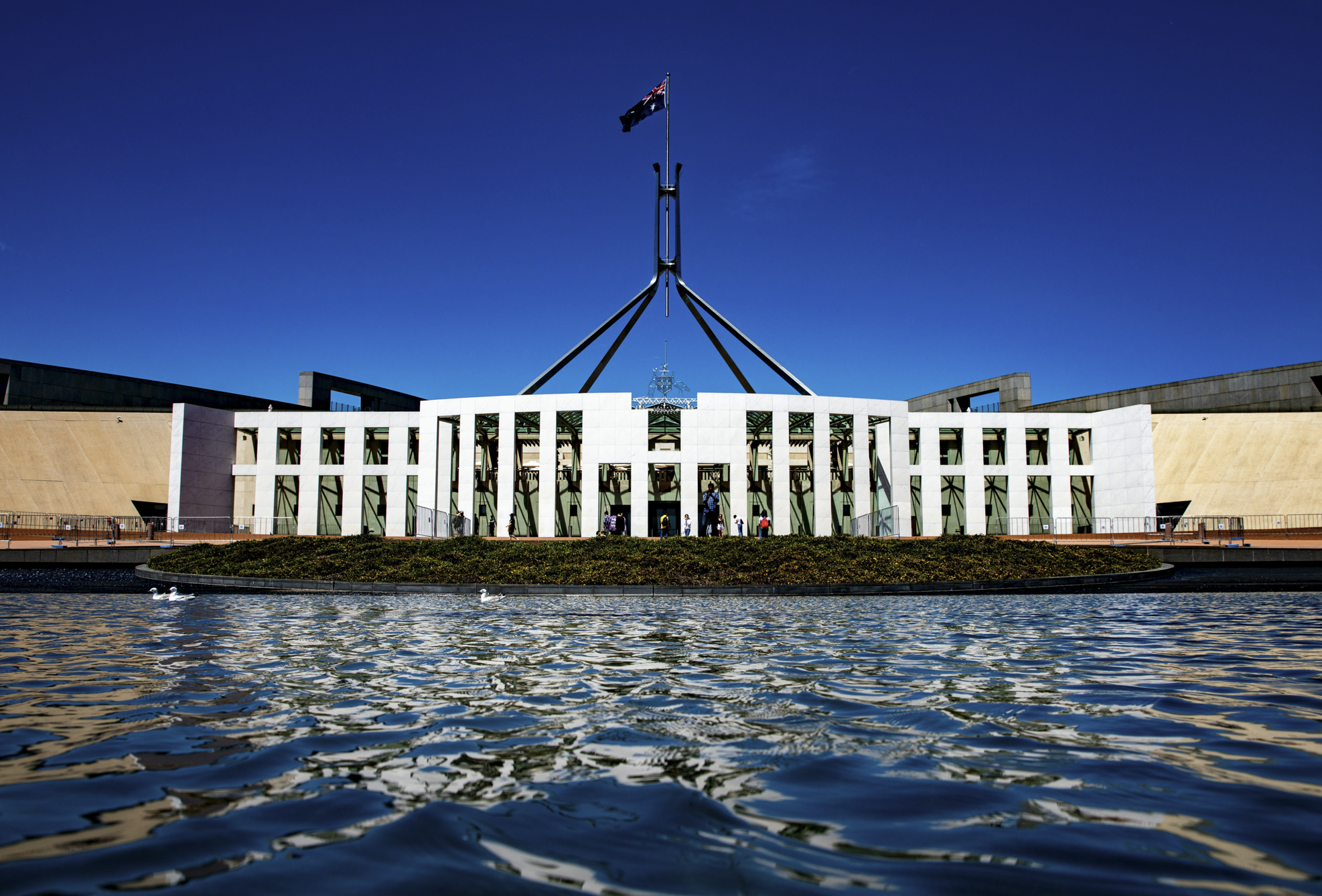




.jpg)